Umit begins a new chapter near Lake Balkhash
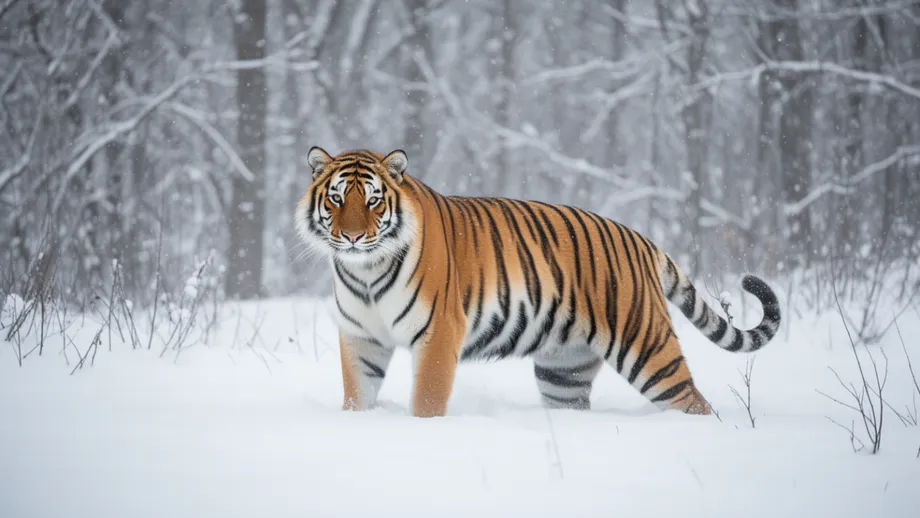
An adult female tiger named Umit was released into Kazakhstan's Ile-Balkhash State Nature Reserve on July 31, 2026, beginning the country's effort to rebuild a wild tiger population more than seven decades after the animal disappeared. The goal is a population of about 50 tigers able to survive and reproduce without animals continually being brought in.
Contents
- Umit begins a new chapter near Lake Balkhash
- Why an Amur tiger can restore the Turan tiger's range
- How the programme reached the first release
- Restoring food and shelter before adding predators
- Six arrivals, with different routes toward the wild
- Tracking Umit and protecting nearby households
- What the funding supports
- Saiga recovery and snow leopard protection
- The Caspian seal shows a different trend
- Kazakhstan seeks wider conservation cooperation
- Key Points
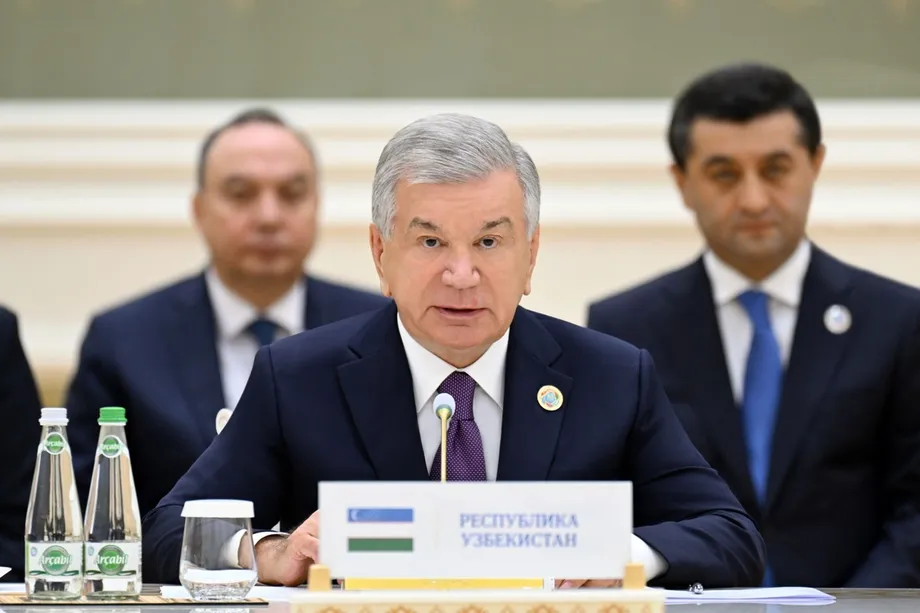
President Kassym-Jomart Tokayev highlighted the release at the biodiversity leaders' summit in Yerevan, Armenia, on October 16, ahead of COP17, the United Nations biodiversity conference. He thanked Russia and President Vladimir Putin, the United Nations Development Programme (UNDP), the World Wide Fund for Nature (WWF), other international partners and nongovernmental organisations for supporting the return.
Tokayev placed the release in July, consistent with the Ecology and Natural Resources Ministry's account specifying July 31; another account of his summit speech gave June. Umit, whose name means hope in Kazakh, came from Russia's Far East and now moves through habitat near the southern shore of Lake Balkhash wearing a tracking collar.
Kazakhstan last reliably recorded a wild tiger in 1948. Its disappearance followed hunting, the loss of forests along rivers and a decline in the wild animals it hunted. Returning the predator has therefore required more than transporting a tiger: authorities have spent over a decade preparing habitat, rebuilding prey populations, constructing facilities and training staff.
The release also gives communities around the reserve a new neighbour. Tracking systems, a response team, livestock protection measures and a compensation fund are intended to reduce the risks as tigers return to a landscape where people have lived without them for generations.
Why an Amur tiger can restore the Turan tiger's range
Umit is an Amur tiger, the population associated with the Russian Far East. Kazakhstan's historic population is commonly called the Turan or Caspian tiger. Genetic research supplied the scientific basis for using Amur tigers to restore the predator to Central Asia.
WWF's tiger restoration programme describes a 2009 study comparing DNA from Central Asian museum specimens with other tiger populations. WWF says the research found Turan and Amur tiger DNA identical. The finding allowed conservation planners to consider Amur tigers as the starting population for restoration in Kazakhstan.
Dale Miquelle, a tiger specialist who formerly led the Wildlife Conservation Society's Russia programme, explained the connection:
For all intents and purposes, this is the return of the caspian tiger, only this time they flew instead of walking.
The practical task is to establish living, hunting and breeding animals across part of the tiger's former range. A feasibility study in 2017 identified two suitable locations in Kazakhstan, with Ile-Balkhash considered the most promising. Its river delta, wetlands and forests provide the water, cover and prey that tigers need.
How the programme reached the first release
Kazakhstan announced its readiness to bring tigers back at the International Tiger Conservation Summit in St. Petersburg in 2010. Seven years of research and planning followed before the government and WWF signed their restoration agreement.
The main steps show how habitat preparation and international cooperation developed together:
- September 2017: Kazakhstan and WWF signed a memorandum at EXPO-2017 to implement the tiger restoration programme.
- June 27, 2018: Kazakhstan established the Ile-Balkhash Reserve.
- 2022: Kazakhstan and Russia signed a memorandum on tiger reintroduction at the International Tiger Conservation Forum in Vladivostok.
- September 2024: Two Amur tigers, Kuma and Bogdana, arrived from the Netherlands for care in adaptation enclosures.
- November 2025: Kazakhstan and Russia signed a joint action plan for transferring and adapting Amur tigers during Tokayev's state visit to Russia.
- May 2026: Four tigers arrived from Russia, including Umit.
- July 31, 2026: Umit was released into the reserve.
Kazakh specialists completed training in Russia in December 2025 and February 2026. Their preparation included the skills needed to monitor animals, assess their behaviour and respond when a tiger approaches people.
Restoring food and shelter before adding predators
Ile-Balkhash contains part of the Ili River delta, forests along floodplains, saxaul woodland and wetlands beside Lake Balkhash. WWF records the reserve's area at establishment as more than 415,000 hectares; the ministry's later description gives 450,252 hectares.
The programme has brought 119 kulans, a type of wild donkey, and more than 200 Bukhara deer into the area. Wild boar, a major food source for tigers, and goitered gazelles have also increased, according to the ministry. New enclosures, automatic watering equipment and feed have supported animal restoration.
WWF also identifies an ecological corridor linking Altyn-Emel and Ile-Balkhash. This is an area connecting habitats so animals such as kulans and gazelles can move between them more safely. Restoring movement routes complements the work inside the reserve.
The ministry says scientific assessments found sufficient density of the main prey species to support tigers. Maintaining that food supply will remain a continuing task. Miquelle has pointed to experience in Russia, where African swine fever killed large numbers of wild boar and left some tigers searching for food around settlements.
Miquelle described the conditions needed for Kazakhstan's project to work:
I am very hopeful this can work. In Russia, a number of translocations resulted in the recolonisation of tiger habitat. So there's a blueprint that suggests that this can work as long as there is suitable habitat and sufficient prey.
Six arrivals, with different routes toward the wild
Umit arrived from Russia with an adult male named Amur and two cubs, Turan and Ussuri. The four animals were taken to specially prepared adaptation enclosures after their arrival in May 2026 from the Khabarovsk region.
Veterinary and behavioural assessments checked Umit's health, hunting ability, reaction to people and readiness to live independently. Amur remained under observation and continued behavioural tests. The ministry gave no release date for him, making the decision dependent on his readiness.
Turan and Ussuri arrived at approximately six to seven months old. They are expected to remain under specialist supervision until at least 18 months of age, followed by individual health and behavioural assessments. Their possible release is anticipated in 2027, subject to those checks.
Kuma and Bogdana, the pair brought from the Netherlands in September 2024, followed a different route. They came from Landgoed Hoenderdaell zoo and were being kept in an enclosure complex to adapt to local conditions. The ministry described plans for cubs born at the reserve to be released gradually.
The complex covers 10 hectares and includes six individual enclosures, heating systems, artificial pools and video surveillance. This infrastructure allows specialists to care for animals while assessing which can eventually live in the wild.
Tracking Umit and protecting nearby households
Umit carries a GPS/GSM collar that allows specialists to track her location. Satellite information, camera traps and field observations are being used around the clock to study how she moves, finds resting places and searches for prey.
The monitoring also supports public safety. The ministry described an alert system intended to notify responsible staff and residents when a tiger comes within five kilometres of a home or settlement. A dedicated reserve team has been trained to deter animals and, when necessary, capture them.
Residents gained access to a tiger information hotline in May 2025. They can ask questions and apply for electric fencing to improve protection around livestock grazing areas. Reserve managers have also held meetings with communities to discuss safety arrangements.
A compensation fund supported by international organisations was created to pay for livestock harmed by tigers. For households near the reserve, these measures address the most immediate concerns: keeping animals safe, receiving warnings and knowing where to seek help.
Ecology and Natural Resources Minister Yerlan Nyssanbayev described the release as the beginning of a longer process:
A great deal of work lies ahead to monitor the tigers and establish a sustainable population, but today we have taken the first and very important step.
What the funding supports
The ministry describes the broader tiger restoration programme as lasting at least 35 years, with funding of about $30 million. Its stages cover preparing the territory, releasing tigers and monitoring the resulting population. WWF is expected to provide about one third of the funding, with UNDP and Kazakhstan's state budget providing the rest.
The initial population is intended to grow through the gradual release of roughly 15 to 20 tigers. The longer goal is about 50 animals reproducing in the wild. Each successful release therefore needs to be followed by years of protection and observation.
UNDP's project description lists a related project running from 2021 to 2026 with a budget of 1,376,641,000 tenge. It covers preparing Ile-Balkhash for tiger reintroduction, conserving natural and cultural heritage in the Ulytau mountain range, and working with local communities.
The Government of Kazakhstan and UNDP are the donors. National partners include the Forestry and Wildlife Committee and local executive bodies in Almaty and Ulytau regions. Meruyert Sarsembayeva is named as project coordinator. Because this project also covers Ulytau heritage and tourism sites, its budget serves several stated objectives.
Saiga recovery and snow leopard protection
Tokayev used the Yerevan summit to place the tiger programme alongside other wildlife efforts. Kazakhstan's saiga population rose from 21,000 in 2003 to an estimated 4.7 million by spring 2026, he said. The country now holds around 98 percent of the world's saigas.
Those figures represent an increase of about 224 times the 2003 population. They also place most of the responsibility for this antelope's conservation within Kazakhstan, where it is a major part of the steppe ecosystem.
Snow leopard numbers have reached nearly 190, Tokayev said, following critically low levels in the 1990s. Around 70 percent of the species' range in Kazakhstan lies within protected areas. He credited sustained protection, scientific monitoring and cooperation between authorities, researchers and international partners.
Kazakhstan is also working with Czech, German and Hungarian partners to reintroduce Przewalski's horse. Tokayev presented these efforts as examples of countries combining resources and knowledge to restore rare animals.
The Caspian seal shows a different trend
Caspian seals provided the sharpest contrast to the recovery figures. Tokayev said their population had fallen from approximately one million to 270,000 over the past century, a decline of about 73 percent. Kazakhstan has officially listed the seal as rare and endangered.
The president called on all five countries bordering the Caspian Sea, together with the international community, to strengthen protection. He recalled his appeal for urgent, coordinated action at the first Caspian Environmental Summit in Turkmenistan and warned against repeating the environmental damage suffered by the Aral Sea.
Tokayev expressed that warning directly:
We must not allow the Caspian Sea to suffer the same fate.
The tiger programme centres on a reserve and its surrounding landscape. Caspian conservation requires cooperation across a shared body of water. Kazakhstan is advocating an interstate programme to conserve the sea's resources, alongside its domestic protection measures.
Kazakhstan seeks wider conservation cooperation
Tokayev invited partners to support a proposed International Fund for Rare Species and Biodiversity Conservation. He also proposed Almaty as the location for a regional office of the Secretariat of the UN Convention on Biological Diversity.
The proposed office would help Central Asian countries carry out the Kunming-Montreal Global Biodiversity Framework, the international agreement guiding action to protect nature. Scientific exchange and joint conservation projects would be part of its work.
Kazakhstan has adopted a national biodiversity conservation programme lasting 10 years, focused on restoring habitats, protecting species and expanding protected areas. A National Genetic Biodiversity Bank is also being established.
Tokayev called for digital technology and artificial intelligence to support ecosystem monitoring, analysis of biodiversity data and warnings about environmental threats. He proposed the International Center for Artificial Intelligence in Astana as a platform for joint research and specialist training.
The president also presented the Taza Qazaqstan initiative, highlighted the Astana Declaration on Environmental Solidarity in Central Asia adopted after the April summit, and renewed Kazakhstan's proposal for an International Water Organization within the UN system. His central appeal was for practical cooperation on nature despite political differences.
For the tiger programme, the next work is concrete: track Umit, assess the remaining animals, maintain prey populations and keep neighbouring communities informed and protected. The ambition of a population of about 50 depends on carrying out those tasks over many years.
Key Points
- Umit, an adult female Amur tiger, was released at Ile-Balkhash on July 31, 2026, more than seven decades after Kazakhstan's last reliable wild tiger sighting.
- Tokayev thanked Russia, UNDP, WWF and other partners at the biodiversity leaders' summit in Yerevan.
- Kazakhstan aims to establish a wild tiger population of about 50 through gradual releases, habitat restoration and monitoring.
- Tracking collars, warning systems, a response team and a compensation fund form part of community safety measures.
- Tokayev cited 4.7 million saigas and nearly 190 snow leopards, while warning that Caspian seals had fallen to about 270,000.
- Kazakhstan is seeking support for an international conservation fund and a UN biodiversity regional office in Almaty.