Singapore puts the daily shortfall at 17 billion thermal units
Indonesia began reducing gas exports to Singapore on October 24, redirecting supplies to electricity producers in Batam, Bintan and Sumatra. Singapore's Energy Market Authority (EMA) said information from local importers put the reduction at 17 billion British thermal units a day for 18 days, less than 2% of national daily gas demand.
Contents
- Singapore puts the daily shortfall at 17 billion thermal units
- How large is the reduction?
- Where Indonesia is sending the gas
- What importers and customers face
- How Singapore can replace the missing supply
- Will electricity become more expensive?
- A longer shift toward Indonesian domestic demand
- Export warnings add a diplomatic dimension
- What changes before the 2028 deadline?
- Key Points
The Indonesian upstream oil and gas regulator, SKK Migas, described the diversion as 31 million standard cubic feet a day, comprising 15 million from Natuna and 16 million from Sumatra. Singapore generates about 95% of its electricity using natural gas, making replacement supplies central to keeping power available.
EMA said Singapore had sufficient energy supplies to meet national demand. Singapore GasCo, the central gas procurement and supply company, was ready to import additional liquefied natural gas, while electricity generators were required to maintain fuel reserves, including diesel.
The immediate effect is therefore a change in supply arrangements for importers and their customers. Gas Supply, an importer wholly owned by Temasek, confirmed that temporary reductions from its Indonesian supplier had affected deliveries to customers. The company said it had contacted affected customers and was working with its upstream supplier.
Indonesia's decision also brings a longer commercial deadline into sharper focus: Singapore's existing Indonesian gas import contracts expire at the end of 2028. Jakarta had already been considering how much gas to retain for domestic electricity production and industry before announcing this diversion.
How large is the reduction?
EMA's assessment uses energy content rather than the physical volume of gas. A British thermal unit measures energy, while a standard cubic foot measures gas volume under specified conditions. Converting between them requires information about the gas's heat content.
Against Singapore's daily demand of more than 1,000 billion British thermal units, EMA's figure of 17 billion represents less than 1.7%. Earlier descriptions of the Indonesian announcement put the reduction at 31 billion British thermal units a day; EMA based its assessment on information received from Singapore's importers.
The reduction was also estimated at around 9% of Indonesia's pipeline gas deliveries to Singapore. That percentage uses a smaller base than EMA's national demand figure: Indonesian pipeline supplies are just one part of Singapore's gas supply.
EMA offered a useful comparison from recent operating experience. Planned and urgent maintenance had caused reductions ranging from 20 billion to 100 billion British thermal units a day in recent months. Other gas sources replaced those volumes without incident. The current assessed daily shortfall is smaller than the lowest figure in that range.
Where Indonesia is sending the gas
SKK Migas said the 15 million standard cubic feet a day diverted from Natuna would go to PLN Batam through the WNTS–Pulau Pemping–Batam pipeline. Another 16 million from Sumatra would be redirected through the TGI pipeline to serve electricity demand in Batam, Bintan and Sumatra.
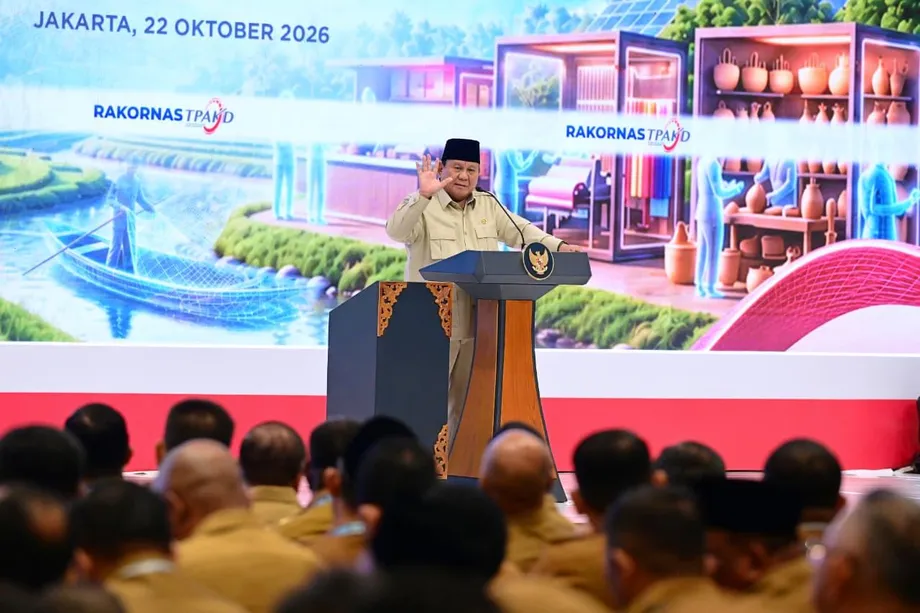
Djoko Siswanto, chairman of SKK Migas, explained the regulator's purpose when announcing the diversion:
In order to safeguard the reliability of domestic gas supplies for electricity generation, effective today, gas supplies previously destined for Singapore are being redirected for domestic use,
Batam and several cities in Indonesia's Riau Islands province suffered a blackout lasting 16 hours earlier in October. The diversion directs additional fuel toward electricity systems in that region.
SKK Migas cited Article 8, Paragraph 1 of Indonesia's Oil and Gas Law as the basis for prioritising domestic natural gas needs. The regulator said it would monitor developments daily. Djoko said Singapore was the only export destination affected because the pipelines involved connected directly to the country.
What importers and customers face
Gas Supply receives gas originating in Sumatra. Natuna gas travels through a direct subsea pipeline to a receiving facility operated by Sembcorp Gas. The two routes connect Indonesian production to different commercial supply arrangements in Singapore.
Gas Supply said its deliveries had been affected and that it was communicating directly with customers. It did not disclose how many customers were affected or give its own timetable for restoring deliveries. EMA's assessment covered an 18 day period.
EMA's spokesperson also addressed the commercial response to the disruption:
EMA understands that our importers will pursue all relevant recourse in their contracts for the gas supply disruption,
Contractual recourse means using the protections and remedies agreed between buyer and seller when supplies fall short. The response will depend on the relevant contract terms. Lee Poh Seng, head of the National University of Singapore's mechanical engineering department, said whether the reduction constituted a breach depended on the specific agreements.
Sembcorp Industries' 2023 annual report described a West Natuna gas import agreement valued at approximately $1.9 billion. The Indonesian supply agreements were expected to run until 2028, making both immediate delivery obligations and future renewal decisions important to the buyers.
How Singapore can replace the missing supply
Singapore imports pipeline gas from Indonesia and Malaysia, alongside liquefied natural gas (LNG) shipped from international suppliers. In 2025, pipeline gas accounted for 43% of its gas imports and LNG for 57%.
LNG is natural gas cooled until it becomes liquid, allowing large quantities to travel by ship. At the receiving terminal, it is turned back into gas for use. This gives Singapore access to suppliers beyond the countries connected to it by pipelines.
EMA said Singapore GasCo was operationally ready to import more LNG at any time. The authority also pointed to generators' compulsory fuel reserves, including diesel, as another protection for electricity supply.
Singapore's supply mix helps explain why a reduction from one exporter can be managed. Deputy Prime Minister Gan Kim Yong told Parliament that no single country accounted for more than 30% of Singapore's gas imports in 2024. LNG supplies come from regions including the Middle East, Africa, the United States and Australia.
Sung Jinseok, a research fellow at the National University of Singapore's Energy Studies Institute, said the disruption reinforced GasCo's role in keeping Singapore adequately supplied and contracted for gas. He identified full reliance on LNG as one possible scenario for which Singapore was preparing.
Will electricity become more expensive?
Energy specialists expected a limited immediate effect on electricity costs because the affected share of Singapore's gas demand was small. David Broadstock, an economist who monitors the energy sector, said a major price surge was unlikely.
Subodh Mhaisalkar, chief executive of the Solar Energy Research Institute of Singapore, said LNG infrastructure allowed Singapore to buy gas from multiple international suppliers. He also warned that replacing pipeline gas with LNG could raise procurement costs and increase exposure to changing global prices.
Lee Poh Seng drew a practical distinction between having energy available and buying it affordably. LNG can fill the physical supply gap, while the cost of doing so depends on market conditions. For electricity producers, securing replacement fuel and determining its price are separate tasks.
The price assessment therefore rests on two facts: EMA puts the daily shortfall below 2% of national gas demand, and Singapore has alternative supply arrangements. Analysts expect the small volume to limit the cost effect, even if replacement purchases are more expensive.
A longer shift toward Indonesian domestic demand
Indonesia uses about 70% of its natural gas production domestically and exports about 30%, according to figures cited by Energy and Mineral Resources Minister Bahlil Lahadalia. The government is reviewing that allocation as it seeks more fuel for electricity generation and more gas for industry, particularly petrochemicals.
Petrochemical industries use gas as both fuel and a raw material for products such as chemicals and fertiliser. Directing gas toward these industries forms part of Jakarta's effort to process more resources at home.
Indonesia had already agreed in 2022 to extend supplies to Singapore until 2028 at lower volumes than under the previous contract. In April 2025, Djoko described plans to reduce exports from Sumatra while using Natuna supplies to compensate. A gas swap agreement signed in May 2025 by MedcoEnergi, Sembcorp Gas, Gas Supply and others allowed more Sumatra gas to serve domestic users.
The latest diversion affects both Natuna and Sumatra. It follows Indonesia's export renewal warning, when Bahlil raised the possibility of letting gas export arrangements with neighbouring countries expire.
The main stages in the changing supply relationship are:
- 2022: Indonesia agreed to extend gas supplies to Singapore until 2028 at reduced volumes.
- May 2025: MedcoEnergi and buyers including Sembcorp Gas and Gas Supply signed a gas swap agreement.
- October 21, 2026: Bahlil raised the possibility of not extending gas exports to neighbouring countries.
- October 24: The latest diversion began, with EMA assessing a reduction lasting 18 days.
- End of 2028: Singapore's existing Indonesian gas import contracts are due to expire.
Export warnings add a diplomatic dimension
Bahlil, who also serves as coordinating minister for downstreaming and energy transition, broadened his comments beyond domestic demand when he discussed evaluating energy exports. He did not identify a country in his warning.
The minister described the action he was prepared to consider:
I will conduct an evaluation. I will not hesitate to consider stopping exports to countries that do not respect Indonesia,
SKK Migas gave domestic electricity reliability as its reason for diverting the gas. Broadstock also pointed to tensions over transboundary haze as possible political context, while expressing uncertainty about any connection to the supply decision.
Singapore has stepped up scrutiny of companies potentially connected to fires in Indonesia. Its National Environment Agency issued notices to 20 companies in Singapore and Indonesia under the Transboundary Haze Pollution Act, and Singapore announced plans for a specialist panel to investigate businesses that may have contributed to haze.
Cross border energy cooperation also faces commercial negotiations. On October 19, Bahlil said Indonesia and Singapore had yet to agree on electricity export pricing. For businesses financing pipelines, power links and supply contracts, reliable delivery and agreed prices are central to commitments that can last decades.
What changes before the 2028 deadline?
Singapore is building a second LNG terminal, expected to become operational by the end of the decade. Additional receiving capacity would allow it to import more gas from international suppliers as Indonesian contracts approach expiry.
Other fuel programmes have more limited near term roles. Singapore announced on October 23 that three electricity generation companies had been appointed to pilot biomethane imports and supply. The first imports are expected by the end of 2028, with the pilot supporting up to 300 megawatts of generation capacity. Biomethane is gas made by processing methane obtained from organic material.
Singapore has also met its solar deployment target of 2 gigawatt peak ahead of schedule. Its next target, 3 gigawatt peak, could supply around 4% of electricity demand in 2030. Gigawatt peak measures solar panels' rated output under standard test conditions.
The figures show the different roles of these investments. LNG provides a way to replace missing gas, while solar and alternative fuels gradually broaden the electricity supply mix. For the current disruption, EMA's response centres on existing gas sources, GasCo's import readiness and generators' fuel reserves.
Key Points
- Indonesia began diverting gas from Singapore to domestic electricity users on October 24.
- EMA assessed the reduction at 17 billion British thermal units a day for 18 days, less than 2% of Singapore's daily gas demand.
- SKK Migas described a diversion of 31 million standard cubic feet a day from Natuna and Sumatra.
- Gas Supply confirmed affected customer deliveries, while EMA said Singapore had sufficient energy supplies.
- GasCo can import additional LNG, and electricity generators must maintain fuel reserves.
- Analysts expect a limited electricity price effect, although replacement gas may cost more.
- Existing Indonesian gas import contracts expire at the end of 2028; a second Singapore LNG terminal is expected by the end of the decade.