Antalya talks put Nepal's mountain risks in focus
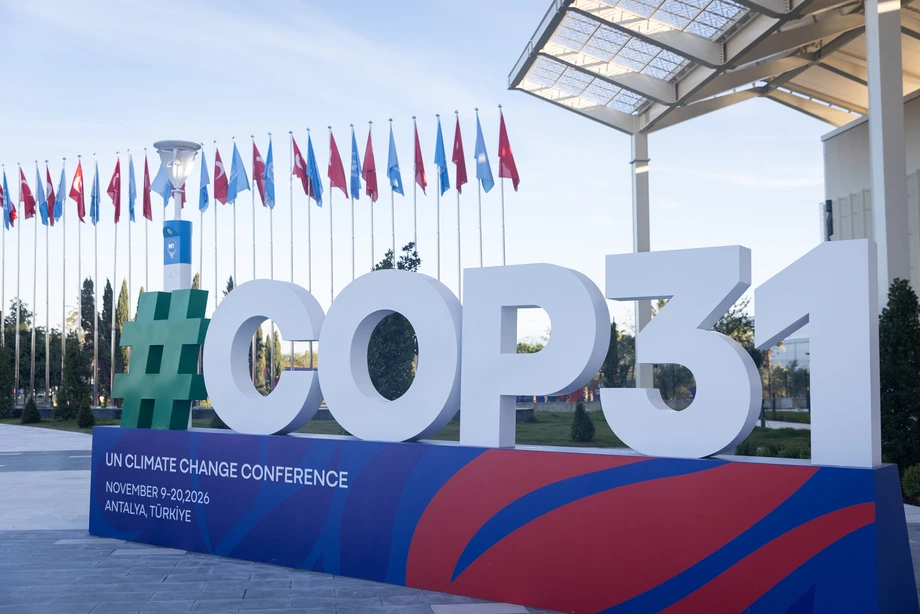
Nepal opened its pavilion at COP31 in Antalya, Türkiye, on November 9, 2026, calling for easier access to climate disaster funding as it renewed a joint effort with Bhutan to put Himalayan warming on the formal negotiating agenda. Their proposal on the effects of a temperature rise of 1.5 degrees Celsius in mountain regions appears as item 20 on the supplementary provisional agenda.
Contents
- Antalya talks put Nepal's mountain risks in focus
- Bhote Koshi brings the danger into view
- Nepal and Bhutan seek a formal place for mountains
- Two funding needs sit behind Nepal's appeal
- The finance minister brings an economic case
- International leaders invoke Nepal's losses
- Promises face a test of delivery
- Electricity targets link energy policy to mountain protection
- Dates and decisions to watch
- Key Points
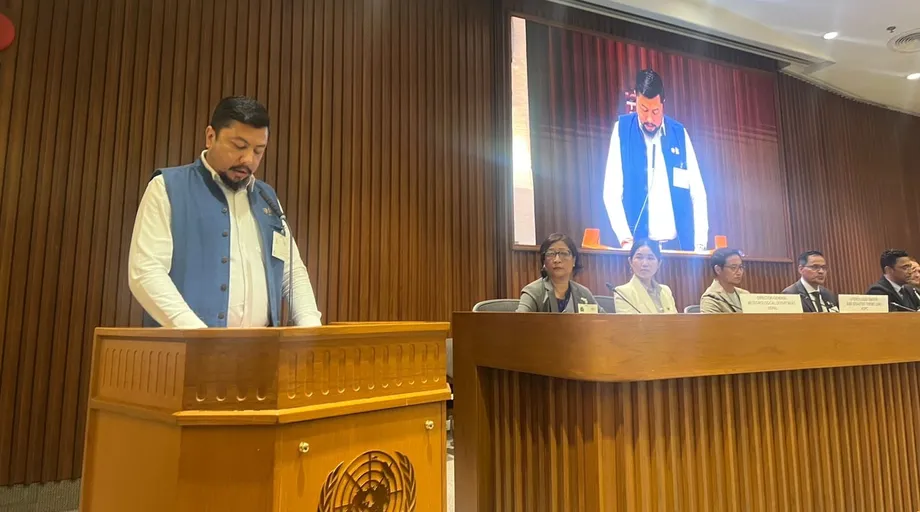
Foreign Minister Shisir Khanal, who leads Nepal's delegation, used the inauguration to call for climate justice, adequate financing for loss and damage, and international cooperation to protect Himalayan ecosystems and communities downstream. The conference runs until November 20, bringing together negotiators from nearly 200 countries.
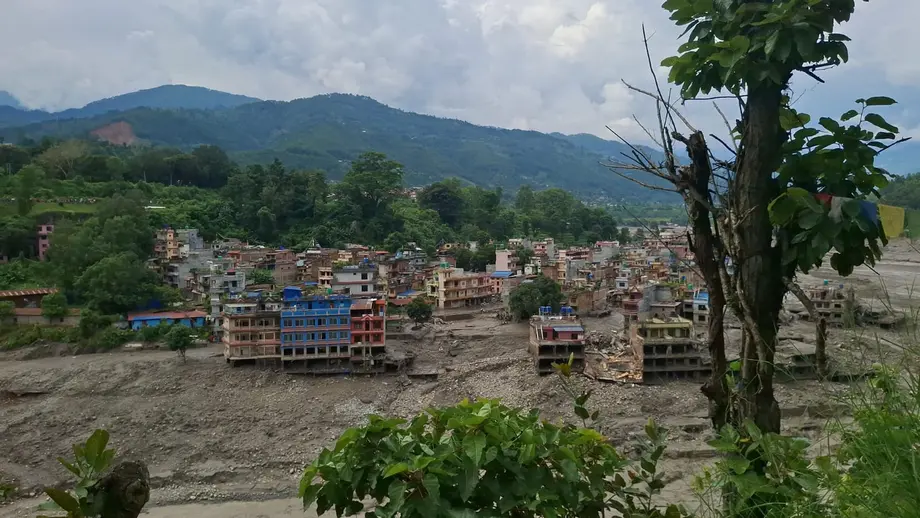
Khanal pointed to the recent Bhote Koshi disaster, describing it as a "Himalayan tsunami". His central argument was that countries such as Nepal, which contribute little to global greenhouse gas emissions, face a disproportionate share of the destruction caused by a warming planet.
Health and Food Safety Minister Nisha Mehta and House of Representatives member Sagar Dhakal also addressed the inauguration. The pavilion will present Nepal's climate ambitions, biodiversity conservation achievements and adaptation efforts led by local communities, placing the country's practical experience alongside its demands at the negotiating table.
Bhote Koshi brings the danger into view
The Bhote Koshi disaster followed a massive collapse of ice and rock in the Himalayas that triggered devastating flooding. The reported toll was more than 1,450 people killed and nearly 6,000 missing. For Nepal's delegation, the catastrophe has become a central example of the human cost behind discussions about temperature targets and international finance.
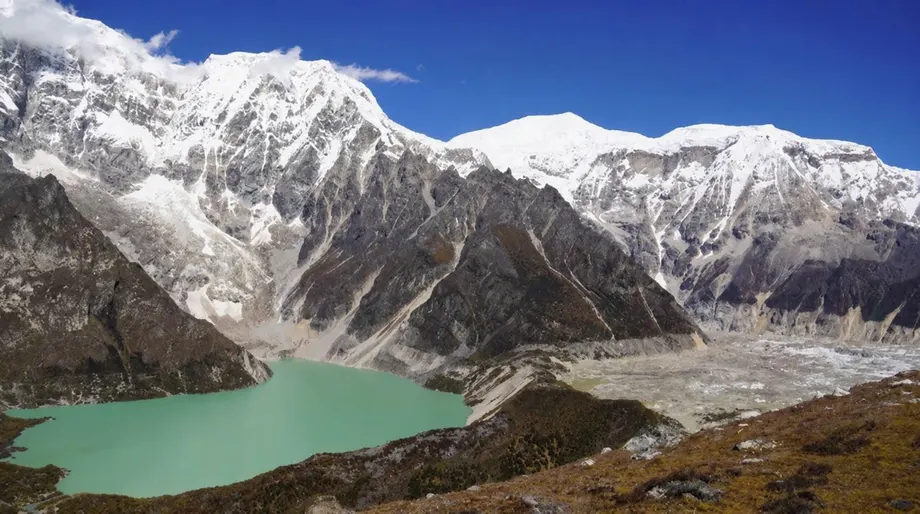
Khanal drew attention to changes in the cryosphere, the collective term for snow, glaciers and other frozen water. In mountain areas, changes to these frozen systems can affect both the stability of slopes and the movement of water through valleys.
Nepal faces several connected threats: glacial lake outburst floods, landslides and increasingly unpredictable rainfall. A glacial lake outburst flood happens when water stored near a glacier suddenly escapes, sending a powerful surge downstream. Communities, infrastructure, water resources and livelihoods can all lie in its path.
Downstream protection is therefore part of Nepal's request for international cooperation. Khanal argued that safeguarding the Himalayas must extend beyond mountain ecosystems to the people and places linked to them by rivers.
Nepal and Bhutan seek a formal place for mountains
Nepal and Bhutan's proposal focuses on what global warming of 1.5 degrees Celsius means for Himalayan regions. That threshold refers to the rise in the world's average temperature above the period before widespread industrialisation, rather than an identical temperature increase in every location.
The proposal's formal adoption had not been confirmed at the opening of COP31. Governments must agree on the agenda that directs their negotiations, making approval an immediate diplomatic priority for the two mountain countries.
Nepal tried to secure a separate formal agenda item for mountain issues at COP30 in Brazil in 2025, but countries did not reach agreement. The joint initiative with Bhutan carries that effort into Antalya, where Chris Bowen, Australia's climate change and energy minister, said more than 160 agenda items and 60 substantive negotiating mandates were under consideration.
Nepal also scheduled an opening day event with Bhutan, Kyrgyzstan and international organisations on adaptation finance for mountain regions. That places the practical question of paying for protection alongside the diplomatic effort to secure space in the formal talks.
Two funding needs sit behind Nepal's appeal
Khanal's demand for climate finance covers two different needs. Adaptation means preparing for climate hazards and reducing their impact. Loss and damage finance addresses the harm suffered when destructive events strike, including losses that preparation cannot prevent.
Nepal is asking for adequate money and straightforward access to the international loss and damage fund. The distinction matters for affected communities: a funding promise must be followed by an application process they can use and assistance that arrives when recovery is needed.
UN Climate Change Executive Secretary Simon Stiell called at the opening for adaptation finance to be tripled and for better access to money already committed. African countries are also pressing for discussions on tripling adaptation finance, giving Nepal's concerns a place within a wider demand from vulnerable countries.
Bowen, who is leading COP31's formal negotiations, described the access problem in direct terms:
"The countries that need climate finance the most are getting it the least," he said.
Bowen cited Australia's Access to Finance Statement and Action Plan for Small Island Developing States and least developed countries, launched at the Pacific Pre-COP meeting. Its stated aim is to simplify and accelerate access to climate funding.
The finance minister brings an economic case
Finance Minister Dr Swarnim Wagle left Kathmandu for Antalya on November 9, travelling from Tribhuvan International Airport aboard a Turkish Airlines flight. Khanal had already arrived to lead the Nepali delegation.
Wagle is scheduled to raise Nepal's positions on climate change and sustainable economic development at about six senior level sessions. His participation gives the delegation a finance minister's voice in discussions about how international support can reach a country facing damage to infrastructure, water resources and livelihoods.
Nepal's pavilion and ministerial programme serve related purposes. The pavilion presents conservation and community adaptation work, while the delegation seeks financial support and negotiating decisions. Together, they connect Nepal's experience of coping with climate risks to its request for international assistance.
Wagle's secretariat scheduled his return to Nepal for Sunday, Kartik 29, corresponding to November 15. The conference will continue for another five days, with Khanal also scheduled to address a plenary meeting and participate in international climate negotiations.
International leaders invoke Nepal's losses
Nepal's disaster featured in opening statements beyond its own pavilion. Stiell referred to a tragedy in the Himalayas, while outgoing COP30 president André Aranha Corrêa do Lago urged governments to remember climate victims in Nepal, Brazil and countries across Africa and Europe.
Bowen explicitly cited Nepal when explaining why climate negotiations concern present suffering as well as future risks. Australia's climate change and energy minister said:
"Whether it be glacial collapse in Nepal, heat deaths in Europe, or an intensifying El Niño. Climate change is here. It is not a forecast. It is not a prediction. It is the lived reality for billions of people," he said.
Türkiye is hosting COP31, with its environment, urbanisation and climate change minister, Murat Kurum, serving as conference president. Australia leads the negotiations under an arrangement reached after the two countries competed to host the meeting.
Kurum called for an implementation conference, centred on turning agreements into results. Explaining that aim, the COP31 president said:
"The decisions we take in Antalya will only truly come to life when they leave these halls," he said.
Promises face a test of delivery
Climate finance discussions in Antalya include the commitment agreed in Baku to provide at least $300 billion annually by 2035, alongside efforts to scale financing from public and private sources to $1.3 trillion. Stiell called for clarity on delivering those commitments without reopening earlier agreements.
Kurum introduced a Climate Implementation Bridge intended to connect countries needing finance and technology with investors and countries able to provide them. The initiative aims to match local needs with money, expertise and technology, addressing the gap between countries that can obtain support and those struggling to access it.
Developing countries sought additional climate finance items on the formal agenda before COP31 opened, with discussions continuing into Sunday night. Monday's opening ceremony began about 90 minutes late. Finance is consequently both a question of how much money is available and a question of what governments will formally negotiate.
More than 100,000 people are expected to attend over the two weeks, and organisers expect more than 90 heads of state and government. The Trump administration has sent no official US delegation, while China, India and European countries are participating through ministers and negotiators despite the absence of several national leaders.
Electricity targets link energy policy to mountain protection
Türkiye's 35-by-35 Global Electrification Pledge aims to increase electricity's share of final energy consumption from around 20 percent to 35 percent by 2035. Using those figures, the goal represents a rise of 15 percentage points, or roughly three quarters above the starting share.
Final energy consumption means the energy used by households, transport, industry and other consumers. Electricity currently supplies about one fifth of that demand; much of the rest is met through fuels burned directly. The Turkish initiative brings together renewable generation, grids, storage, energy efficiency, cleaner transport and industry.
The European Union is pressing for clean electrification. The source of the electricity matters because replacing direct fuel use with electricity cuts emissions most effectively when the power itself comes from sources with low emissions.
Rachel Cleetus, climate programme director at the Union of Concerned Scientists, called for a rapid transition away from fossil fuels and an expansion of renewable energy. For Nepal, efforts to reduce warming and requests for disaster funding address different parts of the same problem: limiting future pressure on mountain systems while helping communities cope with damage already occurring.
Dates and decisions to watch
Nepal's immediate diplomatic task is to secure support for the Himalayan proposal while pressing for finance that vulnerable countries can access. The conference timetable brings several opportunities for those demands to enter discussions among ministers and national leaders.
The main dates and developments are:
- 2025: Nepal sought a separate mountain agenda item at COP30 in Brazil, but countries did not reach agreement.
- November 9, 2026: COP31 opened in Antalya, Khanal inaugurated Nepal's pavilion, and Wagle departed Kathmandu for the conference.
- November 11 and 12: The main gathering of world leaders is scheduled.
- November 15: Wagle is scheduled to return to Nepal after participating in about six senior level sessions.
- November 20: COP31 is scheduled to close.
For communities exposed to Himalayan hazards, the concrete issues are support for preparation, help after disasters and international action to reduce warming. Nepal's delegation is seeking progress on all three, while its joint proposal with Bhutan tests whether mountain risks can secure a dedicated place in the negotiations.
Key Points
- Nepal opened its COP31 pavilion on November 9, calling for climate justice and accessible loss and damage finance.
- Foreign Minister Shisir Khanal cited the Bhote Koshi disaster and risks to mountain and downstream communities.
- Nepal and Bhutan's Himalayan proposal appears as item 20 on the supplementary provisional agenda, awaiting confirmed formal adoption.
- Finance Minister Swarnim Wagle is scheduled to address about six senior level sessions.
- UN climate chief Simon Stiell called for tripling adaptation finance and improving access to committed funds.
- COP31 runs in Antalya until November 20, with Türkiye hosting and Australia leading formal negotiations.