Strong Finish Needed After 5 Million Arrivals
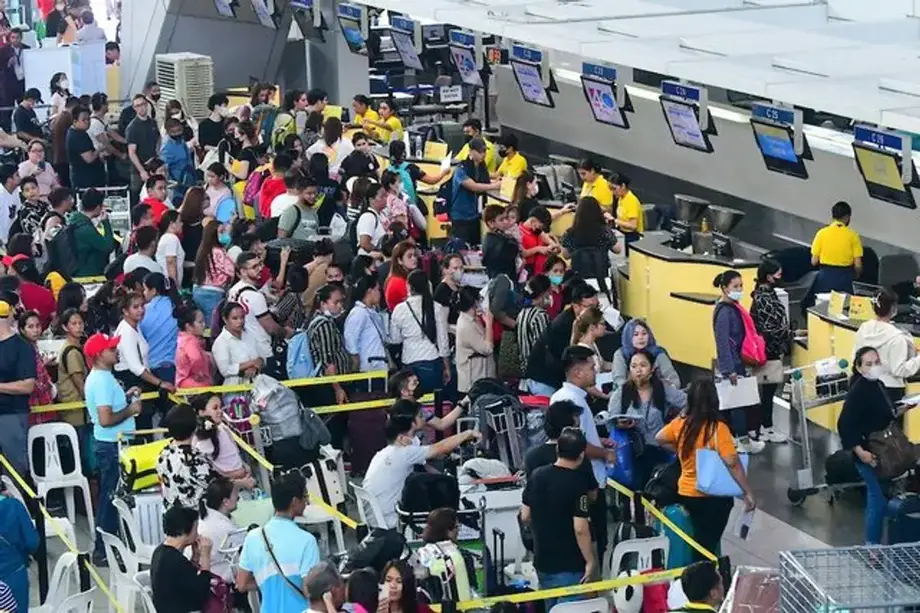
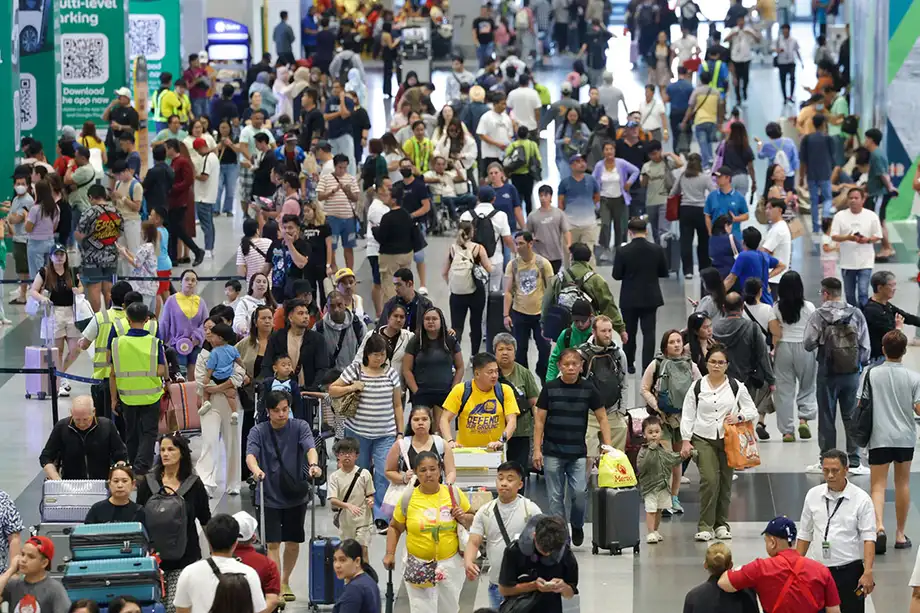
The Philippines welcomed 5 million foreign visitors in the first 10 months of 2026, according to the Department of Tourism, with the United States leading its overseas markets and a recovery in Chinese arrivals helping support the industry. Tourism officials are counting on November conferences, the ASEAN summit and stronger holiday travel to lift the final two months.
Contents
- Strong Finish Needed After 5 Million Arrivals
- Americans Lead, While China Gains Ground
- What the Growth Figures Mean
- Why Officials Expect a Stronger Final Quarter
- November Meetings Bring Thousands of Visitors
- Chinese Entry Rules Become a Policy Priority
- Domestic Flights Shape Where Visitors Can Go
- Free Rides and Postcards Extend the Summit Beyond Meetings
- Key Points
The department put growth through October at 15% compared with the same period a year earlier. American visitors numbered 986,343, ahead of South Korea's 870,980. China supplied 394,394 visitors, an increase of nearly 70% that industry participants linked to easier entry rules.
The annual goal has been described differently across tourism announcements. The initial figure was 6.4 million, while Tourism Secretary Ma. Bernardita Angara-Mathay has more recently cited 6.7 million. She has also discussed a range of 6.4 million to 6.8 million and said 7 million might be possible. The clearest recent working target is 6.7 million.
Reaching that figure from 5 million would require another 1.7 million arrivals in November and December, or roughly 27,900 a day across those 61 days. Reaching 6.4 million would require 1.4 million more, equivalent to about 23,000 a day. Those calculations show how much depends on the strength and duration of the seasonal increase.
Higher fuel prices, more expensive flights and the cost of reaching domestic destinations remain practical concerns. For hotels, transport operators and tourism businesses, the immediate issue is whether the expected surge in visitors lasts long enough to turn a promising October into a strong finish for the year.
Americans Lead, While China Gains Ground
The United States accounted for about 19.7% of the 5 million arrivals through October, compared with South Korea's 17.4%. The gap between the two markets was 115,363 visitors, placing the United States ahead of a country that previously held the leading position.
The five largest markets together supplied 2,973,072 visitors, or about 59.5% of the total. Their figures were:
- United States: 986,343 arrivals.
- South Korea: 870,980 arrivals.
- Japan: 429,544 arrivals.
- China: 394,394 arrivals.
- Australia: 291,811 arrivals.
Japan remained third, with China in fourth place and Australia fifth. China's share was about 7.9% through October, compared with the department's stated 6.9% for January through August, when it counted 303,567 Chinese visitors.
The increase between those two cumulative Chinese totals was 90,827 arrivals. For businesses serving Chinese guests, the recovery offers a growing customer base, while the larger American and South Korean markets remain central to the country's visitor numbers.
What the Growth Figures Mean
The tourism department's earlier January through August figures recorded 4.42 million international arrivals, compared with 4.38 million during the same months of the previous year. That represented growth of about 0.9%, much slower than the 15% increase stated for the period through October.
The department has not explained the sharp change between those cumulative growth rates. Readers therefore have two distinct snapshots: modest growth through August and a substantially stronger increase in the January through October announcement.
The previous year's detailed total was 6,484,060 foreign visitor arrivals, including returning Overseas Filipinos. That category matters because a visitor count that includes Filipinos returning from abroad is broader than a count limited to foreign nationals. Against that 2025 total, 6.7 million would represent growth of about 3.3%, consistent with Angara-Mathay's description of a roughly 3% annual increase.
Why Officials Expect a Stronger Final Quarter
Angara-Mathay has pointed to the normal increase in travel during the final quarter as a reason for confidence, even as fuel costs and airfares rise. Beach destinations are among the places expected to benefit from stronger seasonal demand.
The tourism secretary summed up the seasonal pattern in a brief assessment:
"The good months are the last quarter," she said.
The department's dashboard has also shown stronger daily traffic. Angara-Mathay said passenger arrivals had been running at between 12,000 and 13,000 a day and reached 26,000 in October. The figures she cited describe daily passenger activity, while the annual goal concerns cumulative visitor arrivals.
The October level gives a sense of the pace officials hope to sustain. A daily average of about 27,900 would be needed to add 1.7 million visitors over November and December. A strong day helps, but the final result depends on how many days maintain similarly high traffic.
Angara-Mathay acknowledged that expensive travel had initially worried her. Her current expectation is that seasonal demand and international gatherings will help the country maintain arrivals despite those costs.
November Meetings Bring Thousands of Visitors
The 49th Association of Southeast Asian Nations Summit and Related Meetings are expected to bring about 10,000 delegates, with accompanying family members also anticipated. ASEAN is the regional grouping through which Southeast Asian governments discuss political, economic and other shared issues.
Angara-Mathay projected participation by 21 foreign leaders and said each ASEAN member state was expected to bring about 500 people. The Philippine International Convention Center in Pasay is identified as the summit venue.
The summit dates have been given as November 15 to 17 in one announcement and November 16 to 18 in another. Delegates and businesses arranging services will need the final event schedule to settle bookings and transport plans.
Clark is also hosting the Junior Chamber International World Congress from November 11 to 15. More than 6,000 representatives from 120 countries are expected, with some bringing family members. Together, the two events have delegate projections exceeding 16,000, before accompanying relatives are counted.
The meetings provide an identifiable source of demand for accommodation, meals and transport in November. Their projected delegate numbers are nevertheless small beside the 1.7 million additional arrivals needed to reach 6.7 million. Holidaymakers and other travelers will have to supply most of that increase.
Several dates define the tourism push and the services surrounding it:
- March 29: Scheduled commercial turboprop flights moved from Ninoy Aquino International Airport to provincial hubs.
- November 5 to 14: Thirty modern jeepneys provide free rides on two Metro Manila routes.
- November 11 to 15: The JCI World Congress takes place in Clark.
- November 11 to 17: Summit postal services operate at the International Media Center in Pasay.
- Mid-November: The ASEAN summit takes place, with announcements giving November 15 to 17 and November 16 to 18.
- 2027: The current Chinese visitor entry arrangement is due to expire.
Chinese Entry Rules Become a Policy Priority
The recovery in Chinese arrivals has placed attention on the arrangement allowing eligible Chinese nationals to enter through Manila and Cebu without a visa for stays of up to 14 days. A visa is permission to enter a country, usually obtained through an application. Removing that application for eligible travelers can reduce the preparation needed for a short trip.
Industry participants attributed the nearly 70% rise in Chinese visitors through October to the arrangement. The tourism department is seeking to extend it before its expiry in 2027, giving travel businesses a clearer basis for planning future trips.
Angara-Mathay also wants the policy expanded to other entry gateways. An extension and an expansion would do different things: an extension would keep the arrangement operating for longer, while an expansion would allow eligible visitors to use more airports or other approved entry points.
The secretary said one more government agency needed to be convened on the proposed expansion. No approval date or list of additional gateways was announced. Travelers planning to use the arrangement currently have Manila and Cebu as the identified entry points.
Domestic Flights Shape Where Visitors Can Go
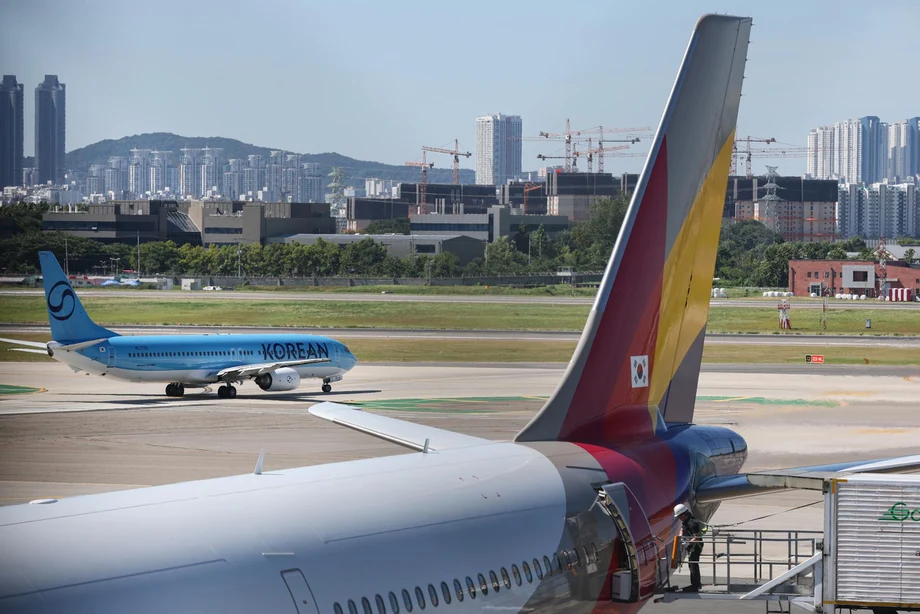
Angara-Mathay is also seeking the restoration of limited turboprop slots at Ninoy Aquino International Airport, or NAIA. Turboprops are aircraft whose engines drive propellers. They are often used on shorter routes and can serve airports that have fewer options for larger jet aircraft.
Scheduled commercial turboprop services moved from NAIA to provincial hubs on March 29 to ease air traffic congestion and reduce delays for larger jets. The tourism secretary argues that access to those flights also matters to people trying to reach domestic destinations.
Angara-Mathay described the purpose of her proposal in direct terms:
"We are working on bringing back the turboprops in NAIA because it's hard to travel," she said.
She also cited the difficulty of reaching Clark while its train connection is not yet operational. For a passenger arriving in Manila, a domestic departure from another airport can add a road transfer, more travel time and another expense.
The proposal exposes a practical balance in tourism planning. Moving smaller aircraft can free space at a busy airport, while retaining some services can make onward travel easier. Restoring limited slots is the tourism secretary's stated aim; an implementation timetable has not been announced.
Free Rides and Postcards Extend the Summit Beyond Meetings
Thirty modern jeepneys are providing free round trips from SM Fairview to Buendia and from Sucat to Baclaran between November 5 and 14. Services run from 4 a.m. to 10 p.m. under an agreement involving the tourism and transportation departments and the Land Transportation Franchising and Regulatory Board.
The vehicles carry images of Philippine destinations, festivals and experiences. For residents using the routes, the direct benefit is a fare saving during the service period. The program also puts tourism promotion on vehicles moving through Metro Manila.
The Department of Tourism and the Philippine Postal Corporation are offering postal services at the International Media Center in the World Trade Center, Pasay, from November 11 to 17. Delegates can select from 25 postcards featuring Philippine cultural heritage and buy commemorative stamps.
The stamp collections include the Philippines' ASEAN Chairship 2026 issue, a commemoration of the 50th anniversary of the Treaty of Amity and Cooperation in Southeast Asia, and the ASEAN Fruits series. The treaty is a regional agreement built around peaceful relations and cooperation.
Postmaster General and Chief Executive Officer Maximo C. Sta. Maria III explained why the postal service wanted physical souvenirs to be part of the event:
"Postcards and stamps tell stories, capture experiences, and connect people, places, and cultures. More importantly, they give our international guests something tangible to remember their time in the Philippines," he said.
The free rides and postal services are modest programs beside the national arrivals goal, but each connects the summit to a concrete experience. Residents receive transport assistance, while delegates have another way to encounter and share Philippine places and culture.
Key Points
- The Department of Tourism counted 5 million foreign visitors through October 2026, reporting growth of 15% from a year earlier.
- The United States led with 986,343 arrivals, followed by South Korea with 870,980.
- The recently cited annual target of 6.7 million requires another 1.7 million arrivals in November and December.
- Chinese arrivals reached 394,394 as officials sought to extend and expand the 14 day entry arrangement.
- The ASEAN summit and JCI World Congress are expected to attract more than 16,000 delegates combined, plus accompanying relatives.
- Higher travel costs and access to domestic flights remain practical concerns as officials count on stronger seasonal demand.