Workers evacuated as water enters Tunnel 5
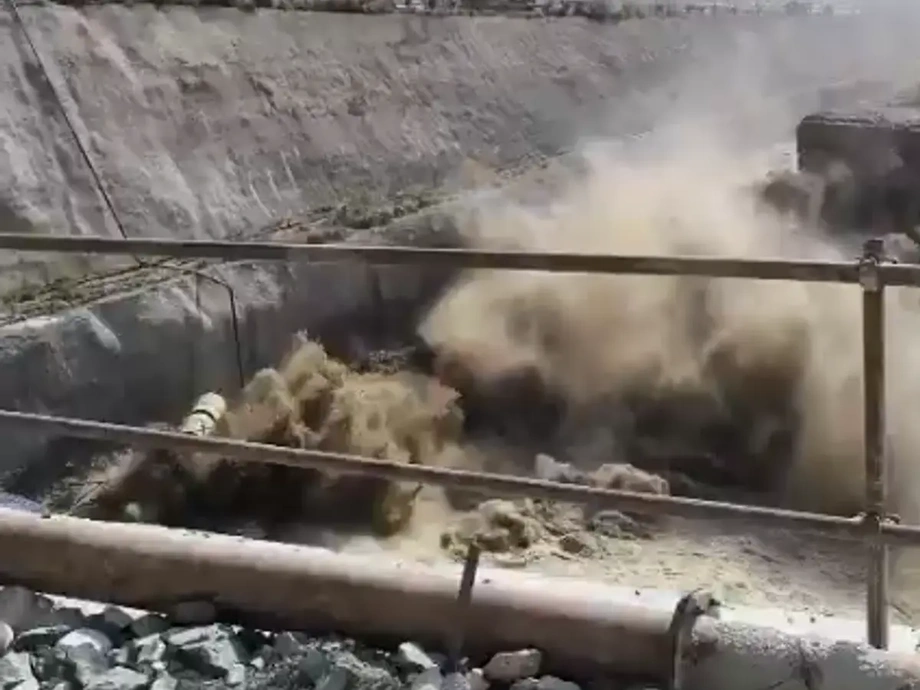
A rock collapse at Pakistan's Tarbela Fifth Extension Hydropower Project sent water into Tunnel 5 and the powerhouse construction area on November 9, forcing workers to evacuate and bringing construction to a halt. The Water and Power Development Authority (WAPDA) said everyone was moved to safety and no one was injured or killed.
Contents
- Workers evacuated as water enters Tunnel 5
- What officials say happened underground
- Main structures remain intact, WAPDA says
- Pumping and inspections come before a restart
- An earlier collapse brought warnings about oversight
- Costs have risen to nearly four times the original estimate
- What the extension would add to Tarbela
- Several interruptions have pushed back completion
- Key Points
The authority said a weak rock mass gave way during excavation of the second bench of a connecting tunnel at the project in Haripur, Khyber Pakhtunkhwa. Water from the intake pit then entered the tunnel and the area where the powerhouse is being built. A bench is a level excavated in stages as crews work through rock.
WAPDA declared an emergency and suspended construction. It subsequently said the intake pit had been completely drained, water was no longer entering downstream construction areas, and pumping had begun to remove water from the unfinished powerhouse.
The stoppage adds pressure to a project designed to supply another 1,530 megawatts of electricity. Its cost has risen from about Rs 82 billion at approval in 2017 to a revised Rs 316 billion, while completion has slipped beyond the original 2026 target.
What officials say happened underground
Waseem Ahmed, Haripur's deputy commissioner, said the collapse occurred in a weak section of rock during work on the connecting tunnel. He described how water reached the construction area and confirmed that workers had escaped safely.
It allowed water from the intake pit to enter the tunnel," Ahmed said. "All workers were immediately evacuated and are safe.
Descriptions of the incident also referred to a crack in a protective embankment or the collapse of a protective barrier. WAPDA's explanation focused on the weak rock mass, and an inquiry is expected to examine whether structural weakness or a technical fault caused the water entry.
A worker was reportedly swept away by the current and rescued. WAPDA's statement said all personnel were evacuated safely and there were no injuries or deaths. Pakistani and foreign staff were among those moved out of the work area.
Ahmed visited the site with rescue and administrative teams. Senior WAPDA officials, the project engineer, consultants and the contractor were also assessing conditions and reviewing what would be needed before construction could restart.
Main structures remain intact, WAPDA says
WAPDA rejected claims that the main T-5 tunnel had collapsed. The authority said the main tunnel, the powerhouse under construction, the tailrace culvert and the switchyard were undamaged.
The powerhouse is the building that houses generating equipment. A tailrace carries water away after it passes through the turbines, while a switchyard connects the electricity produced to the transmission network. Water entered the powerhouse construction area, and WAPDA said the structure itself remained intact.
Ahmed also rejected social media claims that the dam had broken. The deputy commissioner explained that a failure of the dam would have sent floodwater downstream, while water inside the affected tunnel was receding.
If the dam had broken, it would have caused flooding downstream," he said. "As I speak to you, the water level inside the tunnel has almost completely receded.
Local authorities also reportedly warned that the Indus River level could rise and urged people to avoid swimming or travelling by boat. Residents therefore faced a practical river safety warning alongside official assurances that the main dam remained intact.
Pumping and inspections come before a restart
WAPDA's immediate response concentrated on clearing the intake pit and removing water from the powerhouse area. Dewatering means pumping water out so crews can gain access to flooded working areas and inspect them.
The authority said the intake pit had been completely drained, while dewatering of the powerhouse had started. Those are separate stages of the response: stopping the inflow allows teams to begin clearing the water already inside the construction site.
A high level committee is to investigate the cause, with the resumption of work dependent on its findings. No date was given for restarting construction or completing the investigation.
For the project teams, the immediate task is to establish the condition of the excavation and the route through which water entered. The assessment will guide the work needed to make the affected area ready for crews to return.
An earlier collapse brought warnings about oversight
The latest incident follows a cofferdam collapse during the previous year. A cofferdam is a temporary barrier built to keep water away from a construction area, allowing people to work in a space that would otherwise be flooded.
An official inquiry into that earlier collapse assigned shared responsibility to WAPDA, the contractor and the consultant. It cited a change from roller compacted concrete to a less sturdy rock fill design without approval, together with poor oversight.
Roller compacted concrete is placed and compressed with heavy equipment. Rock fill uses masses of rock to form a barrier. The inquiry's findings concerned both the design change and the supervision responsible for checking and approving the work.
The current investigation will address the November 9 incident, while the earlier findings already place construction controls under scrutiny. WAPDA, its engineers and the contractor now face another interruption involving water entering an active work site.
Costs have risen to nearly four times the original estimate
The project's revised cost of Rs 316 billion is Rs 234 billion above the approximately Rs 82 billion approved in 2017. Using those figures, the revised estimate is about 3.85 times the original amount, an increase of roughly 285 percent.
Planning Commission officials have warned that the cost of electricity from the extension could reach Rs 27 to Rs 28 per unit. A unit is one kilowatt hour, the amount of electricity used by an appliance drawing one kilowatt for an hour.
The financing package includes $390 million from the World Bank and $300 million from the Asian Infrastructure Investment Bank, a combined $690 million. The project's approved dollar cost has been listed at $807 million.
WAPDA awarded a civil works contract worth $354.6 million to Power Construction Corporation of China in May 2021. Civil works cover the physical construction needed for the project, including major concrete structures and excavation.
The latest shutdown adds another interruption to a scheme already carrying a much larger rupee budget. Its financial importance extends beyond the construction bill because the eventual cost of generation affects the value of the electricity it will supply.
What the extension would add to Tarbela
The fifth extension is designed around three generating units, each rated at 510 megawatts. Together, they would add 1,530 megawatts and raise Tarbela's installed generating capacity from 4,888 megawatts to 6,418 megawatts.
That is an increase of about 31 percent, calculated from the stated existing capacity and planned addition. Installed capacity describes how much power equipment can produce when operating at its rated output.
The project is expected to generate an average of 1.347 billion units of electricity annually. Annual generation measures the electricity produced over time, while megawatts measure the rate of production at a particular moment. Hydropower output depends on the water available and how the equipment is operated.
For Pakistan's electricity system, the delay pushes back access to those additional generating units. For the construction teams, restoring safe access to the flooded area comes before work toward that capacity can continue.
Several interruptions have pushed back completion
The project was originally expected to be completed in 2026. The revised completion target is given as June 2028, although September 2027 has also been cited as a deadline. WAPDA's response to the latest incident did not clarify which schedule now governs the work.
The construction history includes both administrative and physical interruptions. Permission to close the tunnel became an issue in 2024, while rising reservoir water stopped work temporarily in August 2025.
- 2017: The project was approved at about Rs 82 billion.
- May 2021: WAPDA awarded the $354.6 million civil works contract.
- 2024: Difficulties arose in obtaining clearance from the Indus River System Authority to close the tunnel.
- August 2025: Work was temporarily halted as the reservoir level rose.
- November 9: A weak rock mass collapsed during connecting tunnel excavation, allowing water into the construction area and prompting evacuation.
The Indus River System Authority clearance concerned permission for a tunnel closure needed for construction. Together with reservoir conditions and excavation safety, it forms part of the sequence of constraints that has slowed the extension.
The next decision is when work can safely resume following the investigation. Completion of pumping, inspection of the affected area and the committee's findings will shape that decision.
Key Points
- A rock collapse on November 9 allowed water into Tunnel 5 and the powerhouse construction area, halting work.
- WAPDA said all workers were evacuated safely, with no injuries or deaths.
- The authority said the main tunnel, powerhouse structure, tailrace culvert and switchyard remained undamaged.
- The intake pit was drained, and pumping began in the powerhouse area.
- The 1,530 megawatt extension would increase Tarbela's installed capacity to 6,418 megawatts.
- The revised project cost is Rs 316 billion, compared with about Rs 82 billion at approval.
- An investigation will guide the restart, while cited completion dates range from September 2027 to June 2028.