A bigger project list meets a much larger financing challenge
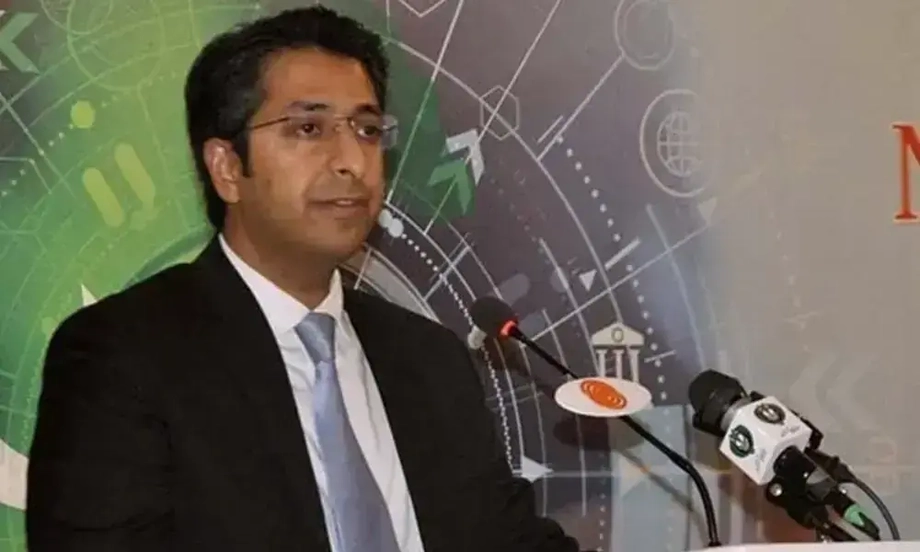
Pakistan has expanded its Climate Prosperity Plan to 100 projects valued at $8.5 billion as officials seek cheaper international finance, private investment and carbon market access to support climate action through 2030. Speaking in Islamabad at the 29th Sustainable Development Conference on November 4, 2026, Rana Ihsaan Afzal Khan, the prime minister's coordinator on commerce and industries, described the country's climate finance gap as $348 billion.
Contents
- A bigger project list meets a much larger financing challenge
- What the expanded prosperity plan contains
- Who would select projects and arrange the money?
- Why coordination has become a financing issue
- Why Pakistan wants cheaper finance and better prepared projects
- Solar growth brings batteries and coal contracts into focus
- Electric transport and carbon markets widen the agenda
- Climate investment is tied to the wider growth debate
- The milestones from strategy to delivery
- Key Points
The Ministry of Climate Change and Environmental Coordination's National Climate Finance Strategy, published in 2024, describes $348 billion as the investment needed for climate resilience by 2030, alongside a narrower estimate of $200 billion for implementing national climate commitments. Khan used the larger figure to describe the financing shortfall. The strategy records about $4 billion invested in climate activities in 2021, showing how small the historical flow has been beside the country's stated needs.
Hamza Ali Haroon, regional director for South and West Asia at the Climate Vulnerable Forum and V20, said the revised project plan had gone to the Finance Ministry. Officials are also developing a country platform, a shared mechanism for selecting projects, arranging finance and coordinating federal and provincial institutions.
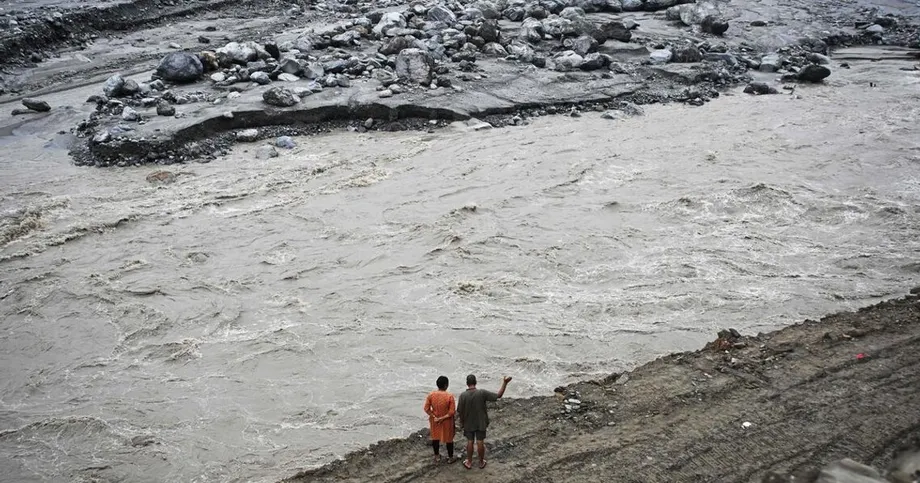
For families and businesses, the agenda reaches well beyond government financing arrangements. It covers agriculture able to withstand extreme weather, more reliable infrastructure, cleaner electricity and transport, and support for exporters facing environmental requirements abroad. The 2022 floods illustrate the stakes: the ministry's strategy puts damage at an estimated $30 billion and says more than 33 million people were affected.
What the expanded prosperity plan contains
Haroon told the conference that the Climate Prosperity Plan had grown from 69 projects valued at $4.5 billion to 100 projects costing $8.5 billion. An earlier CVF-V20 consultation statement put the 69 projects in its Investor Book at more than $4.85 billion. Using the conference figures, the revision adds 31 projects and $4 billion in proposed investment.
The earlier Investor Book covered eight areas: agriculture resilient to climate change, energy efficiency and transition, electric vehicles and transport, the circular economy, resilient infrastructure, solutions using natural systems, green economic zones and financial protection. A circular economy keeps materials in use through repair, reuse and recycling, reducing waste and demand for new resources.
The broader plan sets out $1.6 trillion in investment needs through 2050. Its purpose is to turn existing policies into projects that investors and development institutions can assess and finance. Those policies include Pakistan's Nationally Determined Contribution, or NDC 3.0, its climate commitment under the Paris Agreement, as well as the National Adaptation Plan 2023, biodiversity plans, URAAN Pakistan and the Green Taxonomy.
The taxonomy provides a common way to classify activities considered environmentally sustainable. Paired with a project list and financing arrangements, it can help public bodies and investors work from the same definitions when deciding where money should go.
Who would select projects and arrange the money?
Adnan Pasha, adviser to the finance minister, said the Finance Division would lead the institutional architecture for mobilising climate finance and support projects from federal ministries and provincial governments. Provincial proposals would first pass through their Planning and Development Departments, followed by prioritisation by the Ministry of Climate Change and Environmental Coordination.
The Finance Division would then develop the financing structure. The Economic Affairs Division and External Finance Wing would help engage development partners and arrange external finance. Pasha said project selection should reflect national priorities alongside the different adaptation needs of individual provinces. Adaptation means preparing people, infrastructure and economic activity for climate effects such as floods, heat and water shortages.
The earlier CVF-V20 statement described the proposed platform as jointly anchored by the finance and climate ministries, with provinces, development partners, multilateral development banks and private investors participating. Haroon said consultations had produced six operational models, while stressing the need for national ownership, implementation capacity and investment expertise.
At the ministry's May 14 consultation, provinces were asked to nominate coordination officials, identify further projects and support the platform. Climate ministry secretary Aisha Humera Chaudhry also requested provincial consultations and proposed joint investor roadshows with CVF-V20, taking provincial investment proposals directly to potential financiers.
Why coordination has become a financing issue
Dr Muhammad Rafiq of the Pakistan Climate Change Authority said climate initiatives were scattered across federal ministries and provincial institutions, leaving gaps in data, governance, planning and budgets. Under the Pakistan Climate Change Act 2017, the authority has a national remit. Rafiq described its membership as including six provincial and five federal members.
The authority would coordinate with existing ministries and provincial governments. The proposed platform would bring together the Finance Ministry's Sustainable Finance Framework, the Planning Ministry's Blended Finance Framework and the national climate finance strategy. Blended finance combines public or development funding with private investment, often using the public contribution to reduce risks that would otherwise discourage investors.
The 2024 strategy already proposes four coordination bodies: a steering committee of secretaries, a technical committee on climate finance, provincial technical committees, and a Climate Finance Monitoring and Evaluation Unit. The platform's practical task is to connect these arrangements so that project preparation, funding decisions and monitoring work together.
Rafiq said a proposal had been submitted to the Green Climate Fund, with a decision expected in the week following the November conference. An exact decision date was not given. The national strategy's initial review is scheduled for fiscal year 2027, providing another checkpoint for assessing progress and adjusting financing plans.
Why Pakistan wants cheaper finance and better prepared projects
Khan urged the international community to move beyond commercial loans and provide loss and damage funding and concessional finance through multilateral institutions. Concessional finance offers more favourable terms than ordinary market borrowing, such as lower interest rates or longer repayment periods. Loss and damage funding addresses harm associated with climate impacts.
His argument was that countries asking Pakistan to move towards a cleaner economy should also help finance that transition. The appeal brings climate policy directly into Pakistan's wider economic debate: borrowing costs and repayment schedules affect how much room the government has to invest in public services and infrastructure.
The Sustainable Development Policy Institute's conference account also records Khan's concern that international climate funds and institutional investors have capital but need commercially and financially workable projects. He called for project preparation and technical assistance facilities to turn national priorities into proposals ready for investment.
Preparing a project means establishing its costs, expected benefits, delivery arrangements and financial risks before seeking money. For Pakistan, this is where the $8.5 billion project list must become detailed investment proposals. Public funding and private capital also need to be matched to different purposes, including public protection against floods and investments that can earn revenue.
Solar growth brings batteries and coal contracts into focus
Khan said Pakistan imported more solar generating capacity than any other country in 2024 and that distributed solar supplied more than a quarter of national electricity in 2025. Distributed solar refers to systems spread across homes, businesses and other sites, rather than generation concentrated in large power stations. He also cited imports of around 4.5 gigawatts of battery storage equipment during the preceding six months.
The government is preparing a policy to encourage local battery manufacturing and make Pakistan a regional production centre. Batteries can store solar electricity for use after sunset or when supply falls. The import figure was expressed in gigawatts, a measure of power; storage duration also depends on the amount of energy the batteries can hold.
At another conference session, former climate minister Malik Amin Aslam said households and businesses were already pursuing cleaner electricity while policy had lagged behind. Michael Williamson of the United Nations Economic and Social Commission for Asia and the Pacific said Pakistan faced a difficult transition because most of its coal plants were commissioned after 2015 and still carried substantial financial obligations.
Those obligations include capacity payments, which compensate generators for keeping contracted capacity available. Energy transition specialist Dr Christoph Nedopil Wang argued that coal retirement finance should use realistic asset values based on future electricity demand. Ali Nawaz Leghari of the Private Power and Infrastructure Board favoured converting plants using imported coal to domestic Thar coal, arguing that reliable generation remained necessary alongside renewable power and batteries.
Electric transport and carbon markets widen the agenda
Khan said the Auto Policy 2026-31 and Electric Vehicle Policy aim for electric vehicles to reach 30 percent penetration by 2030, with projected economic savings exceeding $15 billion. SDPI described the auto policy as recently approved. The Pakistan Accelerated Vehicle Electrification programme, known as PAVE, is providing subsidies for electric motorcycles and vehicles with three wheels.
The programme connects climate policy to everyday purchases, particularly vehicles used for commuting and small transport businesses. Khan also cited Pakistan's submission of NDC 3.0 and its 15th place in the 2026 Climate Change Performance Index as part of the government's account of progress.
In Sindh, Khan said 13 carbon market projects had been finalised, with potential to reduce emissions by more than 330 million tonnes. He also referred to a climate project list valued at about $62 million. Carbon markets can generate income by selling credits tied to measured emissions reductions or carbon removal, making reliable measurement and verification central to project development.
The Commerce Ministry is working on a national institution to help exporters meet international environmental requirements, including the European Union's Carbon Border Adjustment Mechanism, or CBAM. The mechanism links carbon costs to emissions associated with certain imported goods. For affected exporters, the work includes measuring production emissions and meeting the relevant reporting requirements.
Climate investment is tied to the wider growth debate
Khan linked renewable energy and green agriculture to a target of 6 percent sustainable growth driven by exports and an ambition to expand Pakistan's economy to $1 trillion by 2035. Discussions elsewhere at the conference focused on the reforms needed to turn investment into industrial production, jobs and higher living standards.
Mirza Ikhtiar Baig, a National Assembly member serving on committees concerned with finance, commerce and economic affairs, said fiscal consolidation and reduced immediate default risk had not translated into sufficient jobs, export growth or relief for ordinary citizens. Planning Commission chief economist Dr Muhammad Ali Talpur stressed political stability, consistent policies and implementation, pointing to a five year economic plan supported by annual plans and a review during its implementation.
Economist Khaqan Najeeb identified a competence crisis in both public institutions and private businesses. He said family ownership structures could restrict professional management and business expansion, and criticised repeated reliance on International Monetary Fund programmes without resolving structural weaknesses. His account put Pakistan's participation at 25 programmes over 79 years.
The tariff discussion added a practical warning for the climate investment agenda. Dr Anil Salman of the Islamabad Policy Research Institute called for trade, industrial and tax policies to work together, with performance judged through productivity, new exporters and actual export growth. Economist Dr Kaiser Bengali argued that incentives drawing investment towards property and shopping malls needed to shift towards manufacturing, local processing and jobs.
The milestones from strategy to delivery
Pakistan's next stage brings together commitments made over several years. The sequence shows how a national financing strategy, provincial consultations and the expanded project list are intended to connect.
- 2022: Floods caused an estimated $30 billion in damage and affected more than 33 million people, according to the climate ministry's strategy.
- 2024: The National Climate Finance Strategy set out financing needs, institutional proposals and a schedule for reviews every two years.
- May 14: The climate ministry convened federal and provincial governments to align the Climate Prosperity Plan with national commitments and provincial projects.
- November 4, 2026: Conference discussions presented the expanded plan of 100 projects valued at $8.5 billion and the proposed financing platform.
- The following week: Officials expected a Green Climate Fund decision on the platform proposal.
- Fiscal year 2027: The national climate finance strategy is scheduled for its initial review.
The immediate work is concrete: prepare projects, assign responsibilities, structure financing and connect provincial priorities with investors. The expanded plan gives Pakistan a larger investment agenda. Delivering it requires the financing and administrative arrangements discussed in Islamabad to operate together.
Key Points
- Khan described a $348 billion climate finance gap through 2030; the national strategy uses that figure for climate resilience investment needs.
- The Climate Prosperity Plan now covers 100 proposed projects valued at $8.5 billion.
- A proposed country platform would coordinate federal and provincial projects and international financing.
- Pakistan is seeking concessional finance, private capital and carbon market access alongside stronger project preparation.
- Battery manufacturing, electric transport and exporter compliance form part of the wider economic agenda.
- A Green Climate Fund decision was expected after the conference, while the strategy's first review is scheduled for fiscal year 2027.