Hazardous air returns after a cleaner October
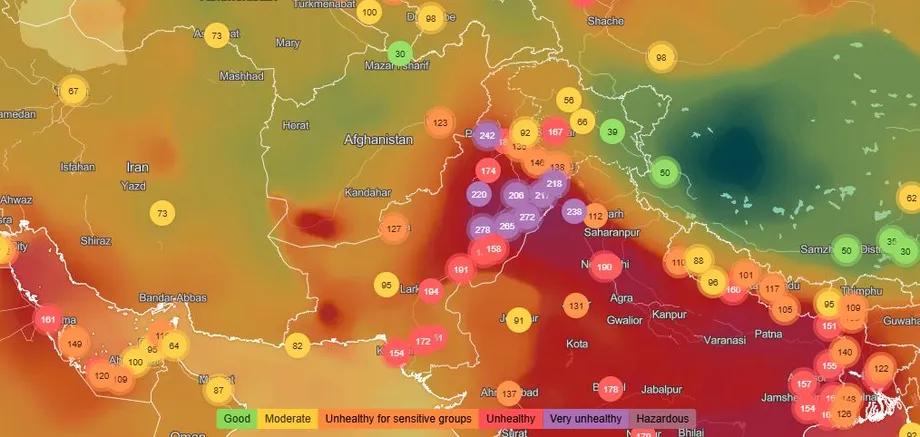
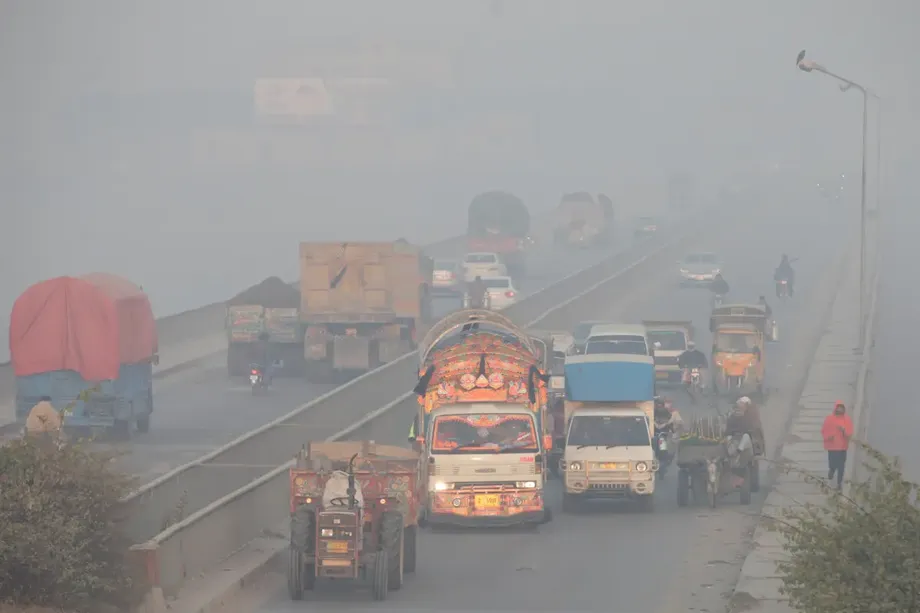
Lahore recorded an Air Quality Index of 535 at 8am on Monday, November 2, 2026, as fine particle pollution reached 343 micrograms per cubic metre. The reading, recorded by IQAir and confirmed by Punjab's Environmental Protection Department, came just days after a month that provincial officials described as the city's cleanest October in five years.
Contents
- Hazardous air returns after a cleaner October
- What the pollution readings mean
- October improved, but pollution stayed high
- Why weather accounted for much of the improvement
- Crop fires clustered around Lahore
- A reversal across the Punjab border
- Transport and industry add to the burden
- What Punjab's enforcement figures show
- Government claims meet a November test
- Key Points
Pollution spread across Punjab rather than stopping at Lahore's boundaries. Gujranwala recorded an AQI of 606 during the morning, while Faisalabad and Multan registered 310 each and Sialkot reached 260. Lahore also topped IQAir's global ranking of major cities during the 9am to 10am period, when Cairo ranked second at 226.
Two sets of findings help explain the sharp deterioration. Satellite observations counted 13,241 fire detections in Pakistani Punjab from October 1 to 29, with about half concentrated in the final seven days. A Pakistan Air Quality Initiative analysis, meanwhile, found that favourable weather accounted for much of Lahore's improvement during October.
For residents, the change meant another period of hazardous exposure while travelling, working outdoors or going about daily routines. PM2.5, the tiny particles behind the readings, can reach deep into the lungs and enter the bloodstream, increasing risks to the lungs and heart.
What the pollution readings mean
IQAir's readings changed during the morning as monitoring updates arrived. Lahore registered 509 in one early snapshot before reaching 535, while Gujranwala subsequently climbed to 675. The changing figures track a moving pollution episode, with conditions varying by hour and location.
AQI turns pollution measurements into a scale intended to communicate health risk. PM2.5 concentration measures the actual mass of fine particles in a cubic metre of air. An AQI of 535 and a PM2.5 concentration of 343 micrograms per cubic metre therefore describe the same episode using different measures.
Pakistan's daily PM2.5 limit is 35 micrograms per cubic metre. Lahore's 8am concentration was about 9.8 times that figure, although the daily standard applies to an average over a full day. The morning reading shows how intense exposure had become at that hour.
Children, older people and people with existing respiratory conditions face particular risks. Outdoor workers and people making long journeys by motorcycle also spend more time breathing polluted air. For these groups, the problem extends beyond a city's position in a global ranking to the amount of pollution encountered throughout the day.
October improved, but pollution stayed high
PAQI compared 26 Lahore monitoring sites that reported on matching days in October 2025 and October 2026. Average PM2.5 fell from 136.3 to 100.1 micrograms per cubic metre, a decline of about 27 per cent. Twenty four of the 26 sites recorded an improvement.
The October 2026 average was also about 18 per cent below the average of 122 micrograms per cubic metre for October during 2020 to 2025. Those figures support the finding that Lahore experienced a relatively cleaner month, even while pollution remained substantial.
Every one of October's 31 days exceeded Pakistan's daily PM2.5 limit, according to PAQI. The monthly average of about 100 micrograms per cubic metre was nearly three times the national daily threshold and about 6.7 times the World Health Organization's daily guideline of 15.
Other Punjab cities experienced similar conditions. Multan's October average was 106 micrograms per cubic metre and Gujranwala's was 105, both higher than Lahore's. Rawalpindi, at 50, had the lowest average among Punjab's six cities with the strongest monitoring coverage, yet its monthly figure also stood above the national daily threshold.
Why weather accounted for much of the improvement
PAQI used a computer model trained on autumn conditions since 2018 to estimate how much weather affected the October comparison. It calculated that October 2026 weather lowered PM2.5 by about 19 per cent compared with the concentration expected under the previous October's weather.
When both months were compared under the same typical weather conditions, the estimated improvement narrowed to about four per cent. That figure combines changes in government measures, agricultural burning and other pollution sources. PAQI did not provide an individual share for each factor.
The largest weather influence came at night. The atmospheric mixing layer, the depth of air available for pollutants to spread through near the ground, averaged 68 metres in October 2026, compared with 43 metres a year earlier. That gave pollution roughly 58 per cent more vertical space in which to disperse.
Weak winds can allow emissions to accumulate, while an atmospheric inversion places warmer air above cooler air near the ground, limiting upward movement. These conditions help explain why air quality can deteriorate rapidly even when the types of pollution sources remain familiar.
Punjab Senior Minister Marriyum Aurangzeb attributed the worsening conditions to weak winds and air currents arriving from India. PAQI's October findings also show why weather matters locally: a deeper layer of air can dilute pollution, while a shallower, less ventilated layer concentrates it where people breathe.
Crop fires clustered around Lahore
An analysis by environmental monitoring organisation HamariHawa counted 13,241 satellite fire detections in Pakistani Punjab between October 1 and 29, compared with 3,158 in Indian Punjab. Pakistani Punjab's total was about 4.2 times as large. Around 92 per cent of its detections were on farmland and were considered likely to involve crop residue burning.
Burning accelerated late in the month. The final seven days accounted for 6,655 detections, just over half the total, and October 29 recorded the highest daily count at 1,327. PAQI also found that the main burning period began about a week later than in 2025, creating the possibility that some seasonal activity had shifted toward November.
Okara recorded 2,144 detections, followed by Gujranwala with 1,011 and Nankana Sahib with 1,003. Together, those three districts accounted for 4,158 detections, exceeding the total for Indian Punjab by 1,000. Other districts with substantial counts included Pakpattan, Sheikhupura, Hafizabad, Dera Ghazi Khan, Kasur, Khanewal and Jhang.
The concentration of fires in Punjab's rice growing areas places agricultural smoke within the wider region affecting Lahore. An airshed is an area whose air moves between communities, carrying pollution across administrative boundaries. Wind direction helps determine which emissions reach a particular city.
The fire analysis used NASA's Fire Information for Resource Management System, drawing on VIIRS instruments aboard Suomi NPP, NOAA-20 and NOAA-21. Each detection marks a location where a satellite observed a fire during a pass. Burned area and smoke volume require other measurements, while clouds, thick smoke and fires occurring between passes can leave gaps in the count.
A reversal across the Punjab border
A comparison using only the Suomi NPP satellite, which provides a consistent basis for examining changes over time, recorded 4,562 detections in Pakistani Punjab and 918 in Indian Punjab from October 1 to 29, 2026. Pakistani Punjab's count was almost five times as high.
The position was reversed in the same period in 2019. Indian Punjab recorded 14,002 detections, compared with 2,908 in Pakistani Punjab. HamariHawa's historical analysis also found that Indian Punjab's detections fell 95 per cent between 2021 and 2025, while Pakistani Punjab's rose 33 per cent between 2019 and 2025.
PAQI's October assessment found about a third fewer crop fire detections than a year earlier across Pakistani Punjab, Indian Punjab and Haryana. A yearly decline can occur alongside a large absolute total and a sharp increase during the closing days of a month, as the October figures illustrate.
HamariHawa used the same method on both sides of the border and checked its Indian Punjab results against official Indian fire counts, finding a strong correlation. It said Pakistan lacked a comparable publicly available official series of daily fire counts. Such a series would give residents and authorities a regular district level record of where burning was occurring.
Transport and industry add to the burden
PAQI's report, Unveiling Pakistan's Air Pollution: A National Landscape Report on Health Risks, Sources, and Solutions, identifies transport as Lahore's largest source of primary PM2.5 emissions. Industry accounts for 28 per cent and brick kilns for 17 per cent. Primary particles are released directly into the air, for example through exhaust or combustion.
Vehicles, factories and kilns therefore remain central to Lahore's pollution problem alongside seasonal agricultural burning. Construction dust, industrial fuel use and waste disposal practices add to the regional burden. Pollution control has to address activities that continue throughout the year as well as the concentrated burning period.
PAQI's national report puts Lahore's annual average PM2.5 above 110 micrograms per cubic metre, more than 22 times the WHO annual guideline of five. The annual guideline concerns exposure over a year, while daily limits address shorter periods of intense pollution.
The initiative estimates that air pollution reduces life expectancy across Pakistan by 3.9 years and contributes to around 128,000 premature deaths annually. For Lahore, it estimates a potential reduction in life expectancy of up to seven years from prolonged exposure. These are population estimates describing the health burden across communities.
PAQI also estimates pollution's economic burden at 6.5 per cent of Pakistan's gross domestic product. Its assessment covers several cities and multiple pollutants, connecting the costs of illness and premature death with the wider need to reduce emissions from transport, industry and other sectors.
What Punjab's enforcement figures show
Punjab's Environmental Protection Agency reported inspecting 11,580 brick kilns between September 28 and October 27. It demolished 197 kilns that violated requirements, sealed 163 units, registered 162 cases and imposed fines totalling Rs40.7 million.
During the same period, the agency inspected 6,650 industrial units, demolished 22 and sealed 191. It issued 333 smog notices, registered 15 cases and imposed Rs28 million in fines. Inspections targeting plastic burning covered 6,064 sites, with 152 sealed and 45,100 kilograms of plastic confiscated.
Another inspection programme examined suction hoods, equipment used to capture polluted air at its source. Of 4,204 facilities inspected, 1,863 had installed the required equipment, about 44 per cent. Authorities sealed 333 sites that failed to meet requirements.
Punjab also deployed 67 Quick Response Units to identify and prevent agricultural fires, supported by drones, night squads and field teams. Construction dust operations covered 397 union councils, with mist sprinklers installed at 49 locations. Anti smog guns were operating at selected locations in Lahore to suppress suspended dust.
In a further enforcement statement, Aurangzeb said three industrial units had been sealed and fined a combined Rs1.6 million. Four brick kilns had been demolished, eight sealed and Rs1 million in fines imposed. She also reported inspections at 178 plastic manufacturing locations, the sealing of 13 sites and confiscation of 613 kilograms of plastic.
The minister said authorities had issued 516,327 warning notices discouraging crop residue burning. These later figures were presented separately from the agency's September 28 to October 27 totals, without a matching reporting period.
Government claims meet a November test
Aurangzeb's October figures put Lahore's average US AQI for PM2.5 at 180.5 in 2026, compared with 204.6 in 2025, 213 in 2024 and roughly 193 to 195 in 2022 and 2023. Her figures also showed a maximum of 262 on October 31, making 2026 the only October in that five year comparison without a reading above 300.
Sajid Bashir, the Environmental Protection Department's official spokesperson, attributed October's improvement to provincial and departmental action while acknowledging that pollution control work was continuing.
"Due to the efforts of the Punjab government and the Environment Department, smog and pollution levels were better this October than last year. We are still working hard to tackle the pollution situation," he said.
PAQI's weather analysis puts that improvement in context: measured pollution fell substantially, while the estimated reduction under comparable weather was much smaller. The practical challenge is to reduce emissions enough for cleaner conditions to persist when winds weaken and pollution becomes trapped near the ground.
The key dates show how quickly the situation changed:
- October 1 to 29: Satellites recorded 13,241 fire detections in Pakistani Punjab, with the largest daily count on October 29.
- October 31: Lahore recorded its highest October AQI of 262 in the figures presented by the provincial government.
- November 1: PAQI issued its Hawanama forecast projecting PM2.5 of 149 micrograms per cubic metre by November 4.
- November 2: Lahore's 8am PM2.5 reached 343 micrograms per cubic metre, with an AQI of 535.
- November 4: The forecast concentration of 149 would be about 49 per cent above October's average.
The November 4 projection concerns conditions later in the week, while Monday's 343 reading captures an earlier hourly spike. Together with the late October fire surge, it points to continued pressure on residents and on enforcement across Lahore's surrounding agricultural and industrial districts.
Key Points
- Lahore recorded an AQI of 535 and PM2.5 of 343 micrograms per cubic metre at 8am on November 2.
- October PM2.5 fell 27 per cent from a year earlier across 26 monitoring sites; PAQI estimated a four per cent improvement after adjusting for weather.
- Lahore exceeded Pakistan's daily PM2.5 limit on all 31 days of October.
- Pakistani Punjab recorded 13,241 satellite fire detections from October 1 to 29, about 4.2 times Indian Punjab's total.
- Transport, industry, brick kilns and agricultural burning all contribute to the regional pollution burden.
- Punjab reported thousands of inspections, closures, demolitions and fines as hazardous air returned in November.