A bigger airline, with changes passengers will notice first
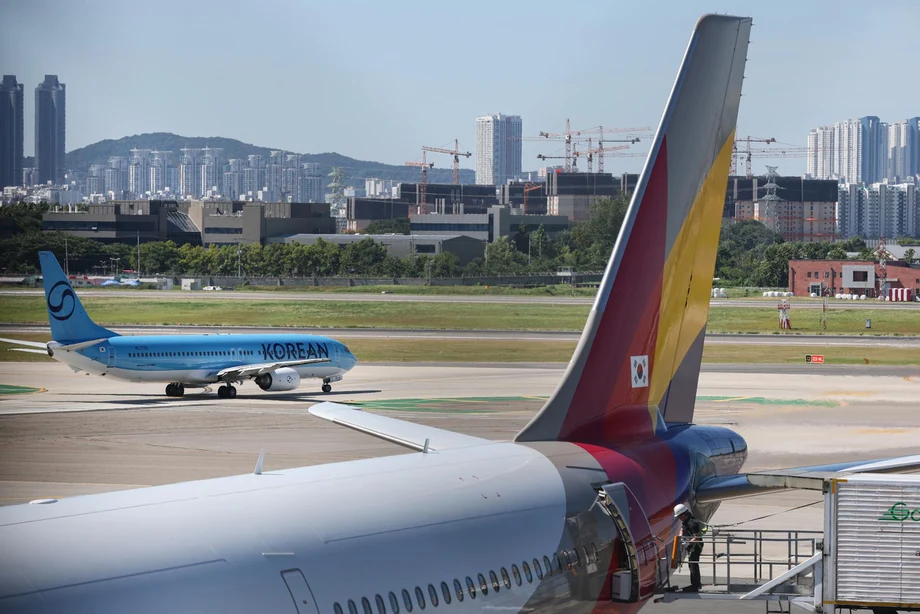
Korean Air and Asiana Airlines are preparing to combine on December 17, 2026, bringing together about 230 aircraft and roughly 28,000 employees while changing how passengers book flights, seek refunds and spend their accumulated miles. The combined airline is expected to generate annual revenue of more than 23 trillion won and aims to rank among the world's 10 largest airlines by international seat capacity.
Contents
- A bigger airline, with changes passengers will notice first
- Reservations move before the launch
- What happens to existing Asiana miles?
- Award seats must meet actual travel benchmarks
- Mileage spending must rise through 2036
- Smaller balances become easier to spend
- Elite members and families retain specific benefits
- Schedules could spread out and some routes could become daily
- Aircraft, maintenance and staff present the next tests
- Key Points
For existing customers, the most immediate changes concern reservations and loyalty accounts. Asiana flights will operate under Korean Air flight numbers, and Korean Air will become the contact for ticket changes and refund inquiries from December 17. Some booking services will pause temporarily while reservation information moves between systems.
Asiana mileage holders will have a longer transition. The Korea Fair Trade Commission's mileage integration decision, approved on September 14, 2026, allows them to keep their existing miles separately for 10 years after the merger and use them across all routes operated by Korean Air.
The regulator also requires measurable increases in mileage use, protections for elite members and stronger access to award seats on popular routes to the Americas, Europe and Oceania. Those conditions address a practical concern: customers need opportunities to spend their miles, as well as an account showing how many they own.
Korean Air completed its acquisition of Asiana on December 12, 2024. The December 2026 launch is the next stage, combining the airlines' operations and customer systems after an acquisition process that began with an announcement in 2020.
Reservations move before the launch
Korean Air began transferring Asiana's domestic flight numbers and reservation information on November 2, followed by international flights on November 4. The work is being carried out in stages ahead of the December launch.
New reservations, booking changes and advance seat selection will be temporarily unavailable during parts of the transfer. Passengers with existing Asiana bookings will therefore encounter changes before the airlines formally become one. The companies plan to provide guidance to reduce confusion, although the duration of individual service interruptions has not been specified.
The main milestones show how the operational change follows a much longer regulatory process:
- 2020: Korean Air announced its plan to acquire Asiana.
- May 9, 2022: The Fair Trade Commission conditionally approved the combination.
- December 12, 2024: Korean Air completed the acquisition.
- September 30 to October 13, 2025: The regulator collected public comments on the proposed mileage arrangements.
- December 10, 2025: The commission reviewed the proposal and required improvements.
- September 1, 2026: Korean Air submitted its final revised mileage plan.
- September 14, 2026: The commission approved the plan.
- November 2 and 4, 2026: Reservation transfers began for domestic and international flights, respectively.
- December 17, 2026: The combined airline and approved mileage arrangements are scheduled to launch.
The two mileage programs will continue operating separately until the integration date. From that date, customers will have both the option to retain Asiana miles under the approved protections and the option to convert them into Korean Air's SKYPASS program.
What happens to existing Asiana miles?
Asiana miles will remain separately managed for 10 years even after Asiana ceases to exist as a corporate entity. Customers who keep them will retain Asiana's existing redemption rules, meaning the number of miles needed for a reward, and its existing expiration rules.
The separate management period lasts a decade, while individual miles remain subject to their original expiry dates. Customers will be able to use retained Asiana miles for award tickets, seat upgrades, payments combining money and miles, and shopping. Flight benefits will extend across all Korean Air operated routes.
Customers who choose conversion must convert their entire Asiana balance. Miles earned by buying and taking flights will become Korean Air miles at a rate of one for one. Miles earned through credit cards and other partners will convert into 0.82 Korean Air miles for each Asiana mile.
For example, 10,000 Asiana miles earned from flying would become 10,000 SKYPASS miles, while 10,000 earned through partners would become 8,200. A customer with both types would have each portion converted at the relevant rate. The different rates reflect the airlines' similar flight accrual rules and a review of the spending needed to earn partner miles.
Conversion can be requested at any point during the decade. Any unconverted miles still valid at its end will automatically move to SKYPASS at the applicable rates. Korean Air plans to introduce a system at launch showing customers their expected mileage balance and membership tier before they convert.
Award seats must meet actual travel benchmarks
The Fair Trade Commission made access to award seats a central condition of approval. An award ticket is a ticket bought with miles, while a mileage upgrade lets a customer use miles to move to a higher cabin.
For 10 years, Korean Air must maintain the number of passengers actually travelling on award tickets and mileage upgrades at or above the airlines' combined 2024 level. Popular routes to the Americas, Europe and Oceania face a higher benchmark: their combined 2023 performance, the highest recorded over the preceding decade.
The regulator chose actual passenger use as a measure of compliance. Korean Air will therefore have to manage its rewards program around benefits that customers redeem and use. The airline may add special flights for mileage bookings during peak periods and on popular routes where necessary to reach the required levels.
Korean Air must also submit annual information on award seat availability during peak travel periods to an implementation monitoring committee. That requirement addresses the risk that additional award seats could be concentrated in quieter months while access during holidays becomes more restricted.
For someone saving miles for a trip to Europe or North America, the practical change is a binding benchmark tied to previous travel on those routes. Seat availability will still depend on the flight and travel date, but the airline must sustain the required volume of reward travel across the covered network.
Mileage spending must rise through 2036
Korean Air faces a second measure alongside award travel: the total number of miles customers use each year. The baseline is the combined mileage redeemed by members of both airlines in 2025.
Annual use must reach 106% of that baseline in 2027 and 2028, 112% in 2029, and 121% in every year from 2030 through 2036. Put simply, the final target is 21% more miles spent each year than the two airlines' customers used together in 2025.
The two measures cover different aspects of the program. Award travel benchmarks track passengers taking flights or upgrades with miles. The annual redemption target tracks the amount of mileage spent across eligible uses, including other ways to use smaller balances.
The commission required revisions because it judged that the merger would weaken the airline's incentive to provide enough attractive redemption options. Its decision said Korean Air would become the only domestic airline operator running such a mileage scheme after the combination.
The final plan followed roughly nine months of negotiations, seven meetings between Korean Air and the regulator, and four rounds of requests for changes. A committee of nine specialists in consumer matters, aviation, competition law and accounting will help monitor compliance over the decade.
Smaller balances become easier to spend
Customers with too few miles for a flight will gain broader payment options. The minimum for payments combining cash or a card with miles will fall from 500 miles to 100 miles. The maximum share of the fare payable with miles will rise from 30% to 40%.
The new minimum is one fifth of the previous threshold, allowing customers to use smaller amounts before they expire. The higher ceiling lets an eligible passenger cover an additional 10 percentage points of the fare with miles.
Korean Air must also double the number of products outside air travel that can be bought for fewer than 2,000 miles. The commission included these changes to reduce the amount of small mileage balances lost through expiration.
These spending options matter alongside award tickets because customers hold very different balances. Someone who travels frequently may seek a long distance upgrade, while an occasional passenger may have only a few hundred miles left. The approved plan provides additional uses for both groups.
Elite members and families retain specific benefits
Asiana's five existing membership tiers will be matched to corresponding Korean Air tiers. Customers who convert their miles will also have their combined records reassessed. If that assessment qualifies them for a higher tier, they will receive it; an assessment producing a lower tier leaves the matched status in place.
Some members with status lasting 24 months receive an additional safeguard. If they meet Asiana's renewal conditions before integration, they can retain the corresponding status for 24 months after their existing expiry date, even when that date falls after the merger.
The commission illustrated the rule with a member whose Asiana Diamond status expires on December 31, 2026. If the member meets the relevant renewal conditions before December 17, the corresponding Korean Air Morning Calm Select status can continue until December 31, 2028. The rule avoids requiring that customer to qualify again in the short period between integration and expiry.
Families keeping Asiana miles will retain Asiana's mileage rates for infants and children. On international flights, an infant younger than two travelling without a separate seat requires 10% of the adult mileage amount.
Children aged two through 12 on domestic flights, and two through 11 on international flights, use 75% of the adult mileage amount. Children travelling alone on either domestic or international services are charged the adult mileage amount. These provisions were included after public comments identified the loss of children's existing rates as a concern.
Schedules could spread out and some routes could become daily
Korean Air and Asiana are reviewing how to combine overlapping routes, spread departure times and redeploy aircraft. The aim is to make the enlarged network more useful, particularly for passengers connecting through Incheon International Airport.
The Incheon to Singapore route offers a concrete example under discussion. One of the flights currently departing at 2 p.m. or 4 p.m. could move to 8 a.m. That would give passengers a morning option and could create different connections with other flights at Incheon.
The airlines are also discussing making some routes daily instead of operating them only two or three times a week. That would mean increasing service to seven departures a week, using aircraft and airport slots reassigned across the combined network. A slot is permission to use an airport's facilities at an allocated time.
The schedule changes remain under internal review, with no final timetable announced. For passengers, their value would come from the specific connections created: a useful departure time, a shorter wait between flights or the ability to travel on a day previously without service.
Fare protections will apply on certain routes for 10 years from merger completion. Under the commission's merger conditions, fares on those routes are constrained by the 2019 average fare adjusted for inflation. The protection is route specific, while the combined airline's broader pricing will remain an important part of the customer experience.
Aircraft, maintenance and staff present the next tests
The combined fleet of about 230 aircraft creates opportunities to coordinate maintenance facilities, spare parts, purchasing and crew training. Shared aircraft planning could also help the airline place capacity where it is most useful across its routes.
Different aircraft types and operating systems make that work demanding. Maintenance standards, parts inventories, pilot qualifications and training procedures all need to fit together while daily flights continue. The launch date marks the start of the combined airline, with substantial operational work continuing afterward.
Approximately 28,000 employees will be part of the enlarged organisation. Pay, benefits and personnel systems need to be reconciled. Pilot seniority, the ordering of pilots by service and rank that affects their working opportunities, is a particular source of potential labour conflict.
Further work includes maintenance infrastructure expansion and the planned combination of associated low cost airline operations. These projects extend the integration beyond reservation screens and the Korean Air name on a ticket.
The first customer tests will arrive sooner: whether bookings transfer accurately, ticket changes and refunds are handled smoothly, and mileage benefits work as promised. The longer test will be whether a larger fleet and network deliver more useful flights while the airline meets the regulator's decade of consumer protections.
Key Points
- Korean Air and Asiana are scheduled to combine on December 17, 2026, with about 230 aircraft and 28,000 employees.
- Reservation transfers began in November, with temporary interruptions to some booking services.
- Asiana miles can remain separately managed for 10 years under existing redemption and expiry rules.
- Flight miles convert one for one; partner miles convert into 0.82 SKYPASS miles each. Voluntary conversion covers the entire balance.
- Award travel must meet historical benchmarks, with higher requirements for popular routes to the Americas, Europe and Oceania.
- Annual mileage use must rise to 121% of the combined 2025 baseline from 2030 through 2036.
- Elite status safeguards, children's redemption rates and more options for small balances form part of the approved plan.
- Proposed schedule changes include wider departure choices and daily service on some routes currently served two or three times weekly.