Annual visitor record falls with two months to spare
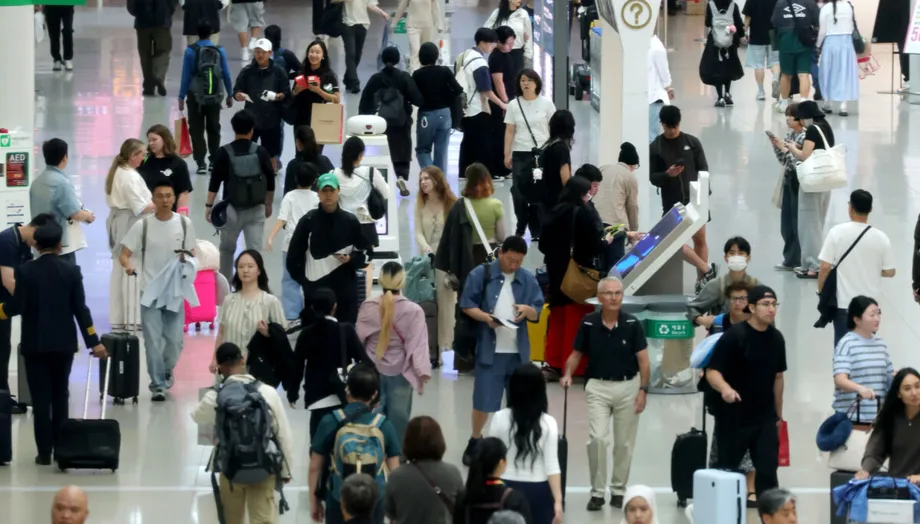
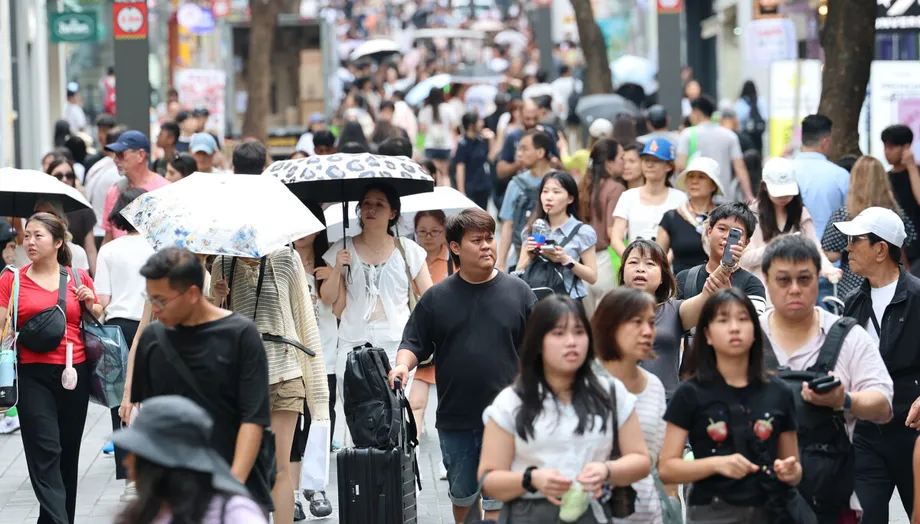
South Korea estimated that foreign tourist arrivals surpassed its previous annual record of 18.94 million on October 27, 2026, more than two months before the end of the year. Spending is growing even faster than visitor numbers, while China, Taiwan, Hong Kong and Macau together account for nearly six in every 10 additional arrivals.
Contents
- Annual visitor record falls with two months to spare
- September figures show the scale of the increase
- Greater China supplies most of the additional visitors
- Other markets grow, but their shares shrink
- How South Korea compares with nearby destinations
- Regional gateways gain ground beyond the capital
- Cruise traffic adds another route into regional tourism
- Card spending rises faster than arrivals
- Government aims to turn the surge into lasting demand
- Key Points
The Ministry of Culture, Sports and Tourism based the milestone on a provisional count of 18.91 million arrivals through October 26 and an average of about 64,000 visitors a day. Another estimate placed the crossing on October 26. The record announcement therefore rests on an estimate rather than a completed count for the day it was reached.
The ministry expects South Korea to pass 20 million annual visitors for the first time in the third week of November. Its target for the end of December is 23 million, about 4.06 million more than the 2025 record, or an increase of roughly 21.4%.
Tourism growth is reaching airports and ports outside the capital region, and foreign visitors are spending more on shopping, accommodation and health and wellness purchases. Yet 71.8% of arrivals still enter through the capital region, leaving a practical challenge: bringing more of that demand to other parts of the country.
September figures show the scale of the increase
The ministry's September tourism update, published on October 22, recorded about 17.11 million foreign visitors during the first nine months of 2026. That was 21.5% above the roughly 14.08 million recorded during the same period of 2025.
September alone brought 2.06 million arrivals, an increase of 21.1% from a year earlier. The monthly total had therefore already passed two million before the annual record announcement later in October.
The detailed January to September figures put the increase at 3,028,166 arrivals, taking the total from 14,082,311 to 17,110,477. Those additional visitors help explain why the government expects to move beyond the previous annual peak well before December.
The main dates and forecasts are:
- January to September 2026: South Korea recorded 17.11 million foreign tourist arrivals.
- October 22: The ministry published its September update and forecast that the annual record would fall during October.
- October 26: The provisional cumulative count reached 18.91 million.
- October 27: The ministry estimated that arrivals had surpassed the previous annual record of 18.94 million.
- Third week of November: The ministry expects cumulative arrivals to exceed 20 million, with about 1.94 million visitors forecast for November.
- End of December: The government is targeting 23 million arrivals.
Greater China supplies most of the additional visitors
China, Taiwan, Hong Kong and Macau together supplied 7,924,120 visitors during January to September, up 29.1% from 6,137,160 a year earlier. The statistics group these four markets under Greater China.
The increase of 1,786,960 arrivals represented 59.0% of South Korea's total growth. All other markets together contributed the remaining 41.0%, or 1,241,206 additional arrivals.
China alone supplied 5,473,078 visitors, up 29.2%. Its increase of 1,236,286 accounted for 40.8% of the entire rise in foreign arrivals. Taiwan grew faster in percentage terms, increasing 32.4% to 1,864,368 visitors.
China and Taiwan together generated 55.9% of the total increase. Hong Kong arrivals rose 18.6% to 546,275, while Macau arrivals increased 27.5% to 40,399.
Greater China's share of all visitors consequently rose from 43.6% to 46.3%. For businesses serving these markets, the numbers point to a larger customer base. For tourism planners, they mean that maintaining growth depends increasingly on demand from this group of markets, even as arrivals from elsewhere also rise.
Other markets grow, but their shares shrink
Japan supplied 3,118,815 visitors to South Korea during the first nine months, an increase of 16.9% from 2,668,523. Its share of South Korea's arrivals nevertheless fell from 18.9% to 18.2%, because total arrivals grew faster.
Europe, the Americas and Oceania followed a similar pattern. Their combined visitor numbers increased 15.1%, from 2,664,903 to 3,066,426, while their share declined from 18.9% to 17.9%. Arrivals from the other Asian markets and the Middle East rose 15.3% to 2,921,595, with their share falling from 18.0% to 17.1%.
Several Southeast Asian markets recorded substantial gains. Arrivals from Indonesia increased 23.4%, the Philippines 15.6%, Thailand 14.3%, Singapore 12.1%, Vietnam 10.6% and Malaysia 7.9%.
South Korea is therefore attracting more visitors across a broad range of places, while the distribution of its visitors is becoming more concentrated. Both developments can happen together: a market can send more tourists than before and still account for a smaller slice of a faster growing total.
How South Korea compares with nearby destinations
South Korea's 21.5% growth during January to September exceeded the rates recorded by Japan, Thailand and Vietnam over the same period. Japan received 30.73 million foreign visitors, down 2.9%, while Thailand received 23.2 million, down 3.8%. Vietnam welcomed 17.68 million, up 14.5%.
Japan and Thailand still received more foreign visitors than South Korea, and Vietnam's total was also slightly higher. South Korea's lead among these four destinations was in the pace of growth.
The two sets of Japanese and Thai figures describe different travel flows. Japanese arrivals in South Korea rose 16.9%, and Thai arrivals in South Korea increased 14.3%. The declines of 2.9% and 3.8% refer to foreign visitors entering Japan and Thailand, respectively.
That matters for understanding the competition. South Korea gained visitors from countries whose own tourism industries were receiving fewer international arrivals, while also narrowing the gap with Vietnam's cumulative total.
Regional gateways gain ground beyond the capital
Airports and seaports outside the capital region handled 4.82 million foreign arrivals during January to September, up from 3.74 million a year earlier. The increase of 1.08 million lifted their share of all arrivals from 26.5% to 28.2%.
The ministry's October 22 update shows that regional airports were growing particularly quickly. They received 3.24 million arrivals, up 37.4%, and accounted for 19.0% of the national total. Regional seaports received 1.58 million, up 14.5%, representing another 9.2%.
Foreign visitors also made 64.72 million visits to destinations outside the capital region, an increase of 19.7% from 54.07 million. These figures come from mobile network data, which count a regional visit when someone stays in an area for at least two hours. A traveler visiting several regions can contribute several visits to that total.
The two measures describe different parts of a journey. Regional entry figures show where visitors arrive in the country. Mobile network figures show where they spend time after arrival, including trips made by people who initially entered through the capital region.
Culture, Sports and Tourism Minister Chae Hwi-young welcomed the regional figures when discussing the record:
It is especially encouraging that the share of arrivals through regional ports of entry and the number of regional visits are both rising. From now on, every day will be a new record for inbound tourism.
Cruise traffic adds another route into regional tourism
Cruise ships brought 1.28 million foreign passengers and crew members to South Korea during January to August, up 12% from a year earlier, according to Korea Tourism Organization figures. Seogwipo, on the southern island of Jeju, accounted for more than half of arrivals by sea during that period.
Chinese citizens represented 57.7% of cruise arrivals, connecting the growth in sea travel with the wider increase in visitors from China. The cruise count includes crew members as well as passengers, and its reporting period ends in August.
Schedules for the fourth quarter included 148 port calls and 638,905 passenger arrivals. The annual cruise total could exceed two million, compared with the previous record of 1.6 million.
Seogwipo's large share shows how a regional port can bring substantial numbers of foreign visitors directly to a destination outside the capital area. Scheduled calls also give local businesses dates around which to prepare for arriving passengers, although the annual total will depend on the sailings that take place.
Card spending rises faster than arrivals
Foreign visitors spent 15.9416 trillion won by card on tourism activities during January to September, according to the ministry. That was up 47.7% from 10.7940 trillion won during the same period of 2025, an increase of 5.1476 trillion won.
The total was the highest for the first nine months of a year since the statistics began in 2018. Spending growth exceeded the 21.5% increase in arrivals by 26.2 percentage points.
Dividing the card spending totals by the arrival totals gives roughly 932,000 won per arrival in 2026, compared with about 766,000 won in 2025, an increase of around 21.5%. This is a broad comparison between two aggregate measures. Actual purchases vary by visitor, length of stay and type of trip, while the spending series covers card payments.
Shopping accounted for 37.0% of spending, accommodation for 19.6%, and medical and wellness services for 16.6%. Together, those three categories represented 73.2% of the total.
The medical and wellness category includes hospitals, pharmacies and cosmetics stores. Its share therefore reflects a range of purchases, from health services to beauty products. For retailers, hotels and businesses in those categories, visitor spending has been growing considerably faster than the number of arrivals.
Government aims to turn the surge into lasting demand
The ministry attributed the increase to the international popularity of Korean culture, efforts by tourism businesses and hospitality toward visitors. It also cited more flights, easier visa rules and stronger coordination through the National Tourism Strategy Meeting, which has been elevated to a presidential body.
Kang Jeong-won, the ministry's director general for tourism policy, said in the October 22 update that efforts to raise awareness of travel to South Korea, improve the travel environment and expand tourism content were producing results. He also announced an upcoming briefing on the year's performance and policy plans for 2027, without giving a date.
The government's stated plans include expanding air services, easing visa issuance, improving transportation and strengthening overseas marketing. Its next ambition is 30 million annual visitors, with preparations for the possibility of 40 million.
For now, November's projected 1.94 million arrivals and the December target of 23 million provide the nearest tests. Regional gateways have increased their share, but the capital region still handles more than seven in every 10 arrivals. Greater China supplies nearly half of visitors, while other markets continue to expand.
Those figures make the next task concrete: provide enough transport and services for rising demand, bring more spending to regional destinations and keep attracting visitors from a wider range of markets.
Key Points
- South Korea estimated that arrivals surpassed the previous annual record of 18.94 million on October 27, 2026.
- January to September arrivals reached 17.11 million, up 21.5% from a year earlier.
- Greater China supplied 46.3% of visitors and 59.0% of the increase in arrivals.
- Regional airports and seaports handled 4.82 million arrivals, raising their share to 28.2%.
- Tourism card spending reached 15.9416 trillion won, an increase of 47.7%.
- The ministry expects arrivals to pass 20 million in November and is targeting 23 million by the end of December.