A brain chemical tracked as a medicine takes effect
A wireless chip implanted in the prefrontal cortex of miniature pigs has tracked a rise in a chemical involved in memory after the animals received donepezil, a drug used to treat Alzheimer's disease. The signal then gradually returned to its starting level, giving researchers a continuous view of the brain's chemical response to the medicine.
Contents
- A brain chemical tracked as a medicine takes effect
- Why researchers followed acetylcholine
- What continuous wireless measurement changes
- How the chip turns chemistry into a readable signal
- A separate mouse experiment tested light stimulation
- Could brain measurements guide the next stimulus?
- How the device could help drug research
- Publication, collaboration and commercialization
- Key Points
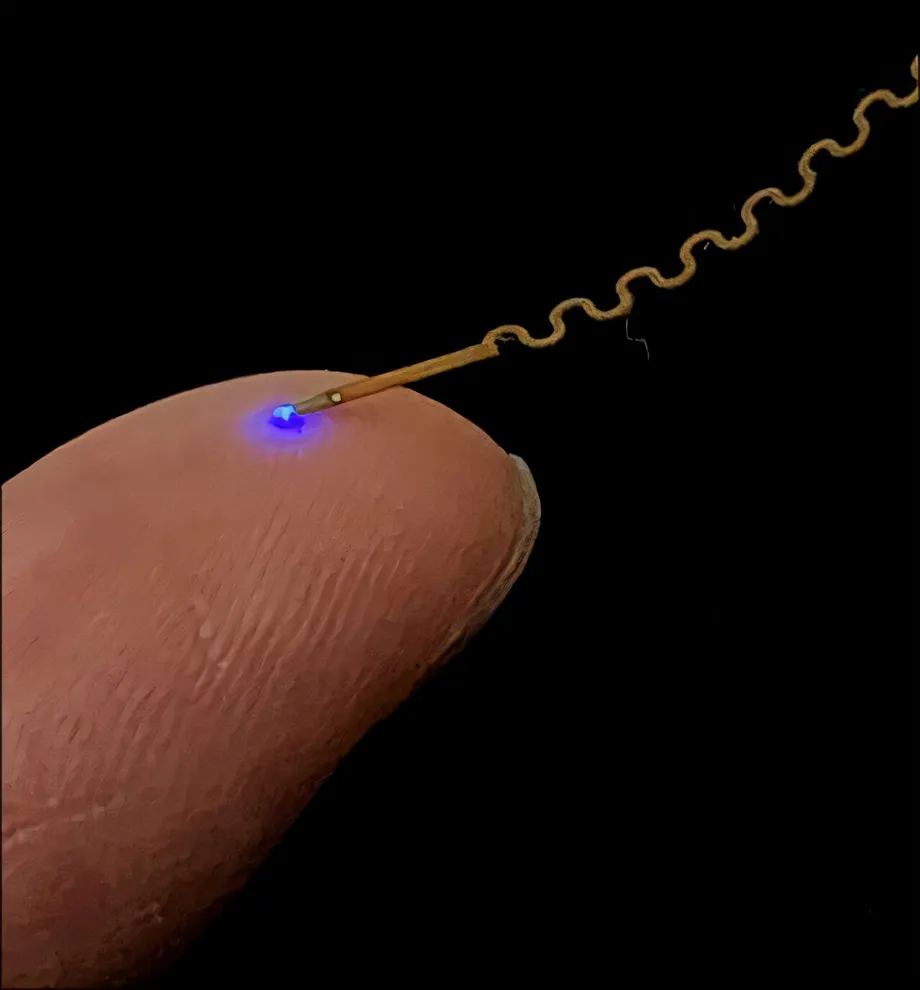
The research, led by Professor Kyung-In Jang of KAIST's Department of Mechanical Engineering, combines an acetylcholine sensor, a tiny light source and wireless measurement electronics. Its purpose is to help scientists follow changes inside a particular brain region as they happen, rather than wait for a later sample or assess a drug mainly through changes in behavior.
The findings were published on October 14, 2026, in Device, a journal published by Cell Press. KAIST announced the work on October 27. Collaborators included the Daegu Gyeongbuk Institute of Science and Technology (DGIST), the Korea Brain Research Institute (KBRI) and the Korea Research Institute of Bioscience and Biotechnology (KRIBB).
The experiments measured chemical responses in animal brains. Assessing benefits for patients would require further research, including tests of whether an implant can remain safe and keep producing reliable measurements over long periods.
Why researchers followed acetylcholine
Acetylcholine is a neurotransmitter, a chemical messenger that carries information between nerve cells. It helps support learning and memory, making it a useful target for researchers studying how medicines affect those functions.
Donepezil acts on acetylcholinesterase, an enzyme that breaks down acetylcholine. By blocking that enzyme, the drug allows the messenger to remain active for longer. Following acetylcholine after a dose gives researchers a way to observe part of that process inside the brain.
The team chose the prefrontal cortex, a region involved in judgment, attention and memory. After implanting the chip and administering donepezil, the researchers recorded an increase in the acetylcholine signal followed by a gradual return toward baseline, meaning the level recorded before treatment.
That changing signal is useful because a medicine's action unfolds over time. A measurement taken at a single moment can capture a rise or a recovery, while continuous recording can show how those stages follow one another.
What continuous wireless measurement changes
Researchers often assess medicines for brain diseases through memory tests, behavior or imaging. Those methods answer different questions from a sensor placed directly in a brain region: they can track performance or broader activity, while the chip follows a particular chemical response at its implantation site.
Direct sampling of fluid from the brain can take several minutes or more for each sample. The new device was used to follow changes second by second, offering a more detailed record of a signal that changes over short periods.
A miniaturized circuit processes the measurements and sends them by Bluetooth to an external device. This allows researchers to receive the readings without a data cable tethering the animal to recording equipment.
Miniature pigs were used because their brains are closer in size and structure to human brains than those of rodents. KRIBB supplied the animals and supported the surgical procedures, contributing the facilities and expertise needed for this part of the work.
How the chip turns chemistry into a readable signal
Acetylcholine needs to be converted into something the chip's electronics can measure. The sensor uses enzymes to trigger chemical reactions that produce hydrogen peroxide. An electrode then converts that reaction product into an electrical current.
The sensing layer combines porous chitosan with extremely thin silver and platinum nanowires. Chitosan is a material that can be obtained from the shells of crustaceans such as shrimp and crabs. Its many small pores provide a large surface on which the detecting enzymes can attach.
The nanowires help turn the hydrogen peroxide produced during the reaction into an electrical signal. Together, the porous material and the conductive wires connect a chemical event in the brain to a measurement that electronic equipment can record.
Other molecules in the brain can also generate signals at an electrode. To reduce that interference, the thin probe has an electrode coated with enzymes on one side and an electrode without enzymes on the other.
The system compares the two readings and subtracts the signal shared by them. This helps separate changes associated with acetylcholine from background chemical activity. The resulting measurements pass through the small circuit before being transmitted outside the animal.
A separate mouse experiment tested light stimulation
The chip also contains a micro light emitting diode, or micro-LED, that can deliver light inside the brain. Researchers tested this component in a separate experiment involving transgenic mice, with KBRI supporting the surgeries and experiments.
These mice had nerve cells engineered to respond to light. The technique, called optogenetics, allows scientists to activate selected cells with illumination rather than relying only on electrical stimulation.
When the researchers switched on the chip's light source, they recorded an increase in the acetylcholine signal. This showed that the same device could provide a stimulus and detect the associated chemical response.
The work therefore involved two distinct experimental steps: tracking the response to donepezil in miniature pigs, and tracking the response to light in genetically modified mice. Each tested a different function of the combined device.
Could brain measurements guide the next stimulus?
Jang and his colleagues see the combination of sensing and stimulation as a starting point for a closed loop neural interface. In plain language, that means a system that measures a response and uses the result to decide what to do next.
A future version could detect a chemical change after stimulation, then adjust the timing or strength of the next stimulus. Building the sensor and light source into one device provides a way to investigate that process.
Jang, the KAIST professor who led the research and served as the paper's corresponding author, described the goal:
This study lays the groundwork for technologies that monitor changes in the brain and adjust stimulation based on its response,
The present work provides an experimental foundation for that approach. Developing a system that reliably chooses and delivers stimulation in response to a changing brain signal would require further testing.
How the device could help drug research
Researchers could use continuous acetylcholine recordings to compare what happens after different doses of a medicine or different intervals between doses. Rather than recording only whether a signal increased, they could examine when it rose, how it changed and when it returned toward its starting level.
Those measurements could help connect a treatment schedule with a chemical response in a selected brain region. They could also be considered alongside behavioral tests and other measurements when researchers investigate how a medicine acts.
The research leaves several practical questions for future development, including safety during prolonged implantation and the stability of readings over time. For scientists comparing experiments conducted days or weeks apart, a sensor must keep measuring consistently enough for those comparisons to be useful.
For people living with Alzheimer's disease, the immediate development is a research tool. Human use would require further validation, and no date for a human trial was announced.
Publication, collaboration and commercialization
The study brings together engineering, chemical sensing and animal experiments across four South Korean institutions. DGIST researchers Son Ji-eun, Oh Se-hyeok and Ha Jeong-dae were joint first authors, while Jang was the corresponding author responsible for communication about the paper.
The publication and announcement followed this schedule:
- October 14, 2026: Device published the study on the implantable chip and its animal experiments.
- October 27, 2026: KAIST announced the research and its plans for further development.
The paper is titled "Implantable neural chip with electrochemical sensing and optogenetic stimulation for monitoring of cholinergic pharmacological responses." Its DOI is 10.1016/j.device.2026.101329. In the title, electrochemical sensing refers to turning chemical reactions into electrical measurements, while cholinergic refers to signaling involving acetylcholine.
The team plans to pursue commercialization through N-Side Inc., a faculty founded startup led by Jang. Turning the experimental device into a dependable research product will require attention to the same issues that matter in the laboratory: safe implantation and measurements that stay reliable.
Key Points
- A KAIST led team used an implanted wireless chip to follow acetylcholine signals after giving donepezil to miniature pigs.
- The signal increased after treatment and then gradually returned toward its starting level.
- The device combines chemical sensing, a tiny light source and Bluetooth transmission.
- A separate experiment in genetically modified mice recorded increased acetylcholine signals after light stimulation.
- Potential uses include comparing drug responses and developing stimulation that adjusts to measured brain activity.
- Further testing must assess prolonged implantation safety and measurement stability before human use.