A US$200 Million Deal With Most Payment Deferred
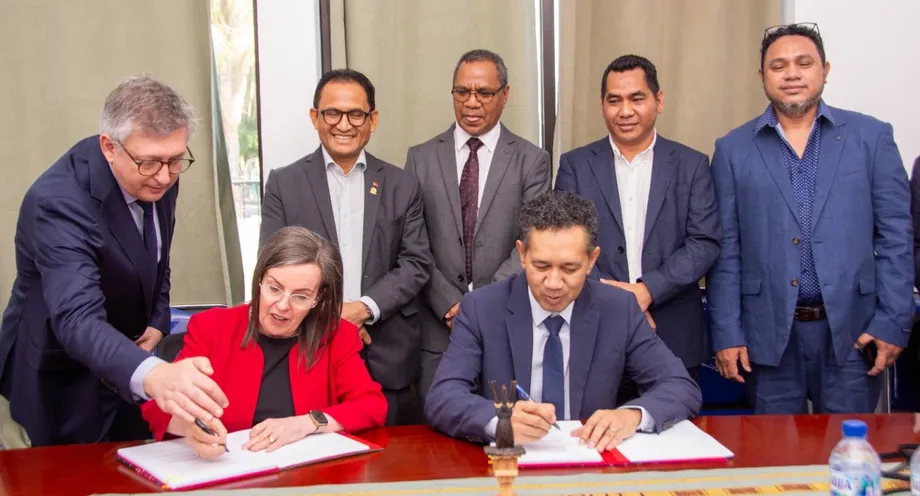
Timor-Leste's national petroleum company, Timor GAP, signed an agreement on 27 October 2026 to buy Woodside Energy's entire 33.44% interest in Greater Sunrise for up to US$200 million. Just US$13.71 million is payable when the sale closes. The largest payment, US$175 million, depends on the project reaching its first cargo of liquefied natural gas.
Contents
The agreement moves Timor-Leste toward full ownership of a resource discovered in 1974, after more than five decades without production. Combined with a separate agreement to acquire Osaka Gas's 10% interest, the purchase would put the Sunrise and Troubadour fields entirely under Timor GAP's control once both transactions are completed.
Woodside and Timor GAP are targeting completion of their transaction in the first half of 2027, subject to government, regulatory and joint venture approvals. Woodside would then leave the Sunrise Joint Venture after more than 25 years of involvement.
For Timor-Leste, the purchase strengthens its ability to pursue a pipeline to Natarbora on the country's southern coast, where it wants an LNG development to support industry, jobs and export earnings. For Woodside, it ends its ownership of an asset held back by prolonged disagreements over where to process the gas and how to organise its development.
The immediate change is control over the project. The larger task is finding the money, completing the design and building the facilities needed to turn gas beneath the Timor Sea into a product customers can buy. An independent assessment in 2018 estimated development costs at US$15.6 billion, giving a sense of the scale beyond the stake purchase.
How the Three Payments Work
Timor GAP's purchase price is divided into three stages, each tied to a different point in the transaction or the development:
- US$13.71 million at completion of the stake sale.
- US$11.29 million within 30 days after a final investment decision.
- US$175 million within 365 days after loading begins for the first LNG cargo ultimately intended for sale to a customer.
A final investment decision, usually shortened to FID, is the formal commitment to fund and proceed with a project. It comes after developers have worked through matters such as engineering, costs, financing and commercial arrangements.
The payment schedule leaves 93.1% of the maximum purchase price dependent on development milestones beyond the sale itself. The first cargo payment alone accounts for 87.5% of the total. Woodside would therefore receive most of its potential proceeds only after Greater Sunrise has advanced far beyond its present stage.
Timor GAP gains a smaller initial payment than the headline price suggests, while taking responsibility for advancing a much larger undertaking. Woodside retains a financial interest in the project's eventual progress through the conditional payments, even though it will hold no participating interest after completion.
What Timor GAP Is Buying
The agreement covers Woodside's interests in Retention Leases NT/RL2 and NT/RL4 and Production Sharing Contracts JPDA 03-19 and JPDA 03-20. These are the petroleum titles and contracts associated with its Greater Sunrise stake.
A participating interest is a company's ownership share in a petroleum venture, carrying rights and obligations under the venture's arrangements. A production sharing contract sets out how petroleum production and related responsibilities are allocated between the public authority and the companies developing the resource.
Timor GAP held 56.56% before the two purchases. Acquiring Osaka Gas's 10% would bring that holding to 66.56%; adding Woodside's 33.44% would bring it to 100%. The Osaka agreement was announced on 2 September 2026, ahead of the Woodside deal.
Full ownership would bring decisions previously negotiated among three commercial partners into a single national company. Timor GAP would also carry the responsibility for assembling the technical, commercial and financial arrangements needed to move the project forward.
Why the Pipeline Destination Matters
Greater Sunrise lies approximately 150 kilometres southeast of Timor-Leste and 450 kilometres northwest of Darwin, in Australia's Northern Territory. For years, Dili has wanted the gas brought to its southern coast, while Woodside favoured a connection to processing facilities in Darwin.
Timor GAP now plans to advance a pipeline to Natarbora and the Timor LNG development concept. LNG is natural gas cooled until it becomes liquid, making it compact enough to transport in specialised ships. Developing that export route requires facilities on land as well as equipment and pipelines offshore.
Timor-Leste's goal extends beyond revenue from selling gas. Bringing processing facilities ashore could create demand for construction workers, technicians, transport services and local suppliers. Those are the kinds of economic activity the government wants to build along the southern coast.
The maritime boundary agreement with Australia also connects the processing destination to the division of revenue between the countries. Timor-Leste receives 70% of the relevant upstream revenue if the pipeline goes to Timor-Leste, or 80% if processing takes place in Darwin. Upstream activity means extracting the petroleum before later processing and sale.
The difference is 10 percentage points. Dili's preference for domestic processing reflects its pursuit of industrial activity and employment alongside its treaty revenue share. Full commercial ownership would give Timor GAP greater control over the development proposal, while the treaty arrangements between Australia and Timor-Leste continue to govern their respective roles and revenue entitlements.
A Large Resource With a Much Larger Funding Task
Timor GAP puts Greater Sunrise's contingent resources at about 5.1 trillion cubic feet of gas and 226 million barrels of condensate. Condensate is a light liquid hydrocarbon recovered alongside natural gas that can be sold as a separate petroleum product.
Contingent resources are quantities considered potentially recoverable but still dependent on conditions being met before commercial development can proceed. For Greater Sunrise, the next steps include selecting and designing the development, securing financing and completing the necessary legal and commercial arrangements.
The US$15.6 billion development estimate from 2018 was 78 times the maximum US$200 million price for Woodside's stake. The figures cover different things: one concerns building a development, while the other concerns purchasing a 33.44% interest. Together, they show why financing construction is a far larger undertaking than paying for this acquisition.
The 2018 estimate is also eight years old. No updated construction budget, final investment decision date or first cargo date accompanied the sale announcement. Those milestones will determine when Timor GAP must make the later purchase payments and when the country could begin receiving new production revenue.
Timor-Leste's economic position gives the timetable added weight. Its Greater Sunrise development ambitions were already central to national investment plans in November 2025, when the Petroleum Fund was estimated at nearly US$20 billion and the previous gas producer, Bayu-Undan, had ceased output. At that time, continued dependence on fund withdrawals was associated with a risk of depletion around the mid-2030s without new petroleum revenue.
The Legal Framework Is Moving Alongside the Sale
Woodside linked its decision to sell with progress in August on the key principles for a new Greater Sunrise Production Sharing Contract and the associated fiscal framework. These arrangements concern the commercial rules and taxes under which development would proceed.
Further progress followed in September. At a meeting in Dili on 25 September, Timor-Leste's government received an update on technical agreement covering three instruments: the Petroleum Mining Code, the Production Sharing Contract and the Fiscal Regime.
The September technical agreement moved those documents toward approval within both countries. Timor-Leste's process was expected to involve the Council of Ministers and then the National Parliament, while Australia would follow its own government procedures.
The three instruments serve different purposes. The mining code provides rules for petroleum operations. The production sharing contract governs the relationship between the authorities and the contractor. The fiscal regime addresses taxation and other financial obligations.
The approval process was estimated in September to take about three months, pointing to around December 2026 if that schedule holds. Work on selecting a single development concept and detailed design was expected to become a focus in 2027. These government processes run alongside the approvals needed to complete Woodside's sale.
Why Woodside Is Leaving
Woodside presented the transaction as a decision about where to place its money and management attention. Chief executive Liz Westcott said the company recognised Greater Sunrise's potential benefits while choosing to concentrate on opportunities offering the greatest value to shareholders.
Westcott described the timing of the sale in relation to the negotiations over the project's commercial and tax rules:
"Reaching alignment on the key principles underpinning a new Greater Sunrise Production Sharing Contract and associated fiscal framework in August provides an appropriate point for Woodside to sell its participating interest to TIMOR GAP," she said.
Woodside said it would work with Timor GAP, Osaka Gas and both governments to support an orderly transition and preserve progress on future development. Its exit transfers its ownership role to a company whose national development objectives place particular weight on bringing gas ashore in Timor-Leste.
For Dili, the acquisition combines opportunity with responsibility. A single owner can pursue a more unified commercial position, but Timor GAP must still turn that position into engineering plans, financing and construction. The payment structure gives the company time before most of the purchase price becomes due, while leaving the much greater development bill to be addressed.
The Dates That Shape the Next Steps
Greater Sunrise's history stretches from discovery in the 1970s to a proposed ownership transfer in 2027. The latest agreements bring several commercial and government processes together:
- 1974: The resource was discovered.
- 2018: An independent assessment estimated development costs at US$15.6 billion.
- August 2026: Alignment was reached on key principles for a new production sharing contract and fiscal framework.
- 2 September 2026: Timor GAP announced an agreement to acquire Osaka Gas's 10% interest.
- 25 September 2026: Officials discussed technical agreement on the mining code, production sharing contract and fiscal regime.
- 27 October 2026: Timor GAP signed the agreement to acquire Woodside's 33.44% interest.
- Around December 2026: The earlier estimate for government consideration of the three framework documents points to this period.
- First half of 2027: Woodside and Timor GAP aim to complete their transaction.
The immediate checkpoints are approval of the project framework and completion of the ownership transfers. Timor GAP's next commercial task is to advance its preferred development concept toward the investment decision that would trigger the second payment to Woodside.
For people on Timor-Leste's southern coast, the promised benefits depend on the project reaching construction and operation. The October agreement gives their national petroleum company a route to full control of Greater Sunrise; delivering jobs, business opportunities and export income will require the larger development to follow.
Key Points
- Timor GAP agreed to buy Woodside's 33.44% Greater Sunrise interest for up to US$200 million.
- US$13.71 million is payable at completion, with the remaining payments tied to an investment decision and the first LNG cargo.
- The Woodside and Osaka Gas acquisitions would give Timor GAP 100% ownership once both are completed.
- Timor GAP favours a pipeline to Natarbora and LNG development on Timor-Leste's southern coast.
- Woodside's sale is targeted for completion in the first half of 2027, subject to approvals.
- An updated construction budget and dates for an investment decision and first cargo have not been announced.