
Nearly $19 billion in savings, with pressure to spend less
Timor-Leste is reviewing how to protect a Petroleum Fund worth nearly US$19 billion after an international seminar in Bangkok on October 6 and 7, 2026, brought renewed calls for tighter fiscal discipline. Finance Minister Santina Cardoso said the fund provides about 80% of state budget financing, making its survival a question of public spending and economic development as much as investment performance.
Contents
- Nearly $19 billion in savings, with pressure to spend less
- What the Bangkok discussions covered
- How the sustainable income rule works
- Budget dependence is high across several measures
- Why depletion forecasts differ
- The transition after Bayu-Undan
- Greater Sunrise is not assured budget revenue
- Spending quality matters alongside spending limits
- What a gradual fiscal transition must resolve
- Key Points
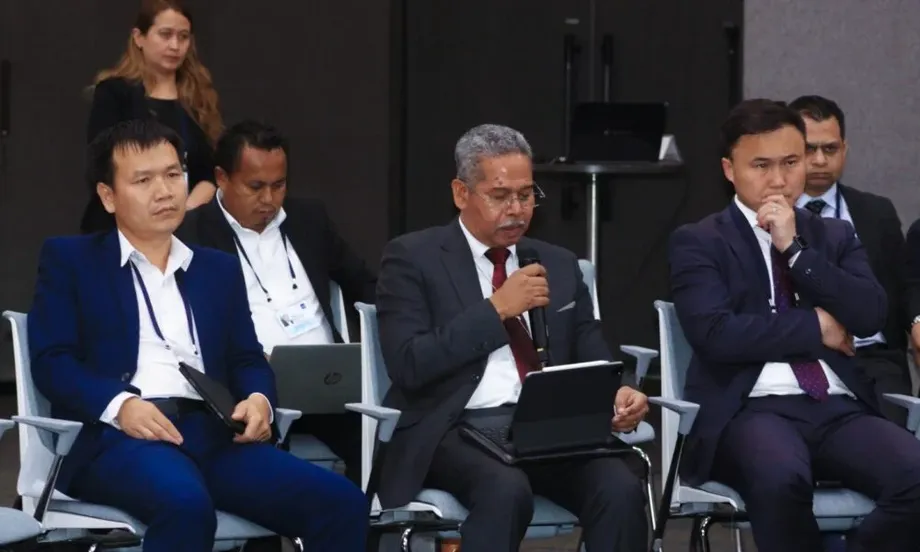
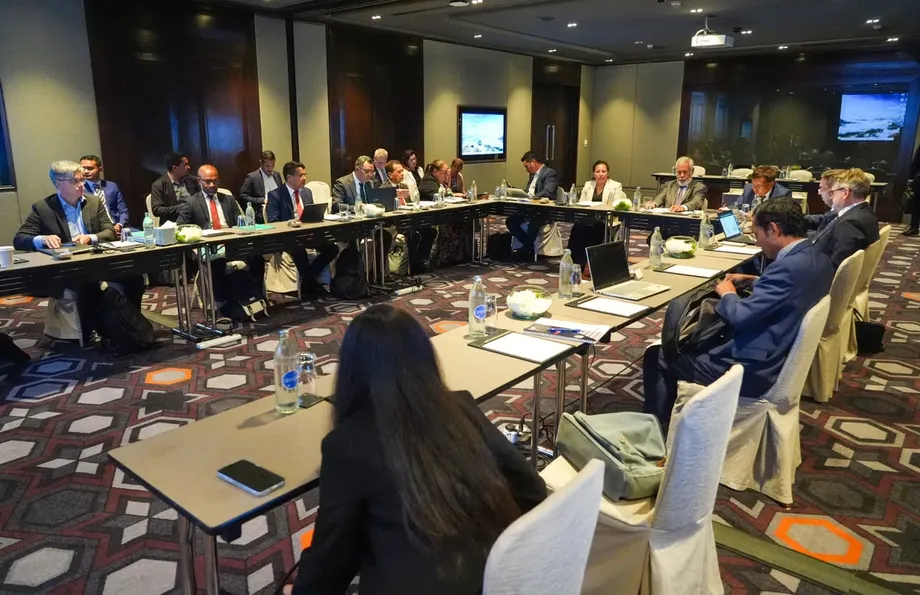
The Petroleum Fund Consultative Council recommended more prudent and disciplined management to preserve public finances and resources for future generations. Prime Minister Xanana Gusmão joined the meeting, organized by the Ministry of Finance and the Central Bank of Timor-Leste (BCTL) during his official visit to Thailand.
The warning has a concrete official benchmark. The explanatory memorandum accompanying public debt amendment proposal PPL No. 30/VI(3.ª), published through the National Parliament, says the Finance Ministry estimates that the fund could be entirely exhausted by 2037 if withdrawals continue at the same level. The proposal would amend Law No. 13/2011 of September 28, governing public debt.
Cardoso nevertheless said the fund was performing better than earlier projections: petroleum receipts and investment earnings had exceeded expectations, while withdrawals had been lower than forecast. That leaves the government with two facts to reconcile. Its financial reserve is stronger than anticipated, yet spending has exceeded the sustainable withdrawal benchmark for years.
The Bangkok discussions did not announce a new withdrawal ceiling, an adopted investment allocation or a timetable for fiscal changes. Instead, the government said it was examining options for a gradual transition guided by the fund's existing rules and principles.
What the Bangkok discussions covered
The first day examined fund sustainability, projects financed through its resources, their contribution to the fund's objectives and fiscal strategy. The second day focused on investment management, risk and returns. Together, those subjects connect decisions about the financial portfolio with decisions about how much the state spends.
Cardoso called for further studies and updated economic models to support preparation and execution of the State General Budget. The Consultative Council also examined investment performance, annual public expenditure and the effect of budget execution on fund income. Its advice included options for better management, rather than simply identifying risks.
Experts from Australia and Norway shared experience in sovereign fund management and financial sustainability. Participants also exchanged experience with specialists and institutions from Thailand and Bank Negara Malaysia. Presentations addressed national investment priorities and ways to mobilize capital for development over the longer term.
The delegation included Deputy Prime Minister Mariano Assanami Sabino, Vice Minister for ASEAN Affairs Milena Rangel, Timor-Leste's ambassador to Thailand and Prime Minister's Chief of Staff Elizabeth Exposto. Their attendance placed the technical discussion alongside broader government decisions about development and regional engagement.
How the sustainable income rule works
The Petroleum Fund profile published by the International Forum of Sovereign Wealth Funds explains the legal framework. The fund was established under Law No. 9/2005 of August 3, later amended by Law No. 12/2011 of September 28. It gives effect to Article 139 of the Constitution, which requires equitable use of natural resources and a financial reserve from their exploitation.
The fund is a Ministry of Finance account held at BCTL. Petroleum income enters it before transfers are made to the state budget. Those transfers are guided by Estimated Sustainable Income (ESI), set at 3% of total petroleum wealth.
Petroleum wealth includes both the fund balance and the present value of expected future petroleum revenue. Present value expresses what future receipts are worth today. The benchmark is therefore not simply 3% of the cash and investments currently in the fund.
For scale, 3% of a $19 billion balance is $570 million. That calculation is an illustration, not an official ESI estimate, because the legal formula also includes expected future receipts. The distinction matters when comparing the fund's size with budget demands.
The fund invests only in international financial assets, with an objective of earning a 3% real return over the long term. A real return measures gains after inflation. The investment target and the withdrawal benchmark both use 3%, but serve different purposes: one concerns portfolio performance, while the other guides sustainable spending.
The institutional profile also acknowledges that pursuing investment returns requires accepting fluctuations over shorter periods. A strong market year can improve the balance without establishing that the same withdrawal rate will remain affordable through weaker years.
Budget dependence is high across several measures
The public debt proposal says the Petroleum Fund regularly financed more than 70% of state budget expenditure over the past decade. It links that dependence to withdrawals above ESI and argues that budget revenue sources must be diversified.
Cardoso's figure of about 80% describes the financing dependence discussed at the Bangkok seminar. Former finance minister Rui A. Gomes, who held office from 2018 to 2023, estimates that fund transfers financed about 73% of the 2025 budget. These figures refer to different periods and formulations, so they should not be treated as an exact series showing a seven percentage point increase.
Gomes places the start of repeated withdrawals above sustainable income in 2008. In a January 2025 analysis, Deakin University emeritus professor Damien Kingsbury similarly says sustainable withdrawals were exceeded almost every year from 2008–09. His analysis puts withdrawals in 2023 at 88% of gross domestic product (GDP).
Budget share and GDP share measure different things. The first indicates how much government financing depends on the fund; the second compares withdrawals with the size of the economy. Both point to heavy dependence, but the percentages cannot be substituted for one another.
Gomes gives the initial 2026 budget as $2.29 billion, compared with $2.6 billion in 2025. That is a reduction of $310 million, or about 12%. A further $101.1 million was approved in June 2026, principally to respond to higher international fuel prices. The initial reduction therefore did not remove the need for additional financing during the year.
Why depletion forecasts differ
The Finance Ministry's 2037 estimate in the public debt proposal is conditional on maintaining the same level of withdrawals. A separate account of Gomes's assessment places the risk around 2034 if withdrawals above ESI persist. Kingsbury's January 2025 analysis projected exhaustion in the second half of the following decade if spending continued at the same level.
These are different estimates, not an agreed expiry date. The 2034 and 2037 projections are three years apart, and their underlying assumptions are not set out in enough detail to reconcile them. Investment returns, spending, inflation and future petroleum receipts all affect how quickly the reserve could decline.
Gomes reports a balance of about $18.75 billion in May 2026, while the Bangkok accounts describe nearly $19 billion in October. Those figures concern different dates and use different degrees of rounding. They do not establish a precise increase between May and October.
His account also gives a balance of approximately $18.3 billion at the end of 2024 and an investment return of 6.8% that year, following 9.99% in 2023. He argues that budget transfers absorbed a substantial part of the investment gains.
Cardoso's statement that results exceeded projections is compatible with that concern. A fund can outperform a forecast and still face eventual depletion if withdrawals keep consuming its assets. Better results provide more room for adjustment; they do not by themselves demonstrate that current spending is sustainable.
The transition after Bayu-Undan
The end of commercial production at Bayu-Undan changed the financing equation. Gomes dates that event to June 4, 2025, and describes the subsequent period as a shift away from current petroleum earnings toward reliance on the fund's investment income and accumulated assets.
There is a difference in how the chronology is described. Kingsbury's January 2025 analysis referred to Timor Sea oil fields as no longer producing income, whereas Gomes identifies June 2025 as the end of Bayu-Undan commercial production. Those statements should not be read as establishing an identical cutoff date for all petroleum receipts.
The main milestones show how the present debate developed:
- 2005: Timor-Leste established the Petroleum Fund and its framework for preserving petroleum wealth.
- 2008–09 onward: Withdrawals exceeded the sustainable benchmark in most years, according to Gomes and Kingsbury.
- 2024: Timor GAP acquired a 16.74% interest in the Bayu-Undan consortium, according to Gomes.
- June 4, 2025: Bayu-Undan commercial production ended, according to Gomes.
- June 2026: A $101.1 million budget increase was approved.
- October 6–7, 2026: The Bangkok seminar examined fiscal sustainability and investment strategy.
Gomes also describes a possible new use for Bayu-Undan through carbon capture and storage. The proposed project could store about 10 million tonnes of carbon dioxide annually, but its viability depends on a final investment decision and contracts. Potential storage capacity is not the same as secured government income.
Greater Sunrise is not assured budget revenue
Greater Sunrise remains central to expectations of future petroleum income. Kingsbury's analysis says Timor-Leste holds a 56.6% stake in the project and describes a dispute over whether gas should be processed in Australia or at a proposed facility on Timor-Leste's southern coast.
The analysis gives Timor-Leste's upstream revenue share as 80% if processing occurs in Australia and 70% if it occurs in Timor-Leste. Those revenue allocations are distinct from the ownership stake. Kingsbury also describes a late 2024 Australian offer to raise Timor-Leste's share of receipts to 90%, with Australia's share supporting a dedicated development fund.
The figures describe arrangements and an offer discussed at that time, not a confirmed outcome from the Bangkok seminar. Kingsbury says the project remained stalled at the end of 2024; Gomes also describes it as lacking a definitive decision in his later assessment.
Gomes cites government projections of more than $78 billion in taxes and royalties from Greater Sunrise. Kingsbury's analysis refers to more than $33 billion worth of gas. These numbers measure different things and are not directly comparable. Neither is equivalent to money already available for annual budget spending.
The practical issue is timing. New petroleum projects may eventually produce revenue, but the fiscal transition has to manage withdrawals before any such income arrives. No confirmed production date or final investment decision is identified in the accounts of the seminar.
Spending quality matters alongside spending limits
The World Bank's February 13, 2025 public spending report, titled Timor-Leste Economic Report: Transforming Public Spending to High Growth, provides a measure of the development challenge. Public expenditure averaged 85% of GDP between 2013 and 2023, while annual GDP growth averaged 1.3%.
The report also says 42% of the population lived below the national poverty line. Kingsbury's academic analysis gives other measures: more than a quarter in absolute poverty, almost half in multidimensional poverty and almost half of children under five experiencing stunting. Different poverty definitions and reference periods mean these figures are not interchangeable.
Bernard Harborne, the World Bank's country representative for Timor-Leste, called for spending that delivers stronger economic results:
Timor-Leste is at an important juncture. To create jobs and boost growth, the country is encouraged to improve the efficiency of spending and diversify its economy.
The World Bank recommends moving toward compliance with ESI over time, improving tax collection and redirecting resources from ineffective programs toward infrastructure, education and health. It also calls for better procurement, stronger public investment management and fewer project delays.
These recommendations give substance to Cardoso's argument that sustainability is also a development issue. Reducing withdrawals protects the reserve, while making spending more effective can strengthen the economy and its ability to generate revenue outside petroleum.
What a gradual fiscal transition must resolve
The government says it wants fund resources to support productive sectors, diversify the economy and reduce petroleum dependence. Gomes's figures illustrate the scale of that task: non petroleum exports were about $35 million to $36 million, compared with roughly $900 million in annual imports of essential goods. On those figures, imports were about 25 to 26 times the value of non petroleum exports, although the two categories are not a complete trade balance.
The public debt amendment proposal identifies Treasury bonds and Treasury bills as possible financing instruments and says successive governments have intended to issue them. These are forms of borrowing. They can diversify financing sources, but must be repaid and cannot replace the need for stronger recurring revenue.
Governance details also require care. BCTL Governor Hélder Lopes described an Investment Council advising the finance minister, with three BCTL experts and an annual workshop. Cardoso described Consultative Council seminars normally held twice a year, once domestically and once abroad. The accounts use different council names and meeting frequencies; they do not establish that these descriptions concern exactly the same body or schedule.
The next substantive decisions concern the pace of withdrawal reductions, the spending to protect, domestic revenue measures and investment risk. No deadline for adopting a revised strategy, issuing Treasury securities or reaching a new sustainable withdrawal path was announced in the seminar accounts.
The central choice is already defined: use the stronger than expected balance to support a managed transition, while avoiding the assumption that market gains or unconfirmed petroleum projects will indefinitely cover budget needs.
Key Points
- Timor-Leste's Petroleum Fund was reported at nearly $19 billion during the October 6–7, 2026 Bangkok seminar.
- Finance Minister Santina Cardoso said it provides about 80% of state budget financing.
- The Consultative Council recommended greater discipline, while the government reviews a gradual fiscal transition.
- A public debt proposal cites a Finance Ministry estimate of depletion by 2037 if withdrawals remain unchanged; a separate assessment places the risk around 2034.
- Estimated Sustainable Income is 3% of total petroleum wealth, including expected future petroleum receipts.
- The World Bank recommends better spending, stronger tax collection and gradual compliance with the sustainable income rule.
- No new withdrawal ceiling, reform deadline or confirmed Greater Sunrise production date was announced in the seminar accounts.