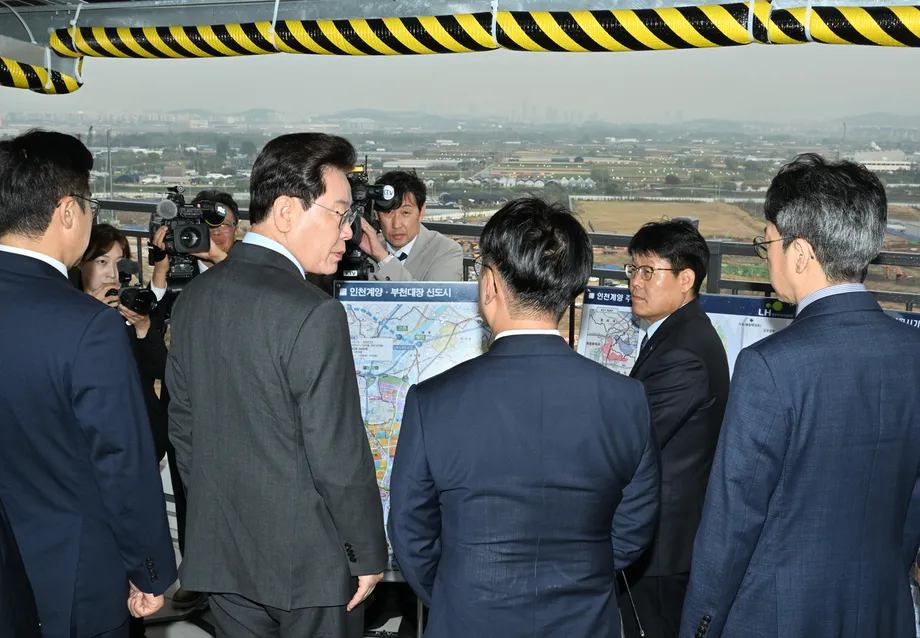
336 contracts put public research spending under scrutiny
South Korea's government funded research institutes awarded 336 contracts worth 12,064,750,000 won to companies founded by their researchers between 2022 and June 2026. More than half, 182 contracts, were awarded directly to a selected company without competitive bidding, according to National Research Council of Science and Technology (NST) figures presented to lawmakers.
Contents
- 336 contracts put public research spending under scrutiny
- Direct awards accounted for 54.2% of contracts
- 110 contracts involved researchers still tied to their institutes
- Three contracts from the same research project
- The institute cites its rules and promises changes
- Research complaints averaged about 300 days
- Six month rules allow extensions without a final limit
- How the cases unfolded
- Gaming during work brought reprimands
- Keeping business cooperation open as funding changes
- Key Points
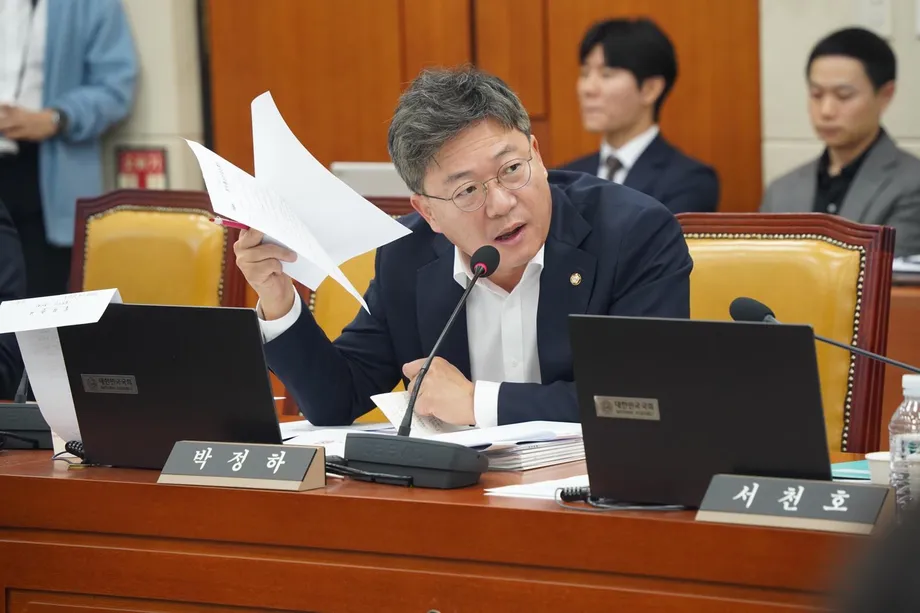
The contracts came under scrutiny at an October 20, 2026, parliamentary audit at the Korea Advanced Institute of Science and Technology (KAIST) in Daejeon. People Power Party lawmaker Park Jeong-ha, a member of the National Assembly's Science, ICT, Broadcasting and Communications Committee, obtained the figures from NST.
The most closely examined case involved three contracts worth a combined 45.43 million won awarded by the Korea Institute of Civil Engineering and Building Technology to a heating equipment company headed by one of its serving researchers. All three came from the same research project, and each fell below the 20 million won threshold permitting a direct award under the applicable rules.
Lawmakers also examined research misconduct complaints that had taken hundreds of days to process and disciplinary action against employees who repeatedly accessed gaming servers during working hours. Together, the cases put purchasing decisions, investigation deadlines and workplace supervision at publicly financed laboratories under scrutiny.
The debate carries a second concern: how to keep useful cooperation between public laboratories and businesses alive while tightening safeguards. At the same hearing, lawmakers discussed a survey in which 61.2% of public institute researchers expected business cooperation to decline after the abolition of the project based funding system, known as PBS.
Direct awards accounted for 54.2% of contracts
NST's figures show that direct awards represented 54.2% of the 336 contracts with companies founded by institute researchers. Their combined value was approximately 5.4 billion won, compared with about 12.06 billion won for all contracts in the tally.
That puts direct awards at roughly 45% of the total value, even though they accounted for more than half the number of contracts. The difference means the direct awards were, on average, smaller than the other contracts.
A direct award allows an institution to choose a supplier without inviting companies to compete through a bidding process. Such purchasing is permitted in specified circumstances, including some small contracts. The central concern raised at the hearing was how institutions manage purchasing when a supplier's founder also works for the public body paying the bill.
Park called for checks across the institutes and changes to contract management and safeguards against conflicts of interest. A conflict of interest arises when a person's public responsibilities overlap with a private financial interest, creating a need for disclosure and independent decisions.
110 contracts involved researchers still tied to their institutes
Eight institutes recorded 110 contracts with companies founded by researchers who retained an employment relationship with the purchasing institution. Those relationships included active employment, leave and permission to hold another role alongside an institute position.
The Electronics and Telecommunications Research Institute (ETRI) accounted for 83 of those contracts, followed by the Korea Atomic Energy Research Institute with 11 and the Korea Institute of Civil Engineering and Building Technology with five. ETRI therefore accounted for about three quarters of this group, based on 83 out of 110 contracts.
Across the eight institutions, 41 of the 110 contracts were direct awards, about 37%. The concentration varied by institute: 10 of the atomic energy institute's 11 contracts and four of the construction institute's five contracts were awarded without competitive bidding.
The employment connection matters because an institute may be supporting a researcher's business while also deciding whether to buy its products or services. Clear responsibility for selecting suppliers, checking completed work and approving payment becomes especially important when colleagues work on both sides of that relationship.
Three contracts from the same research project
The construction institute's case brought those overlapping roles into focus. In 2023, the institute approved an extension allowing a serving research fellow to continue holding a second position at a heating equipment business identified as Company E.
Between September and December 2025, the institute awarded the company three direct contracts for pipe work, installation of measuring equipment and manufacture of a controller. Together, the contracts were worth 45.43 million won. Each was worth no more than 20 million won.
The applicable rules allowed contracts at or below that threshold to be awarded directly. Because all three purchases belonged to the same research project, the arrangement prompted suspicion that the work had been divided into smaller contracts to meet the threshold.
The employees who requested the purchases and supervised and inspected the work belonged to the same research division as the company's researcher chief executive. Company E also occupied office space inside the institute's startup support facilities.
Those details explain why the scrutiny extended beyond the price of each purchase. The supplier's leadership, the officials overseeing delivery and the institute providing office space were connected through the same workplace.
The institute cites its rules and promises changes
The construction institute told Park's office that disclosure of an interest or an application to step aside from the decisions was not applicable. It said the contracts had followed existing institute rules and that it was pursuing revisions to improve fairness.
At the parliamentary audit, institute president Park Sun-kyu put the contract value at approximately 45 million won and explained that some purchases fell under provisions allowing small direct awards.
Park Jeong-ha said researcher entrepreneurship should be encouraged while contract decisions remain transparent and technologies are tested through fair competition. The People Power Party lawmaker described the boundary he wanted institutions to maintain:
Researcher startups must not lead to conflicts of interest or controversy over preferential treatment in contracts with their original institutions.
No finding on the suspected division of contracts, completion date for the institute's rule changes or timetable for a broader review was announced. The immediate institutional response was to defend compliance with existing rules while acknowledging the need to revise them.
Research complaints averaged about 300 days
Separate figures obtained from the Ministry of Science and ICT by Rebuilding Korea Party lawmaker Kim Sun-min showed 108 reports of research misconduct or misuse of research funds received since 2021.
After excluding four complaints that were withdrawn or dismissed, the remaining 104 had an average processing or elapsed time of approximately 300 days. Twenty nine had lasted longer than a year, equivalent to about 28% of that group.
The average includes both completed cases and time already spent on cases still being handled. For researchers awaiting a decision, the figures describe a process that can stretch across much of a year or longer.
One suspected case of improperly obtaining government subsidies, handled by the research and development special zones promotion foundation, took 938 days from a February 2022 report to submission of the findings in September 2024. Another allegation involving false registration of participating researchers took 621 days to reach a findings report.
A plagiarism complaint under the National Research Foundation of Korea's oversight, investigated by Kyungpook National University, had been under reconsideration for four years and six months after being filed in April 2022.
Six month rules allow extensions without a final limit
The Ministry of Science and ICT's rules for the information, communications and broadcasting sectors, and the Ministry of Education's research ethics guidelines, generally require cases to move from the start of a preliminary investigation to a decision within six months.
Both sets of rules allow extensions without limiting either the number of extensions or the total investigation period. That leaves room for cases to continue well beyond the stated six month period.
The complaint statistics measure time from reporting, while the rules start the clock at the beginning of a preliminary investigation. Readers therefore need to keep track of two stages: the time before an inquiry formally begins and the time spent investigating and deciding it.
The longest cases show how distant a final decision can become. The subsidy case took more than two and a half years to reach its findings report, while the plagiarism complaint remained in reconsideration after four and a half years.
How the cases unfolded
The contracts, complaints and disciplinary cases span several years. Their sequence helps explain why the October 2026 hearing addressed both individual decisions and the rules governing them.
- 2021 onward: Authorities received 108 complaints concerning research misconduct or misuse of research funds.
- February 2022: A suspected government subsidy fraud case was reported; its findings report followed in September 2024, after 938 days.
- April 2022: The plagiarism complaint investigated by Kyungpook National University was filed.
- 2023: The construction institute extended permission for its researcher to hold a second role at Company E.
- 2024: Five employees at ETRI's affiliated National Security Research Institute were caught repeatedly accessing gaming servers during working hours.
- September to December 2025: Company E received three direct contracts worth 45.43 million won.
- June 2026: The NST contract tally closed, covering 336 contracts beginning in 2022.
- October 20, 2026: Lawmakers examined the contracts and business cooperation concerns at the parliamentary audit in Daejeon.
The chronology places the three Company E purchases after the institute had approved the researcher's continuing outside role. It also shows that some complaints had remained active through multiple annual oversight cycles.
Gaming during work brought reprimands
Workplace discipline added another concern about supervision at public laboratories. Five National Security Research Institute employees received reprimands after repeatedly accessing gaming servers during working hours in 2024.
One employee's recorded connection time exceeded 90 hours. The institute initially considered a salary reduction appropriate for that employee, but reduced the disciplinary penalty because of an earlier commendation.
The institute said it deducted annual leave and pay corresponding to the connection time and strengthened blocks on websites unrelated to work. Those measures accompanied the reprimands.
The case put attention on both the penalty chosen and the use of past awards to reduce it. It also placed day to day supervision alongside the larger questions about spending and research ethics investigations.
Keeping business cooperation open as funding changes
The hearing also addressed concern that abolishing PBS could reduce cooperation between public laboratories and smaller businesses. PBS links research funding to individual projects; the reform debate concerns how researchers can gain greater funding stability while continuing to take on work with companies.
Democratic Party lawmaker Han Jun-ho cited a June 2026 Korea Industrial Technology Association survey in which 61.2% of institute researchers expected business cooperation to decline after PBS abolition. Among companies with experience working with public institutes, 77.2% said joint research had helped their research and development.
The two figures describe different groups: researchers anticipating a change and companies assessing previous cooperation. Together, they explain the concern that a funding reform intended to give laboratories greater stability could weaken a service businesses already value.
Han urged institutions to preserve small projects of short duration for small and medium sized businesses, deepen work with existing partners and open opportunities to more regional companies. He cited the Korea Institute of Machinery and Materials' southeastern research division, where joint projects rose from six in 2023 to 30 in 2025, a fivefold increase.
Korea Institute of Industrial Technology president Son Woong-hee acknowledged concern that corporate cooperation could shrink and called for funding arrangements that reflect the needs of institutes closely connected with industrial workplaces.
Research staffing adds another pressure. NST figures discussed earlier in October showed 155 voluntary researcher departures in 2025, including 137 people in their 30s and 40s, as younger researchers left institutes for other careers, often in academia.
The concrete task facing the institutes is to make supplier selection more independent and complaints more timely while preserving the staff and business relationships needed to carry out research. At the hearing, lawmakers sought tighter controls on purchases involving researcher businesses alongside continued access to public laboratories for smaller companies.
Key Points
- Public research institutes awarded 336 contracts worth about 12.06 billion won to companies founded by their researchers between 2022 and June 2026.
- Direct awards accounted for 182 contracts, or 54.2%, with a combined value of approximately 5.4 billion won.
- Three construction institute contracts worth 45.43 million won prompted scrutiny because they involved the same project and each fell below the direct award threshold.
- Across 104 research misconduct and funding complaints, processing or elapsed time averaged about 300 days; 29 lasted longer than a year.
- Investigation rules generally specify six months but allow extensions without a limit on their number or total duration.
- Lawmakers also sought to protect business cooperation as research funding changes, citing survey evidence that companies value joint research.