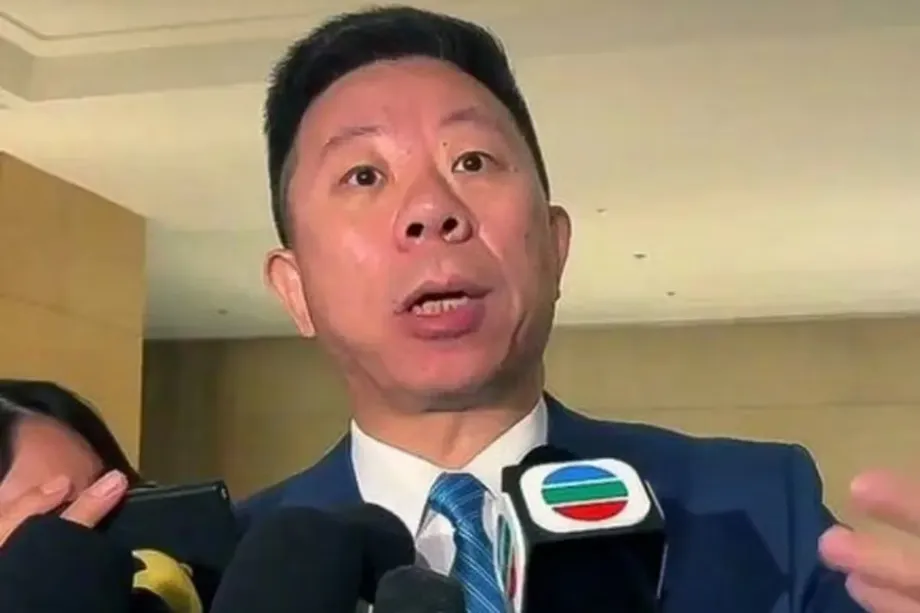
Nine lawmakers targeted as diplomatic dispute widens
The Chinese Embassy in Manila told Philippine lawmakers they were "now on the list" on Tuesday, October 20, 2026, as Senator Risa Hontiveros filed Senate Resolution No. 746 urging President Ferdinand Marcos Jr. to declare Chinese Ambassador Jing Quan persona non grata or request his recall.
Contents
- Nine lawmakers targeted as diplomatic dispute widens
- The remark that triggered the confrontation
- Two resolutions, one executive decision
- Manila summons Jing and rejects intimidation
- Beijing says its words were taken out of context
- The lawmakers refuse to back down
- Existing Chinese restrictions give the warning weight
- How the dispute escalated
- Maritime rights and the choices still facing Manila
- Key Points
The warning followed an appeal by nine members of the House of Representatives for Marcos to reconsider his opposition to expelling Jing. Their demand centers on the ambassador's statement that China could easily win if it chose to use force against the Philippines, although he also said Beijing would choose peace.
The embassy posted a photograph identifying lawmakers on Facebook and accompanied it with a brief warning:
Put on record. You are now on the list.
The embassy did not explain what the list means or specify restrictions attached to it. Its earlier warnings that Philippine politicians could be barred from China, together with existing restrictions on other Filipino officials, have made the message a concrete concern for legislators challenging Beijing.
In another statement apparently responding to Hontiveros's resolution, the embassy said:
Since you don't welcome us, we don't welcome you, either. Fair enough.
Two Senate resolutions now seek executive action against Jing. Neither chamber of Congress can remove a foreign ambassador itself. The decision rests with the Philippine executive branch, which has summoned Jing and rejected attempts to intimidate officials while keeping diplomatic channels open.
The remark that triggered the confrontation
Jing made the disputed remarks after a dialogue organized by the Philippines-China Studies Center of Diliman College in Quezon City. The event is dated October 15 in the chronology accompanying the latest Senate action, although it has also been dated October 16.
The ambassador was responding to Defense Secretary Gilberto Teodoro Jr., who had described China as a regional "troublemaker" because of its actions in disputed waters. Jing dismissed that description as "nonsense" and said the Philippines was fortunate to have China as a neighbor.
Jing paired his reference to China's military strength with a declaration that Beijing would avoid force:
If we want to use force, we may easily win. But no, we will not choose force, and we love peace.
Marcos said the statement sounded like a threat and warranted an explanation. Speaking to reporters on Friday, the president said:
It sounds very much to me like a threat, and it is not a very diplomatic statement to be made. So we perhaps would like to understand what exactly it is that he means.
The Department of Foreign Affairs described the remarks as conveying a "thinly veiled threat" of force. Philippine Coast Guard spokesperson Rear Adm. Jay Tarriela called them a "direct threat," pointing to confrontations involving Filipino and Chinese personnel at sea.
Two resolutions, one executive decision
Senator Erwin Tulfo filed Senate Resolution No. 739 on Monday, October 19. It asks the Department of Foreign Affairs to recommend to the appropriate authorities that Jing be declared persona non grata, citing the seriousness of his remarks and their effect on Philippine sovereignty, national dignity and relations with China.
Hontiveros followed on October 20 with Resolution No. 746. Her proposal asks the president either to declare Jing persona non grata or to request that Beijing recall him. The two measures pursue the same broad objective through slightly different requests: Tulfo seeks a recommendation through the foreign affairs department, while Hontiveros addresses the president directly and offers recall as an alternative.
Persona non grata means that a diplomat is no longer welcome in the country where they serve. Hontiveros cited the Vienna Convention on Diplomatic Relations, under which a receiving country can make that declaration without explaining its reasons. The sending country must then recall the diplomat or end the diplomat's functions.
Hontiveros's resolution recognizes the president's leading role in foreign affairs while seeking to put the Senate's disapproval on record. Filing the resolutions increases political pressure on Marcos; any formal action against Jing must come from the executive branch.
Manila summons Jing and rejects intimidation
Foreign Affairs Secretary Ma. Theresa Lazaro summoned Jing on October 19 to convey Manila's serious concern and strong objection. She called his language provocative and unacceptable, saying it aggravated an already sensitive relationship and weakened efforts to build understanding and cooperation.
The Department of Foreign Affairs also addressed the embassy's public challenges to elected officials. In its statement, the department said:
It is not the place of a foreign mission to publicly criticize or taunt Philippine officials and legislators who are acting within their mandates. As a democracy, the Philippines values freedom of expression and a plurality of voices, and it will not accept attempts by a foreign envoy to intimidate those who exercise them.
Lazaro said sensitive issues should be handled through established diplomatic channels and bilateral mechanisms. Those are the meetings and communication arrangements governments use to raise complaints, explain positions and negotiate without conducting every exchange in public.
Palace Press Officer Undersecretary Claire Castro said Marcos would leave the handling of the controversy to the foreign affairs department. She also indicated that he did not want a persona non grata declaration against a foreign envoy. The Palace described its priorities as maintaining diplomacy and asserting Philippine rights and interests in the West Philippine Sea without aggression.
Beijing says its words were taken out of context
Jing used the October 19 meeting with Lazaro to dispute Manila's interpretation. According to the embassy's account of the exchange, he accused Philippine officials and politicians of taking his remarks out of context and attacking China.
The ambassador said different parts of the relationship should be handled on their own merits rather than allowing a dispute in one area to affect every other area. He presented his comments as an argument for preserving peace:
Peace is hard-won in this region. We should cherish the peace. This is not called 'threat,' but the effort to uphold peace. On maritime disputes, China has exercised great restraint.
The embassy also raised a wider set of complaints. It cited the suspension of military communications for three years, an alleged factory raid involving Chinese workers and the departure of 180 teachers involved in Chinese language education. These were accusations advanced by the Chinese side during the dispute.
Jing claimed the Philippines had carried out at least 10 activities he described as infringements and provocations at sea during the preceding month. He also criticized Tarriela and urged Manila to restrain politicians whom he described as hostile to China.
The exchange exposes the central disagreement: Jing presents his reference to military strength as part of a promise of restraint, while Philippine officials view the mention of an easy military victory as intimidation against a backdrop of repeated maritime confrontations.
The lawmakers refuse to back down
The nine House members who urged Marcos to reconsider expelling Jing were Zia Alonto Adiong, Arlene "Kaka" Bag-ao, Percival "Perci" Cendaña, Leila de Lima, Chel Diokno, Dadah Kiram Ismula, Cielo Krisel Lagman, Karl Legazpi and Mark Anthony Santos.
Their joint appeal described the embassy's language as undiplomatic and damaging to serious dialogue. They urged Marcos to stand firm against further Chinese aggression and give serious consideration to removing the ambassador.
Adiong said he understood the embassy's list as identifying people who opposed China's pattern of intimidation, aggression and disrespect. The Lanao del Sur representative responded:
Then yes, I am proud to be on it.
Akbayan likewise rejected the warning. Its statement associated Diokno, Cendaña, Ismula, Bag-ao and Hontiveros with what the party called China's list of perceived enemies, and connected their response to the experiences of Filipino fishermen and personnel in the West Philippine Sea.
Akbayan said:
We will wear this designation with pride. We will not be intimidated into silence, nor will we waver in defending our sovereignty, sovereign rights, and national integrity.
De Lima, the House senior deputy minority leader, offered a possible way to resolve the immediate dispute: an apology or retraction. Without one, she said, the executive should seriously consider declaring Jing persona non grata.
Existing Chinese restrictions give the warning weight
China has already imposed restrictions on two prominent Philippine officials. In July 2025, it barred former senator Francis Tolentino, now labor secretary, from mainland China, Hong Kong and Macao over conduct Beijing said harmed its interests.
In June 2026, China imposed restrictions on Teodoro, his spouse and his child. Those measures included entry bans and prohibitions on Chinese organizations and individuals conducting transactions, cooperating or engaging in other activities with them.
The Department of Foreign Affairs called the sanctions against Teodoro and his family an "unfriendly act" that complicated relations and weakened mutual trust. Beijing defended its measures as protecting Chinese national interests.
Bicol Saro Representative Terry Ridon pointed to those precedents when challenging the embassy's warning. He said additional restrictions should not dictate how Filipino officials defend national interests.
The embassy's rhetoric has also extended beyond possible entry restrictions. An earlier post challenged Philippine officials to act immediately on their proposed persona non grata declaration, with language suggesting that the Philippine ambassador in Beijing could face a reciprocal response.
For both governments, the dispute therefore concerns more than Jing's individual posting. Removing an ambassador could prompt action against the other country's representative, making it harder to manage an already strained relationship through senior diplomatic contacts.
How the dispute escalated
The public confrontation developed over several days, moving from a statement about force to formal diplomatic objections, Senate resolutions and warnings directed at individual lawmakers.
- October 15 or 16: Jing said China could easily win if it used force, while stating that Beijing would choose peace, after a dialogue in Quezon City.
- October 17: The embassy challenged officials discussing a persona non grata declaration to act, telling them to "STOP BLUFFING."
- October 19: Lazaro summoned Jing, and Tulfo filed Senate Resolution No. 739 seeking a recommendation for a persona non grata declaration.
- October 20: Hontiveros filed Senate Resolution No. 746, and the embassy told lawmakers they were "now on the list."
The maritime tensions behind the exchange extend further back. Jing had also been summoned in July after a Philippine marine was injured in a confrontation involving the China Coast Guard at Second Thomas Shoal in the Spratly Islands.
Repeated encounters involving ramming and powerful water cannons have made references to military force especially sensitive in Manila. Filipino fishermen, coast guard crews and military personnel operate in the waters at the center of the dispute, giving the diplomatic language an immediate human dimension.
Maritime rights and the choices still facing Manila
The Philippines bases its maritime position on the United Nations Convention on the Law of the Sea and the 2016 arbitral ruling in its case against China. The tribunal rejected the legal basis for China's expansive claims to historic rights across much of the South China Sea. Beijing rejects that ruling.
Sovereign rights at sea concern specific powers, including rights to resources such as fish, oil and gas. They matter directly to the Filipino crews whose work and access to fishing grounds are affected by confrontations in the West Philippine Sea.
Hontiveros has urged the government to demand a formal retraction and apology and to raise the controversy before the Association of Southeast Asian Nations and the United Nations General Assembly. Those proposals would move the discussion beyond the two governments and seek support from other countries.
Other legislators have urged restraint. Makabayan lawmakers Antonio Tinio, Sarah Elago and Renee Co called for immediate de-escalation and a return to diplomacy while continuing to assert Philippine maritime rights and the country's legal victory.
Ridon also said he planned to file a House resolution within October seeking an investigation into alleged connections between online advocates for China and supporters of the Duterte family. That proposed inquiry would add a domestic political dimension to the dispute.
Marcos faces competing demands: lawmakers want a firm response to language they consider threatening, while the foreign affairs department is trying to preserve communication with Beijing. An apology or retraction, a request for recall and a formal persona non grata declaration remain the principal options raised publicly.
Key Points
- The Chinese Embassy told Philippine lawmakers they were "now on the list" on October 20 without explaining its meaning.
- Nine House members urged Marcos to reconsider his opposition to expelling Ambassador Jing Quan.
- Tulfo's Resolution No. 739 and Hontiveros's Resolution No. 746 seek executive action against Jing.
- The president or Department of Foreign Affairs, rather than Congress, has authority to declare an envoy persona non grata.
- Manila condemned Jing's remarks about force; Jing said he was defending peace and had been taken out of context.
- Existing Chinese restrictions on Tolentino and Teodoro provide a concrete precedent for the embassy's warnings.
- The Palace favors continued diplomacy, while lawmakers have proposed an apology, retraction, recall or expulsion.