Past corporate deals return to Parliament's scrutiny
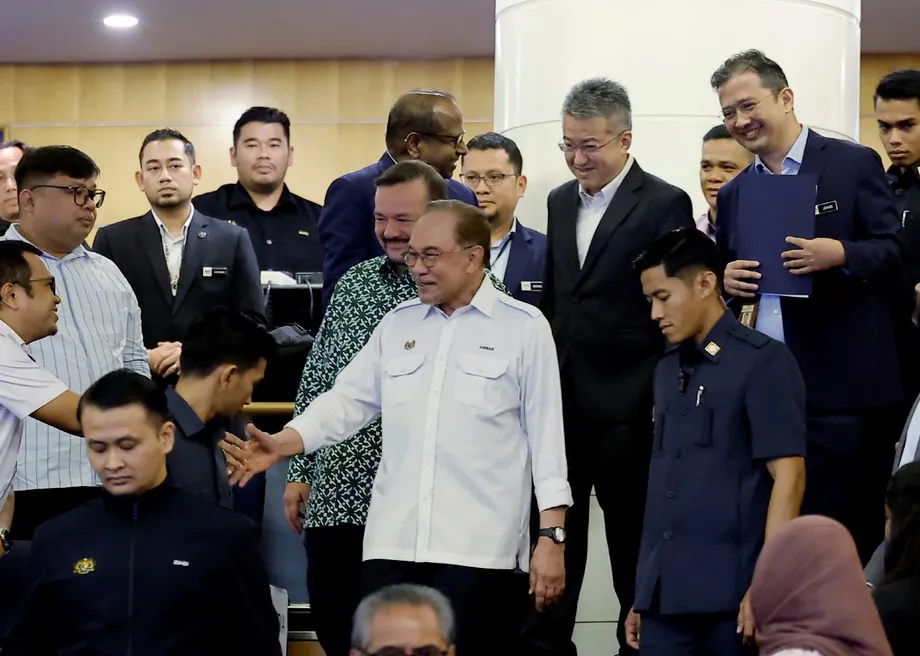
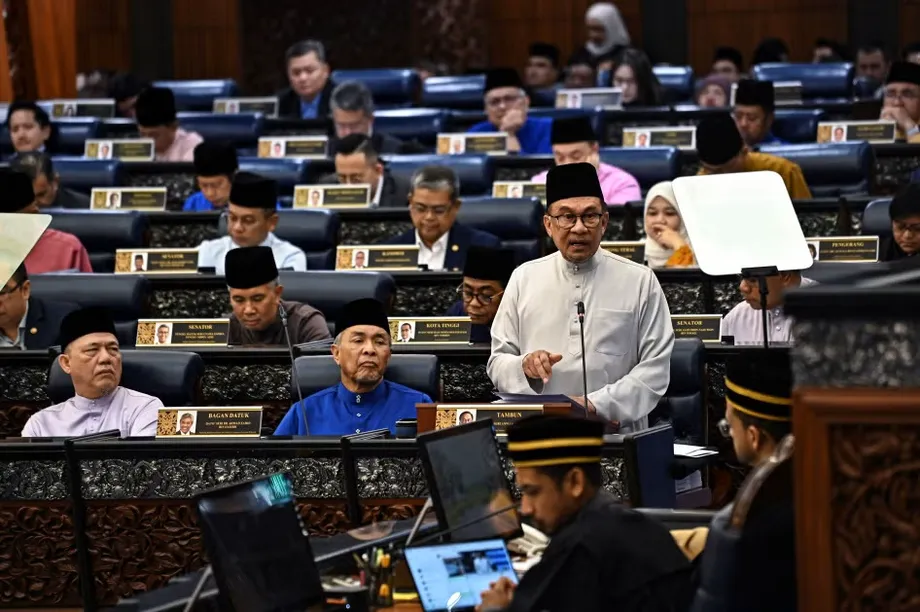
Prime Minister Datuk Seri Anwar Ibrahim has pointed to three major Malaysian corporate transactions after the Asian Financial Crisis as examples of why financial regulators and enforcement agencies must act transparently and without political interference. Speaking in Parliament on Tuesday, he cited the 1999 takeover of Multi-Purpose Holdings Bhd, the restructuring of RHB Bank and the 2001 sale of Phileo Allied Bank to Maybank.
Contents
Anwar said Malaysia already has sufficient laws to tackle corporate crime. The central issue, he told the Dewan Rakyat, is whether the country's leadership provides clear direction and the political commitment needed to enforce those laws, including when influential people are involved.
His remarks linked questions about the treatment of prominent business owners after the financial crisis with present concerns about investigations, transactions across national borders and the protection of public money. He also raised the Serba Dinamik case, saying losses to the public or shareholders reached RM34 billion, and alleged that requests had previously been made to stop the investigation.
Anwar, who is also finance minister, was answering a supplementary question from Datuk Seri Aminuddin Harun, the Pakatan Harapan MP for Port Dickson. Aminuddin asked about investigations spanning several agencies and overseas transactions, stronger international cooperation, and whether changes to financial and trade laws were needed to prevent gaps in enforcement and prosecution.
What Anwar says existing laws can do
Bank Negara Malaysia, the Securities Commission Malaysia, the Royal Malaysian Police, the Inland Revenue Board and the Malaysian Anti-Corruption Commission already have adequate legal powers within their respective areas of responsibility, Anwar said.
Those agencies cover different parts of financial activity. Banking supervision, capital markets, taxation, corruption and criminal investigations can intersect in a corporate case. A transaction involving a company, for example, can require investigators to examine financial records while also checking whether officials or business leaders abused their positions.
Anwar's answer placed responsibility on the use of those powers. His position was that effective enforcement requires investigators to be able to pursue information and take appropriate action, backed by a clear commitment from the government.
Aminuddin's question addressed the practical difficulty of cases that cross both institutional and national boundaries. Evidence may be held by more than one agency, while money or company records may be outside Malaysia. Anwar said international relationships were already part of the enforcement system.
Three transactions and the pressure to sell
Multi-Purpose Holdings was taken over in 1999 by a group led by Singaporean businessman Akbar Khan. Anwar raised allegations that its controlling shareholder, Lim Thian Kiat, had been pressured to sell his stake.
RHB Bank was his second example. Following the financial crisis and the bank's restructuring, founder Abdul Rashid Hussain was widely perceived to have faced political and regulatory pressure to relinquish his holding. A controlling stake gives an owner substantial influence over a business, so pressure to surrender it can change both ownership and decision making.
Phileo Allied Bank, founded by Tong Kooi Ong, was sold to Maybank in 2001. Tong was also widely perceived to have faced intense political pressure to exit during the consolidation of Malaysia's banking industry after the crisis.
Anwar linked the cases to the finance minister at the time, whom he did not name in his remarks, describing a figure with considerable influence and substantial financial resources. The minister associated with that period of banking consolidation was Daim Zainuddin.
The allegations concern whether political influence shaped decisions by business owners and regulators. Anwar used the transactions to argue for greater transparency and accountability at Bank Negara, the Securities Commission, the anti-corruption commission and the police.
How the events fit together
The corporate transactions Anwar discussed stretched across several years of financial crisis and banking reorganisation. The main sequence was:
- 1998: The Asian Financial Crisis formed the backdrop to the restructuring of Malaysia's financial sector and the pressure later associated with Abdul Rashid Hussain's departure from RHB.
- 1999: A group led by Akbar Khan took over Multi-Purpose Holdings, amid allegations that Lim Thian Kiat was pressured to sell his stake.
- 2001: Phileo Allied Bank was sold to Maybank during the consolidation of the banking sector.
- 2025: Malaysia underwent the Financial Action Task Force mutual evaluation that Anwar cited in defending the country's financial enforcement efforts.
Banking consolidation means combining banks into fewer institutions, usually through mergers or acquisitions. In the cases Anwar raised, the central concern was how decisions about ownership were made and how much pressure the individuals selling their interests faced.
Serba Dinamik and the demand for disclosure
Serba Dinamik brought the discussion from historical ownership disputes to the handling of a major corporate investigation. Anwar put losses to the public or shareholders at as much as RM34 billion. He did not provide a breakdown of that figure in the parliamentary remarks described.
Anwar also alleged that there had previously been requests to halt the investigation. He said his government's position was to avoid interference in investigative work and to ensure that information about corporate wrongdoing was disclosed and investigated without exception.
Explaining that position to MPs, Anwar said, in remarks translated from Malay:
Our position is that whatever information is obtained, without exception, should be disclosed and investigated as necessary.
Anwar also distinguished information requiring investigation from accusations unsupported by clear evidence. His argument was that enforcement should follow the information obtained, regardless of who might be implicated, while investigators assess the evidence needed for further action.
For shareholders, that commitment concerns the handling of losses and access to answers about what happened to their investments. For enforcement agencies, it concerns whether an investigation can proceed when a case attracts political attention or involves powerful interests.
Why cooperation beyond Malaysia matters
The Securities Commission, Bank Negara and the Malaysian Anti-Corruption Commission maintain relationships with international bodies, Anwar said. He explained that those connections are necessary because financial crime can extend across borders.
Money can move between bank accounts in different countries, while the documents needed to explain a transaction may be held elsewhere. Cooperation allows national authorities to seek assistance from their counterparts as they trace funds and investigate the people or companies involved.
Anwar cited Malaysia's 2025 mutual evaluation by the Financial Action Task Force, or FATF, as recognition of the country's work. He said Bank Negara received particularly strong recognition, alongside Malaysia's efforts against money laundering and to recover funds that had been siphoned away.
FATF assesses countries' measures against money laundering and related financial crime. Money laundering is the process of making money obtained through crime appear to come from a lawful source. A mutual evaluation examines both a country's rules and how its institutions put them into practice.
Anwar's reference to the assessment supported his argument that Malaysia has an established enforcement framework. His call for political commitment addressed how that framework should be used in individual cases, including those involving people with influence.
Changes planned for government enterprises
The legislative changes Anwar described are focused on enterprises owned by the government. He said the Finance Ministry was preparing measures under a proposed Government-Owned Enterprise framework, referred to as the SOE Act.
Anwar said the proposals were expected to be tabled towards the end of the year, or early the following year if more preparation time was required. No exact tabling date was given. Presenting legislation to Parliament is the start of the parliamentary process, with debate and approval required before proposed rules can take effect.
The focus on government enterprises gives the proposed changes a narrower scope than Aminuddin's wider question about corporate crime. Such enterprises involve public ownership, making their management and accountability a direct concern for taxpayers as well as the government.
Anwar's position therefore has two parts: existing enforcement laws are sufficient for current corporate crime investigations, while changes concerning government enterprises are being prepared separately. The immediate instruction to agencies is to act transparently and pursue information without political protection for those involved.
Key Points
- Anwar said Malaysia's existing financial and enforcement laws are sufficient, but effective action requires clear leadership and political commitment.
- He cited Multi-Purpose Holdings, RHB Bank and Phileo Allied Bank in discussing allegations of pressure on business owners after the Asian Financial Crisis.
- He put losses associated with Serba Dinamik at up to RM34 billion and alleged that requests had previously been made to stop its investigation.
- He said corporate crime information should be disclosed and investigated without exception, while distinguishing it from unsupported accusations.
- Anwar cited the 2025 FATF mutual evaluation as recognition of Bank Negara and Malaysia's efforts against money laundering.
- Finance Ministry proposals concerning government enterprises are expected towards the end of the year or early the following year.