A jump in electricity forecasts puts nuclear plans under scrutiny
South Korea's forecast for peak electricity demand in 2040 rose by about 27 gigawatts in four months, prompting a new group of researchers and academics to demand a closer examination of the figures before citizens weigh proposals for more nuclear reactors.
Contents
- A jump in electricity forecasts puts nuclear plans under scrutiny
- What changed between April and August?
- Annual consumption and peak demand answer different questions
- AI growth is being weighed against energy savings
- The existing plan already expands nuclear and renewables
- Renewable supply brings another calculation into the debate
- Construction time turns demand forecasts into financial decisions
- Warmer seas and shared sites enter the safety questions
- Waste deadlines extend beyond the next electricity plan
- Key Points
The government's August projection put peak demand at 158.4 to 165.0 gigawatts, up from 131.8 to 138.2 gigawatts in April. The increase of 26.6 to 26.8 gigawatts amounts to roughly one fifth of the earlier forecast. It followed the announcement of major development projects expected to require large amounts of electricity.
The group, whose Korean name translates as the Different Questions Forum, wants officials to explain when, where and how much electricity semiconductor factories and artificial intelligence data centres will actually need. It also wants the public to see the assumptions behind nuclear construction costs, safety assessments and plans for radioactive waste.
Its members include Kim Byung-kwon, director of the Green Transition Institute; Jeon Yeong-hwan, a professor in Hongik University's School of Electronic and Electrical Engineering; and Han Yoon-jung, a joint representative of Hanshin University's Institute for Ecological Civilization.
A citizens' panel is scheduled to hold deliberations in December 2026. Its conclusions will inform the 12th Basic Plan for Electricity Supply and Demand, covering 2026 to 2040. The forum plans to gather questions from around 100 experts and members of the public, publish them, and ask the government and the nuclear public deliberation committee to respond.
The immediate issue is what evidence citizens will receive before making recommendations that could shape electricity investment for decades. The forum wants demand forecasts, costs and risks examined together, rather than a decision based mainly on projected industrial growth.
What changed between April and August?
President Lee Jae-myung announced three major development projects on June 29, 2026. The subsequent increase in the electricity forecast has become a central concern for the forum, which is asking officials to identify the industrial projects behind the added demand and their expected operating dates.
The April 22 public discussion on electricity demand had already included growth from AI, advanced industries and the replacement of fossil fuels with electricity. Hur Jin, an Ewha Womans University professor chairing the demand forecasting committee, presented projected electricity consumption of 657.6 to 694.1 terawatt hours in 2040.
The main steps in the planning process are:
- February 2025: South Korea finalised its 11th electricity supply and demand plan, running through 2038.
- April 22, 2026: A public discussion presented demand scenarios for the 12th plan, including annual consumption of 657.6 to 694.1 terawatt hours in 2040.
- June 29, 2026: Lee announced three major development projects.
- August 2026: The projected peak electricity requirement for 2040 rose to 158.4 to 165.0 gigawatts.
- September 2026: The government began three months of public deliberation on nuclear power's role in the next plan.
- December 2026: The citizens' panel is scheduled to hold its deliberative discussions.
The government has yet to provide the detailed answers requested by the forum about the revised forecast, individual project costs and associated risks. Those answers would allow citizens to examine how much demand is firmly expected, where it will arise and which investments must be ready first.
Annual consumption and peak demand answer different questions
Gigawatts measure the rate at which electricity is needed or produced at a particular moment. Terawatt hours measure the amount used over a period, usually a year. A power system needs enough energy across the year and enough available generating and network capacity during its busiest hours.
Hur's April forecast of 657.6 to 694.1 terawatt hours compares with 624.5 terawatt hours in the final year of the 11th plan. The difference is 33.1 to 69.6 terawatt hours, or about 5.3% to 11.1%, although the two plans end in different years.
The 12th plan introduces multiple scenarios for the first time. The reference scenario assumes a 53% reduction under South Korea's 2035 national climate target, while the higher scenario assumes 61% and wider AI adoption. These national targets, known as nationally determined contributions, describe a country's commitments to reduce greenhouse gas emissions.
Electrification can increase electricity consumption while reducing fossil fuel use elsewhere. A factory replacing a gas furnace with electrical equipment, for example, adds demand to the grid. For planners, the practical task is to connect those changes to specific places, dates and hours of use.
AI growth is being weighed against energy savings
AI data centres were projected in the April discussion to require about 26.5 terawatt hours in 2040. The calculation assumed that the power density of servers using graphics processing units would reach about three times its current level. Power density describes how much electricity equipment needs within a given space.
The demand framework also proposed more than 120 terawatt hours of savings through efficiency improvements, demand response markets, heat pumps and electricity prices that vary by time of day. The savings figure is more than four times the projected AI data centre consumption, though it covers a much broader set of activities across the economy.
Demand response pays or rewards electricity users for changing consumption when the grid needs relief. Time based tariffs encourage a similar shift through prices. The plan also introduces moving demand between hours through industrial tariffs and vehicle to grid technology, which can allow suitably equipped electric vehicles to return stored electricity to the network.
These measures perform different jobs. Efficiency can reduce total electricity use, while shifting consumption can ease a peak without cutting the annual total by the same amount. Data centres and factories also have different limits on when they can reduce demand. The nuclear debate therefore includes the delivery of promised savings alongside the delivery of new power plants.
The existing plan already expands nuclear and renewables
The World Nuclear Association's South Korea profile, updated on November 2, 2026, records 643 terawatt hours of electricity generation in 2025, including 185 terawatt hours from nuclear plants, or about 29%. Total electricity consumption was 577 terawatt hours.
The association puts the nuclear fleet's capacity factor at about 85% in 2025. That measure compares actual output with what plants could generate if they operated at full power throughout the year. Nuclear plants provide substantial output, while maintenance, refuelling and other shutdowns affect how much is available.
The 11th plan projects nuclear capacity rising from 24.7 gigawatts in 2023 to 28.9 gigawatts in 2030 and 35.2 gigawatts in 2038. It also expands renewable capacity from 30 gigawatts in 2023 to 121.9 gigawatts in 2038, according to the Institute for Energy Economics and Financial Analysis, or IEEFA.
IEEFA's assessment puts nuclear's projected share of generation in 2038 at 35.24%, while the World Nuclear Association gives 35.6%. IEEFA lists renewables at 32.95%, coal at 10.06%, natural gas at 10.55%, and hydrogen and ammonia generation at 6.23%.
The 12th plan will therefore build on an existing programme that expands several technologies. Decisions about additional reactors sit alongside choices about renewable deployment, gas capacity, transmission lines and the timing of industrial development.
Renewable supply brings another calculation into the debate
IEEFA energy finance specialist Michelle (Chaewon) Kim examined the finalised 11th plan in a March 2025 analysis. The institute estimated that additional electricity demand from AI and semiconductors would reach about 47,032 gigawatt hours by 2030 compared with 2024.
Under its proposed acceleration of renewable deployment, IEEFA calculated that renewable generation could increase by 76,445 gigawatt hours over that period, assuming the existing power plant construction programme stayed on schedule. That is about 1.6 times the estimated additional demand from the two sectors.
IEEFA's calculation addresses electricity produced across the year. Meeting industrial demand also requires generation to be available when needed, sufficient transmission capacity and arrangements to manage changes in wind and solar output. The forum's questions about the location and timing of demand bring those practical requirements into the investment decision.
IEEFA also argues that the source of electricity matters for industrial customers. It identifies RE100 corporate renewable electricity commitments, the European Union's Carbon Border Adjustment Mechanism and emissions reporting requirements as pressures on industries using fossil fuels. These arrangements differ in scope, but together make electricity sourcing part of commercial planning as well as engineering.
The institute says the 11th plan's renewable expansion falls short of tripling capacity by 2030 under the international COP28 pledge. Its analysis supports testing a faster renewable programme alongside proposed nuclear investments, with the costs and delivery schedules of each made visible.
Construction time turns demand forecasts into financial decisions
New reactors are estimated to take nine to 13 years from site selection to completion. Supporters of construction argue that waiting until electricity demand arrives would leave too little time to respond. Nuclear generation produces very little carbon dioxide during operation and can supply large amounts of power regardless of the weather.
The International Energy Agency has put nuclear capacity under construction worldwide at 78 gigawatts across 15 countries, the highest level in more than 30 years. Some 38 countries have joined the goal of tripling nuclear capacity by 2050.
South Korean public opinion also provides support for new construction. A Korea Energy Information Culture Agency survey of 2,000 adults in June 2026 found that 79.2% supported including new reactors in the electricity plan.
The forum is asking how cost estimates account for current prices, stronger safety and labour standards, and actual construction durations. It wants generation costs and underlying assumptions disclosed across technologies, along with economic assessments for individual plants. It also wants responsibility for extra costs from delays explained.
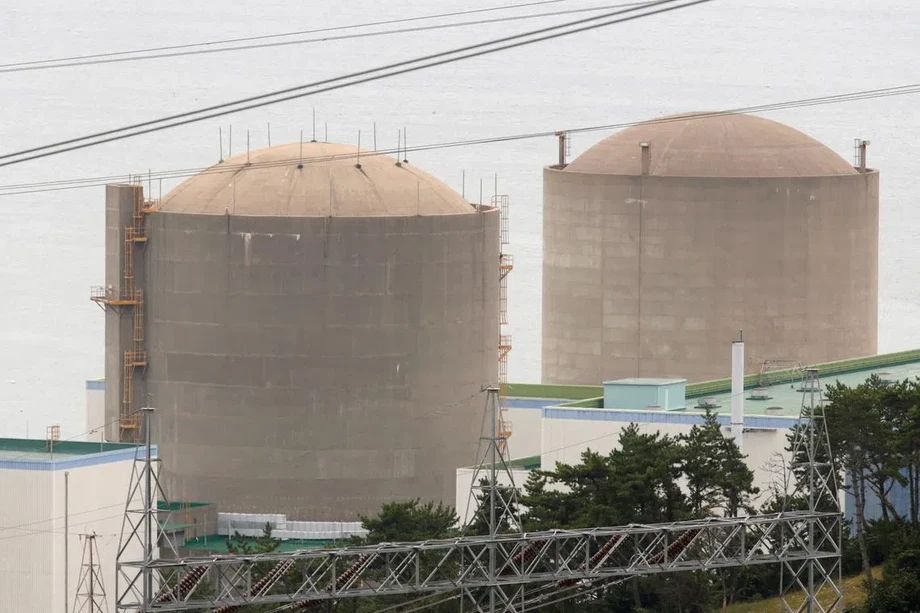
Shin Hanul units 3 and 4 illustrate the lengthy commitment involved. According to the World Nuclear Association, construction began in May 2025 and May 2026, respectively, with completion targeted for 2032 and 2033. Earlier units at Shin Hanul took around a decade from construction to commercial operation, including safety reviews and modifications.
Warmer seas and shared sites enter the safety questions
The forum wants new reactor designs and site assessments to explain how they account for rising seawater temperatures and typhoon risks. Coastal nuclear plants depend on seawater systems to remove heat, making local ocean conditions relevant to both safety equipment and operating performance.
The World Nuclear Association describes Korea Hydro & Nuclear Power assessments identifying when seawater temperatures could reach design values at several existing reactors: 2030 for Shin Wolsong units 1 and 2, 2031 for Hanbit units 3 and 4, and 2034 for Hanbit units 1, 2, 5 and 6.
KHNP plans to replace heat exchangers at all six Hanbit units by the first half of 2029, according to the association. Heat exchangers transfer heat between separate water systems. The planned replacements show how changing environmental conditions can require equipment investment at operating plants.
The forum also asks whether risk assessments consider several reactors at one site stopping simultaneously, and whether evacuation plans address emergencies affecting multiple units. A shared coastal location can expose several plants to the same weather event. For nearby communities, the practical concerns include warning systems, transport and the scale of any evacuation.
Waste deadlines extend beyond the next electricity plan
Spent nuclear fuel remains highly radioactive and requires secure management after removal from a reactor. The forum wants officials to explain where fuel from new plants would be stored, and for how long, if a permanent disposal facility is delayed.
South Korea's Special Act on High-Level Radioactive Waste Management sets a goal of securing a permanent disposal facility by 2060. The management committee under the prime minister's office plans to invite candidate sites in 2027 and select a final location before 2038.
Lee Sang-hoon, a former University of Suwon professor, argues that nuclear economic assessments give insufficient weight to waste disposal costs. He points to Finland's Onkalo project, where site investigations began in 1983 and the location was approved in 2001, an 18 year selection process. His account puts construction costs at about 1 billion euros, compared with an initial estimate of about 500 million euros.
Japan designated Minamitorishima for an initial literature survey in March 2026. That stage examines existing geological information before more detailed investigations. China, meanwhile, plans to complete construction of a disposal facility by 2040 and begin operation in 2050.
These schedules place waste management decades beyond the immediate reactor decision. South Korea's December deliberations will bring together two demands: preparing electricity supply early enough for industry, and giving citizens a detailed account of the costs, safety measures and storage responsibilities that accompany it.
Key Points
- South Korea's August forecast raised projected peak electricity demand in 2040 by about 27 gigawatts compared with April.
- The Different Questions Forum seeks public checks of industrial demand, generation costs, climate risks and spent fuel plans.
- A citizens' panel is scheduled to deliberate in December 2026, with its conclusions informing the 12th electricity plan.
- The April framework combined rising electricity consumption with proposed savings exceeding 120 terawatt hours.
- The existing 11th plan already expands nuclear and renewable capacity, while new reactors can take nine to 13 years to complete.
- South Korea plans to invite waste disposal candidate sites in 2027, select a location before 2038 and secure permanent disposal by 2060.