A recovery bill nearly 50 percent above the losses
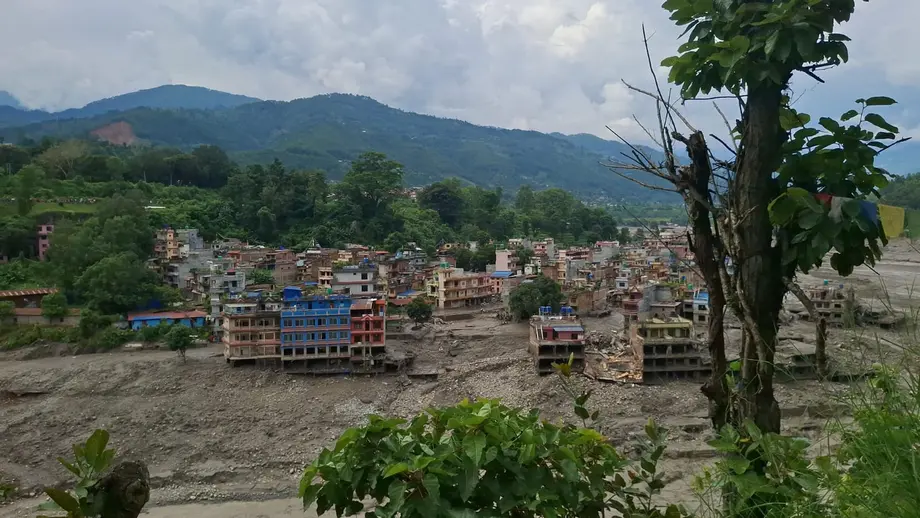
Nepal needs an estimated Rs 706.65 billion to recover from devastating flooding along its central river corridors, according to a preliminary National Planning Commission assessment. The bill is Rs 233.99 billion higher than the Rs 472.66 billion recorded in physical damage and economic losses, reflecting the cost of restoring services, rebuilding livelihoods and making infrastructure safer.
Contents
- A recovery bill nearly 50 percent above the losses
- Where the reconstruction money would go
- How the assessment has developed
- Broken roads hold back several recoveries at once
- Hydropower companies face repairs and mounting debt
- Finding safe land without separating communities
- Children need classrooms, caregivers and protection
- Protection extends beyond shelter
- Farmland and falling incomes shape the next phase
- International funding starts far below the need
- Available money must reach households
- Key Points
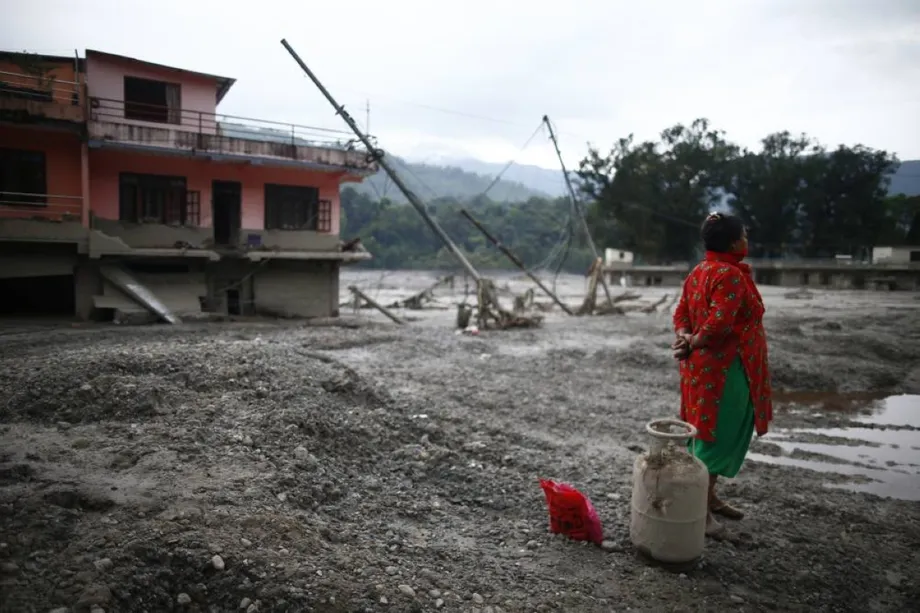
The August 26, 2026, disaster destroyed settlements, severed roads and damaged hydropower facilities, particularly in Rasuwa, Nuwakot and Dhading. More than two months later, families are still seeking secure housing, power companies are waiting for reconstruction decisions, and thousands of children are learning in temporary classrooms.
The commission puts physical damage at Rs 282.90 billion and economic losses at Rs 189.76 billion. Physical damage means assets that were broken or destroyed, such as houses, bridges and power stations. Economic losses include earnings and production that disappear while those assets remain out of use.
Recovery needs are a third measure: the money required to restore services and economic activity, support affected households and reduce future risks. At almost 1.5 times the combined damage and losses, Nepal's proposed recovery programme goes well beyond replacing ruined structures.
The preliminary assessment records 1,464 deaths, 5,285 missing Nepalese and foreign nationals, and 13,795 rescues. Figures attributed to the International Centre for Integrated Mountain Development put deaths at 1,451 and missing people at 5,745. The humanitarian burden includes displaced families, children without parental care and communities whose farmland and transport links have disappeared.
Finance Minister Swarnim Wagle says Nepal is seeking $4 billion to $5 billion for reconstruction and rehabilitation over three to five years. The immediate challenge is turning funding plans into shelter, accessible hospitals, functioning schools and routes that can carry reconstruction equipment.
Where the reconstruction money would go
Infrastructure accounts for the largest part of the commission's recovery estimate: Rs 382.83 billion, or about 54.2 percent of the total. Damage to roads, bridges, hydropower facilities and public buildings also affects the pace at which other sectors can recover.
The commission divides the proposed recovery spending into five broad areas:
- Infrastructure: Rs 382.83 billion, against approximately Rs 173.86 billion in damage and losses.
- Productive activities, including agriculture, livestock and businesses: Rs 145.77 billion, against Rs 136.77 billion in damage and losses.
- Environment, land, forests, biodiversity and disaster risk reduction: Rs 94.43 billion, against Rs 121.68 billion in damage and losses.
- Social services: Rs 57.77 billion, against approximately Rs 39 billion in damage and losses.
- Governance and measures spanning several sectors, including social security: Rs 25.83 billion, against Rs 1.19 billion in damage and losses.
Private households and businesses suffered Rs 254.03 billion in damage and losses, about 53.7 percent of the total. Public assets and services account for Rs 218.63 billion. Private losses include homes, agricultural production, livestock, vehicles, household goods, daily earnings and employment.
The productive sector shows why recovery requires more than construction. Its estimated economic losses of Rs 95.41 billion are more than twice its Rs 41.35 billion in physical damage. A business can lose customers and income for months after the building itself has been repaired.
How the assessment has developed
The government's Rapid Damage and Needs Assessment for the Rasuwa-Bhotekoshi Flood 2026 covered Rasuwa, Nuwakot, Dhading, Gorkha and Chitwan. It described an ice and rock avalanche near the Nepal–Tibet border on August 26 that sent destructive floodwaters downstream.
The main milestones show how emergency estimates have developed into more detailed recovery planning:
- August 26: Flooding devastated settlements and infrastructure along the Bhotekoshi and Trishuli corridors.
- August 31: Nepal submitted a funding proposal to the Fund for Responding to Loss and Damage.
- September 3: Authorities reported 3,948 rescued people staying in holding centres in Nuwakot, Rasuwa, Dhading and Kathmandu.
- September 13: The government's rapid assessment was released, according to earlier assessment coverage.
- October 28: The National Child Rights Council's preliminary shelter data recorded 584 children, including 41 who had lost both parents.
- November 4: Indian Foreign Secretary Vikram Misri discussed reconstruction support with Nepali officials in Kathmandu.
- November 6: Wagle outlined efforts to mobilise reconstruction financing over three to five years.
An earlier rapid assessment estimated Rs 408.29 billion in disaster effects and Rs 723.32 billion in recovery needs. The commission's latest preliminary totals raise estimated damage and losses while lowering the recovery requirement. Its earlier private property survey examined a narrower part of the destruction, including household assets, businesses and preferences about where to rebuild. Inventories and engineering estimates are still being verified, while financing and reconstruction decisions remain under development.
Broken roads hold back several recoveries at once
The rapid assessment recorded 69 kilometres of damaged roads, including 55 kilometres of the Betrawati–Rasuwagadhi section that were completely destroyed. It estimated road restoration at $364.28 million and counted 37 destroyed bridges carrying motor vehicles and 68 damaged trail bridges.
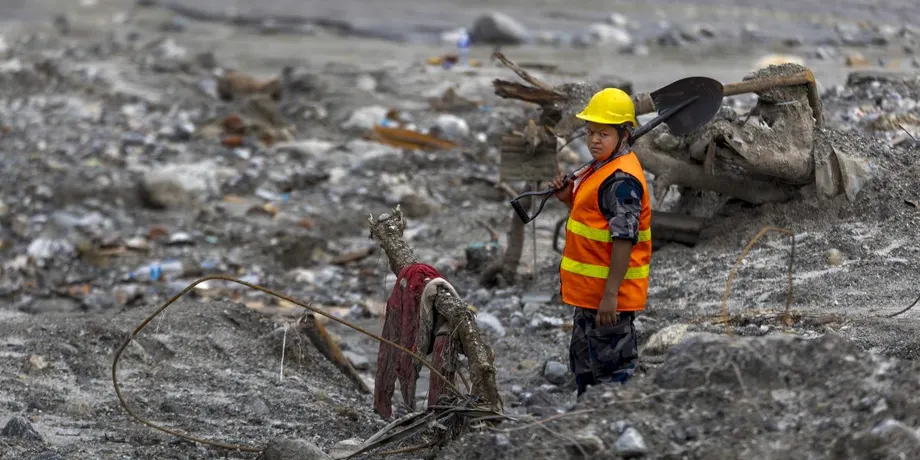
Road access connects several urgent tasks. Families need routes to schools and hospitals. Farmers need to move produce. Hydropower operators need to transport machinery. Initial work includes clearing debris, reopening tracks, creating temporary diversions and protecting slopes and riverbanks.
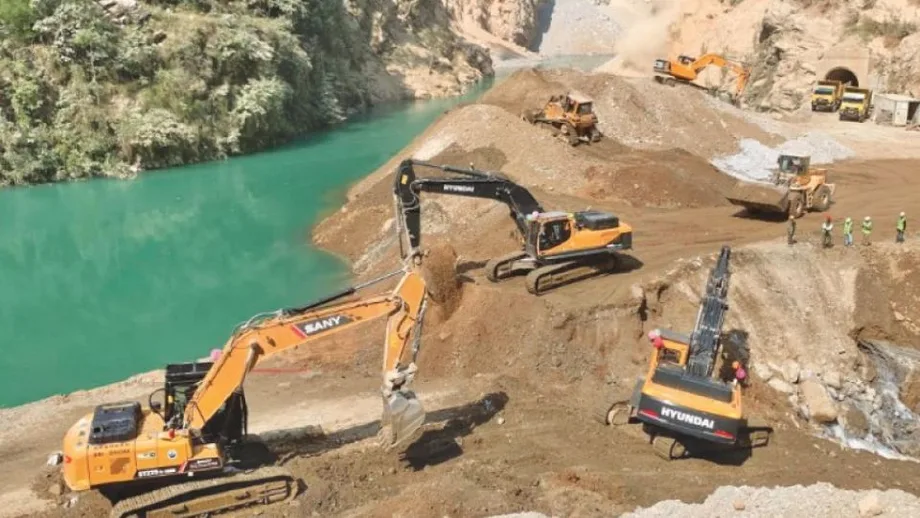
Temporary crossings can reopen basic travel while still leaving heavy construction equipment stranded. Rasuwagadhi Hydropower Company says about six bridges are needed to reach its headworks, sediment removal facilities and powerhouse. Bijay Mohan Bhattarai, secretary of the Independent Power Producers' Association, Nepal, says equipment transport requires a bridge capable of carrying 50 tonnes.
Health services face similar access problems. The Mailung Community Health Unit and health posts at Timure and Syafrubesi were washed away. A bridge connecting to Trishuli Hospital in Nuwakot collapsed, while four health facilities in Dhading suffered partial damage. Alternative premises, medical camps and helicopter evacuations are supporting care while permanent facilities and access routes await restoration.
Hydropower companies face repairs and mounting debt
Fourteen hydropower projects in Rasuwa and Nuwakot were affected, seven belonging to the Nepal Electricity Authority and its subsidiaries and seven operated privately. Preliminary project losses exceeded Rs 12.46 billion. The broader rapid assessment valued energy sector physical damage at $889.21 million and economic losses at $107.91 million.
The assessment also estimated an annual generation loss of 2,520 gigawatt hours, subject to further verification. A gigawatt hour measures electricity produced or consumed over time; lost generation means less electricity available for sale and less revenue for the affected operators.
Rasuwagadhi Hydropower Company is preparing insurance claims and assessing whether rebuilding will be financially viable. Its secretary, Narnath Neupane, says the company continues to face interest obligations even though it is no longer generating revenue. Revised designs, additional borrowing and delayed operations could all increase costs.
Bhattarai estimates that projects previously in operation could take another two years to rebuild. He says support must address both reconstruction costs and the debt accumulated while production is suspended.
"Insurance money alone will not be sufficient. Reconstruction costs will rise, and we will also lose two years of revenue. The government therefore needs to introduce a special reconstruction package," he said.
Electricity Regulatory Commission chair Ram Prasad Dhital says a study is examining insurance, relief, concessional loans and possible effects on electricity tariffs. A government scientific study coordinated by water policy specialist Debesh Belbase is also examining the unusual flooding.
Finding safe land without separating communities
The National Disaster Risk Reduction and Management Authority's early assessment counted 8,317 destroyed houses and about 1.6 million people directly affected across 15 local government areas. Around 15 settlements were destroyed across Rasuwa, Nuwakot and Dhading.
Housing plans must account for repeated displacement. Madhav Prasad Aryal, chair of Uttargaya Rural Municipality, said Khalte had around 300 households, including families awaiting resettlement after the 2015 earthquake. The flood struck before that move could happen, and part of the proposed alternative site at Tallopahire was also swept away.
Former prime minister Baburam Bhattarai has urged authorities to identify safer sites near existing communities, where possible, rather than moving mountain residents hundreds of kilometres from their work and social networks. Previous reconstruction provides practical experience: after the 2015 earthquake, 602 houses were built for the relocated village of Laprak at Gupsipakha.
By November 3, disaster authority chief executive Dharmaraj Upreti said 126 temporary homes had been completed, against an estimated requirement of 400 to 450. Some families had chosen rental accommodation. Officials identified 45 potential temporary housing sites, and 43 organisations expressed interest in construction. Geological studies were underway for permanent settlements.
Upreti said about 5,100 households had received Rs 45,000 each in housing support, equivalent to approximately Rs 229.5 million. More temporary accommodation was expected in Nuwakot because suitable land was scarce in affected parts of Rasuwa.
Children need classrooms, caregivers and protection
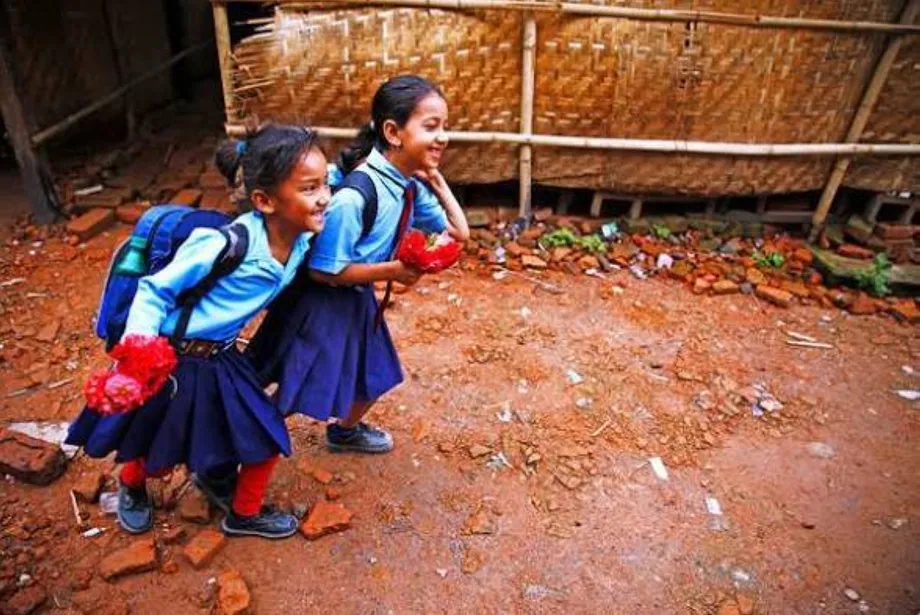
More than 10,000 children and about 500 teachers were affected by damage to 19 schools in Rasuwa, Nuwakot and Dhading, according to Ministry of Education and Sports information officer Bir Bahadur Thami. Classes were arranged through 56 temporary learning centres.
More than 150 children staying in Kathmandu holding centres were attending schools run by Kathmandu Metropolitan City, Nagarjun Municipality and Tokha Municipality. Among 584 children recorded in shelters by October 28, the National Child Rights Council counted 269 who had lost one parent and 41 who had lost both.
The ministry announced the Secure Future Scholarship Scheme and began seeking resources for a Rs 1 billion fund. Children who lost both parents have first priority for residential, full or partial scholarships, followed by other affected children according to need.
A partnership lasting five years between the child rights council and SOS Children's Villages Nepal provides family based care for 50 children, care by relatives for 100 and direct assistance for another 100. Education recovery planning also prioritises safe, inclusive schools and psychological support.
Protection extends beyond shelter
The government approved a three month response plan costing Rs 739.99 million for vulnerable communities along the Bhotekoshi and Kaligandaki corridors. Its activities cover child protection, prevention of violence against women and girls, and psychological and social support.
Ministry secretary Krishna Bahadur Raut told a parliamentary committee that 10 Women-Friendly Spaces had served 2,910 women and 757 adolescent girls. Services included hygiene supplies, baby kits and support for pregnant women, breastfeeding mothers and people with disabilities. Police in plain clothes were deployed at 15 locations as part of protection measures.
Local organisations also helped reach displaced communities. Matthew Hanning, chief executive of International Nepal Fellowship UK, said the charity and partners, including Good Neighbours Nepal, supported around 1,500 people within days. He described families sheltering in Kathmandu and others weighing a return to land where roads, bridges and livelihoods had disappeared.
Hanning said four churches were completely destroyed and more than 10 partially damaged within one district's church network, with some pastors and congregation members missing. His account also described continuing floods and landslides, adding uncertainty for communities deciding where to settle.
Farmland and falling incomes shape the next phase
Farmers from Rasuwa to Dhading lost productive land beneath flood debris. Some residents want to cultivate parts of the newly formed riverbed land once parcel boundaries are identified. The government says it has begun identifying affected agricultural land, a necessary step toward deciding where farming can resume.
The commission estimates that poverty measured through household consumption rose from 12.2 percent to 14.9 percent in affected local government areas. That increase of 2.7 percentage points amounts to a relative rise of about 22 percent, showing how quickly lost assets and earnings can reduce families' ability to meet everyday needs.
The assessment also warns that the disaster could cut one percentage point from the government's projected economic growth rate of 7 percent. Transport disruption, lost electricity production, reduced agricultural output and interrupted trade all contribute to that risk.
Tourism provides another concrete example. Following disrupted pilgrimage routes, Indian visitor arrivals fell from 17,298 in October 2025 to 12,097 in October 2026, about 30 percent. Total arrivals still rose, helped by other markets, leaving businesses exposed differently depending on their customers and routes.
International funding starts far below the need
The Fund for Responding to Loss and Damage provisionally set aside $21.6 million for Nepal through its Barbados Implementation Modalities pilot. The decision was described as the fund's first response to a specific disaster. Against the reported $4.77 billion recovery estimate, the allocation represents about 0.45 percent.
Fund executive director Ibrahima Cheikh Diong said the board had adapted its operations to urgent needs. Campaigners want a permanent emergency response system rather than decisions arranged separately after each disaster. Harjeet Singh, global convenor of the Fill the Fund campaign, described the speed he believes is needed.
"We must set up a permanent rapid-response system that moves support in days, not months," he said.
Wagle says Nepal hopes to obtain about 80 percent of its planned $4 billion to $5 billion financing from India, China, the World Bank and the Asian Development Bank over three to five years. That would mean roughly $3.2 billion to $4 billion from those four partners, with the remainder sought elsewhere.
Misri told Foreign Secretary Amrit Bahadur Rai and other Nepali officials on November 4 that India was ready to consider specific assistance requests and project proposals. Talks with China include reconstruction and infrastructure serving the Rasuwa, Tatopani and Korala border crossings.
Wagle says current fiscal year reconstruction will use money redirected from the existing budget, while additional resources may enter the following year's budget. He also says Nepal has joined a catastrophe insurance system, intended to provide faster funding after major disasters.
Available money must reach households
The Prime Minister's Disaster Relief Fund reportedly held about Rs 18 billion, compared with Rs 2.17 billion before the floods. Of Rs 1 billion allocated to the disaster authority for rescue and relief, Rs 370 million had been released, with around Rs 260 million spent on helicopter operations.
Earlier scrutiny of delayed rent assistance identified unfinished household registration, verification and missing requests from local governments as obstacles to payments. Those administrative steps affect whether centrally held funds reach families trying to rent rooms and restart work.
Housing delivery also requires matching buildings to households. Fifty temporary shelters in Bidur reportedly remained unoccupied despite completion before Dashain, while officials were arranging further construction elsewhere. The immediate recovery priorities are concrete: occupied shelter, usable transport routes, school attendance, accessible healthcare and restored earnings.
Key Points
- The preliminary recovery requirement is Rs 706.65 billion, nearly 50 percent above estimated damage and economic losses.
- Infrastructure requires Rs 382.83 billion, about 54 percent of proposed recovery spending.
- Fourteen hydropower projects were affected, while damaged bridges restrict access for reconstruction machinery.
- More than 10,000 children were affected, with classes arranged through 56 temporary learning centres.
- Nepal is seeking $4 billion to $5 billion over three to five years; the loss and damage fund allocation covers about 0.45 percent of the reported recovery requirement.
- Housing, livelihoods, child protection and faster delivery of assistance remain central reconstruction priorities.