A first allocation, with another approval still required
The United Nations Fund for Responding to Loss and Damage provisionally set aside $21.6 million for Nepal on October 22, 2026, following the devastating August 26 floods in the Bhote Koshi and Trishuli river system. The package includes $20 million for assistance and $1.6 million for oversight and supervision, together worth about 3.26 billion Nepalese rupees.
Contents
- A first allocation, with another approval still required
- What the flood destroyed
- How Nepal secured an exceptional hearing
- What Nepal must submit next
- How far the money could stretch
- Why board members argued over precedent
- A fund facing requests far beyond its resources
- Other assistance and the climate connection
- The next decisions
- Key Points
The decision came 57 days after the disaster, at the fund's first extraordinary board meeting. It was the first time the fund had earmarked money for an individual country since its creation through the UN climate negotiations of 2022 and 2023.
Nepal must now submit a formal proposal explaining where the assistance would go, how affected communities would benefit and which organisation would manage it. The board must approve that proposal before the release process can move forward. No firm date has been given for Nepal to receive the money.
The $20 million intended for assistance amounts to about 0.42 percent of the government's estimated $4.78 billion recovery and reconstruction requirement. That leaves almost the entire rebuilding bill to be financed through other channels.
Camila Minerva Rodriguez Tavarez, the fund's Dominican board co-chair, announced the decision after the virtual meeting reached agreement:
Hearing no objections, the decision is so adopted.
For families whose homes, schools, roads and livelihoods were swept away, the immediate task is turning that financial commitment into an approved programme. The broader issue for the fund is whether Nepal's exceptional route can help shape a faster response to future disasters.
What the flood destroyed
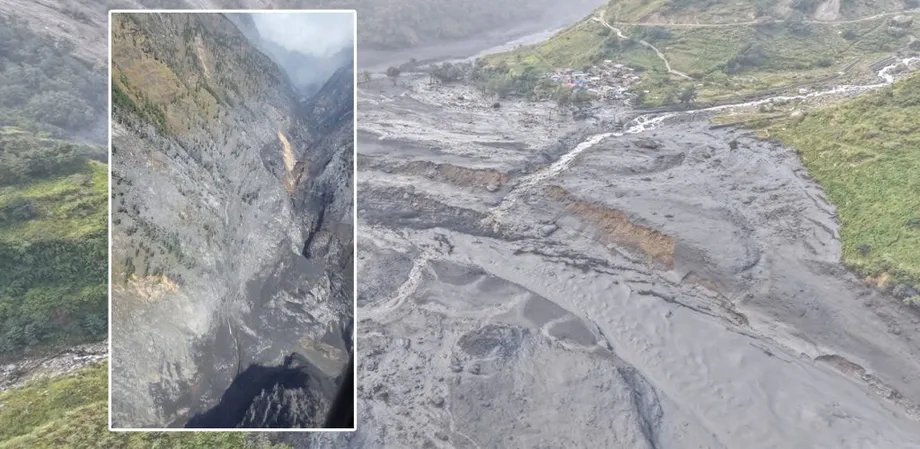
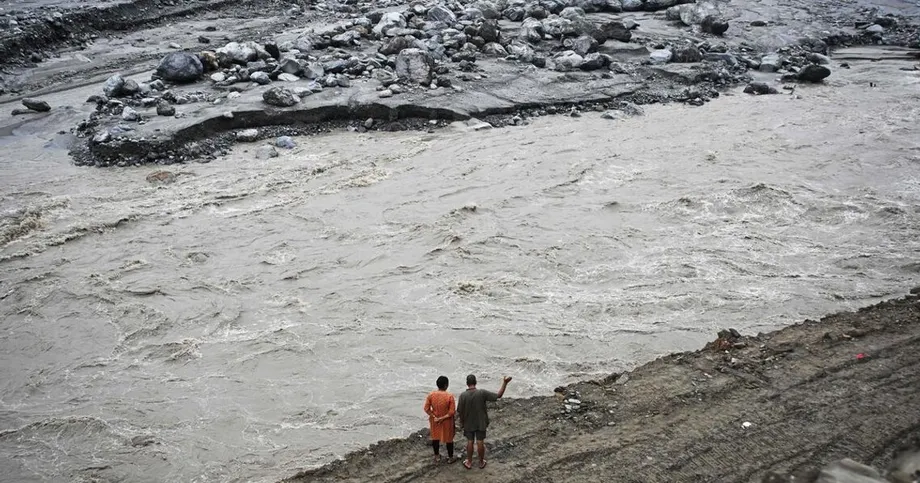
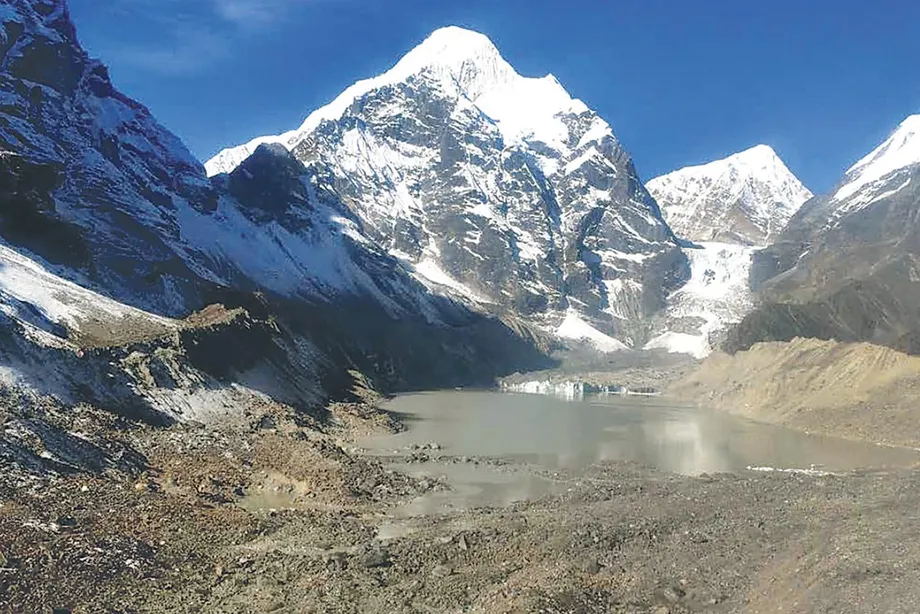
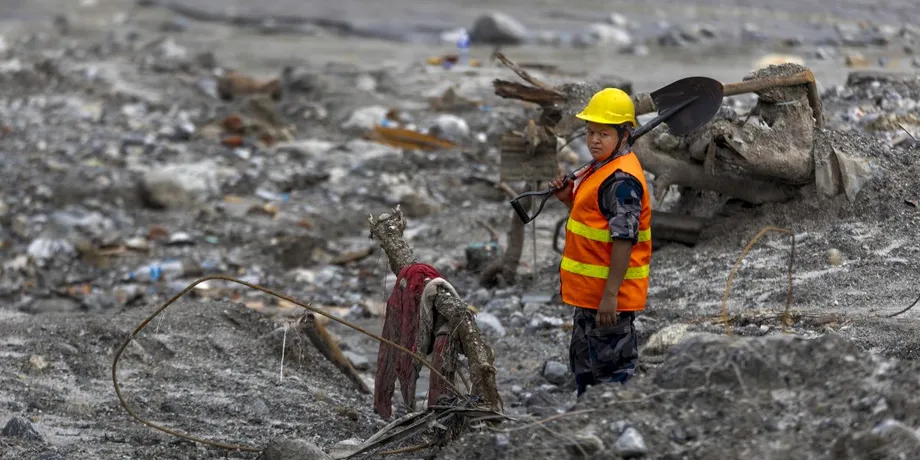
The disaster began when a large mass of rock and glacier ice collapsed in the Langtang Lirung area of Rasuwa district, near Nepal's border with China. Water, ice, rocks and debris surged through the Bhote Koshi and Trishuli river system, devastating communities in Rasuwa and Nuwakot.
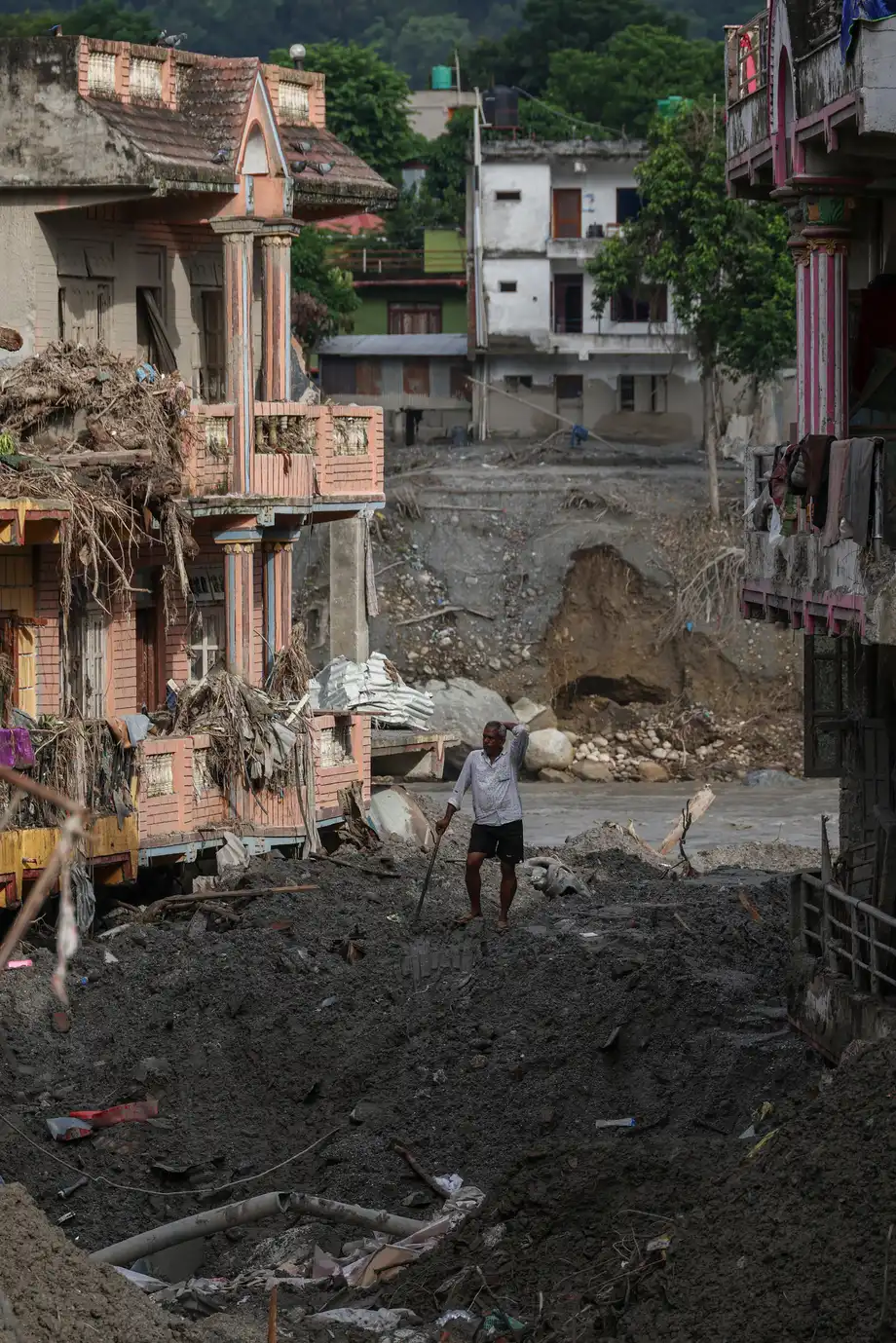
Nepal's agriculture, forests and environment ministry put the death toll above 1,500, with more than 5,000 people missing and more than 60,000 people directly affected across approximately 15,000 households. A briefing by UN Project Services chief Jorge Moreira da Silva gave a broader affected population of about 100,000, including more than 30,000 children, and put the number missing at 5,600. A further published tally placed deaths above 2,000.
Moreira da Silva described the destruction after joining UNOPS teams in Nepal. Survivors had told him of a wave more than 100 metres high, travelling at 180 kilometres per hour and devastating 60 kilometres of valley.
The UNOPS chief explained the scale in direct terms:
We are not dealing with a normal flood.
His briefing described more than 100 collapsed bridges, 13 destroyed hydropower dams and 23 destroyed schools. About 2.2 million tonnes of debris and sediment covered places previously occupied by homes, roads, schools and rivers.
Missing bridges have transformed daily travel. Moreira da Silva said a journey that once took minutes on foot could now take 12 hours. Rebuilding transport links therefore affects much more than movement: it determines access to classrooms, medical treatment, markets and reconstruction supplies.
How Nepal secured an exceptional hearing
Finance Minister Swarnim Wagle and Agriculture, Forests and Environment Minister Gita Chaudhary wrote jointly to the fund on August 31, five days after the flood, seeking urgent assistance. Nepal's letter did not request a specific $20 million allocation. That amount was determined within the limits of the fund's initial assistance programme.
Fourteen board members representing least developed countries, African states and Asia-Pacific states backed the request for an emergency meeting. Representatives from Latin America, the Caribbean and small island developing states also supported an urgent response. Several rounds of formal and informal discussions followed.
The main dates show how the request moved from disaster response into the fund's decision process:
- August 26, 2026: The collapse in the Langtang Lirung area triggered the destructive flood.
- August 31: Wagle and Chaudhary sent their joint appeal for urgent assistance.
- October 22: The board provisionally earmarked $21.6 million and invited Nepal to submit a formal proposal outside the usual application period.
- December: The board is expected to consider its first projects and discuss its longer term operating model at a meeting in the Philippines.
Wagle, Nepal's finance minister, welcomed the response to the joint letter:
The fact that they could convene this emergency meeting in response to our letter and commit $20 million of grant money is very welcome.
What Nepal must submit next
Nepal will prepare its proposal through the Barbados Implementation Modalities, the rules governing the fund's initial phase of assistance. The exceptional decision allows the country to enter that process after the regular submission period had closed.
The proposal must turn the broad goal of relief, rehabilitation and reconstruction into a programme the board can assess. Nepal needs to identify the activities to be financed, the communities that would benefit and the institution through which the money would be managed.
Maheshwor Dhakal, spokesperson for Nepal's Ministry of Agriculture, Forests and Environment and an alternate member of the fund's board, described the next step:
Based on the guidelines and procedures provided by the Loss and Damage Fund Secretariat, Nepal will prepare and submit a programme proposal to address losses and damage caused by climate-related disasters.
The additional $1.6 million is intended for oversight, supervision and related management functions. The amount provisionally reserved for assistance in affected areas is $20 million, the current maximum for an individual application.
Dhakal also described the decision to the board as recognition of the victims' suffering and dignity. For the government, completing the proposal is now the practical route from that recognition to financing recovery work.
How far the money could stretch
Nepal's preliminary assessment separates approximately $1.8 billion in physical damage from $883 million in economic losses. Physical damage covers assets such as buildings, bridges and power infrastructure. Economic losses include the income and production interrupted when those assets stop functioning.
Together, those figures total about $2.68 billion. The $20 million allocation is roughly 0.75 percent of that amount, commonly expressed as about 0.7 percent against the rounded $2.7 billion estimate.
Recovery and reconstruction are expected to cost more: approximately $4.78 billion, or 723 billion Nepalese rupees. Against that requirement, the same $20 million represents about 0.42 percent. The two percentages answer different questions, one about damage and lost economic activity, the other about the cost of recovery.
The government's initial estimate put immediate relief and reconstruction during the first six months at $57.67 million, alongside approximately $4.71 billion for reconstruction over a longer period. The provisional $20 million would equal about 35 percent of the immediate requirement if it were all directed there, although Nepal's programme has yet to specify spending priorities.
Nepal is still assessing the full economic and other losses while preparing its recovery plan with support from the UN and multilateral development banks. Moreira da Silva put recovery needs at roughly 10 percent of Nepal's gross domestic product, a measure of the country's annual economic output.
Why board members argued over precedent
Board members unanimously supported the Nepal decision, but they disagreed over what it should mean for other countries. Germany and Czechia opposed treating the arrangement as a precedent. Japan stressed that assistance must follow established rules and procedures.
Eight representatives, four from developed countries and four from developing countries, negotiated the agreement. Pakistan's board representative Ali Tauqeer Sheikh described the resulting route as a window available once and only to Nepal, narrower than developing countries had sought.
Jan Dusik, representing Czechia and the European Union on the board, said the arrangement could inform future work while remaining exceptional:
This is not a precedent on one hand, but on the other it provides a learning for the development of the long-term model of the fund.
Sheikh urged members to let Nepal's experience inform work on faster payments:
Please do not define the boundaries for learning.
Ecuador's Walter Schuldt also supported an unrestricted review of the lessons. The decision instructs the secretariat to examine Nepal's experience, while the design of a permanent mechanism for rapid assistance remains for future board discussion.
A fund facing requests far beyond its resources
The fund's initial assistance programme has an allocation of $342 million. By June 29, it had received 176 applications concerning 119 countries, seeking approximately $2.8 billion. Those requests total more than eight times the programme's budget.
Developed countries had pledged $822 million to the fund, with contributions received standing at $629.68 million. The difference is $192.32 million, meaning roughly 23 percent of the promised money had yet to arrive. At the time of the Nepal decision, the fund had made no disbursements.
Pledges, paid contributions and programme allocations describe different stages of financing. A pledge is a promise to contribute. A paid contribution is money received by the fund. A programme allocation is the amount reserved for a particular funding round or purpose.
Tasneem Essop, executive director of Climate Action Network International, urged governments to turn their commitments into usable resources:
Pledges on paper cannot rebuild homes or restore lives. Those commitments must be monetised urgently, and the Fund replenished to the scale this crisis demands.
Harjeet Singh, global convenor of the Fill the Fund campaign and founding director of the Satat Sampada Climate Foundation, called for a permanent mechanism rather than repeated exceptional negotiations:
We must set up a permanent rapid-response system that moves support in days, not months.
Other assistance and the climate connection
The UN and humanitarian partners launched a $49.6 million emergency appeal following the disaster. Moreira da Silva later said the appeal, rounded to $50 million, had raised $24.5 million, roughly half its target. The United States announced another $31 million in flood recovery support in September.
These efforts address urgent needs alongside Nepal's much larger reconstruction requirement. The government has appealed to development partners, businesses and other organisations for support, and is planning a pledging conference.
Scientific studies cited in connection with the disaster describe several ways warming can increase mountain hazards. Higher temperatures accelerate glacier loss and melt ice held within rock fractures, weakening slopes. When rock and ice collapse into water or onto a glacier, the resulting surge can carry destructive quantities of debris downstream.
A September World Weather Attribution assessment identified climate change as a primary contributing factor. The physical sequence involved several connected processes, including slope failure, glacier conditions and the movement of water and debris through the valleys.
Moreira da Silva pointed to Nepal's estimated 0.08 percent share of global greenhouse gas emissions when arguing that the country should receive international help with recovery. He called for investment in warning systems, infrastructure able to withstand climate hazards and safer planning.
The next decisions
The board's December meeting in the Philippines is expected to consider its first project approvals and debate the fund's longer term model, including how quickly assistance can be released after disasters. Nepal's experience will give members a concrete case to examine: an urgent appeal, an exceptional meeting and a provisional allocation that still requires a programme proposal.
The fund's 11th board meeting is also planned for Kathmandu in March 2027. Nepal's ministry announced March 17 to 19; other published schedules give March 9 to 19. The ministry's dates provide the narrower meeting window.
Ajay Mathur, a former Indian climate negotiator and former director general of the International Solar Alliance, welcomed the operational step while calling for quicker support. Raju Chhetri, lead climate finance negotiator for least developed countries, described the agreement as evidence that countries could reach effective consensus on urgent needs.
For Nepal, the next concrete milestone is submission and approval of its programme. For the board, the December debate will address whether future disaster responses can move through an established rapid process rather than depend on another exceptional negotiation.
Key Points
- The fund provisionally earmarked $21.6 million for Nepal on October 22, including $20 million for assistance and $1.6 million for oversight.
- Nepal must submit a formal programme proposal and obtain board approval before the release process proceeds.
- The $20 million equals about 0.42 percent of Nepal's estimated $4.78 billion recovery and reconstruction requirement.
- The August 26 floods devastated homes, bridges, schools, health facilities and hydropower infrastructure.
- The fund's initial $342 million programme faces requests totalling approximately $2.8 billion.
- The board will discuss its longer term model, including rapid disbursement, in December in the Philippines.