A healthy spring is the goal, but October shapes the plan
Shohei Ohtani is expected to recover from right biceps and left knee injuries without surgery and arrive at spring training in 2027 at full strength. The harder decision for the Los Angeles Dodgers is when to let him start pitching again, even if his body is ready from the beginning.
Contents
- A healthy spring is the goal, but October shapes the plan
- How the injuries changed his season
- The dates that narrowed his options
- Rest came too late to restore his hitting
- One option is fewer starts across the whole season
- A later pitching debut has worked before
- Why relief pitching would be complicated
- Ohtani and the Dodgers need a shared stopping point
- October adds a demand his earlier seasons did not
- Key Points
Andrew Friedman, the Dodgers' president of baseball operations, said at an October 21 press conference at Dodger Stadium that the club expects Ohtani to return to pitching. Rest, rather than an operation, is the treatment planned after injuries interrupted his 2026 season and weakened his hitting during the playoffs.
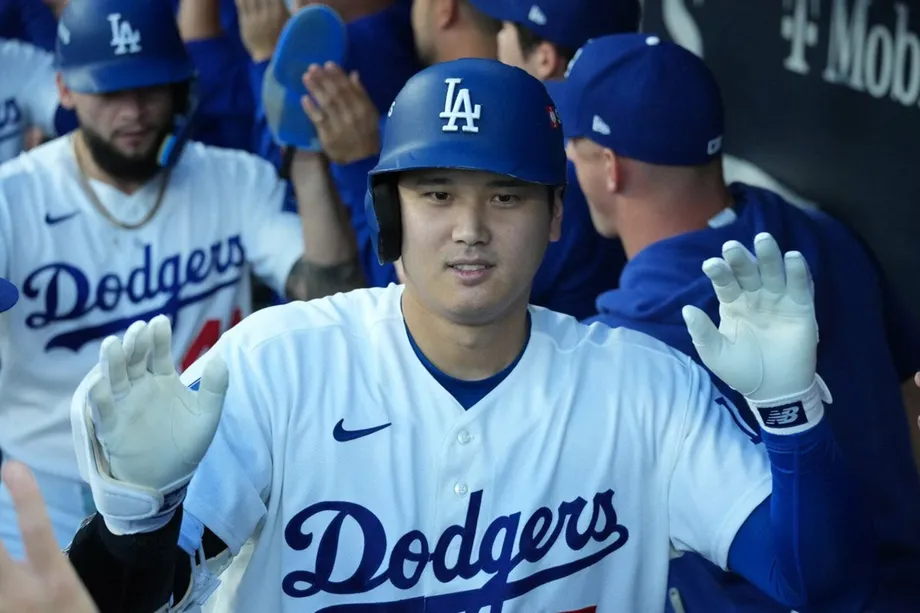
Ohtani, 32, finished with a team leading 30 home runs and a 1.79 earned run average across 14 pitching starts. Yet he did not pitch after July 3. By October, his production at the plate had also fallen: he went 5 for 26, a .192 batting average, as Milwaukee swept Los Angeles in four games in the National League Championship Series.
Friedman made the team's position on Ohtani's pitching future explicit.
I'm not only expecting him to pitch, we're excited about him pitching.
The Dodgers have not settled on a starting date, an innings limit or a schedule of rest days for 2027. Their task is to keep both parts of Ohtani's game productive through a regular season of 162 games and then the postseason, rather than reaching the autumn with his pitching already shut down and his swing affected by pain.
That could mean holding him out of the starting rotation early in the season while keeping his bat in the lineup, a strategy with a recent precedent in Los Angeles.
How the injuries changed his season
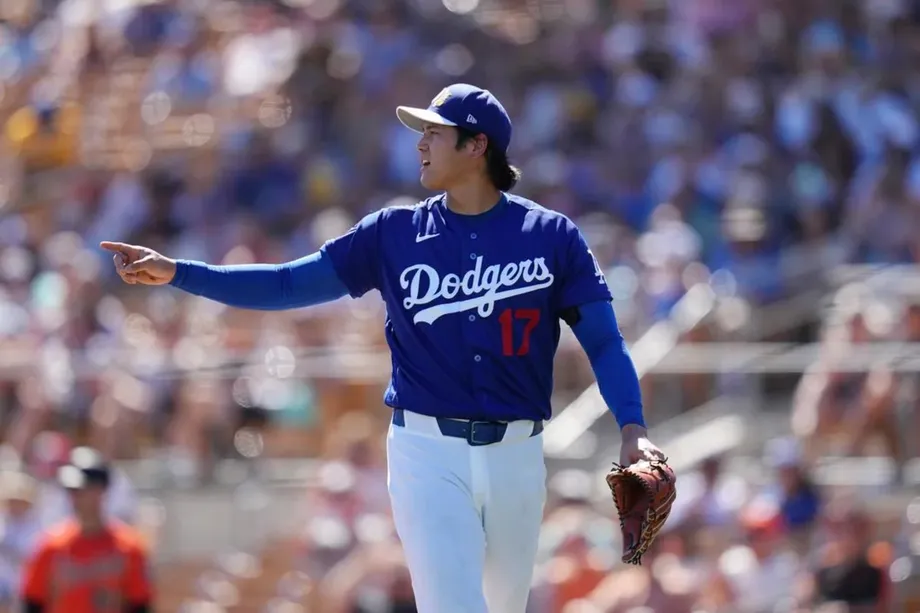
Ohtani's final pitching figures show why the Dodgers want him back on the mound. He went 8 wins and 2 losses and allowed an average of 1.79 earned runs per nine innings over 85⅔ innings. His career ERA across 114 regular season starts stands at 2.83.
His 2026 performance changed as the knee trouble continued. Ohtani had a 0.74 ERA through his first 10 starts, followed by a 4.38 ERA in his last four, all of which came while he was dealing with the knee injury.
The problem extended beyond pitching. Ohtani finished the regular season batting .275, with a .377 on base percentage and an .889 OPS. On base percentage measures how often a hitter reaches base; OPS combines that figure with slugging percentage, which gives greater weight to hits for extra bases.
Those numbers remained productive, but his batting average, on base percentage and OPS were his lowest since 2022. His 30 home runs were his fewest in a full season since 2019.
Friedman described injuries that improved and then became troublesome again, with the knee sometimes settling down before the biceps became the larger concern. Ohtani was managing several recurring problems rather than recovering steadily from a single setback.
The dates that narrowed his options
Ohtani's season included repeated efforts to keep hitting while restoring his pitching. By September, the Dodgers had moved from adjusting his workload to placing him on the injured list.
- June 11: Ohtani left a game with left knee inflammation. The Dodgers initially suspected a stolen base attempt had aggravated it; Ohtani later suggested his pitching mechanics might have contributed.
- July 3: He made his final pitching start of 2026 and was later replaced as a hitter because of right biceps discomfort.
- July 19: The Dodgers kept him out of the rotation indefinitely after knee discomfort continued despite an Orthovisc injection intended to help lubricate the joint.
- July 25: Ohtani was shut down from throwing after another knee setback.
- August 8: He resumed playing catch, beginning another attempt to return to the mound. He advanced to a bullpen session on August 14 and faced hitters on August 23.
- August 29: The Dodgers pushed back a possible return after a difficult bullpen session the previous day.
- September 7: After missing four consecutive games, Ohtani returned to the lineup and said he would concentrate exclusively on hitting for the rest of the season.
- September 11: The Dodgers placed him on the injured list for 15 days.
- October 13: Team officials discussed whether to leave him out of NLCS Game 3. Ohtani persuaded them he felt well enough to play.
Manager Dave Roberts later acknowledged that, with hindsight, he would have preferred putting Ohtani on the injured list earlier. He returned for the final five games of the regular season, leaving little time to recover his rhythm before the playoffs.
Rest came too late to restore his hitting
Ohtani's decline at the plate overlapped with his August attempt to rebuild his pitching workload. Beginning August 8, he batted .205 with a .666 OPS over his final 29 regular season games.
Across his final 26 games, including the postseason, his batting average was .167, his on base percentage was .298 and his slugging percentage was .240. He hit one home run in that stretch.
The Dodgers hoped his September absence and their bye through the Wild Card round would leave him stronger for October. Instead, he began the playoffs with three hits in 20 at bats and no hits for extra bases through six games, prompting the discussion about sitting him in NLCS Game 3.
His three run homer in Game 4 ended a streak of 25 games without a home run. It was his only postseason hit for extra bases, alongside four singles. Milwaukee nevertheless completed the sweep, ending the Dodgers' attempt to win a third consecutive World Series.
Other Los Angeles hitters were struggling too. For the club, Ohtani's finish created a specific planning problem: stopping his pitching in July had still left him unable to deliver his usual offensive production in October.
One option is fewer starts across the whole season
The most direct route would be to begin 2027 with Ohtani in the rotation and reduce his workload through extra rest or skipped starts. The Dodgers already use six starting pitchers rather than the more traditional five, giving each pitcher a longer interval between outings.
Los Angeles also has enough pitching depth to consider breaks without requiring Ohtani to take every turn. Yoshinobu Yamamoto, Blake Snell, Tyler Glasnow and Roki Sasaki are returning options, with Justin Wrobleski, Emmet Sheehan and Gavin Stone providing further depth. Stone is coming back from shoulder surgery.
Friedman said the team must consider whether Ohtani should pitch immediately and, if so, how to handle his first month before assessing his condition again. The Dodgers sometimes gave him a full day off after pitching in 2026, but they did not skip starts before the injuries forced more substantial changes.
Ohtani's largest workload in both roles came with the Angels in 2022, when he made 666 plate appearances and threw 166 innings across 28 starts. His 85⅔ innings in 2026 amounted to just over half that pitching total.
The Dodgers are now trying to build a schedule that includes an additional demand beyond those regular season numbers: enough strength left for a potentially long postseason.
A later pitching debut has worked before
Delaying Ohtani's pitching season would allow Los Angeles to use him as a hitter while he gradually prepares to start games. June is one possible window discussed as an option, rather than an announced return date.
The Dodgers followed a similar process in 2025 as Ohtani returned from elbow ligament surgery. He threw bullpen sessions and faced hitters before games, then served as a hitter at night. His first pitching start came on June 16.
Los Angeles gradually increased his outings from one inning in June to six innings in September. Ohtani then made four postseason starts, pitching 20⅓ innings with a 4.43 ERA as the Dodgers won the World Series.
His roster status makes that arrangement easier. Ohtani qualifies as a player who both pitches and hits, so he counts as a position player for roster limits. The Dodgers can therefore carry their usual complement of 13 pitchers while he prepares to join them on the mound.
A later start would give the club fewer regular season innings from one of its most effective pitchers. That matters even for a strong team: winning enough games to secure a playoff bye can remove the need to survive a Wild Card Series played over a maximum of three games.
The decision is therefore about distributing his contribution across the calendar. More starts in April and May could help the standings, while a shorter pitching season could leave more capacity for September and October.
Why relief pitching would be complicated
Using Ohtani out of the bullpen offers another possible route, but shorter appearances bring scheduling and lineup difficulties. A starting pitcher knows when his outing will begin. A relief pitcher may have to prepare quickly as a game changes.
Ohtani would need to warm up while also remaining ready to bat. If his place in the lineup were approaching, the Dodgers could face a conflict between getting him ready to pitch and getting him to the plate.
The designated hitter rule creates another cost. A designated hitter bats without playing a defensive position. Special rules allow Ohtani to start as both pitcher and designated hitter, then remain the designated hitter after he stops pitching. Moving him from designated hitter to the mound in relief works differently: the team gives up its designated hitter role.
Using him as the final pitcher could reduce that difficulty, but an extended game could still leave Los Angeles without his bat after he exits. His relief appearance for Japan in the 2023 World Baseball Classic final occurred when his next turn to hit was eight lineup spots away, a useful gap that would not always be available during a league game.
Ohtani and the Dodgers need a shared stopping point
Friedman has identified communication about Ohtani's physical condition as part of the challenge. The club depends heavily on his account of how he feels when deciding whether he should hit, pitch, rest or attempt another stage of rehabilitation.
After Ohtani returned from the injured list, Friedman described the difference between frequent conversations and getting a complete picture of his discomfort.
The communication back and forth has been awesome. The fully sharing exactly how he's feeling, maybe not as awesome.
Friedman connected that reluctance to a familiar competitive instinct among star players who want to help their teams win. In Ohtani's case, the decisions affect two jobs at once. A pitching setback can lead to more rehabilitation work while he is still expected to produce as a hitter.
Ohtani has said he will review his treatment and training program. Asked after the Dodgers' elimination whether he intended to pitch again next season, he answered through interpreter Will Ireton.
Yes, definitely. And looking forward to having a better season next year.
Ohtani turns 33 in July 2027 and has undergone two major operations on the ligaments in his right elbow. The immediate plan for his knee and biceps is rest, while the broader work involves agreeing how to respond sooner when discomfort returns.
October adds a demand his earlier seasons did not
Ohtani won the 2023 World Baseball Classic with Japan and was named the tournament's most valuable player. He continued pitching for the Angels that regular season before undergoing elbow ligament surgery near its end, which kept him off the mound throughout 2024.
His move to Los Angeles changed the length of the season he must prepare for. The Angels did not reach the playoffs during his time there. The Dodgers won the World Series in 2024 and 2025, then reached the NLCS in 2026, extending competition well beyond the regular season.
Ohtani has never begun a season performing both roles and then pitched in that year's postseason. In 2024, he hit but did not pitch. In 2025, his pitching began in June. In 2026, he opened the season doing both, but his last pitching appearance came in July.
The Dodgers remain committed to his return to the mound rather than a permanent move to hitting alone. Their next plan must account for the full schedule, including the weeks when the team hopes to be competing for another championship.
For Ohtani, a successful recovery would restore the opportunity to do both jobs. For Los Angeles, a successful season would also mean having him strong enough to perform them when the most consequential games arrive.
Key Points
- Ohtani's right biceps and left knee injuries are expected to require rest, not surgery.
- The Dodgers expect him to be healthy for spring training and to pitch in 2027.
- He finished 2026 with 30 home runs and a 1.79 ERA in 14 starts, but did not pitch after July 3.
- He batted .192 in the postseason as Milwaukee swept Los Angeles in the NLCS.
- Options include extra rest between starts, a later pitching debut or a more complicated move to relief work.
- No pitching return date or workload limits have been announced.
- The central goal is to preserve his hitting and pitching through October.