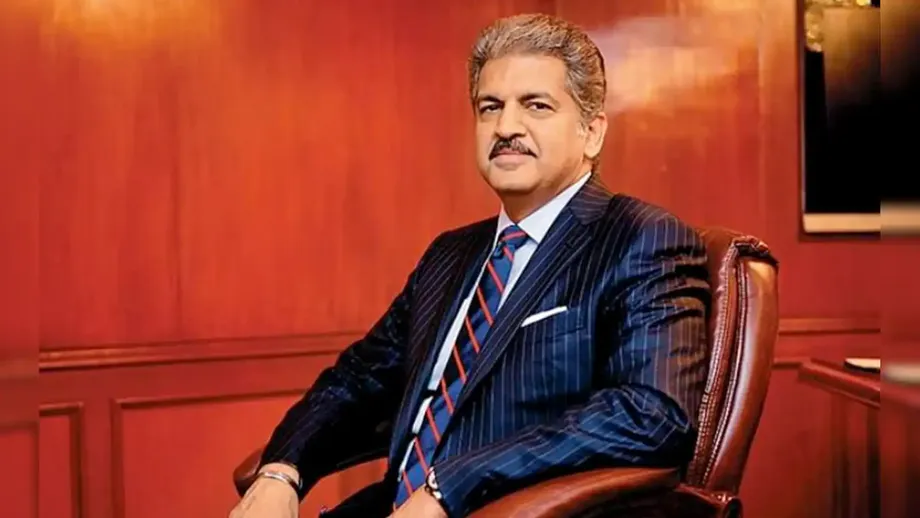
A V8 request meets an unexpected expiry date
A request for a Mahindra Scorpio producing 500 horsepower took an unusual turn when the fan proposing it told Anand Mahindra he was probably going to die in 20 years. The Mahindra Group chairman responded by asking for an extension to his warranty, turning a blunt prediction about his lifespan into a joke about the vehicles his company builds.
Contents
- A V8 request meets an unexpected expiry date
- What Naidu asked Mahindra to build
- Mahindra turns the prediction into a warranty joke
- How electric vehicles in Bhutan started the discussion
- The Scorpio hybrid behind Mahindra's response
- What Mahindra's 2008 statement records
- The programme extended beyond hybrids
- Two different ideas of a desirable Scorpio
- Key Points
The exchange with Pranesh Naidu, chief executive of Ayma Superintelligence Interactive Corp, followed a more substantive argument about Mahindra's engineering choices. Behind the humour were competing ideas about what an Indian vehicle maker should build: powerful engines for enthusiasts, or vehicles designed around fuel consumption, customer needs and alternative sources of energy.
Mahindra's reply to Naidu was posted on October 22, 2026. The discussion had begun with an October 14 post about electric vehicles supplied to Bhutan's government, then moved through criticism of the company's engine range and its record on hybrid technology.
The history includes a Scorpio hybrid concept unveiled in 2006 and an official company statement from January 2008 describing hybrid vehicles undergoing testing. Mahindra says the earlier Scorpio project never reached commercial production because the market was not ready. No production plan or launch date for a Scorpio with a V8 engine was announced in the exchange.
What Naidu asked Mahindra to build
Naidu, who uses the X handle @praneshbuilds, addressed Mahindra as "Anand uncle" and said he had admired him since childhood. His request was for an engine project that would appeal to people who prize power and the experience of driving a muscular SUV.
Naidu, the technology company chief executive, linked that request to a prediction about Mahindra's remaining years:
You're probably going to be dead in 20 years. So why not die knowing that you made a really awesome V8 and V10 engine Imagine a Scorpio with a small block V8 that did 500 horsepower!
A V8 has eight engine cylinders arranged in two banks forming a V; a V10 has ten. Horsepower measures how quickly an engine can do work. Naidu's figure of 500 horsepower was his proposed target for an imagined Scorpio, rather than a specification released by Mahindra.
The request framed a larger engine as something worth creating for its own appeal. Mahindra's earlier response to another user had framed the decision differently, around whether that kind of vehicle suited the market the company wanted to serve.
Mahindra turns the prediction into a warranty joke
Mahindra acknowledged Naidu's enthusiasm before responding to the certainty of his prediction. The chairman used the language of vehicle ownership to answer a personal remark.
Addressing Naidu directly, Mahindra wrote:
Pranesh, I'm flattered that you're a fan. But I'm a little shaken by the confidence with which you've handed me a 20-year expiry date! I know that would be a respectable innings, but I was hoping to stick around on the planet just a wee bit longer. So before we discuss V8 engines, could I persuade you to extend my warranty?
A warranty normally promises repair or replacement if a product develops a covered fault within a specified period. Mahindra applied that familiar motoring term to Naidu's prediction about his life, giving the exchange its punchline.
The response attracted attention online for its humour. The business argument underneath it concerned how Mahindra measures engineering progress and which projects it chooses to bring to buyers.
How electric vehicles in Bhutan started the discussion
On October 14, Mahindra shared a video showing a fleet of electric vehicles handed over by the Indian government to Bhutan's government. He recognised his company's vehicles and thanked Bhutan's prime minister, Tshering Tobgay, for selecting them.
Mahindra Group chairman Anand Mahindra introduced the footage with a short observation:
Well, those cars look familiar!
His accompanying remarks connected the vehicles with relations between India and Bhutan. The post presented a practical use for Mahindra's electric vehicles in a government fleet, before the replies shifted the conversation toward engines the company had not built.
X user Nitin Meshram challenged Mahindra's engineering record, citing about 70 years of vehicle manufacturing. He argued that the company had not developed a V6 or V8 engine or a plug-in hybrid, and claimed it had introduced nothing that was an industry first.
The main events span both the recent exchange and an older engineering programme:
- January 2006: Mahindra unveiled a concept Scorpio using a diesel engine, an electric drive unit and a battery at the Delhi Auto Expo.
- January 9, 2008: Mahindra published details of hybrid testing and other alternative propulsion projects at that year's Auto Expo.
- October 14, 2026: Mahindra shared the Bhutan electric vehicle video, prompting criticism of the company's engineering record.
- October 15, 2026: Mahindra responded by citing the Scorpio hybrid and explaining his position on larger engines.
- October 22, 2026: His reply to Naidu turned the V8 request into the warranty joke.
The Scorpio hybrid behind Mahindra's response
Mahindra answered Meshram by pointing to the diesel and electric Scorpio unveiled at the Delhi Auto Expo in 2006. He described it as India's first diesel-electric hybrid passenger vehicle and said it never entered commercial production because "the market simply wasn't ready."
The concept combined a common-rail diesel engine with an electric transaxle and a traction battery. Common-rail technology supplies diesel to the engine's injectors through a shared system operating at high pressure. An electric transaxle combines electric drive with components that transmit power to the wheels, while the traction battery stores energy for propulsion.
At the unveiling, Mahindra said the concept could deliver 15 to 16 kilometres per litre and travel 600 to 700 kilometres on one tank. Those were company figures for the concept vehicle.
Anand Mahindra, then vice chairman and managing director, identified hybrid and fuel cell technologies as important to the company's growth strategy. Pawan Goenka, then president of its automotive sector, described the Scorpio hybrid and a hydrogen vehicle prototype as examples of balancing customer needs with environmental protection.
A hybrid combines an engine with electric propulsion. A plug-in hybrid also allows its propulsion battery to be charged from an external electricity supply. Meshram's criticism specifically mentioned a plug-in model; Mahindra's answer referred to the earlier diesel and electric concept.
What Mahindra's 2008 statement records
Mahindra's 2008 Auto Expo release, published on January 9 that year, gives a more detailed picture of the company's work after the Scorpio concept. It describes drivable SUV hybrids, a fleet of full parallel hybrids undergoing testing and a planned micro hybrid launch before the 2008 monsoon.
A full parallel hybrid allows an engine and an electric motor to contribute to driving the vehicle. The release used "micro" hybrid for a start and stop system, which reduces unnecessary engine running when a vehicle is stationary.
The distinction matters to buyers because the systems provide different capabilities. An engine that switches off at a traffic light saves fuel differently from a vehicle whose electric motor helps turn the wheels.
Mahindra said its research and development team numbered 1,200 engineers and technologists. The programme covered several vehicle platforms and propulsion technologies, rather than a single Scorpio demonstration.
Goenka, then president of Mahindra's automotive sector, set out the company's intended sequence of development in the release:
Alternate power train vehicles, especially hybrid vehicles are our near-term solution to reducing pollution and fuel consumption. However, zero-emission vehicles such as hydrogen fuel cell and affordable battery electric vehicles are the long-term solution.
The programme extended beyond hybrids
Mahindra also displayed Scorpio and Bolero vehicles using B100 and B20 biodiesel in 2008. The company said production ready B5 and B10 vehicles had started its biofuel programme. The numbers identify the proportion of biodiesel in the fuel: B20 contains 20 percent biodiesel, while B100 is entirely biodiesel.
The same release described the Hy-Alfa, a three wheeler with an engine burning compressed hydrogen, and the E-Alfa, a passenger vehicle powered by batteries. For the E-Alfa, Mahindra outlined charging options and plans for battery disposal and greater use of reusable and recyclable materials.
A hydrogen combustion engine burns hydrogen to produce mechanical power. A hydrogen fuel cell instead produces electricity through a chemical reaction. Mahindra's programme discussed both directions, alongside batteries, hybrids and fuels derived from renewable plant sources.
Those projects show the range of technologies the company was exploring at the time. Its stated priorities included fuel costs for customers, pollution, energy security and suitability for crowded Indian roads.
Two different ideas of a desirable Scorpio
Naidu's proposal put driving excitement at the centre: a familiar SUV transformed by a powerful V8. Mahindra's response to Meshram put fuel use and product selection at the centre.
Mahindra Group chairman Anand Mahindra described his reasoning this way:
The real question was whether India needed more gas-guzzlers. We thought not. Sometimes innovation is about what you choose not to build. My advice? Look before you leap. Pause before you punch.
Mahindra also said developing V6 and V8 engines "was never rocket science." His argument was that an engineering project needs a purpose beyond demonstrating that the company can complete it.
The Scorpio hybrid offers a concrete example of the gap between developing a vehicle and selling it. Engineers built and displayed a working concept; Mahindra says the commercial decision went the other way because customers were not ready.
The Bhutan fleet brought the discussion back to vehicles selected for actual use. Between that fleet, the old hybrid concept and Naidu's imagined V8, the exchange covered three different stages of a vehicle's life: a product in service, a prototype that remained outside commercial production and an enthusiast's proposal.
Key Points
- Anand Mahindra answered Pranesh Naidu's prediction about his lifespan by asking him to extend his warranty.
- Naidu proposed a Scorpio with a V8 engine producing 500 horsepower.
- The exchange followed criticism prompted by Mahindra's October 14 post about electric vehicles supplied to Bhutan.
- Mahindra cited a Scorpio hybrid unveiled in 2006, saying it never reached commercial production because the market was not ready.
- The company's January 2008 release documented hybrid testing, biodiesel vehicles, hydrogen propulsion and battery vehicles.
- Mahindra defended choosing fuel efficiency and market needs over developing larger engines.