Garlands and medals for Nepal's working dogs
A rescue dog named Leo received Nepal Police's Dog of the Year award in Kathmandu on Sunday, November 8, 2026, as tourists joined handlers and local residents for Kukur Tihar, the festival that honours dogs. Leo was recognised for work after the August Bhotekoshi floods, bringing the memory of a disaster into a celebration of loyalty and service.
Contents
- Garlands and medals for Nepal's working dogs
- Leo's award connects the festival to flood rescue
- What visitors watched in Maharajgunj
- The Army's 88 dogs and a demanding training task
- Flowers for Armed Police Force dogs in Balambu
- Why tourists came for Kukur Tihar
- What the garlands and vermilion mean
- A loyal companion in Hindu stories
- The dates behind this year's observance
- Key Points
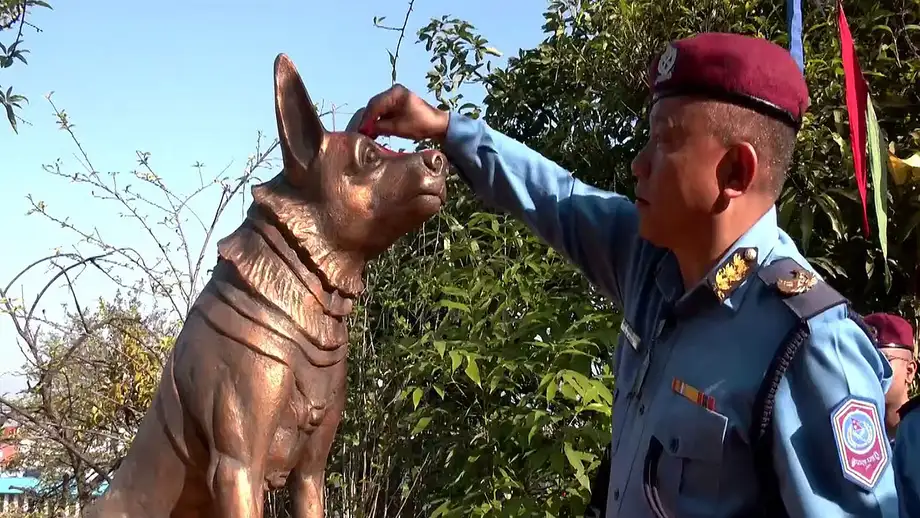
At the Nepal Police Canine Office in Maharajgunj, trained dogs wore flower garlands and vermilion marks, received treats and demonstrated skills used to find missing people, pursue criminal suspects and locate evidence. Deputy Inspector General Om Bahadur Rana attended the annual ceremony, which combined religious worship with recognition of police work.
The celebration extended beyond the police compound. The Nepal Army held a dog show at its unit in Madhyapur Thimi, Bhaktapur, which maintains 88 trained dogs. The Armed Police Force honoured its dogs at its canine facility in Balambu. Across Nepal, household pets and street dogs also received food, flowers and attention.
Kukur Tihar usually falls on the second day of Tihar, Nepal's festival of lights. This year, Nepal Calendar Determination Committee chair Dr Purushottam Bhattarai said calendar adjustments placed it on the third day of Yamapanchak, the festival period. The familiar description of Kukur Tihar as the second day therefore differed from its position in this year's observance.
Leo's award connects the festival to flood rescue
Nepal Police honoured Leo for search and rescue work following the August 2026 Bhotekoshi floods. More than 5,000 people were reported missing after the disaster. The award recognised the dog's contribution to the response, alongside medals for dogs working in criminal investigations, evidence gathering and narcotics detection.
Leo's recognition gave visitors a concrete example of the work behind the demonstrations. Searching for people after a flood is one of several duties assigned to police dogs, whose training also supports investigations and security operations.
The ceremony placed those different jobs together: a dog recognised for disaster response shared the occasion with dogs trained to detect drugs or help investigators follow a suspect. Garlands and treats honoured all of them, while the awards singled out particular contributions.
What visitors watched in Maharajgunj
Nepal Police demonstrated how dogs assist in searches for missing people and investigations in which a murder suspect has fled. Other parts of the programme included races, obstacle courses and trained tricks, showing the dogs' ability to move through barriers and respond to their handlers.
DIG Rana said dogs had provided substantial help in criminal investigations, search and rescue, and security. The demonstrations translated those broad duties into situations visitors could understand: someone has disappeared, a suspect has escaped, or investigators need help finding a clue.
The canine division trains dogs brought from abroad as well as dogs bred locally. Their assignments include drug identification, criminal pursuit and disaster management. The annual Kukur Tihar ceremony is a public occasion for recognising work that usually takes place during investigations or emergency responses.
Nepal Police has used dogs in criminal investigations and search and rescue since 2026 in the Bikram Sambat calendar, corresponding to 1969 or 1970 in the Gregorian calendar. Bikram Sambat, commonly shortened to BS, is the calendar used in Nepal; its year numbers are roughly 57 years ahead of Gregorian dates.
The Army's 88 dogs and a demanding training task
The Army's Bhairav Bahaan unit in Madhyapur Thimi held its own ceremonial worship and exhibition. Dogs demonstrated search and identification, tracking, security, apprehension and the detection of suspicious objects. Municipal representatives, military officers, veterinarians and security personnel attended.
Major General Harendra Pathak, head of the Army's Directorate General of Management and Transport Department, said training dogs with limited resources and facilities was difficult. He described them as force multipliers, a military term for something that helps personnel accomplish more with the people and equipment they have.
Pathak connected that term to patrols, searches and other operational duties:
"Particularly in patrol and security operations, where a large number of personnel would otherwise need to be deployed, a single dog can also accomplish the task. Similarly, dogs are useful in tracking and search operations, attack and apprehension tasks, and creating a psychological impact. They also play a significant role in putting psychological pressure on enemies," he added.
Pathak also said dogs help the morale of soldiers deployed in combat and jungle operations. He put a dog's sense of smell at 10,000 to 100,000 times that of a human, citing scent detection as a reason to train dogs to identify suspicious people and explosive devices.
The Army described its annual worship as recognition of loyalty, honesty and faithfulness, as well as friendship and coexistence between people and dogs. Its event joined a religious ritual to demonstrations of the animals' practical responsibilities.
Flowers for Armed Police Force dogs in Balambu
The Armed Police Force held its observance at the Animal Health and Dog Handler Sub-Branch in Balambu. Handlers showered the dogs with flowers in tribute to their loyalty and companionship, honouring their contribution to protecting people, property and national security.
The three security organisations marked the same festival at different facilities: Nepal Police in Maharajgunj, the Army in Madhyapur Thimi and the Armed Police Force in Balambu. Together, their ceremonies showed how widely dogs are used across Nepal's security services, from finding evidence to supporting patrols and rescue operations.
Why tourists came for Kukur Tihar
Foreign visitors joined Nepalis at the police ceremony, where the dogs' skills and their relationships with handlers drew attention. Gerome, a visitor, said he had travelled to Nepal specifically for the celebration. Another visitor, Jane, said she was struck by the connection between the dogs and the people who trained and worked with them.
The visitors watched an occasion with two connected purposes. The garlands, vermilion and food expressed religious respect and affection. The parade, medals and demonstrations recognised trained abilities and service. A dog could be celebrated as a companion and honoured for helping police carry out a difficult task.
Outside institutional ceremonies, Kukur Tihar also reaches animals without a uniformed handler or a household. Street dogs receive garlands and meals alongside pets, extending the day's attention to dogs that live among communities without belonging to a particular family.
What the garlands and vermilion mean
Kukur means dog in Nepali. During Kukur Tihar, people place flower garlands around dogs' necks, apply a vermilion tika to their foreheads and offer bread, treats or other food. The ritual recognises their devotion and their long relationship with people.
Dogs hold a religious place in the traditions surrounding Yama, also called Yamaraj, the Hindu god of death. They are regarded as his guardians and messengers. Shyam and Sabal are named as dogs guarding Yama, with a belief that honouring and feeding dogs helps a person gain passage to Yamalok, Yama's realm.
Other beliefs connect dogs to Bhairav, a form of the Hindu deity Shiva, whose vehicle is a dog. Dogs are also described as guarding the gateway to liberation after death. These beliefs help explain why the day's gestures are acts of worship as well as expressions of affection.
Kukur Tihar follows Kaag Tihar, when crows are honoured. The wider festival also honours Lakshmi, the goddess of wealth. Animals therefore have a place within the same sequence of observances associated with lights, households and prosperity.
A loyal companion in Hindu stories
The Mahabharata gives the relationship between a person and a dog a memorable moral test. Yudhishthira, one of the epic's central figures, is accompanied by a devoted dog on his final journey. When offered entry to heaven, he refuses to abandon the animal.
The dog then reveals himself as Dharma, who has been testing Yudhishthira's conduct. Dharma is a Hindu concept concerned with duty, right conduct and the order that sustains life. The episode makes loyalty a responsibility shared by both companions: the dog stays with the person, and the person refuses to leave the dog behind.
The Rigveda contains another story involving a dog, Sarama, who helps Indra recover stolen cattle. These traditions give dogs roles as helpers and guardians, connecting the festival's modern gestures of food and flowers to older religious accounts.
At the police ceremony, those themes met the work of living animals and handlers. Leo's rescue award, the investigators' demonstrations and the visitors' interest all centred on a relationship built through training, care and repeated cooperation.
The dates behind this year's observance
November 8 brought together nationwide worship and ceremonies at the three security organisations. Kukur Tihar is associated with Kartik Krishna Chaturdashi, a day in the Hindu lunar calendar, and is also known as Narak Chaturdashi. Lunar observances do not stay on the same Gregorian date each year.
Bhattarai said Narak Chaturdashi and Kukur Tihar should be observed on the day Chaturdashi coincides with sunrise.
Bhattarai's explanation placed this year's dog festival on the third day of Yamapanchak, although Kukur Tihar is usually described as its second day. The main dates connecting the celebration, police service and Leo's award were:
- 1969 or 1970: Nepal Police began using dogs in investigations and search and rescue, in the Bikram Sambat year 2026.
- August 2026: The Bhotekoshi floods prompted the rescue work for which Leo later received recognition.
- November 8, 2026: Nepal celebrated Kukur Tihar, with police, Army and Armed Police Force ceremonies and worship of pets and street dogs.
The annual celebration gave public recognition to dogs across very different settings. A street dog receiving a meal, an Army dog demonstrating detection skills and a police rescue dog receiving a medal were all part of the same observance.
Key Points
- Nepal celebrated Kukur Tihar nationwide on Sunday, November 8, 2026.
- Nepal Police named Leo Dog of the Year for rescue work after the August Bhotekoshi floods.
- Police dogs demonstrated searches, investigative skills, races and obstacle courses in Maharajgunj.
- The Army unit in Madhyapur Thimi, which maintains 88 trained dogs, held worship and demonstrations.
- The Armed Police Force honoured its service dogs at its canine facility in Balambu.
- Tourists joined local participants, while pets and street dogs received garlands, vermilion and food.
- Calendar committee chair Dr Purushottam Bhattarai said this year's observance fell on the third day of Yamapanchak rather than its usual second day.