December vote halted as football bodies demand changes
The Korea Football Association has suspended preparations for a presidential election planned for December 18, 2026, after FIFA and the Asian Football Confederation challenged a proposal to expand voting from 192 electors to more than 20,000 people and introduce electronic voting.
Contents
- December vote halted as football bodies demand changes
- A reform that would multiply the electorate
- What the joint letter asked the KFA to change
- Why FIFA favours elected representatives
- Why mobile voting raised concerns
- Government involvement adds an independence dispute
- How the election timetable came apart
- What sanctions could mean for Korean football
- March deadline puts pressure on the redesign
- Key Points
The KFA said it received a joint letter on November 7 and canceled the board meeting and extraordinary general assembly scheduled for November 9. Those meetings were needed to approve changes to the association's governing rules before the election could proceed. An October 7 letter and October 9 meetings were also reported, but the KFA's November chronology is consistent with its attempt to amend the rules on November 4.
The intervention leaves the association facing a longer leadership vacancy following Chung Mong-gyu's departure in July after 13 years as president. He had announced his intention to resign in May. Under current domestic rules, the KFA must elect his successor by March 2027.
FIFA and the AFC want the association to reconsider both its timetable and its proposed election structure. Their objections concern who has the authority to elect the president, whether electronic ballots can remain secret, and whether reforms recommended by a government led committee preserve the KFA's independence.
The December timetable has effectively collapsed, with the KFA preparing to review its proposals and repeat the necessary approval procedures. No replacement election date has been announced.
A reform that would multiply the electorate
The KFA had accepted recommendations from the K-Football Innovation Committee to give players, coaches, referees and other football participants a much larger role in choosing the president. The previous election had 192 electors. Expanding that number to 20,000 would make the electorate about 104 times as large.
The committee, launched in July under the Ministry of Culture, Sports and Tourism, proposed considering electronic and online voting to accommodate that expansion. Its stated purpose was to move beyond an election decided by a small group of football representatives and broaden participation across the sport.
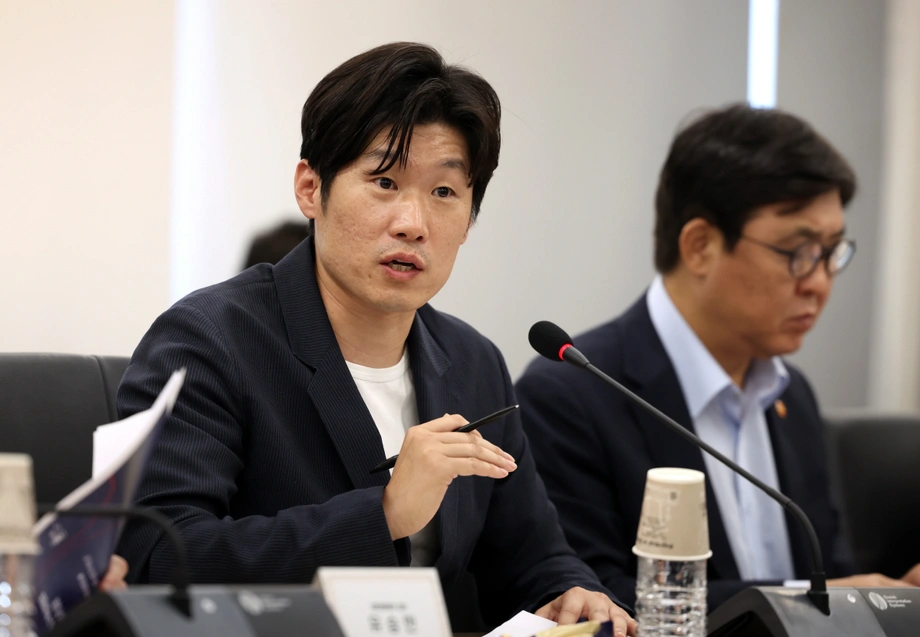
Park Ji-sung, the former South Korea men's national team captain and a co-head of the innovation committee, described the timetable agreed with the KFA when the expansion plan was announced:
"Preparations will take time, but we reached a consensus with the KFA that a transparent election must take place before the end of the year," Park said.
FIFA and the AFC have now asked the association to pursue wider representation through a different structure: an assembly composed of properly elected representatives from football's various groups. The dispute therefore reaches beyond the number of voters to the way those voters gain their authority.
What the joint letter asked the KFA to change
The letter, titled Situation of the Korea Football Association, bore the official seals of Elkhan Mammadov, FIFA's director of member associations, and Vahid Kardani, the AFC's deputy general secretary. It followed a review of documents submitted by the KFA.
Those documents included innovation committee meeting minutes, regulations of the Korean Sport & Olympic Committee, draft KFA statutes and draft presidential election rules. Statutes are an organisation's basic governing rules, including how its leaders are chosen and how decisions are made.
FIFA and the AFC said the proposed election arrangements did not comply with their statutes. They also set out a broader reform agenda: stronger representation, an improved election structure, greater independence for the KFA's judicial bodies, new committees, safeguards against conflicts of interest and greater transparency.
The KFA's judicial bodies handle disciplinary and other internal disputes. Protecting their independence matters because the people deciding such cases need room to apply the rules without pressure from association leaders or others with an interest in the outcome.
The letter asked the KFA to adopt and put the revised rules into operation before beginning further election procedures. It also required continued updates on measures connected with changing the presidential election regulations.
Why FIFA favours elected representatives
FIFA and the AFC cited Article 15(j) of the FIFA Statutes, which requires legislative bodies to be constituted according to the principles of representative democracy. In this model, groups within football choose representatives who then participate in the association's general assembly.
The joint letter explained the preference of the two governing bodies:
In line with this principle, FIFA and the AFC generally prefer a general assembly composed of duly elected representatives of football stakeholders rather than a system involving direct participation by a very large number of individual voters.
A representative assembly gives different parts of football a defined place in decision making. Players, coaches, referees and other groups can gain a voice through representatives chosen to speak for them, with rules determining how those representatives are elected and held accountable.
The KFA's proposed expansion would require clear answers about the qualifications of the new voters, how different groups would be represented and how the enlarged electorate would connect to the general assembly. FIFA and the AFC said their preferred model supports balanced representation, effective decisions, institutional stability and accountability.
Why mobile voting raised concerns
FIFA and the AFC also challenged the proposal for more than 20,000 electors to take part through large scale electronic voting. Their letter specifically identified ballot secrecy as a concern.
A secret ballot allows a voter to make a choice without another person watching or demanding to see it. With online or mobile voting, election organisers must address the possibility that someone could stand beside a voter, apply pressure or ask for evidence of the choice made.
Security and confidence in the count are further practical issues. A voting system needs to verify that each eligible person votes only as permitted, keep individual choices private and produce a result that participants can trust. Those requirements become central when the proposed electorate expands from fewer than 200 people to more than 20,000.
The letter described substantial concerns about governance and electoral fairness in the proposed system. The KFA must now work through those concerns alongside the question of who should hold voting rights and how those rights should be exercised.
Government involvement adds an independence dispute
The innovation committee's role has brought another set of rules into focus. FIFA Statutes Articles 14 and 19 require member associations to conduct their affairs independently and without undue influence from third parties. Governments are among the outside bodies covered by that principle.
The Ministry of Culture, Sports and Tourism and the innovation committee have maintained that their recommendations for improving the election do not breach those independence requirements. FIFA and the AFC have sought documents to assess the reform process and the relationship between the committee and the KFA.
The AFC's rules also address the election of an association's executive body through its general assembly and the protection of association independence. Together, these provisions make the route by which reforms are adopted as important as their stated purpose.
The KFA operates within South Korea's domestic oversight framework while also belonging to international football organisations whose rules govern membership and participation. Its next steps must address the ministry's reform agenda and the requirements set by FIFA and the AFC.
How the election timetable came apart
The canceled November meetings followed months of discussion and requests for information. The innovation committee held six meetings dealing with election reform, including the composition of the electorate and relevant sports governing rules. Its seventh meeting was a listening session focused on developing young players.
The main steps in the election dispute were:
- May 2026: Chung Mong-gyu announced his intention to resign as KFA president.
- July: Chung left office, and the government led innovation committee began its work.
- August: FIFA requested information about the committee's activities.
- September 30: FIFA, the AFC and the KFA held a video meeting about the committee's recommendations.
- October 6: FIFA and the AFC requested further documents and asked the KFA to refrain from additional reform decisions while their review continued.
- November 4: A planned attempt to amend the KFA's rules was delayed by internal disagreements.
- November 7: The KFA said it received the joint letter challenging the proposed arrangements.
- November 9: The rescheduled board meeting and extraordinary general assembly were canceled.
- December 18: The intended presidential election date became unworkable under the suspended timetable.
FIFA had also planned a visit to South Korea to examine the situation, but that visit was postponed. Its requests for information included committee minutes, communications exchanged with the KFA, proposed election rules and Korean Sport & Olympic Committee regulations.
What sanctions could mean for Korean football
FIFA and the AFC warned that unilateral action by the KFA could lead them to refer the matter to their decision making bodies and consider possible measures. The association has responded by stopping the election preparations and reviewing the objections.
FIFA's rules allow sanctions for undue outside interference, including suspension of a member association. They also address recognition of executive bodies elected through procedures that fail to meet independence requirements.
A suspension could affect national teams and professional clubs seeking to enter international competitions. Other possible restrictions include limits on contact with fellow member associations and the loss of access to development programmes, education and funding.
Players, clubs and youth football organisations therefore have a direct interest in how the dispute is resolved. The immediate task for the KFA is to produce an election process acceptable under the governing rules while restoring a permanent presidency.
March deadline puts pressure on the redesign
The KFA plans to review the joint letter, discuss the reform direction internally and consult the Ministry of Culture, Sports and Tourism. It must then prepare revised statutes and election rules, obtain the necessary board and general assembly approvals, and organise the vote.
March 2027 is the deadline identified under current rules. The Korean Sport & Olympic Committee amended its regulations in July to allow member sports associations as much as eight months to hold a presidential election, giving the KFA more time following Chung's July departure.
The extra time still leaves several connected decisions to make. The association needs to settle the composition of the voting body, its relationship to the general assembly, the voting method and the safeguards protecting independence and ballot secrecy.
The KFA has said it will discuss changes reflecting FIFA's recommendations and seek to hold the election as soon as possible. A workable revision would have to carry the committee's goal of broader participation into rules that FIFA and the AFC accept, before candidates and voters receive a new timetable.
Key Points
- The KFA suspended preparations for its planned December 18, 2026, presidential election after objections from FIFA and the AFC.
- The reform proposal would expand voting from 192 electors to more than 20,000 and introduce electronic voting.
- The governing bodies raised concerns about ballot secrecy, representative democracy and association independence.
- FIFA and the AFC favour a general assembly made up of duly elected representatives from football's different groups.
- The KFA must revise and approve its rules before restarting the election process.
- Current rules require a new president to be elected by March 2027; no replacement voting date has been announced.