A vast resource, but a small industry
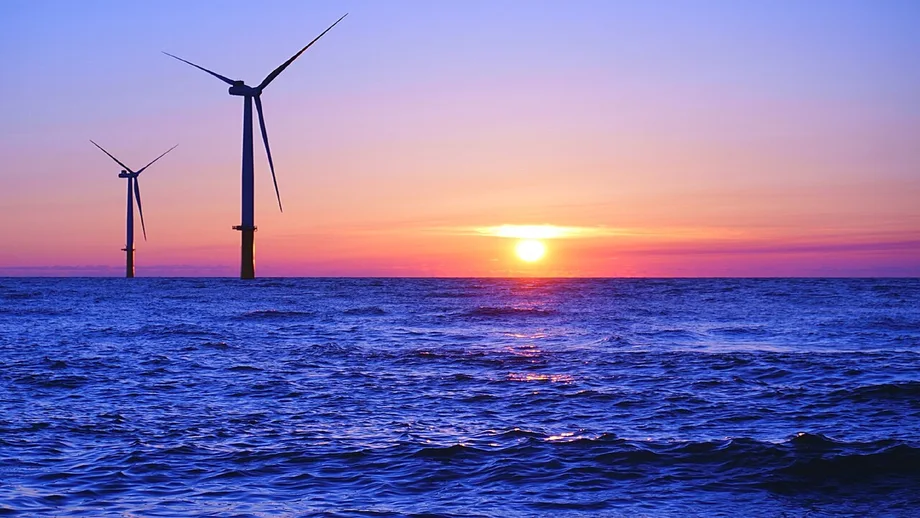
Japan has set a target of generating 30 to 45 gigawatts of electricity from offshore wind by 2040. Today, its operating offshore farms provide about 0.5 gigawatts. Reaching the target would mean expanding current capacity by roughly 60 to 90 times, while building the factories, ports, cables and local partnerships needed to make the projects work.
Contents
The stakes reach beyond climate policy. Japan's energy self sufficiency rate was 16.4% in fiscal 2024, leaving the country heavily reliant on imported fuels. Wind from the sea could supply electricity at home, yet higher costs have already led large companies to abandon planned projects. The government is changing its support and auction rules as it tries to turn ambitious targets into completed wind farms.
Japan's first commercial offshore farms began operating at the ports of Noshiro in 2022 and Akita in 2023. A 220 megawatt wind farm at Kitakyushu Hibikinada was commissioned in March 2026, and the floating wind farm off Goto, Nagasaki Prefecture, started operating early that year. If projects in the pipeline proceed as planned, capacity could reach 5.7 gigawatts by March 2031.
The gap between that near term figure and the 2040 goal is large. A 2024 estimate by the Japanese think tank Climate Integrate put the country's offshore wind potential at 552 gigawatts, roughly the generating capacity of 550 nuclear reactors. That estimate describes what the resource could support, not what has been built or approved.
What is holding projects back?
Costs have become a direct test of Japan's project system. Mitsubishi Corporation left a consortium in 2025 after its three planned wind farms, with a combined capacity of 1.7 gigawatts, became too expensive under the existing terms. BP withdrew from a separate Japanese consortium in 2026. That project is rated at 450 megawatts, and the other members have said they intend to continue it.
Mitsubishi's three projects had been awarded in an earlier auction. The government plans to offer those sites again and has revised the public bidding system, with a new focus on whether successful bidders can finish construction. The changes follow an earlier plan to reauction the three sites after Mitsubishi's withdrawal, which left 1.76 gigawatts of planned capacity in doubt. the planned reauction showed how a project can be awarded on paper yet still fail when construction costs and expected power revenues no longer match.
Japan's Ministry of Economy, Trade and Industry outlined another response on November 10, 2026. Its proposed changes to the Green Innovation Fund would direct up to 120 billion yen toward lower cost offshore wind and fuel technology, including synthetic methane. A further 80 billion yen could help 11 projects facing higher material and labor costs. The fund, established in 2021 and scheduled to run through 2032, has a total budget of about 2.7564 trillion yen.
The Renewable Energy Institute says the government's new focus on reliable project completion is a significant step, while also calling for clearer sharing of risks between companies and the state and a detailed development road map. In simple terms, companies are more likely to invest when they can estimate who pays if costs rise, when projects will be built and how future auctions will work.
Japan needs equipment and trained workers
Japan does not currently have a turbine maker able to supply the domestic market at scale. That leaves developers exposed to changing international prices and makes it harder to build up local experience in manufacturing, installation and maintenance.
The government is pursuing cooperation with foreign companies while trying to grow Japanese industry. In November 2026, the Ministry of Economy, Trade and Industry and Germany's Siemens Energy signed a cooperation memorandum covering floating wind projects, supply chains and workforce development. Siemens Energy plans to open a wind power maintenance and management facility in Eniwa, Hokkaido, in January 2027. The government has also named Hokkaido, Tohoku and Kyushu as strategic regions for wind industry investment.
Danish manufacturer Vestas has received government backing for a plan to bring final assembly of turbine nacelles to Japan. A nacelle is the housing at the top of a turbine tower that contains key machinery. The project is estimated to cost US$8.2 million, with the government set to fund half. Vestas has said local assembly depends on continued market growth and enough Japanese orders.
Funding for industrial development does not immediately create a full domestic supply chain. Developers also need suitable ports, ships, cables, steel structures, maintenance teams and training. The challenge is to give suppliers enough certainty to invest before a large pipeline of projects exists. Seven floating wind projects in Japan were being tracked with investment value of nearly US$5.5 billion, an indication of the scale of proposed activity, rather than proof that all seven will be built.
Why floating turbines matter
Many European wind farms use foundations fixed to the seabed in relatively shallow water. Japan's seabed often drops steeply not far from shore, leaving fewer places suited to that approach. Floating turbines sit on platforms held in place by mooring lines, much like a boat anchored at sea. They can operate in deeper waters and could therefore open more of Japan's surrounding ocean to development.
Japan began testing the technology off Fukushima in 2013, two years after the earthquake, tsunami and nuclear disaster. The demonstration included three floating turbines, a 25 megavolt amp floating substation and an undersea cable. The project closed in 2021 after demonstrating the equipment. Goto's eight turbines, which together generate 16.8 megawatts, became Japan's first commercial floating wind farm when they began operating in 2026.
A representative of developer Toda Corporation called Goto a major step toward commercial floating wind in Japan. The company has identified a steady stream of projects, supporting infrastructure, stronger local supply chains and trained workers as key needs. Japan's 2040 target assigns at least 15 gigawatts to floating wind, about half of the lower end of the overall 30 gigawatt goal.
Other proposals show what deeper water could make possible. Tokyo's metropolitan government is planning a floating wind farm near the Izu Islands with capacity of at least one gigawatt. Connecting the islands to the mainland electricity grid would require more than 100 kilometers of undersea cable. Separately, Tokyo Gas has invested in US floating wind technology company Principle Power and tested a scale model of a floating foundation in Akishima in January 2026. The company says a large commercial floating project in Japan could start around 2029.
Tokyo Gas offshore wind development leader Nagai has described supply chain coordination as a central obstacle. Developers, manufacturers and suppliers need to agree early on what equipment a project requires, how many units will be made and at what cost. Without a clear project plan, suppliers may hesitate to buy equipment or expand factories; without prepared suppliers, developers struggle to set dependable costs and schedules.
Can Japan build a stronger home industry?
The country's broad sea area offers room to develop projects, but the machinery and skills needed to use it are still being assembled. Japan's territorial waters and exclusive economic zone together cover about 4.47 million square kilometers, according to Tokyo Gas. The exclusive economic zone, or EEZ, extends as far as 200 nautical miles from the coast and gives a country rights to use marine resources there.
A 2025 law opened Japan's EEZ to offshore wind development. Projects have so far been concentrated within 12 nautical miles of shore, while deeper sites will likely depend on floating turbines. The Japan Wind Power Association has said the expanded sea area could be important to meeting future deployment goals and argued that offshore wind should be viewed as a chance to build a new industrial base, as well as a way to generate electricity.
The government's longer term ambitions extend beyond its current 2040 target. Its stated goal is 10 gigawatts of offshore wind by 2030 and 30 to 45 gigawatts by 2040. The Japan Wind Power Association has called for even larger targets: 40 gigawatts of onshore wind, 40 gigawatts of fixed bottom offshore wind and 60 gigawatts of floating wind. These proposals underline the scale of debate over how quickly Japan should build and how much equipment it can make at home.
Local support is part of the project
Since 2019, the government has designated offshore wind promotion zones to help developers secure long term use of marine areas and take part in a structured selection process. Many existing and proposed zones are in rural parts of northwest and southwest Japan, where wind projects may bring jobs and investment but also affect fishing, wildlife and local landscapes.
Projects under development include the 690 megawatt Murakami Tainai wind farm in Niigata Prefecture and the 615 megawatt Tsugaru project in Aomori Prefecture. In waters off Akita, JERA and its partners are building a project with 21 turbines near Akita, Oga and Katagami. The developers said construction was about 40% complete and aimed to begin operations in June 2028. The work includes bringing in monopiles, the large steel foundations for fixed bottom turbines, measuring 70 meters long and weighing 1,400 tonnes.
Large corporations have led Japanese offshore wind because the projects require large investments and years of preparation. Yumi Kobayashi, a director of the nonprofit Hokkaido Green Fund, says that corporate leadership can leave residents feeling distant from decisions. She has pointed to the history of large energy projects in Hokkaido and Fukushima, where local communities faced difficulties after industries closed or projects failed.
Kobayashi also says developers are making an effort to explain why projects are needed in each region and how they could contribute. She hopes local residents might take minority stakes in projects, allowing communities to share ownership without having to finance an entire wind farm.
Fishing communities have a direct stake in how construction and operation affect access to fishing grounds and fish stocks. Fishers have called for ongoing monitoring, while conservationists have raised concerns about possible effects on marine life and wildlife, including eagles in Hokkaido. Continued impact assessments and communication with local users of the sea are necessary parts of project planning, not side issues to address after a site has been selected.
Goto offers a local model, not a shortcut
Goto's project provides an example of how a wind farm can be presented as a local effort. Yuki Kawaguchi, a member of the Goto City Future City Creation Department, said its success depended on a community led approach involving residents, fishers and businesses. The project is expected to support local employment and economic activity, though its eight turbines produce only a small fraction of the capacity Japan is targeting nationally.
Goto's experience cannot simply be copied at every site. Local economies, fishing practices, sea conditions and grid connections differ. Its central lesson is that residents and fishers need a meaningful role in planning, and a clear account of how benefits and possible harms will be shared. That question becomes more pressing as the scale of proposed projects grows.
A local industry effort is also underway in Muroran, Hokkaido. On November 18, 2026, the Muroran Offshore Wind Related Business Promotion Council held a seminar where five speakers discussed workforce training and examples from Nagasaki. Such efforts connect local companies and educational institutions with the jobs and skills that projects may require.
The next milestones to watch
Japan's wind industry is moving on several timelines at once: individual construction schedules, government funding decisions, new auctions and the slower work of developing suppliers and public confidence. The key dates show both progress and the distance still to travel.
- 2013: Japan launched its floating wind demonstration off Fukushima.
- 2021: The Fukushima demonstration ended after testing three turbines and a floating substation.
- 2022 and 2023: Commercial offshore wind farms began operating at Noshiro and Akita.
- 2025: A law opened the EEZ to offshore wind development, and Mitsubishi withdrew from three projects.
- 2026: Goto began operating as Japan's first commercial floating wind farm; the government proposed changes to Green Innovation Fund spending in November.
- June 2028: Developers aim to begin operating the 21 turbine project off Akita, Oga and Katagami.
- Around 2029: Tokyo Gas says a large commercial floating project in Japan could begin.
- 2040: Japan aims for 30 to 45 gigawatts of offshore wind, including at least 15 gigawatts from floating turbines.
Japan has the sea area and long term demand to make offshore wind a major energy source, but the country is starting from a small base. Its progress will depend on whether new rules can keep projects financially workable, whether suppliers and workers can be ready in time, and whether coastal communities see a fair share of the benefits.
Key Points
- Japan has about 0.5 gigawatts of offshore wind operating and targets 30 to 45 gigawatts by 2040.
- Rising costs contributed to Mitsubishi's 2025 exit from three projects totaling 1.7 gigawatts and BP's 2026 exit from a 450 megawatt project consortium.
- Floating turbines can operate in deeper waters and are central to Japan's goal of at least 15 gigawatts of floating wind by 2040.
- The government is revising funding and bidding policies while seeking foreign partners and domestic supply chain investment.
- Fishing, wildlife protection and local participation remain important conditions for gaining support at project sites.