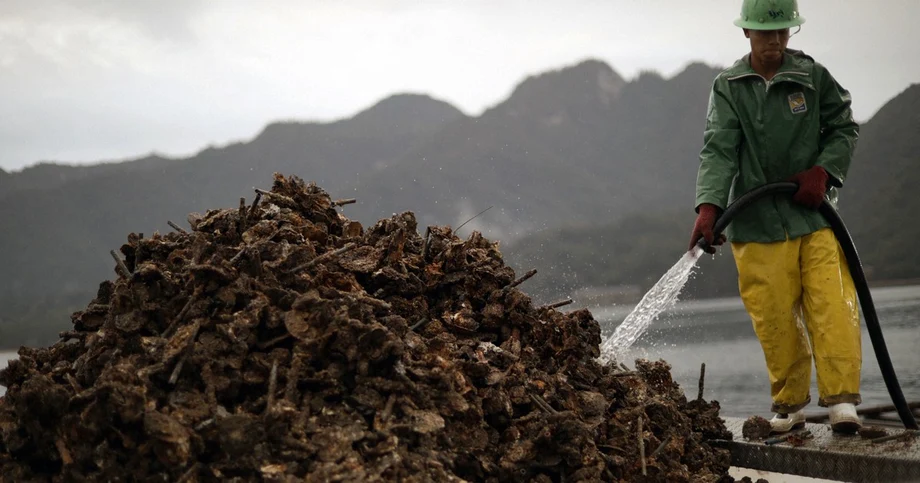
Heavy losses spread across Hiroshima's oyster waters
Hiroshima Prefecture has confirmed oyster deaths of at least 80% in districts across all nine of its oyster farming sea areas, according to a survey of 34 fisheries cooperatives announced on November 17, 2026. Some cooperatives in Kure Bay, Hiro Bay and Mitsu Bay reported losses reaching 90%, threatening another difficult season after widespread deaths last year.
Contents
- Heavy losses spread across Hiroshima's oyster waters
- From local warning signs to widespread damage
- Surviving oysters bring another problem
- What last season's investigation found
- Why the investigation looks beyond temperature
- A previous season reduced some farms to a fraction of their crop
- Retailers are already feeling the shortage
- Nearby waters show a different recovery
- Farmers seek help as officials consider their response
- Key Points
The damage extends to northern, central and western Hiroshima Bay, where oysters grew steadily last season. Some districts there now report that 80% to 90% have died. The survey describes severe losses across the prefecture's farming waters, with the percentage varying by district and cooperative.
Shipments are running at about 20% to 80% of normal volumes. Surviving oysters are also developing less flesh, and many districts report smaller oysters than usual. Farmers face both fewer oysters to sell and weaker growth among those still alive.
The harvest opened on November 2, about a month later than usual because of concerns that extreme summer heat had delayed growth. By November 13, 143 of Hiroshima's 259 producers had begun harvesting, roughly 55% of the total.
From local warning signs to widespread damage
Hiroshima's assessment changed sharply over the autumn. At a September meeting, the prefecture's expert panel described the season's growth as very good, drawing on interviews with producers. By October, cooperatives were reporting substantial losses in some places.
On October 19, the prefecture disclosed cases in which roughly 60% of oysters had died in western waters and around 70% in central waters. Officials then regarded the damage as localised. The November survey found severe losses across a much wider area.
The main developments unfolded over several weeks:
- September 2026: An expert panel heard encouraging reports about oyster growth.
- October 19: Hiroshima disclosed losses of about 60% in some western waters and 70% in some central waters.
- November 2: Harvesting opened, about one month later than usual.
- November 13: A total of 143 producers had started harvesting.
- November 16: Interviews with cooperatives showed that more than 80% considered growth worse than normal.
- November 17: The prefecture announced severe oyster deaths in all nine farming sea areas.
A Hiroshima city oyster farmer described a similarly sudden reversal. Growth had been steady until early October, he said, before deaths increased sharply around two weeks before harvesting began. About 60% of his oysters had died by the time he described the damage.
Surviving oysters bring another problem
Hiroshima's farmers depend on more than the number of oysters remaining on their ropes. The amount of flesh inside each shell also matters for sales, particularly when oysters are removed from their shells before shipment.
The prefectural survey found delays in flesh development across the farming areas. Many districts reported that surviving oysters were smaller than in an ordinary season. A farm can therefore lose income through deaths while also having less saleable flesh in its remaining crop.
The Hiroshima city farmer said the surviving oysters had developed less flesh than last year's crop. He feared the season could become his worst and warned that some businesses could go bankrupt without government assistance.
More than 80% of cooperatives interviewed about the season said growth was worse than normal. That figure describes the share of cooperatives reporting poor growth, while the prefecture's mortality figures describe oyster deaths within affected farming districts.
What last season's investigation found
Hiroshima's previous season offers a detailed record of the environmental pressures investigators are examining. The prefecture's fisheries division published a December 2025 report on December 9, covering conditions as of December 4. It described different suspected causes in different parts of the prefecture.
In central and eastern Hiroshima, officials estimated that exposure to both high water temperatures and high salinity had caused physiological damage. In western Hiroshima, they suspected that high temperatures combined with low oxygen in the water had contributed to deaths. The report called for further verification.
Physiological damage means that an oyster's normal body functions are disrupted. Salinity is the amount of salt in the water. Low oxygen means there is less dissolved oxygen available for aquatic animals to breathe. Together, these conditions can make it harder for oysters to survive.
The expert panel's assessment of last season also identified prolonged stress from warm water and disruption to spawning associated with low rainfall during the rainy season. Spawning is the release of eggs and sperm into the water. The panel considered several pressures acting together rather than a single cause.
Why the investigation looks beyond temperature
The December 2025 report set out a practical investigation into both the water and farming methods. Officials planned to examine the types and origins of young oysters, where cultivation rafts had been moved, and how farmers adjusted the depth of the ropes holding oysters below the surface.
Those details matter because oysters suspended at different depths or moved between locations can experience different water conditions. The prefecture planned to combine information from farms with fishing ground environmental data, with its Fisheries and Marine Technology Center and outside specialists involved in the assessment.
The current season's cause has not yet been settled. The earlier findings give investigators specific conditions to examine, while the sudden autumn losses make the timing and location of environmental changes especially relevant.
National coordination began during the previous season. On December 3, 2025, Japan's Fisheries Agency and the Japan Fisheries Research and Education Agency convened a meeting on mass deaths of Pacific oysters. Participants agreed that the national government and affected prefectures would share information and pursue a coordinated investigation. The December report gave no date for the next meeting.
A previous season reduced some farms to a fraction of their crop
The December 2025 document also recorded what farmers did after heavy losses. In the worst affected central and eastern districts, they were selling the roughly 10% of oysters that survived as shucked meat or transferring them into baskets for further cultivation before sale in the shell.
Most oysters being shipped at that time were known locally as nokoshi, oysters cultivated over three years. Losing them meant losing stock that had occupied farm space and required work over several seasons.
Western districts had a more uneven experience. Some reported mortality close to normal levels, while others said deaths were continuing to increase. This season's severe losses in parts of northern, central and western Hiroshima Bay widen the pressure on areas that had previously performed better.
Farmers were already worried in December 2025 about finding money to purchase materials for the next production cycle. Repeated losses can carry that financial strain into another season, leaving a business with bills for future cultivation while income from the current harvest falls.
Retailers are already feeling the shortage
Fukuya, the Hiroshima department store operator, cancelled a special oyster sale planned for its Hatchobori main store and Hiroshima Station store. The promotion was scheduled to begin on November 12 and continue through February 2027.
The company decided to cancel after consulting seafood wholesalers and other suppliers because poor oyster growth made deliveries uncertain. For shoppers, the shortage is already changing what retailers can promise, rather than remaining a problem confined to farms offshore.
Shipment volumes of 20% to 80% of normal also show how uneven supply has become. At the lower end, a business is shipping only one fifth of its usual volume. The figures describe shipment volume; the prefecture has not attached a monetary loss estimate to the November survey.
Nearby waters show a different recovery
Harima Nada, off western Hyogo Prefecture in the Seto Inland Sea, is having a more encouraging season. Oyster harvesting began there in late October, and fishing industry participants described quality as returning towards normal after last year's mass deaths.
Moderate rainfall was considered one reason the summer heat had caused less damage there. The previous autumn's deaths across broad parts of the Seto Inland Sea had been associated with several pressures, including high water temperatures, high salinity and a shortage of food.
The contrast puts local conditions at the centre of the investigation. Hiroshima is experiencing severe losses while another oyster producing area in the same inland sea is recovering. Rainfall, water conditions and food availability can differ between bays, giving farmers different outcomes during the same summer.
Farmers seek help as officials consider their response
Hiroshima Governor Mika Yokota addressed the damage at her regular news conference on November 17. She said the prefecture would work with specialists on its response.
Shipments have only just begun, but the situation remains uncertain. We would like to proceed with countermeasures while seeking support from experts.
The prefecture had considered financial assistance during the previous season. Its December 2025 report proposed making necessary working capital available without interest to oyster businesses facing severe financial pressure from lost income. Working capital is money used to keep a business operating, including purchasing materials.
That report scheduled explanatory meetings with producers before the end of 2025 as preparations for assistance. The November 2026 announcement sets out an intention to consider countermeasures, without giving details of a new support package or a timetable for decisions.
For producers, the immediate tasks are concrete: harvest what can be sold, assess the surviving stock and find enough money to continue cultivation. The sharp change since September also leaves officials needing a more precise picture of when deaths accelerated and which conditions affected each farming area.
Key Points
- Hiroshima's November 17, 2026 survey found oyster deaths of at least 80% in districts across all nine farming sea areas.
- Some cooperatives in Kure Bay, Hiro Bay and Mitsu Bay reported losses of 90%.
- Shipments are about 20% to 80% of normal, with many surviving oysters smaller and carrying less flesh.
- Harvesting began on November 2, about a month late; 143 of 259 producers had started by November 13.
- Last season's investigation identified heat, high salinity and low oxygen as suspected pressures, varying by location.
- Fukuya cancelled a planned oyster promotion because supplies were uncertain.
- The prefecture is considering its response, while farmers warn of serious financial strain.