Pakistan Nears Its First Journey Into Orbit
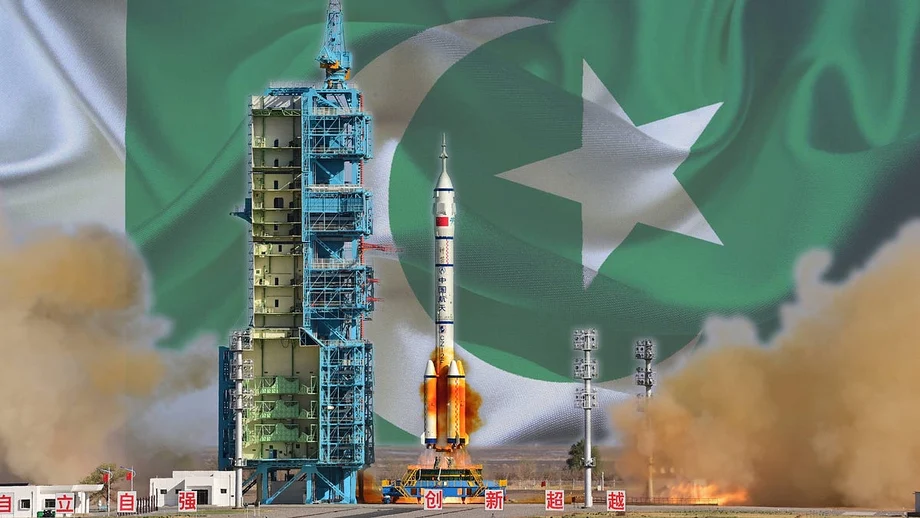
China is preparing to launch its Shenzhou-24 mission during the week of Nov. 23 to 29, 2026, carrying three astronauts from the Jiuquan Satellite Launch Center in northwestern China to the Tiangong space station. One seat aboard the capsule holds special significance because it belongs to Pakistan's first astronaut, who will also become the first foreign guest ever to visit China's orbital laboratory. Launch planners list the target liftoff for Tuesday, Nov. 24 at 7:18 p.m. EST, which falls on the morning of Nov. 25 in Beijing.
Contents
- Pakistan Nears Its First Journey Into Orbit
- Who Are Muhammad Zeeshan Ali and Khurram Daud?
- What Will the Pakistani Payload Specialist Do in Orbit?
- Why Shenzhou-24 Uses a Different Capsule for the Return
- How Islamabad and Beijing Built Their Space Partnership
- Tiangong Opens Its Doors to Global Partners
- A Crowded Week of Global Rocket Launches
- What to Know
Pakistan's Minister for Planning, Development and Special Initiatives, Ahsan Iqbal, has arrived in Beijing to attend the departure ceremony and travel to the launch center to meet the two finalists. Iqbal previously pointed to Nov. 25, 2026, as the expected launch date, though the China Manned Space Agency (CMSA) has not officially confirmed the schedule or revealed which Pakistani candidate will fly. Chinese space officials typically announce crew assignments at a press conference roughly one day before liftoff.
Speaking ahead of the ceremony, Iqbal framed the mission as a defining moment for his country and its long diplomatic ties with Beijing.
Pakistan-China friendship, higher than the Himalayas, will soar even higher than the skies with this historic flight.
Pakistan's Space and Upper Atmosphere Research Commission, known as SUPARCO, echoed that sentiment after the crew completed a joint launch rehearsal at Jiuquan on Nov. 22. In a statement released after the drill, SUPARCO celebrated the milestone for both nations.
The everlasting Pakistan-China friendship is now transcending the limits of the Earth and reaching the vastness of space.
Who Are Muhammad Zeeshan Ali and Khurram Daud?
Two military pilots, Muhammad Zeeshan Ali and Khurram Daud, are the final candidates waiting to learn which one will board Shenzhou-24 and which one will serve as the backup astronaut. Both emerged from a pool of 20 shortlisted pilots and scientists who underwent strict medical, psychological, and technical evaluations in Pakistan and China. On April 22, 2026, officials publicly named Ali and Daud as the two finalists before they arrived in Beijing to train at the Astronaut Center of China.
Their preparation over the past several months covered spacecraft systems, emergency response procedures, physical endurance, and centrifuge drills that simulate the heavy forces astronauts feel during launch. Both candidates also studied Chinese in Islamabad at the Confucius Institute before continuing intensive language lessons in Beijing so they can read technical manuals and communicate smoothly with Chinese crewmates. Keeping two trained candidates ready until launch day ensures the mission can proceed even if one falls ill or becomes medically unavailable at the last moment.
Reaching orbit aboard Shenzhou-24 will shatter Pakistan's previous altitude record. On Oct. 6, 2023, polar adventurer and artist Namira Salim reached an altitude of 87.4 kilometers during a 55 minute suborbital flight arranged by Virgin Galactic. Scientists generally recognize the Karman line, located 100 kilometers above sea level, as the boundary where outer space begins, meaning Salim stopped 12.6 kilometers short of that threshold. Tiangong orbits roughly 400 kilometers above Earth, placing Pakistan's first astronaut more than four times higher than Salim's flight.
What Will the Pakistani Payload Specialist Do in Orbit?
Rather than piloting the spacecraft or commanding the station, the selected Pakistani astronaut will fly as a payload specialist. In spaceflight, a payload specialist is a crewmember focused on operating scientific equipment and running experiments rather than managing flight controls. Chinese crewmates will handle navigation, docking, and station maintenance while the visiting astronaut concentrates on research.
Aboard Tiangong, the Pakistani specialist will oversee four biotechnology experiments chosen from more than 300 proposals submitted by universities and research centers across Pakistan. Fewer than two percent of the submitted ideas made the final cut after undergoing laboratory testing in Pakistan and technical reviews by Chinese experts. The selected studies examine biotechnology, material science, fluid physics, and life sciences, targeting practical advances in food security, climate resilience, and industrial innovation.
Conducting those tests in microgravity gives scientists insight they cannot obtain on the ground. Microgravity is the condition of near weightlessness inside an orbiting spacecraft, where objects, liquids, and living cells float freely instead of settling under Earth's gravity. Studying how biological processes change without gravity helps researchers improve crop resilience and develop new medical or industrial materials. In an April 2026 statement celebrating the candidates, Pakistan's Ministry of Information and Broadcasting described the broader meaning of that research.
This is a significant step forward in Pakistan's space exploration journey that positions the country in the community of a select group of nations actively engaged in human spaceflight programs.
Why Shenzhou-24 Uses a Different Capsule for the Return
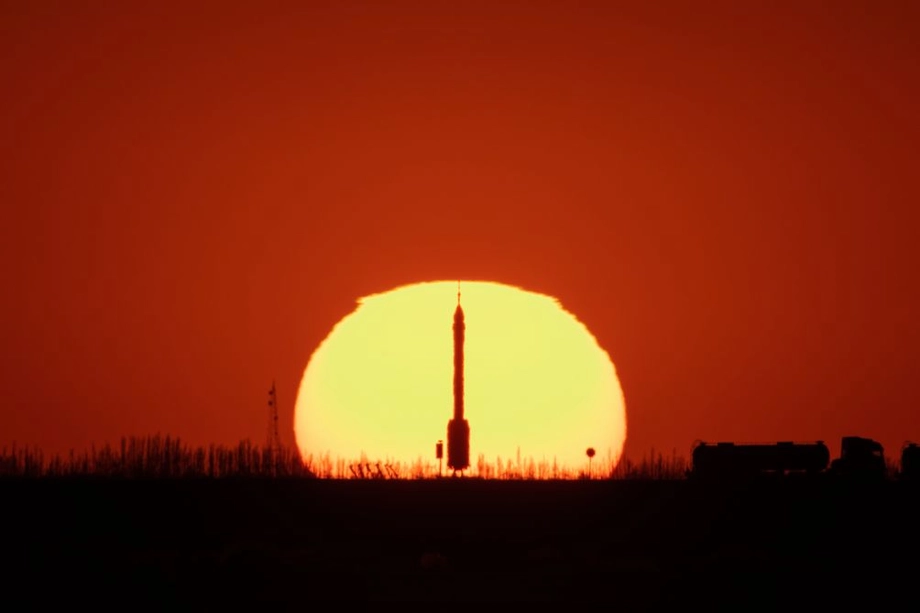
Preparations at Jiuquan entered their final stage on Nov. 17, 2026, when ground crews rolled the 191 foot tall (58 meter) Long March 2F rocket carrying Shenzhou-24 out to its launch pad. Starting around 5 p.m. Beijing time, the rocket traveled 0.93 miles (1.5 kilometers) from the assembly building to the pad over roughly two hours. CMSA confirmed that launch equipment and pad facilities passed inspections in good condition, and Zhu Lu, an official at the China Astronaut Research and Training Center, said all three crewmembers performed accurately during the Nov. 22 rehearsal.
Unlike standard station flights, the Pakistani visitor will travel up on one spacecraft and come home on another. After launching aboard Shenzhou-24 and spending roughly a week aboard Tiangong, the visiting astronaut will return to Earth aboard Shenzhou-23, which has been docked at the station since May 24, 2026. China formally confirmed the Shenzhou-24 assignment on Nov. 7, 2026, pairing a brief international visit with a milestone in Chinese crew endurance.
That capsule swap works because one of the three Chinese astronauts currently aboard Shenzhou-23 plans to remain on Tiangong for an extra six months. Staying behind for a second rotation will allow that astronaut to complete China's first continuous full year in space, while vacating a return seat inside Shenzhou-23 for the Pakistani guest. Extending an astronaut stay to 12 months gives Chinese doctors valuable data on how prolonged weightlessness affects muscle strength, bone density, and heart health as China works toward landing astronauts on the Moon by 2030.
How Islamabad and Beijing Built Their Space Partnership
This week's flight grows out of the February 2025 cooperation agreement signed in Islamabad on Feb. 28, 2025. At the Prime Minister's House, Lin Xiqiang, deputy director of the China Manned Space Engineering Office, and Muhammad Yousuf Khan, chairman of SUPARCO, signed the deal in the presence of Pakistani Prime Minister Shehbaz Sharif. The accord laid out a one year timeline to pick and train Pakistani candidates for short flights alongside Chinese astronauts over the coming years.
Space cooperation between the two neighbors spans more than three decades, beginning with satellite launches and expanding toward lunar exploration:
- 1990: A Chinese rocket launches Badr-1, Pakistan's first experimental satellite, from the Xichang Satellite Launch Center.
- Feb. 28, 2025: China and Pakistan sign the bilateral astronaut cooperation agreement in Islamabad.
- April 2025: SUPARCO begins preliminary domestic screening to find astronaut candidates.
- February 2026: Pakistani and Chinese officials complete the second evaluation stage.
- April 2026: China places Pakistan's PRSC-EO3 remote sensing satellite into orbit on a Long March 6 rocket, and officials announce Ali and Daud as the two finalists entering training in Beijing.
- May 24, 2026: Shenzhou-23 launches to Tiangong, beginning the crew rotation that overlaps with the Pakistani visit.
- Nov. 7, 2026: CMSA confirms that a Pakistani payload specialist will fly aboard Shenzhou-24 and return on Shenzhou-23.
- Nov. 17 to 22, 2026: The Long March 2F rocket rolls out to the pad at Jiuquan and the crew completes its final rehearsal.
Beyond Tiangong, the two nations are preparing joint lunar missions. Around 2028, China's National Space Administration plans to carry Jinnah-1, a 35 kilogram (77 pound) rover built in Pakistan, aboard the Chang'e-8 lunar mission to study lunar soil, radiation, and plasma behavior. Pakistan has also joined China's International Lunar Research Station program, planned for construction in the 2030s.
Zhang Chaozhe, director of the Pakistan Study Center at Sichuan University, said the astronaut mission elevates bilateral trust into one of the hardest fields of engineering.
Human spaceflight is one of the most technologically demanding areas of scientific cooperation. For Pakistan, sending an astronaut to China's space station means gaining access to training, research and operational experience that would be difficult to develop independently.
Tiangong Opens Its Doors to Global Partners
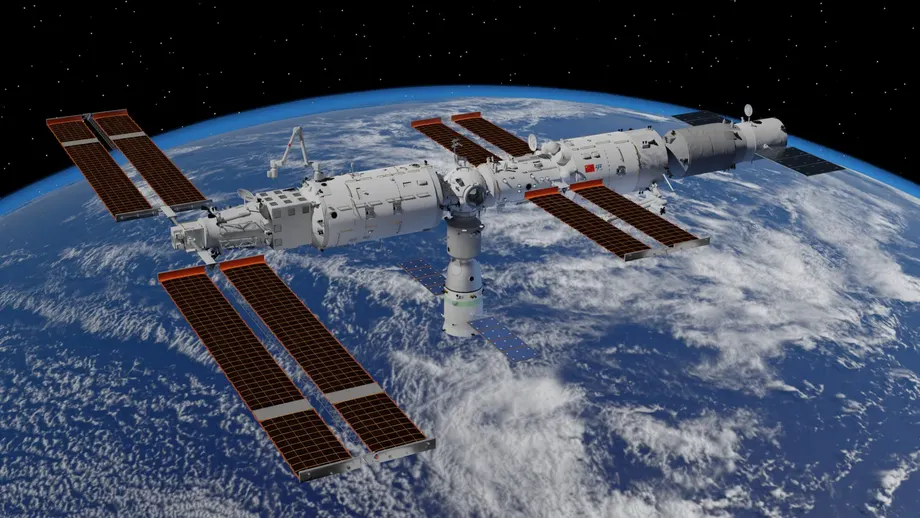
Shenzhou-24 marks China's 18th crewed spaceflight since its human space program began in 1992 and achieved its first orbital launch with Yang Liwei in 2003. Completed in late 2022, Tiangong consists of three permanent modules weighing more than 100 tons and is built to operate continuously for at least a decade, potentially outliving the older International Space Station. China has also discussed doubling the size of its station in the future to accommodate more experiments and visiting crews.
Until now, only Chinese astronauts have lived and worked aboard Tiangong, though European astronauts Samantha Cristoforetti of Italy and Matthias Maurer of Germany joined a sea survival exercise off Yantai in Shandong province in August 2017. Speaking ahead of the Shenzhou-21 launch on Oct. 30, CMSA spokesperson Zhang Jingbo described how foreign payload specialists fit into daily operations aboard the station.
During the flight, in addition to performing the crew's daily duties, they will also undertake scientific experiments for Pakistan.
Interest in flying aboard China's station stretches well beyond South Asia. Chen Shanguang, a senior official in China's manned space program, noted as early as February 2023 that "multiple countries have told China that they hope to send their astronauts to the Tiangong station." Through a partnership with the United Nations Office for Outer Space Affairs (UNOOSA), China has already approved nine international science projects involving 23 institutions from 17 member states for work aboard the orbital complex.
While Beijing expands station access and targets a crewed lunar landing by 2030, major space powers are also pursuing long term energy systems on the Moon. NASA plans to build a lunar nuclear reactor by the end of 2030, while Russia and China aim to deploy a similar reactor by 2036. Such power plants could supply electricity for future lunar outposts and help extract frozen water from shadowed craters to produce drinking water, breathable air, and rocket fuel.
A Crowded Week of Global Rocket Launches
Shenzhou-24 anchors an unusually busy week of spaceflight from Nov. 23 to 29, featuring cargo runs to the International Space Station, commercial satellite constellations, and four additional Chinese launches. Early Tuesday, Nov. 24, at 5:13 a.m. EST, Russia's Roscosmos is targeting liftoff for the Progress MS-36 cargo ship atop a Soyuz-2.1b rocket from the Baikonur Cosmodrome in Kazakhstan, though NASA still lists the resupply flight only as no earlier than fall 2026 without confirming a date. At 5:45 a.m. EST the same morning, Arianespace plans to try again to launch an Ariane 64 rocket from the Guiana Space Centre in French Guiana carrying 36 Amazon Leo internet satellites, after a ground support problem halted Monday's countdown. The flight will be Amazon's first since a Vulcan rocket failure the previous week.
American military and commercial operators fill out the rest of the Western schedule. At 10:55 a.m. EST Tuesday, SpaceX is set to launch the classified USSF-266 mission for the U.S. Space Force from Space Launch Complex 4E at Vandenberg Space Force Base in California, landing the booster on the droneship Of Course I Still Love You in the Pacific Ocean. SpaceX returns to the same California pad at 11:39 p.m. EST on Saturday, Nov. 28, for USSF-380, another classified Space Force mission with an undisclosed payload. On Sunday, Nov. 29, at 10:47 a.m. EST, NASA and Northrop Grumman plan to launch the NG-25 Cygnus XL cargo ship on a Falcon 9 from Cape Canaveral Space Force Station in Florida. Named S.S. James A. Lovell after the late Apollo 13 commander, the freighter will deliver several tons of supplies and research gear to the International Space Station.
Elsewhere in the Pacific and across China, rocket operators have lined up five more flights during the second half of the week. On Thursday, Nov. 26, at 4:35 a.m. EST, the China Aerospace Science and Technology Corporation (CASC), owned by the state, targets a Long March 2D launch from the Xichang Satellite Launch Center, followed at 7:05 p.m. EST by Rocket Lab launching an Electron rocket from New Zealand's Mahia Peninsula on the Night Owls Never Sleep mission. That Electron flight carries a StriX satellite for Japanese company Synspective, using synthetic aperture radar to capture ground images through thick clouds and darkness. On Friday, Nov. 27, at 8:00 a.m. EST, CASC aims to launch a Long March 6A from Taiyuan in Shanxi province. Saturday, Nov. 28 brings two more Chinese missions: commercial firm CAS Space plans a Kinetica 1 launch at 8:00 p.m. EST from a sea platform in the South China Sea supported by Haiyang Oriental Spaceport, followed at 10:50 p.m. EST by a Long March 6C from Taiyuan. Chinese authorities have not disclosed the payloads for any of those four launches.
What to Know
- Shenzhou-24 is scheduled to carry Pakistan's first astronaut and two Chinese crewmates to the Tiangong space station during the week of Nov. 23 to 29, with Pakistani officials pointing to Nov. 25 (evening of Nov. 24 EST) pending official confirmation from China's space agency.
- Military pilots Muhammad Zeeshan Ali and Khurram Daud completed training at the Astronaut Center of China in Beijing, and one will fly as a payload specialist while the other serves as backup.
- The visiting astronaut will spend roughly one week aboard Tiangong running four Pakistani biotechnology experiments chosen from more than 300 proposals before returning to Earth on the docked Shenzhou-23 spacecraft.
- Leaving a return seat open on Shenzhou-23 allows one Chinese astronaut to remain on Tiangong for an extra six months, marking China's first continuous year in orbit.
- The flight fulfills a cooperation agreement signed in Islamabad on Feb. 28, 2025, and precedes joint lunar plans that include sending Pakistan's 35 kilogram Jinnah-1 rover on China's Chang'e-8 mission around 2028.
- Ten other orbital missions share the Nov. 23 to 29 launch window, including Russian and American cargo flights to the International Space Station, 36 Amazon Leo satellites on Ariane 64, two classified U.S. Space Force flights, a Rocket Lab radar satellite launch, and four additional Chinese rockets.