A Breakthrough for Domestic Scientific Equipment
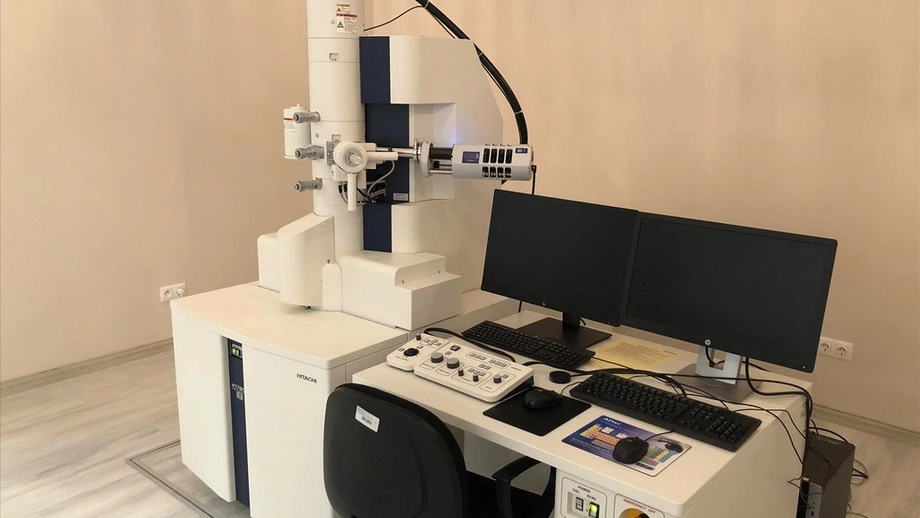
China unveiled its first domestically developed 120kV cryo transmission electron microscope, named the TH-F120C, on November 21 at the Guangzhou International Bio Island. A cryo electron microscope is a high end scientific instrument used by researchers to freeze biological samples and observe them at near atomic resolutions, helping scientists study viruses, proteins, and advanced materials. This new machine was jointly developed by the Bio Island Laboratory, the Guangzhou Laboratory, the Chinese Academy of Sciences Guangzhou Institutes of Biomedicine and Health, and Steel Research Nakatest Co. Ltd. The project marks a major milestone in breaking away from foreign software and hardware restrictions, ensuring that national research data remains secure and independently managed.
Contents
Scientific instruments of this caliber have historically faced massive technical barriers and heavy reliance on foreign imports. China imported approximately 300 transmission electron microscopes in 2022 alone, with total import values exceeding three billion yuan. The new TH-F120C changes this landscape by achieving complete autonomy in all key core components, including the field emission electron gun, low drift high voltage power supply, magnetic lens constant current source, direct electron camera, cryo sample system, and machine control software.
Milestones in Development and Research
The journey toward creating a sovereign electron microscope began years before the recent launch. Chinese Academy of Sciences academician Xu Tao and researcher Sun Fei teamed up with the Chinese Academy of Sciences Institute of Physics in 2016 to initiate foundational research into transmission electron microscopy. A dedicated engineering team formed at the Bio Island Laboratory in 2020 to tackle the complex physics and engineering hurdles associated with building such an advanced device.
Development faced significant hurdles, including overseas technology blockades and strict limits on the import of vital components. The team spent years iterating on precision electron optics and long term reliability testing to build a complete domestic chain of research, manufacturing, and testing. The resulting instrument provides an information resolution of 0.23 nanometers, making it capable of visualizing fine crystal lattice stripes, biological macromolecules, and cellular microstructures.
Technical Specifications and Core Innovations
Engineering a high performance electron microscope requires extreme precision in stabilizing electrical currents and high voltages. The TH-F120C achieves a high voltage stability improved to two parts per million per hour, while its constant current stability operates within one part per million per hour. The self developed high voltage power supply supports a maximum output of 120 kilovolts with a current range spanning from zero to ten amperes.
Operating the device involves sophisticated supporting hardware that manages samples at cryogenic temperatures. The machine features automated sample loading, low temperature vacuum transfer and storage, and a nanometer scale precision goniometer stage to maintain a complete cold sample chain. Additionally, the system incorporates HarmonyOS control software that allows researchers to operate the microscope seamlessly across multiple devices, including computers and tablets.
Expanding Applications Across Scientific Fields
Advanced electron microscopy serves as a foundational tool across multiple scientific disciplines, from structural biology to semiconductor manufacturing. Researchers can use the TH-F120C to observe the atomic arrangement of battery materials, analyze the structure of viral particles, and inspect defects in integrated circuits. The 120 kilovolt field emission design specifically targets the daily sample screening and routine structural analysis needs of laboratories nationwide, serving as a more accessible alternative to massive high voltage platforms.
Visitors at the launch event in Guangzhou viewed six distinct sets of live imagery captured by the microscope, ranging from crystal lattice stripes to protein particles and iron storage proteins. The clarity of these images demonstrates that the domestic instrument can perform complex structural biology and materials science tasks at a world class level. Industry experts note that 100 to 120 kilovolt field emission cryo microscopes are rapidly becoming the mainstream equipment for resolving biological macromolecule structures.
Evolution from Earlier Models
The new TH-F120C represents a direct evolution from earlier milestones achieved by the same research collective. In January 2024, the Bio Island Laboratory and QuantumCTek cofounded Guangzhou Huiju Technology Company to commercialize the initial TH-120 model, famously nicknamed Taihang after the mountain range to symbolize a sturdy backbone for domestic industry. That initial commercial success culminated in the signing of its first batch of commercial orders in December 2024.
Compared to the earlier 2024 model, the newly released TH-F120C brings substantial performance enhancements. High voltage stability was upgraded from ten parts per million per hour down to two parts per million per hour, and current stability improved from five parts per million per hour to under one part per million per hour. These refinements allow the instrument to maintain high precision even under low electron dose conditions required for sensitive biological samples.
The broader timeline of this technological progression highlights a sustained national effort in advanced instrumentation:
- 2016: Research into transmission electron microscopy begins under academician Xu Tao and researcher Sun Fei.
- 2020: A dedicated and comprehensive engineering team is assembled at the Bio Island Laboratory.
- November 2022: Guangzhou Huiju Technology Company is established through a partnership with QuantumCTek.
- January 2024: The initial commercial TH-F120 model, named Taihang, is officially introduced to the market.
- December 2024: The first commercial batch contracts for the domestic electron microscope are formally signed.
- October 2025: The development team initiates deep industry and academic collaboration with a listed enterprise under China Sinogy.
- November 21, 2026: The upgraded TH-F120C model featuring fully self developed components is officially unveiled in Guangzhou.
Commercialization and Future Roadmaps
Translating laboratory breakthroughs into commercial products requires close cooperation between academic institutions and industrial manufacturers. The research team partnered with a listed enterprise under China Sinogy in October 2025 to align research capabilities with industrial mass production. Academician Xu Tao emphasized that high end scientific equipment must move beyond laboratory prototypes and establish a complete chain connecting basic research, core manufacturing, and market applications.
Looking ahead, the development organization has laid out an ambitious timeline for future technological releases. The team plans to introduce a one stop high throughput intelligent cryo electron microscope by 2027 and aims to achieve complete domestic production of a 300 kilovolt intelligent cryo electron microscope by 2029. Future innovations will focus on precise film thickness measurement, in situ high speed freezing, and automated high throughput sample delivery.
Local government support plays a vital role in nurturing these high technology ecosystems through targeted policy reforms. Guangzhou Municipal Science and Technology Bureau representatives noted that the city continuously supports major research platforms like the Bio Island Laboratory by establishing domestic instrument demonstration scenarios. This creates a functional feedback loop of research, usage, feedback, and iterative upgrades that helps homegrown scientific equipment compete globally.
The Bottom Line
At a Glance:
- China launched its first fully autonomous 120kV cryo transmission electron microscope, the TH-F120C, in Guangzhou.
- All core components, including the electron gun, high voltage power supply, and direct camera, were domestically engineered.
- The instrument achieves a high resolution of 0.23 nanometers and features complete cryogenic sample handling capabilities.
- The project builds upon a five year research initiative supported by provincial and national scientific funding programs.
- Developers plan to release high throughput intelligent models by 2027 and target 300kV domestic production by 2029.