A Historic Ruling in The Hague
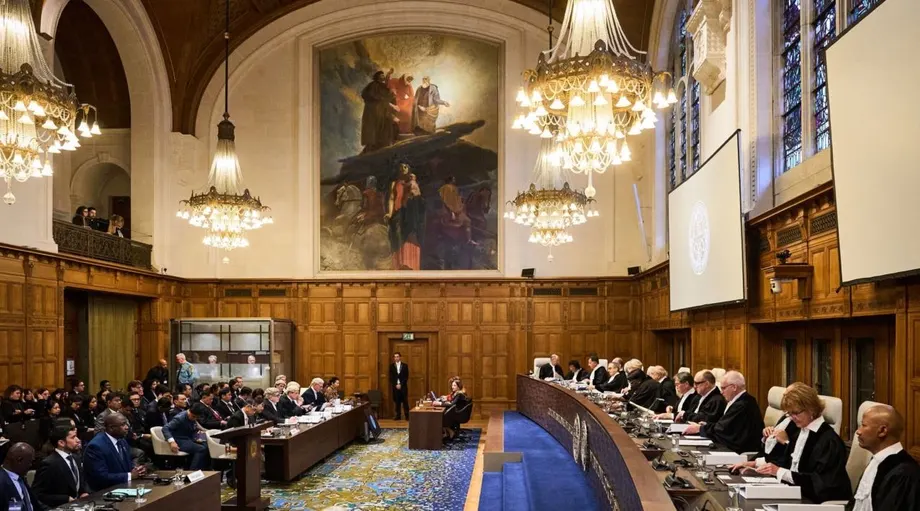
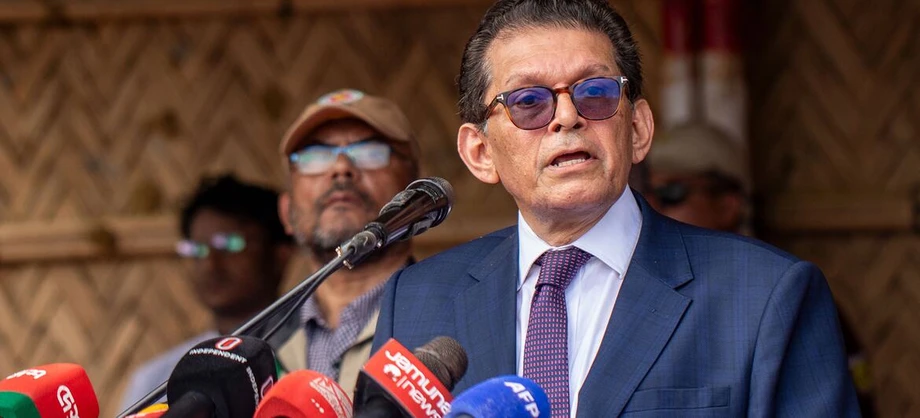
United Nations General Assembly President Khalilur Rahman travelled to Ukhiya within the sprawling refugee settlements of Bangladesh on Friday, November 21, 2026, declaring that the road to home began for the displaced minority. His visit came just one day after the International Court of Justice delivered a landmark judgment in the case brought by The Gambia. The UN top court ruled for the first time in its 80-year history that a sovereign state committed genocide. Judges found that Myanmar incurred responsibility for violating obligations under the 1948 UN Genocide Convention during military clearance operations in northern Rakhine State in 2017.
Contents
The judgment was decided by a 9-to-6 vote among a 15-judge panel, reflecting deep division on the bench regarding how to infer genocidal intent from circumstantial evidence. The court examined extensive evidence regarding military operations, concluding that security forces committed mass killings, widespread sexual violence including gang rape, and extreme violence against children. Judges found that at least 10,000 Rohingya were killed during the crackdown, while approximately 750,000 people fled across the border into Bangladesh, according to data from the UN refugee agency, UNHCR. The legal battle began on November 11, 2019, when The Gambia filed its application at the Peace Palace in The Hague with backing from the 57-member Organisation of Islamic Cooperation. Eleven states intervened in the proceedings to offer interpretations of state obligations under international humanitarian law.
Speaking directly to a massive gathering of refugees at the football field of Camp 4 in Kutupalong, Ukhia, on Friday morning, Mr. Rahman reflected on the significance of the moment. At least 35,000 Rohingya from different camps attended the rally, which began at 9:30 a.m. after attendees began arriving at 8 a.m. Local leaders welcomed the UN official, joined by UN interim resident coordinator Carol Flore-Smereczniak and refugee relief and repatriation commissioner Mohammad Mizanur Rahman. Before becoming Bangladesh Foreign Minister and then Assembly President, Mr. Rahman served as his country top envoy on the Rohingya and visited the camps many times.
Yesterday, in The Hague, the highest court of the United Nations spoke. It spoke in your name: Rohingya. Your identity matters, and the court recognised the Rohingya as a distinct ethnic group whose ties to Myanmar go back generations. The court judgment is unequivocal. And while no judgment can bring back the dead or heal every wound, truth is where justice begins.
Refugees Respond to the Verdict
In the crowded settlements of Cox Bazar, the verdict brought a mixture of deep relief and cautious optimism. For many refugees, the ruling represented a rare moment of formal recognition after years of statelessness, displacement, and uncertainty. Refugees watched broadcasts from The Hague on large screens, celebrating what community leaders called a vital step toward justice.
Mohammad Rofik, a Rohingya community leader, called the judgment a victory because it formally acknowledged the genocide and the suffering endured by the community. Another community leader, Sayed Ullah, described the ruling as historic because it recognised the Rohingya as a distinct ethnic group, challenging Myanmar longstanding refusal to acknowledge their identity. Mohammad Zubair, president of the Arakan Rohingya Society for Peace and Human Rights, said the ruling fulfilled a long-demand of the community. In Rakhine state, 31-year-old Rohingya Pyay Lynn agreed that repatriation has to happen, though he acknowledged that bringing displaced refugees back to their war-ravaged homeland carries significant risks due to ongoing civil conflict.
Four Priorities for Implementation
Addressing the massive crowd in Ukhiya, Mr. Rahman set out four immediate priorities to translate the ruling into concrete action. The first priority is justice. Myanmar must investigate those reasonably suspected of having committed acts prohibited under the Genocide Convention and, where the evidence supports it, prosecute and punish them, alongside reforming its national legislation. The court specifically noted that Myanmar violated its obligation under an earlier January 23, 2020, order to prevent the destruction and ensure the preservation of evidence. While the court found that Myanmar had not directly and publicly incited private individuals to commit genocide, it held the state responsible for widespread atrocities.
The second priority is a safe, voluntary, and dignified return. The court ordered Myanmar to make it possible for the Rohingya to come home. Mr. Rahman stressed that no one should be sent back into danger. Any return must come with real guarantees of safety, freedom from discrimination, freedom of movement, and a voice for the Rohingya in decisions affecting their future. Protection against discrimination specifically includes access to citizenship, addressing a core grievance stemming from a 1982 law that rendered most Rohingya stateless.
The third priority is reparations. The court ordered Myanmar to compensate victims for material harm and report back within two years on restitution measures. Mr. Rahman acknowledged the limitations of financial compensation.
Money cannot replace life. Money cannot replace the loved ones that you have lost. But real reparations can help survivors to regain a sense of security, hope, dignity, and citizenship.
The fourth priority is prevention through legal reform, training for security forces, and genuine civilian control over them. Mr. Rahman pledged to work with UN member states to ensure the judgment is carried out and promised to convey the voices of Rohingya youth, women, and survivors to all 193 UN member states in New York.
Timeline of Key Events
- 1948: The United Nations adopts the Genocide Convention following post-war treaties.
- August 2017: Myanmar military launches clearance operations in northern Rakhine State, driving over 740,000 Rohingya into Bangladesh.
- November 11, 2019: The Gambia files its genocide lawsuit against Myanmar at the International Court of Justice.
- January 23, 2020: The ICJ issues provisional measures ordering Myanmar to preserve evidence and prevent genocidal acts.
- January 2026: The court hears oral arguments and examines extensive evidence during three weeks of hearings.
- November 19, 2026: The ICJ delivers its landmark ruling finding Myanmar responsible for genocide by a 9-6 vote.
- November 20, 2026: Myanmar presidential spokeswoman Khaing Khaing Soe calls the ruling not fair at a press conference in Naypyidaw.
- November 21, 2026: UN General Assembly President Khalilur Rahman visits Rohingya refugee camps in Ukhiya, Cox Bazar, urging global action.
International Reactions and Diplomatic Positions
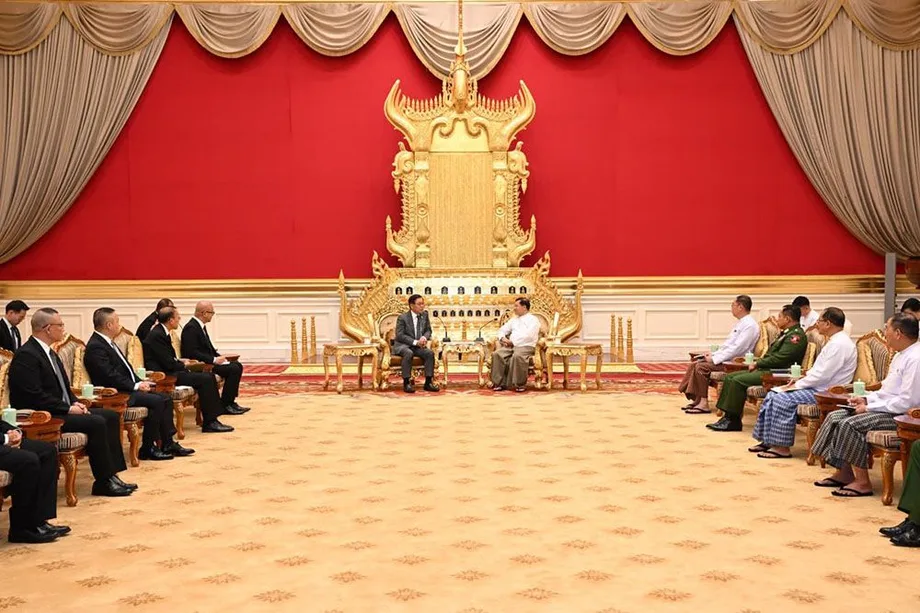
Reactions from governments around the world varied sharply following the verdict. Myanmar presidential spokeswoman Khaing Khaing Soe told reporters in Naypyidaw that the 9-6 decision was not unanimous and termed the verdict not fair. Myanmar argued that its actions targeted armed insurgents after a series of attacks left a dozen security personnel dead, but the court dismissed this counter-insurgency defense, stating that military forces failed to distinguish between civilians and fighters. Furthermore, the spokeswoman claimed that The Gambia had nothing to do with Myanmar.
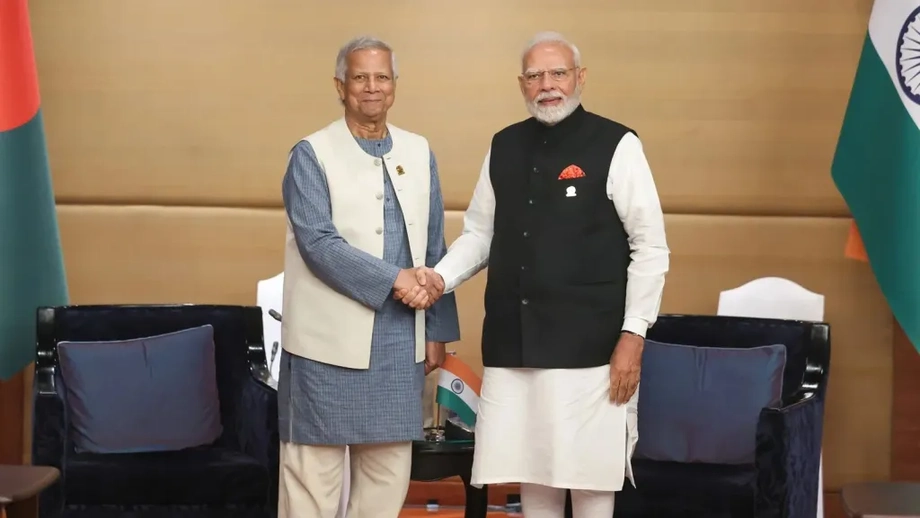
India and Bangladesh welcomed the judgment as an important step toward a resolution. India Ministry of External Affairs spokesperson Randhir Jaiswal stated that New Delhi supports the safe, speedy, and sustainable return of displaced Rohingyas, pointing to humanitarian assistance provided through Operation Insaniyat in five tranches and support for the Rakhine State Development Programme. Bangladesh, which hosts approximately 1.2 million Rohingya refugees in overcrowded camps facing challenges such as poor sanitation, disease outbreaks, and fire risks, views repatriation as the only viable solution.
China expressed concern over judicial overreach following the ruling. Daniel Forti, the International Crisis Group head of UN affairs, noted that any potential enforcement action in the UN Security Council would likely be blocked by China and Russia, both permanent members holding veto powers. The United Kingdom requested closed consultations at the Security Council scheduled for next Wednesday and a private meeting on December 7. Meanwhile, Malaysia announced plans to resettle 10,000 Rohingya migrants in Turkey through a structured skills training programme, addressing an influx of foreign asylum seekers that includes approximately 133,400 registered refugees in Malaysia.
Path Ahead for Repatriation and Enforcement
Turning the legal victory into tangible changes on the ground faces severe logistical and political hurdles. Bangladesh state minister for foreign affairs Humaiun Kobir provided a tentative repatriation timeline of one to one and a half years, noting that Dhaka will pursue multilateral pressure to ensure safe passage. However, realities on the ground in Myanmar complicate these prospects. Following a 2021 military coup that overthrew the elected government, a civil war has engulfed the country, killing more than 100,000 people according to conflict monitor ACLED estimates. In Rakhine State, the Arakan Army rebel group has wrested control of nearly all territory from the military and holds the areas to which refugees would return.
Independent analysts point out that security conditions in Rakhine State remain volatile. Myanmar verified 308,797 people in Bangladesh camps as former Rakhine residents in August, but maintains that repatriation will only begin when security conditions improve. Before the 2017 exodus, approximately 1.1 million Rohingya lived in Myanmar, while only around 600,000 remain in Rakhine State today, including 140,000 confined inside internal displacement camps. Human rights groups emphasize that genuine security, citizenship rights, and freedom of movement remain essential preconditions for any return.
Calls for Sanctions and Accountability
Human rights organizations and activists urged the international community to take robust punitive measures against Myanmar leadership. Amnesty International Secretary General Agnes Callamard urged governments to stop all transfers of weapons, security equipment, and military assistance to Myanmar, and called for a global arms embargo alongside a referral of the entire situation to the International Criminal Court. Human Rights Watch senior international justice counsel Maria Elena Vignoli urged concerned governments to press Myanmar junta to comply with the judgment and ensure safe returns.
Justice for All, an American human rights organization, called for sanctions targeting Myanmar oil and gas sector as well as weapons supply networks, and urged support for a Rohingya reparations fund. Rohingya rights activist Yasmin Ullah called for specific sanctions against President Min Aung Hlaing, the former military leader who commanded the 2017 crackdown and was installed as civilian president following restricted elections earlier in the year. While the International Criminal Court Office of the Prosecutor previously requested an arrest warrant for Min Aung Hlaing in late 2024 for crimes against humanity, prosecutors noted that the ICJ state responsibility judgment has no direct bearing on individual criminal matters before the criminal court.
Funding to sustain the refugee population in Bangladesh remains under severe strain, with the UN reporting that only about 69 percent of the 710 million dollars required for humanitarian funding in 2026 has been met. UN General Assembly President Khalilur Rahman emphasized that the crisis demands coordinated global efforts rather than isolation, reminding member states that upholding international law requires active implementation. As refugees continue to navigate daily hardships in Cox Bazar, Assembly Chief Khalilur Rahman stressed that the international community must maintain pressure to ensure that legal vindication transforms into real safety and dignity.
At a Glance
- The International Court of Justice ruled on November 19, 2026, that Myanmar committed genocide against the Rohingya in 2017.
- The historic decision passed by a 9-6 vote, marking the first time the ICJ found a state responsible for genocide.
- UN General Assembly President Khalilur Rahman visited Rohingya refugee camps in Ukhiya, Bangladesh, on November 21, 2026.
- Myanmar government officials dismissed the ruling as unfair and not unanimous, citing counter-insurgency operations.
- Bangladesh state minister Humaiun Kobir outlined a tentative repatriation timeline of 1 to 1.5 years through multilateral pressure.
- Rights groups including Amnesty International and Human Rights Watch called for global arms embargoes and economic sanctions.