A Historic Legal Milestone in The Hague
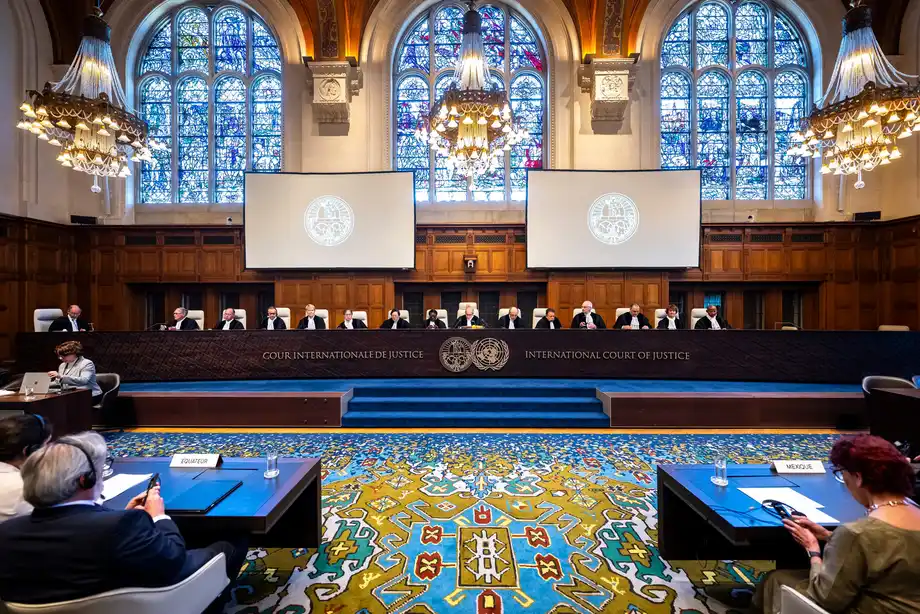
The International Court of Justice delivered a groundbreaking verdict on November 19, 2026, ruling that Myanmar committed genocide against the Rohingya Muslim minority during military operations in 2017. ICJ President Yuji Iwasawa read the decision in the Great Hall of Justice in The Hague, marking the first time in the 80-year history of the United Nations court that judges determined a sovereign state committed genocide. The case, initiated by The Gambia under the 1948 UN Genocide Convention with backing from the 57-member Organisation of Islamic Cooperation, concluded after seven years of legal proceedings. Judges found that Myanmar's security forces carried out mass executions, widespread sexual violence, and extreme violence against children, intending to destroy a substantial part of the Rohingya population. Readers can review our International Court of Justice Finds Myanmar Responsible for Rohingya Genocide in Landmark Ruling for details on the trial proceedings and judicial findings. The legal battle began on November 11, 2019, when The Gambia filed its application at the Peace Palace.
Contents
- A Historic Legal Milestone in The Hague
- Visiting the Refugee Camps in Bangladesh
- Understanding the Evidentiary Basis and Scale of Atrocities
- The Historical Context of Anti-Rohingya Hate Speech
- Genomic Evidence and Deep Historical Roots
- Relief, Reparations, and the Challenge of Enforcement
- Ground Realities in Rakhine State and Funding Shortfalls
- At a Glance
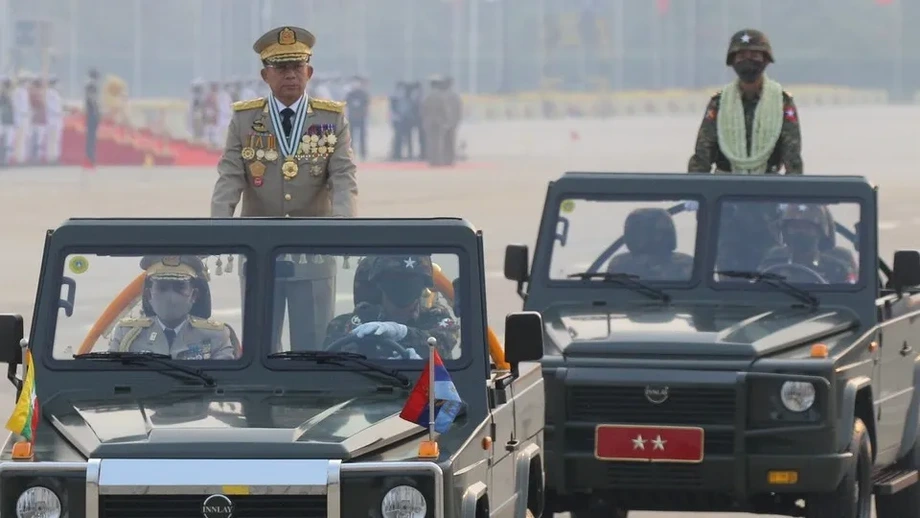
During hearings in January 2026, the court examined extensive evidence regarding military operations in northern Rakhine State. Eleven states intervened in the proceedings to offer interpretations of the ICJ's genocide ruling concerning international humanitarian law and state obligations. The final verdict was decided by a nine-to-six vote among the 15-judge panel, reflecting deep division on the bench regarding how to infer genocidal intent from circumstantial evidence. Understanding genocidal intent presents a severe evidentiary hurdle in international law because governments rarely document plans to exterminate an ethnic group. Myanmar defended its 2017 military campaign as a legitimate counter-terrorism response to attacks by the Arakan Rohingya Salvation Army, an armed group that had raided border posts. The court rejected this defense, noting that the scale, brutality, and pattern of violence far exceeded what military necessity could justify.
Visiting the Refugee Camps in Bangladesh
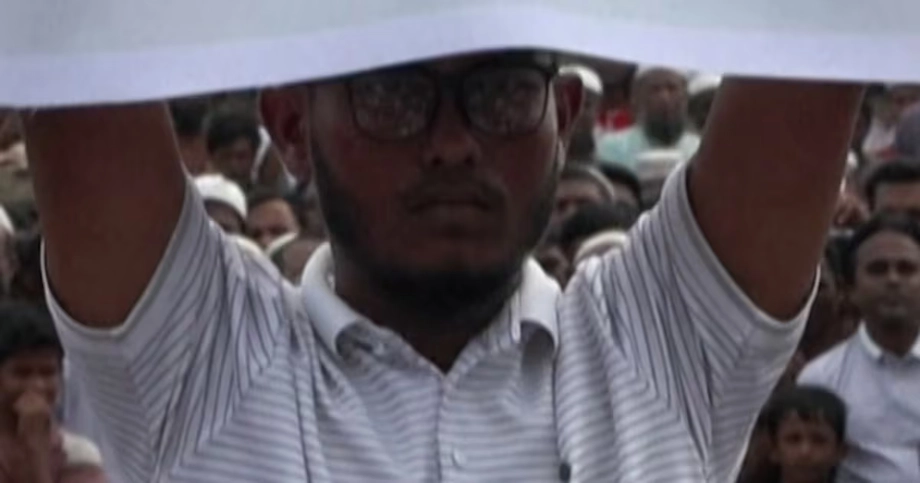
A day after the United Nations highest court found that Myanmar had committed genocide against the Rohingya, General Assembly President Khalilur Rahman visited the refugee camps in Cox's Bazar, Bangladesh, on November 20, 2026, urging the world to turn the landmark judgment into action. Khalilur Rahman previously served as Bangladesh's Foreign Minister and top envoy on the Rohingya before becoming Assembly President. Standing before thousands of refugees at the football field of Camp 4 in Kutupalong, Ukhia, he delivered a message of solidarity. At least 35,000 Rohingya from different camps attended the gathering, which began at 9:30 a.m. Carol Flore-Smereczniak, the UN interim resident coordinator, and Mohammad Mizanur Rahman, the refugee relief and repatriation commissioner and additional secretary, joined local leaders at the event.
Khalilur Rahman told refugees and reporters gathered at the camp that the highest court of the United Nations had spoken their name and declared that what was done to them in 2017 was genocide. He recalled his prior visits to the camps as a diplomat and explained his decision to travel to Bangladesh rather than speak from New York. Refugees in the crowd displayed placards and banners carrying their various demands. Amanullah, a 61-year-old refugee, walked from his camp holding the hands of his young grandchildren, Mohammad Omar, age six, and Mohammad Osman, age four, who wore T-shirts proclaiming their identity and resilience.
Khalilur Rahman set out four clear priorities to ensure the ruling leads to real change. The first priority is justice, requiring Myanmar to investigate and prosecute those suspected of genocide and reform its laws. The second priority is a safe return, ensuring that no one is sent back into danger and that any repatriation includes guarantees of safety, freedom of movement, and a voice for the Rohingya in decisions about their future. The third priority is reparations, acknowledging that compensation can help survivors regain safety and hope. The fourth priority is prevention through legal reform, training for security forces, and genuine civilian control over them.
Money cannot replace life. Money cannot replace loved ones that were lost.
Following the pronouncement of these priorities, Khalilur Rahman offered a direct assurance to the displaced community, stating that they would not be left to face their struggle alone. He pledged to convey their voices and aspirations to all 193 member states of the United Nations in New York.
You will not be alone. I will do my part.
Understanding the Evidentiary Basis and Scale of Atrocities
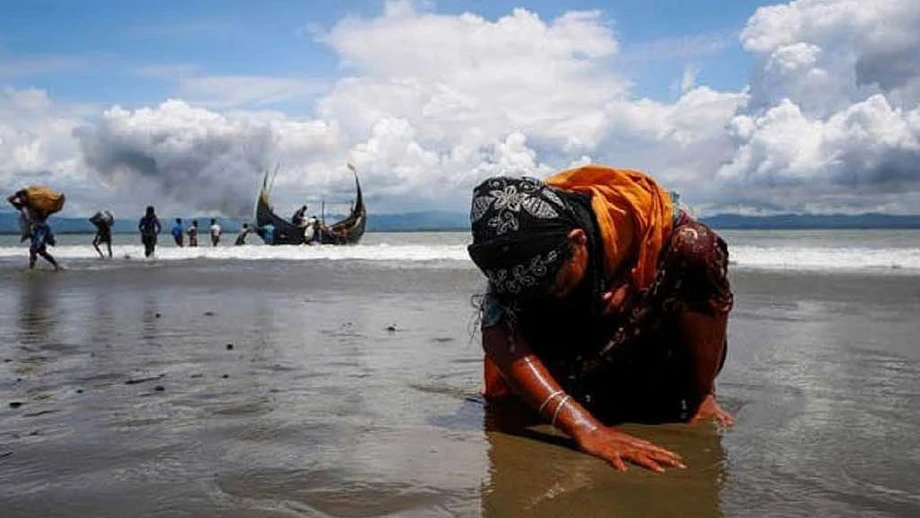
The International Court of Justice found that Myanmar's security forces killed Rohingya, caused serious bodily and mental harm, and carried out measures intended to prevent births within the group. The court also established that villages were systematically destroyed and that people who fled had little or no opportunity to return to their homes. Judges concluded that genocidal intent was the only reasonable inference from the evidence as a whole. They rejected Myanmar's argument that its actions were legitimate operations against insurgents or an effort to move people from the area without intending genocide. Evidence cited in accounts of the judgment put the death toll at about 10,000, while the United Nations refugee agency notes that some 750,000 people fled to Bangladesh during the 2017 military campaign.
Janina Dill, Chair in Global Security at Oxford University, explained that genocidal intent can be inferred from a pattern of conduct. The majority court concluded that the totality of evidence, including the methodical burning of villages, mass rapes, and the targeting of infants, left no other reasonable inference than an objective to destroy the group. The court also examined online hate speech, referencing a 2024 report by the United Nations Independent Investigative Mechanism for Myanmar showing that military networks spread material designed to instill fear and hatred against the Rohingya. Readers can review our ICJ Finds Myanmar Committed Genocide Against Rohingya, but Return and Reparations Remain Uncertain for an in-depth look at the court's evidentiary findings and the legal timeline.
The Historical Context of Anti-Rohingya Hate Speech
The relationship between dehumanizing language, state policy, and mass violence formed a crucial part of the evidence before the world court. On November 1, 2016, an opinion column in the state newspaper The Global New Light of Myanmar compared Rohingya people to a thorn that should be removed if it pierced. Another column that month described them as human fleas. These messages appeared before the military campaign of August 2017 that forced more than 700,000 Rohingya to flee to Bangladesh. Readers can examine our How Anti-Rohingya Hate in Myanmar Turned Exclusion Into a Public Duty for a detailed examination of state media publications and social media campaigns that preceded the violence.
The United Nations Independent Investigative Mechanism for Myanmar shared nine analytical reports with the parties in the case, including one devoted to anti-Rohingya hate speech on Facebook. The United States Holocaust Memorial Museum's hate speech exhibition documents messages that presented Rohingya people as pests, threats, or intruders rather than members of a human community. Ashin Wirathu, a Buddhist nationalist monk associated with anti-Muslim campaigns, used a similar argument in a social media post on April 8, 2016, comparing Muslims to banyan trees damaging Buddhist statues and urging their removal from human society. Myanmar's prejudice also includes judgments about skin color and appearance, reinforcing the exclusion of a population that successive governments have treated as immigrants from neighboring countries despite centuries of roots in the region.
Genomic Evidence and Deep Historical Roots
A scientific study published on November 17, 2026, in Scientific Reports provided the first detailed dataset covering genetic variation across the Rohingya genome. Titled The mosaic genetic ancestry of Rohingya, the research examined blood samples from 25 Rohingya people living in a refugee camp in Cox's Bazar, comparing their genetic data with 2,217 reference samples from across Eurasia. The international team of 12 scientists was jointly led by Professor Gyaneshwer Chaubey of Banaras Hindu University and Gazi Nurun Nahar Sultana of the University of Dhaka. Sultana's team collected blood samples after receiving permission from Bangladesh's Ministry of Disaster Management and Relief. Readers can explore our Rohingya Genome Study Finds Eastern South Asian Roots and Centuries of Links With Myanmar for a comprehensive breakdown of the genetic models and research methods used by the scientists.
The genomic study traced the community's main genetic ancestry to eastern South Asia while identifying a distinct contribution from populations in Myanmar. Researchers estimated that the last major mixing of South and Southeast Asian ancestry occurred between 701 and 974 years ago. One statistical model estimated approximately 59 percent Kol-related ancestry, used as a reference for North Indian ancestry, and 41 percent ancestry linked to Burmese reference populations. Among neighbouring Bangladeshi Muslims, the corresponding estimates were 69 percent and 31 percent. The Burmese contribution was therefore about 10 percentage points higher among the Rohingya, describing a community with a predominantly South Asian foundation whose genetic history was shaped by centuries of interaction in Arakan, the coastal region now largely within Myanmar's Rakhine State.
Relief, Reparations, and the Challenge of Enforcement
The court ordered Myanmar to facilitate the safe, voluntary, and dignified return of displaced Rohingya, conduct credible investigations, punish perpetrators, and enact comprehensive domestic legislation. Judges also mandated restitution or replacement of lost property, requiring Myanmar to report back within two years on compensation measures. While ICJ judgments are legally binding and cannot be appealed, the court possesses no independent enforcement mechanism. Enforcement relies on the UN Security Council, where permanent members holding veto powers can block punitive action. Approximately 1.2 million Rohingya currently live in congested refugee camps in Cox's Bazar, Bangladesh, following the mass exodus driven by the 2017 military operations.
Shama Obaed Islam, Bangladesh's state minister for foreign affairs, welcomed the verdict during a media briefing in Dhaka, describing it as a historic day that would strengthen diplomatic efforts to secure the safe return of the refugees. Syed Ullah, president of the United Council of Rohingyas, noted from Teknaf that survivors had waited nearly a decade for international recognition of the atrocities committed against them. Rashed Al Mahmud Titumir, adviser for finance and planning to the Bangladeshi administration, cautioned that the judgment alone would not resolve the crisis unless the international community helped create conditions in Myanmar that would allow the Rohingya to rebuild their lives with dignity and security.
Ground Realities in Rakhine State and Funding Shortfalls
The legal victory in The Hague contrasts sharply with the volatile security situation inside Myanmar's Rakhine State, where the military is actively engaged in conflict with the rebel Arakan Army. Since late 2023, the Arakan Army has taken control of 14 of Rakhine State's 17 township centers, restricting trade routes and blocking vital roads. Julie Bishop, the United Nations secretary-general's special envoy on Myanmar, warned during a high-level conference that no agreed ceasefire, pathway to peace, or political solution exists four years after the 2021 military coup. United Nations Secretary-General Antonio Guterres, in remarks delivered by Chef de Cabinet Courtenay Rattray, described the crisis as a deepening tragedy and stated that conditions in Rakhine State impede the possibility of safe and sustainable return.
Humanitarian operations in the camps face severe financial constraints due to shrinking aid budgets. Mohammad Yunus, Bangladesh's interim leader, warned of a severe worsening of the refugee crisis due to sharp reductions in international funding, noting that Bangladesh is forced to bear massive financial, social, and environmental costs. To help address these shortages, the United States and Britain announced $96 million in further assistance for refugees in Bangladesh. However, human rights organizations caution against premature repatriation efforts. Joe Freeman, an Amnesty International researcher, warned that existing conditions in northern Rakhine State are nowhere near ready for Rohingya to return safely, noting that an unmanaged repatriation push could prove catastrophic while active conflict and discrimination persist.
At a Glance
- The International Court of Justice ruled on November 19, 2026, that Myanmar committed genocide against the Rohingya minority during 2017 military operations.
- General Assembly President Khalilur Rahman visited Cox's Bazar, Bangladesh, on November 20, 2026, to address a rally of at least 35,000 Rohingya refugees.
- The court ordered Myanmar to investigate and prosecute perpetrators, provide reparations, and submit a compliance report within two years.
- More than 1.2 million Rohingya currently live as refugees in Bangladesh amid shrinking humanitarian budgets and active conflict in Rakhine State.
- A genetic study published in November 2026 revealed that the Rohingya possess a predominantly South Asian genetic foundation combined with centuries of ancestry linked to Myanmar.