Survivors seek action on a complaint filed in 2023
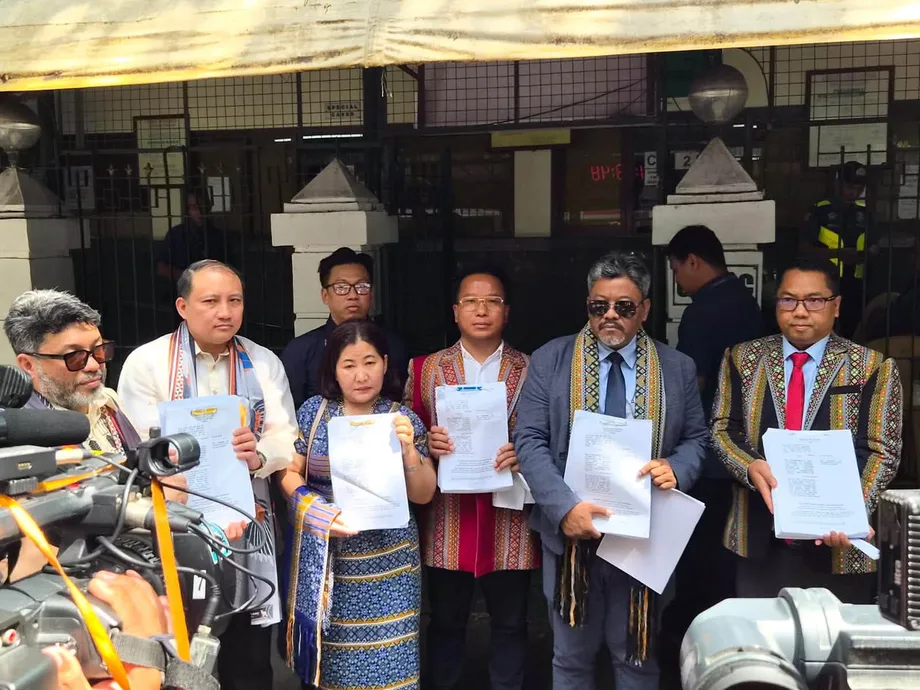
Five people from Myanmar's Chin community have asked the Philippine Court of Appeals to compel prosecutors to act on a war crimes complaint filed on October 25, 2023, against military leader Min Aung Hlaing and other junta officers. Their petition, filed on November 3, seeks a preliminary investigation into allegations that soldiers burned their town and killed residents who tried to extinguish the fires.
Contents
- Survivors seek action on a complaint filed in 2023
- What the survivors say happened in Chin State
- What the Court of Appeals is being asked to do
- How the complaint reached the appeals court
- Why a Philippine law is central to a Myanmar case
- The dispute over Section 17
- Why the delay matters to the complainants
- Key Points
The survivors are asking the appellate court to order the Department of Justice (DOJ) to formally register their complaint and resolve a motion for reconsideration pending since April 11, 2024. They are invoking Republic Act No. 9851, the Philippine Act on Crimes Against International Humanitarian Law, Genocide, and Other Crimes Against Humanity.
The procedural step is a petition asking judges to intervene in the handling of the complaint. No Court of Appeals ruling granting that request or authorizing a prosecution has been announced in the accounts of the filing.
The case places a concrete question before Philippine judges: can survivors of alleged atrocities abroad require Philippine prosecutors to investigate when the victims and military officers are foreign nationals and the officers are outside the Philippines?
What the survivors say happened in Chin State
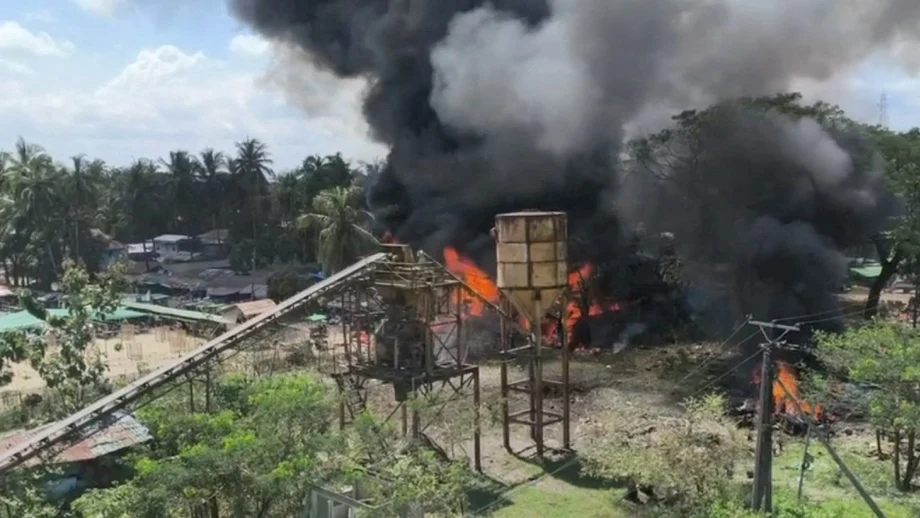
The complainants describe attacks in Chin State, in western Myanmar, following the military coup that removed Aung San Suu Kyi's government in 2021. According to their allegations, soldiers retaliated against resistance to the junta by burning their town. Residents who tried to put out the fires were shot and killed.
Ling Ling, one of the petitioners, said the destruction affected the hometown shared by the complainants. He described a community supporting the legal action:
"We have a full community behind us and people want to justice, all of us present, my colleagues here, have been affected, our hometown, we all come from the same town that was totally destroyed," Ling Ling said.
Ling Ling also said more than 10,000 people had been displaced or killed. His figure combines people forced from their homes with people who died; he gave no separate totals for those two groups.
What the Court of Appeals is being asked to do
The November 3 filing is a petition for mandamus and certiorari under Rule 65 of the Philippine Rules of Court. Those legal terms describe two different requests for judicial intervention.
Mandamus asks a court to require a public official to perform a duty required by law. Here, the survivors want action on their reconsideration request, formal registration of the complaint and a preliminary investigation. Certiorari asks a court to review an allegedly unlawful exercise of authority. The petitioners seek to nullify a February 2024 DOJ letter and subsequent actions they describe as implied denials.
Justice Secretary Fredderick Vida and Prosecutor General Richard Anthony Fadullon are named as public respondents. That means they are the officials whose handling of the complaint is being challenged, while the Myanmar military officers are the people accused of the underlying crimes.
A preliminary investigation is the stage at which prosecutors examine whether there is sufficient basis to bring criminal charges in court. For the survivors, securing that investigation would move their allegations into a formal process for examining evidence and deciding whether charges should follow.
The complaint is described in one account as naming Min Aung Hlaing and nine other junta officers, while another identifies nine military respondents in total, including him. The nine names listed are Min Aung Hlaing, Vung Suan Thang, Tay Zar Kyaw, Phyo Thant, Than Htike, Myo Htut Hlaing, Saw Thun, Myo Zin Tun and Nay Myo Oo.
How the complaint reached the appeals court
The survivors' legal effort has moved from a complaint before prosecutors to a challenge over whether those prosecutors must act. Their lawyers describe a prolonged delay following the DOJ's initial response.
- October 25, 2023: The Chin complainants filed their complaint with the Philippine DOJ under Republic Act No. 9851.
- February 2024: The DOJ issued a letter that the survivors now seek to have nullified.
- April 11, 2024: The motion for reconsideration that the petitioners say remains unresolved was filed.
- July 31: Lawyers filed a motion asking the DOJ to resolve the matter.
- November 3: Five Chin complainants petitioned the Court of Appeals for mandamus and certiorari.
The petition asks judges to address both the DOJ's position on jurisdiction and the time taken to handle the complaint. Those issues are connected: the survivors want a decision on their legal arguments and a route into an investigation.
Why a Philippine law is central to a Myanmar case
Republic Act No. 9851 brings crimes under international humanitarian law, genocide and other crimes against humanity into Philippine domestic criminal law. International humanitarian law sets rules for armed conflict, including protections for civilians.
The survivors invoke universal jurisdiction, a principle allowing national authorities to address certain grave international crimes even when the conduct occurred abroad and involved foreign nationals. Their argument is that the nature of the alleged crimes creates a Philippine duty to investigate and, if the evidence supports charges, prosecute.
The petitioners trace that claimed duty to Section 2(e) of the Act and to the prohibition of war crimes under international law, which they argue forms part of Philippine law through the Constitution. Their position would allow prosecutors to begin examining the allegations despite the military officers being outside the country.
The DOJ's stated reasons for declining to proceed, as described in the accounts of the case, concern those territorial and personal connections: the alleged crimes happened in Myanmar, neither the victims nor the accused are Filipino, and the military respondents are not in the Philippines.
For the court, the dispute therefore concerns the reach of Philippine law before any trial can begin. The survivors say the statute provides a route to investigation; the DOJ's position places limits on that route when the alleged perpetrators are abroad.
The dispute over Section 17
Section 17 of Republic Act No. 9851 is at the center of the disagreement. It addresses jurisdiction and the surrender or extradition of suspected or accused people in the Philippines to an appropriate international court or another state, subject to applicable laws and treaties.
The petitioners say the DOJ interpreted the provision as requiring the accused to be physically present in the Philippines before authorities could act. Their lawyers challenge applying that requirement at the preliminary investigation stage.
Their argument turns partly on the difference between a respondent and an accused person. During a preliminary investigation, the person being investigated is a respondent. The status of accused follows the filing of charges in court. The petitioners contend that language concerning an accused person should not prevent prosecutors from investigating respondents abroad.
Gilbert Andres, a lawyer for the survivors, has also compared their reliance on Section 17 with the Philippine government's use of the provision in the arrest and surrender of former president Rodrigo Duterte to the International Criminal Court (ICC). He urged the authorities to apply the law consistently:
"If Section 17 is robust enough for the State to wield in other cases, it cannot be too weak for these Chin victims to invoke in theirs," Andres said.
Myanmar is not an ICC member. Andres cited that circumstance when explaining the survivors' decision to invoke Philippine law. Their present request is directed at Philippine prosecutors and judges, using a Philippine statute as the basis for action.
Why the delay matters to the complainants
The survivors also invoke Article III, Section 16 of the Philippine Constitution, which guarantees the right to the speedy disposition of cases. Their lawyers argue that the DOJ's handling of the complaint affects both that right and due process.
Romel Bagares, another lawyer for the petitioners, described the constitutional protection and the human cost of waiting:
"The right to the speedy disposition of cases is not a courtesy. It is a guarantee written into Article III, Section 16 of our Constitution. Three years of silence is not neutrality. For a displaced population whose witnesses are aging, every month of delay is prejudice," Bagares said.
For people who have lost relatives and homes, the immediate legal objective is a decision that opens the complaint to investigation. Their petition asks the appeals court to require prosecutors to take the steps needed to examine the allegations and determine whether criminal charges are warranted.
The Court of Appeals must now address the requested intervention in the DOJ process. The survivors' case brings together the alleged destruction of a Chin community, the reach of a Philippine war crimes law and the constitutional demand that complaints receive timely action.
Key Points
- Five Chin complainants petitioned the Philippine Court of Appeals on November 3 over a war crimes complaint filed in October 2023.
- They seek formal registration of the complaint, a preliminary investigation and a decision on their pending reconsideration request.
- The allegations concern the burning of their town in Myanmar and the killing of residents who tried to extinguish fires.
- The legal dispute concerns whether Republic Act No. 9851 requires Philippine authorities to investigate alleged crimes committed abroad by foreign nationals who remain outside the country.
- The petitioners also invoke the constitutional right to the speedy disposition of cases.
- The announced development is the filing of the petition, with no reported court ruling granting it.