Ping Ping and Fu Shuang Meet Atlanta
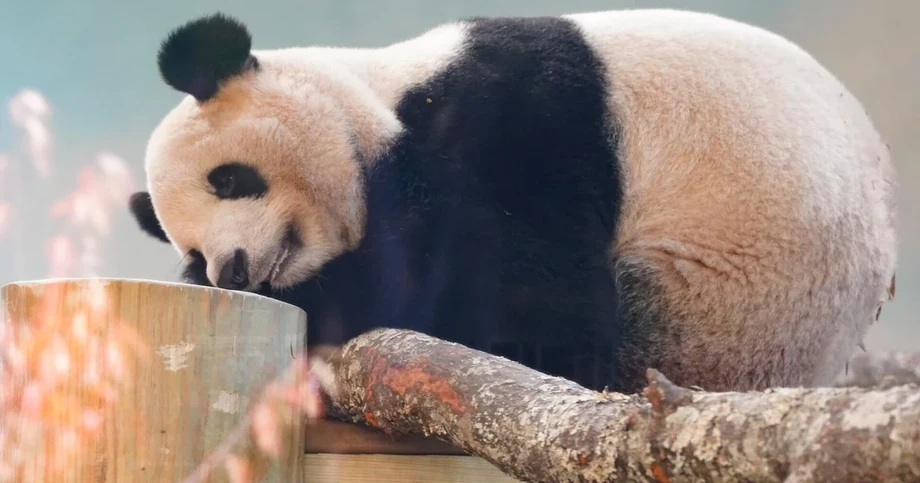
Giant pandas Ping Ping and Fu Shuang made their public debut at Zoo Atlanta on Friday, November 6, 2026, opening a new chapter in the city's conservation partnership with China. Their first appearance coincided with the opening of the Arthur M. Blank Panda Grove, a habitat updated with $6 million in grants from the Robert W. Woodruff Foundation.
Contents
- Ping Ping and Fu Shuang Meet Atlanta
- A New Habitat Built Around Panda Care
- Who Are the Two New Residents?
- From Chengdu to Public Viewing
- What Visitors Can Expect
- How the Conservation Agreement Works
- Breeding Hopes Follow a Productive Partnership
- Why Wild Panda Habitat Still Matters
- A Conservation Project With a Diplomatic Role
- Key Points
The two pandas, both now six years old, arrived at Hartsfield-Jackson International Airport on September 27 aboard a Boeing 777 donated for the journey by FedEx. Visitors had to wait while the animals went through quarantine and settled into their new surroundings.
Zoo Atlanta is one of three zoos in the United States housing giant pandas and the only one in the Southeast. For families in the region, the opening restores an opportunity that disappeared when Atlanta's previous panda family returned to China in October 2024.
Raymond B. King, Zoo Atlanta's president and CEO, announced the November 6 introduction as an occasion extending beyond the zoo itself:
We are overjoyed to introduce Ping Ping and Fu Shuang and the all-new Arthur M. Blank Panda Grove to our community, City of Atlanta, State of Georgia, and beyond on November 6.
The pandas are in Atlanta under an International Cooperative Research Agreement on Giant Panda Conservation between the zoo and the China Wildlife Conservation Association. Their stay combines animal care, research and public education with a diplomatic relationship in which China lends one of its most recognizable native species to institutions abroad.
A New Habitat Built Around Panda Care
The Arthur M. Blank Panda Grove updates the zoo's original panda spaces rather than simply welcoming new animals into an unchanged exhibit. Its indoor dayrooms have been expanded, with new climbing structures and a pool in each. Outdoor habitats also have new structures for climbing.
The $6 million project includes water features with aquatic plants and a sculpture by David Landis, Reflecting the Wild, donated by Dr. Ron and Judy Goldstein. Grants from the Robert W. Woodruff Foundation paid for the habitat update.
Zoo Atlanta says the changes were designed with the pandas' wellbeing in mind while also changing the experience for visitors. Larger indoor spaces, pools and climbing structures give the bears different places to move, rest and explore throughout the day.
King said visitors familiar with the original exhibit would notice the difference immediately:
Members and guests who recall the original giant panda habitat will know immediately upon entry that they are in for an entirely new experience.
Who Are the Two New Residents?
Ping Ping, the male, was born on March 17, 2020. Fu Shuang, the female, was born on October 18, 2020. Both came from the Chengdu Research Base of Giant Panda Breeding in China, a longstanding conservation partner of Zoo Atlanta.
Their birthdays explain why arrival coverage described Ping Ping as six and Fu Shuang as five, while both were six by their November debut. Fu Shuang celebrated her sixth birthday during the period between arriving in Atlanta and going on public view.
Zoo Atlanta's panda arrival announcement explains that Ping Ping's name forms part of a name given to him and his twin brother, expressing a blessing for a smooth and healthy life. Fu Shuang's name comes from "Fu Lu," a reference to her and her mother meaning "happiness."
Ping Ping also has a family connection to Atlanta's former pandas. Xia Feng, identified at the opening celebration as China's ambassador to the United States, said Ping Ping is the nephew of Yang Yang, the male who lived at Zoo Atlanta for 25 years.
Speaking at the debut, Xia described the relationship:
Ping Ping is here to take up the baton from his uncle Yang Yang, his mother's elder brother.
From Chengdu to Public Viewing
The move began with preparation in China. The pandas spent about a month in quarantine before departure, and caregivers helped them become accustomed to transport crates and loud noises. Their flight covered about 8,000 miles and lasted roughly 16 hours.
FedEx donated the dedicated flight, nicknamed the "FedEx Panda Express." The animals traveled in specially built crates, with bamboo, water and favorite treats accompanying them. After landing, they were driven to the zoo in FedEx trucks with a police escort.
Zoo Atlanta initially said the pandas would spend around a month in a biosecure area of the new complex. Biosecurity means controlling access and using health precautions to reduce the chance that illness spreads between animals, people or facilities. Public viewing began about six weeks after arrival.
The main dates trace the return of pandas to Atlanta:
- October 2024: Lun Lun, Yang Yang and their two youngest offspring left Atlanta for Chengdu, ending the previous agreement.
- September 27, 2026: Ping Ping and Fu Shuang arrived in Atlanta and entered quarantine at the zoo.
- October 18, 2026: Fu Shuang turned six.
- November 6, 2026: The pandas made their public debut as the Arthur M. Blank Panda Grove opened.
- November 6-8, 2026: The zoo scheduled opening weekend giveaways and community activities.
What Visitors Can Expect
Zoo Atlanta, in the city's Grant Park neighborhood, has made the new habitat the center of its panda welcome. The opening gives visitors their first chance to see Ping Ping and Fu Shuang since the pair arrived from China.
Members were offered additional viewing opportunities before regular opening hours. For November 7 and 8, entry for Members-Only Panda Mornings was scheduled for 8:30 a.m. From November 9 through November 22, the scheduled member entry time was 8 a.m.
The zoo also offers a Panda Cam for people unable to visit in person. Tickets for visits are available through the zoo's website.
For returning visitors, the attraction carries memories of Atlanta's previous panda family. For younger children, Ping Ping and Fu Shuang may be their first encounter with the species. Atlanta resident Zach Justice, who had seen the former pandas with his wife, Katy, described looking forward to bringing their young child:
As a family, we're excited anytime we get to show our baby new experiences.
How the Conservation Agreement Works
Ping Ping and Fu Shuang are on loan for 10 years. The pandas, along with any offspring they produce, remain China's property and are expected eventually to return there.
The agreement joins Zoo Atlanta with the China Wildlife Conservation Association. Its stated purpose is cooperative research and conservation, continuing a relationship that previously supported panda care, breeding, scientific research and education.
Hosting pandas also carries financial commitments. A 2022 Congressional Research Service analysis put the typical annual fee for a pair at $1 million, with agreements requiring China to direct funds toward conservation. The precise annual payment under Atlanta's new agreement has not been disclosed in the announcements described here.
The habitat investment and the loan arrangement serve different needs. The $6 million in foundation grants paid for changes to the pandas' Atlanta home. Conservation cooperation reaches beyond the exhibit, including work connected to pandas and their habitat in China.
Zoo Atlanta says its partnership with Chengdu, dating to the 1990s, has supported habitat restoration, nature reserve management and rangers. Rangers help protect the places where wild pandas live, while habitat restoration repairs areas damaged or divided by human activity.
Breeding Hopes Follow a Productive Partnership
Zoo Atlanta's original agreement ran from 1999 to 2024. During that period, Lun Lun and Yang Yang produced seven offspring, born between 2006 and 2016, including two sets of twins that were successfully reared.
Lun Lun, Yang Yang and their youngest offspring, Ya Lun and Xi Lun, returned to the Chengdu Research Base of Giant Panda Breeding in October 2024. Their first five offspring also live there. The new pair therefore joins an institution with extensive experience caring for pandas and working with Chinese colleagues.
Ping Ping and Fu Shuang were selected with their age, health, genetics and personalities in mind. Genetics matters because breeding programs seek to maintain diversity, helping a managed population avoid becoming too closely related.
Breeding pandas requires careful timing. Females are receptive to mating for only one to three days each year, and pandas normally live solitary lives. Caregivers must assess whether a pair is compatible as well as whether both animals are healthy.
Li Mingxi, deputy director of the Chengdu breeding base, described the hope that guided the selection:
like each other, and hopefully be able to mate naturally.
The public opening starts a new period of observation and care in Atlanta. Any future breeding attempt will depend on the animals' development, health and compatibility.
Why Wild Panda Habitat Still Matters
Zoo Atlanta puts the wild giant panda population at nearly 1,900, with 72% strictly protected on nature reserves. Using those rounded figures, that means roughly 1,370 wild pandas live under that protection, while about 530 live outside it.
Wild pandas now occupy six mountain ranges above the Sichuan basin. Their range has shrunk as human activity and climate change have affected habitat that once extended across much larger areas of China and into northern Myanmar and Vietnam.
The International Union for Conservation of Nature changed the giant panda's classification from Endangered to Vulnerable in 2016. Vulnerable means the species still faces a high risk of extinction in the wild, even though its situation has improved from the more severe Endangered category.
China has established 67 giant panda reserves, according to Zoo Atlanta. The creation of Giant Panda National Park in 2021 formed the mainstay of a national habitat protection system intended to improve connections between panda habitats and coordinate their protection.
Those connections matter because isolated groups have fewer opportunities to move between suitable areas and find mates. Protecting habitat supports wild animals where they already live, while breeding programs maintain a managed population and contribute knowledge about panda health and reproduction.
A Conservation Project With a Diplomatic Role
China's practice of sending pandas abroad also gives the Atlanta opening a political dimension. The animals become familiar faces of cooperation between countries whose governments may disagree on trade, technology and other issues.
Georgia Tech international affairs professor Fei-Ling Wang described panda sharing as a tool China has used to reward friendly relations, with the continuation or ending of agreements also carrying political meaning. The loan structure gives China a continuing role throughout the animals' stay.
Atlanta's return brings the number of pandas in United States zoos to six, compared with a peak of 15 about a decade earlier. The six are spread across Atlanta, San Diego and Washington, making access concentrated in just three cities.
For Zoo Atlanta, the practical work is more specific than international symbolism: caring for two animals, maintaining the new habitat, cooperating with Chinese specialists and supporting conservation. Visitors see the bears in Georgia, while much of the effort to secure the species' future takes place in the Chinese landscapes where wild pandas live.
Key Points
- Ping Ping and Fu Shuang made their public debut at Zoo Atlanta on November 6, 2026.
- Both pandas are six years old and were born at the Chengdu Research Base of Giant Panda Breeding.
- The Arthur M. Blank Panda Grove received a $6 million update funded by Robert W. Woodruff Foundation grants.
- The pandas are on a loan lasting 10 years, under a conservation agreement with the China Wildlife Conservation Association.
- Zoo Atlanta is one of three United States zoos with giant pandas and the only one in the Southeast.
- Nearly 1,900 giant pandas live in the wild, and the species remains classified as Vulnerable.