A Broader Framework for Managing Water
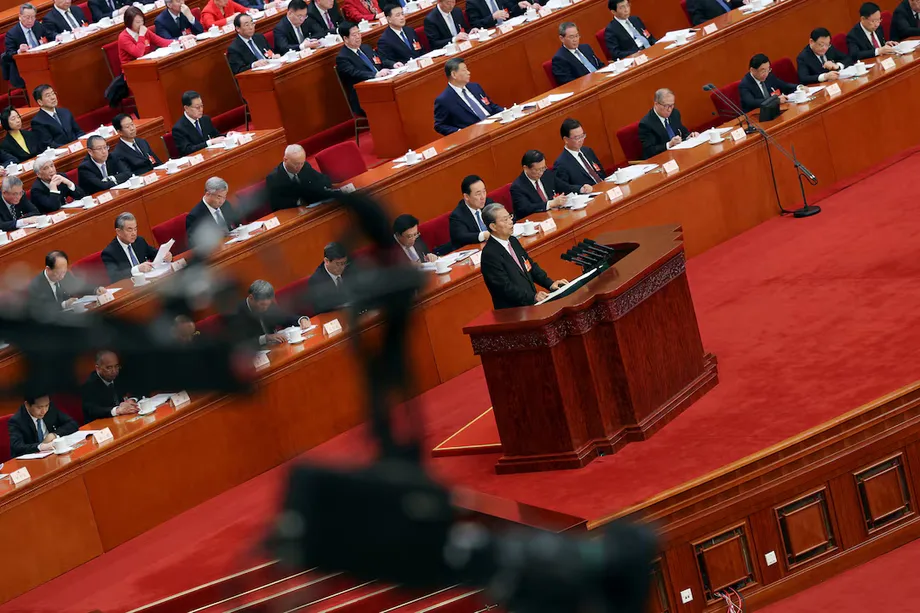
China's lawmakers passed a revised Water Law on November 6, 2026, setting March 22, 2027, as the date it will take effect. The vote came at the 25th session of the Standing Committee of the 14th National People's Congress, following a legislative review that addressed water conservation, infrastructure, ecological protection and the use of alternative water supplies.
Contents
- A Broader Framework for Managing Water
- What the Nine Chapters Cover
- How the Revision Reached the Vote
- Planning for Homes, Production and Nature
- A National Water Network With Environmental Duties
- Keeping Water in Rivers and Lakes
- Saving Water Through Prices and Reuse
- Public Participation and Responsibility
- Key Points
The revised law contains nine chapters. They cover how water is planned, protected, allocated and used, alongside the management of rivers and lakes, the construction and operation of water projects, dispute resolution, supervision and legal liability.
At its core is a requirement to give priority to saving water and to manage water supplies, aquatic ecosystems, environmental conditions and water hazards together. For households, farms, factories and local governments, those subjects are connected: decisions about how much water people take affect what remains for other users and for rivers and lakes.
The adopted law sets out broad principles. More detailed measures described during its final review included ecological compensation, greater public participation, water reuse and improvements to the national water network. Those details were presented as draft provisions; the passage announcements did not explain their final wording or provide specific water prices, compensation amounts or penalty levels.
What the Nine Chapters Cover
The law's structure puts planning, use and enforcement within one framework. Its opening chapter contains general provisions, followed by chapters on water resources planning; protection, development and use; and allocation and conservation.
Further chapters address river and lake management and protection, water project construction and operation, water dispute resolution and supervision, legal liability, and supplementary provisions. This gives the law a reach extending from decisions about future supplies to the operation of infrastructure and the handling of disagreements.
The adopted principles call for comprehensive planning, consideration of competing needs, attention to both immediate problems and their underlying causes, and effective use of water's multiple functions. They also call for government action and market mechanisms to work together. In practical terms, public decisions about allocation and protection are intended to operate alongside economic signals that influence water use.
How the Revision Reached the Vote
The November vote followed a second review in August 2026 and a third review during the Standing Committee's November session. Before that session, Huang Haihua, spokesperson for the Standing Committee's Legislative Affairs Commission, outlined proposed changes at an October 30 press conference.
Huang identified five main areas for further revision: the national water network, public participation, planning requirements, aquatic ecological protection and legal liability. The sequence shows how the final legislative review brought infrastructure and environmental concerns into the same discussion.
- August 2026: The Standing Committee's 24th session conducted the draft's second review.
- October 30, 2026: Huang Haihua presented proposed changes ahead of the next session.
- November 2, 2026: The draft was submitted for its third review at the 25th session.
- November 6, 2026: Lawmakers voted to pass the revised law.
- March 22, 2027: The revised Water Law takes effect.
The timetable leaves an interval between passage and implementation. The effective date is the point when the revised law becomes operative, while the earlier dates mark the scrutiny and approval of its provisions.
Planning for Homes, Production and Nature
The Ministry of Water Resources published an account of the third review describing proposed requirements for water plans to coordinate domestic, production and ecological needs. Its third review account also described proposed public participation mechanisms, expert consultation and the use of modern information technology to improve planning.
Domestic demand means water for everyday life. Production includes uses such as farming and industry. Ecological demand means water needed to sustain rivers, lakes and the living systems that depend on them. Considering all three together means planners must account for nature's water requirements alongside withdrawals for human activity.
The adopted principle of spatial balance addresses the relationship between where water is available and where it is needed. Read together with the planning proposals, it points to decisions that consider location as well as total supply. A national quantity alone cannot describe the circumstances facing an individual river basin or city.
A National Water Network With Environmental Duties
The draft presented on November 2 proposed accelerating construction of a national water network, with the stated aim of improving China's ability to ensure water security. Water security means having dependable water for essential needs while managing threats such as shortages and water hazards.
The proposed network provisions called for a complete, reliable, efficient and environmentally responsible system, supported by intelligent management and orderly regulation. The focus extended beyond constructing individual projects to how different parts of the network would operate together.
Water transfer projects received particular attention in the third review. The draft proposed requiring them to improve the capacity to support water needs while preventing environmental damage. Moving water can help serve a receiving area, but planning also has to consider the places from which that water is taken.
The adopted law gives water project construction and operation a dedicated chapter, alongside a separate chapter for rivers and lakes. That structure brings the management of built infrastructure and natural waterways into the same legal framework.
Keeping Water in Rivers and Lakes
The third review proposed more detailed rules on ecological flows and ecological water levels. An ecological flow is the amount of water that needs to keep moving through a river to support its ecosystem. An ecological water level serves a similar purpose for the height of water in a lake or other water body.
The draft called for control targets for those flows and levels, as well as targets for water released from engineering projects to support ecological needs. It said these targets should take account of factors including water resource conditions. Such requirements connect infrastructure operations with the condition of the waterways around them.
Ecological protection compensation was another proposed addition. Under the draft, regions, organisations and individuals carrying out water ecosystem and environmental protection in accordance with rules or agreements would receive compensation.
The idea is to recognise that protecting water can impose costs on the people or places doing that work, while benefits may extend elsewhere. A community preserving a water environment can support users beyond its own boundaries. The proposed compensation system would give that protective work a place in the legal framework.
Saving Water Through Prices and Reuse
Huang described conservation and the repeated use of water as central priorities of the revision. The draft called for a national water conservation campaign, stronger conservation in agriculture, industry and urban areas, and a combination of incentives and constraints.
At the October 30 briefing, Huang Haihua, spokesperson for the Standing Committee's Legislative Affairs Commission, explained why water protection was central to the revision:
Water is the source of life and the foundation on which humanity and nature depend for survival.
The pricing proposal sought a mechanism reflecting economic and social development, water availability, supply costs, users' ability to pay and conservation requirements. These factors place affordability and the cost of providing water within the same calculation, while also seeking to encourage careful use.
The draft also proposed bringing unconventional water sources into unified allocation. The listed sources included collected rainwater, seawater and desalinated seawater, water from mines and pits, and slightly saline water. Unified allocation means considering these supplies within water planning instead of treating them as separate resources.
Reclaimed water received a specific proposed priority. Local governments at county level and above would be required to encourage the use of reclaimed water meeting applicable standards, with uses such as urban landscaping giving it preference. Reclaimed water is wastewater treated so it can be used again for suitable purposes. Using it to irrigate urban greenery can reduce demand for other supplies.
Public Participation and Responsibility
The third review proposed encouraging people to participate in water protection, conservation and the prevention of water hazards. Its planning provisions also called for public participation and expert consultation, giving both local experience and technical assessment a role in drawing up plans.
The proposed participation measures concern two different stages of water management. People could contribute while plans are being developed and take part in activities that protect or conserve water after decisions are made. Expert consultation would support the assessment of technical issues within planning.
The adopted law also contains chapters on water dispute resolution and supervision, and on legal liability. These subjects matter when users disagree over water or when authorities examine whether legal duties have been followed. Huang said the final review proposed improvements to liability provisions, alongside the changes to planning and ecological protection.
From March 22, 2027, the revised framework will govern a connected set of decisions: how water is allocated, how projects operate, how rivers and lakes are protected, and how responsibility is assigned. Its central direction is to put conservation first while considering human needs, environmental needs and water hazards together.
Key Points
- China passed the revised Water Law on November 6, 2026. It takes effect on March 22, 2027.
- The law has nine chapters covering planning, conservation, allocation, rivers and lakes, water projects, disputes, supervision and liability.
- The adopted principles prioritise saving water and coordinating the management of water resources, ecosystems, environmental conditions and water hazards.
- The final draft review addressed the national water network, ecological compensation, river flows, public participation and planning requirements.
- Draft conservation measures included pricing reforms, coordinated allocation of unconventional supplies and priority use of reclaimed water for urban landscaping.