A broader rulebook for China's renewable energy system
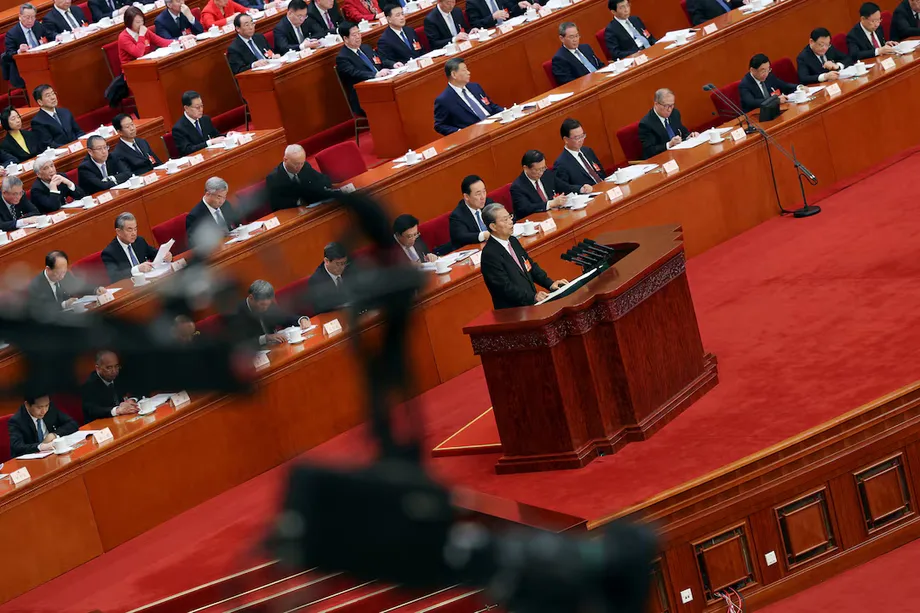
China submitted a draft revision of its Renewable Energy Law for a first reading on November 2, proposing changes to how renewable energy projects are planned, how their electricity is sold and how producers receive payment. The draft contains 76 articles across 10 chapters and was presented to the 25th session of the 14th National People's Congress Standing Committee.
Contents
- A broader rulebook for China's renewable energy system
- What would the revision cover?
- How would electricity trading change?
- How would producers be paid?
- Paying for a reliable electricity system
- Green certificates and the obligation to use renewable energy
- A wider scope, including heat and hydrogen
- How the changes fit together
- Key Points
The proposal brings together several practical challenges facing China's energy transition: connecting new generating capacity, moving electricity to consumers, setting prices through markets and making sure renewable power is actually used. It also adds provisions concerning environmental thermal energy and hydrogen, extending the proposed framework beyond familiar sources such as wind and solar.
The market changes would affect an electricity system in which more than half of generation from new energy sources, including wind and solar, is already priced through market transactions. From January through September in the reporting period, electricity traded through markets reached 5,853.6 billion kilowatt hours, an increase of 18.9 percent from a year earlier.
The revision is still at the first reading stage. The Standing Committee session was scheduled to run from Monday to Friday, but no adoption date or date for the revised law to take effect was announced.
What would the revision cover?
The draft addresses the renewable energy chain from the assessment of natural resources to the responsibilities of electricity consumers. Its main changes cover resource surveys, development planning, construction, production, transmission, market trading, prices, consumption, technological innovation, industrial development, supervision and legal liability.
The proposal also specifies stronger Communist Party leadership and changes to the law's purposes and related requirements. Renewable energy development is presented as a task tied to energy security, changes in the energy mix and environmental protection.
E Jingping, vice chairman of the National People's Congress Environmental Protection and Resources Conservation Committee, described the priority given to renewable energy in the draft. In translated remarks, he said it specifies:
The state gives priority to the development and utilization of renewable energy.
The practical reach of that priority would depend on how planning, construction, electricity dispatch and purchasing rules work together. A project needs permission to be built, a connection to the grid and buyers for its output before its generating capacity can become useful electricity.
How would electricity trading change?
The draft calls for establishing and improving a unified national electricity market, with mechanisms and rules suited to renewable energy. It would promote renewable energy participation in market trading in a steady and orderly way.
A unified market provides a common framework for buying and selling electricity across a large system. For renewable generators, the details matter because their output can change with the weather. A wind farm can produce more when winds strengthen, while solar panels generate during daylight and produce less under heavy cloud.
Market rules determine how those producers offer electricity for sale, how transactions are scheduled and how changes in expected output are handled. Rules adapted to renewable generation therefore affect both the income of developers and the work of grid operators balancing supply with demand.
The reported January to September trading volume of 5,853.6 billion kilowatt hours covered electricity traded through markets across the power system. Alongside the finding that more than half of new energy electricity is now priced through markets, the figure shows why the proposed legal changes concern an existing commercial activity on a large scale.
How would producers be paid?
The draft includes provisions on how prices are formed for electricity delivered by generators to the grid. It also calls for a price settlement mechanism supporting the sustainable development of renewable energy and for protecting developers' reasonable returns in accordance with the law.
Price formation and settlement are closely connected but do different jobs. Price formation determines what electricity is worth under the applicable rules. Settlement is the calculation of payments after electricity has been supplied and transactions have taken place.
For a renewable energy company, both affect the money available to repay construction costs, maintain equipment and finance future projects. A market price can change as electricity demand, fuel costs and available generation change. The proposed settlement mechanism would operate within the broader effort to combine market participation with the protection of reasonable returns.
The draft's stated approach pairs market pricing with financial safeguards for renewable developers. The level of protection and its operation will matter to companies making investment decisions, especially as more wind and solar generation enters electricity markets.
Paying for a reliable electricity system
The revision would add provisions concerning markets for electricity auxiliary services, a power capacity assurance mechanism, and transmission and distribution pricing. These address different parts of keeping electricity available and moving it to users.
Auxiliary services help the grid operate reliably. They can include rapidly adjusting output or helping maintain a stable electrical frequency. A generator or storage facility providing such a service contributes something beyond the amount of electricity it sells.
A capacity assurance mechanism concerns the availability of enough power resources when they are needed. Electricity sales pay for energy delivered; capacity arrangements address the ability to supply power. Transmission and distribution prices concern the networks that carry electricity over long distances and deliver it locally.
China's expansion of storage provides a concrete connection to these issues. By the end of 2025, wind and solar capacity exceeded 1,840 gigawatts, accounting for 47.3 percent of total electrical generating capacity. The development of giant pumped storage projects reflects the need to move some renewable electricity from periods of abundant production to periods of greater demand.
Pumped storage uses electricity to move water uphill, then releases it through turbines to generate electricity later. Such facilities connect the questions of renewable production, grid services and payment: storing energy and keeping the system stable each have value, while building and operating the equipment carries costs.
Green certificates and the obligation to use renewable energy
The draft provides for green electricity and green energy certificate systems. It also strengthens responsibilities for absorbing renewable energy and promoting its consumption, placing attention on the use of electricity as well as its production.
A green electricity certificate records the renewable origin of electricity under the relevant scheme. It allows that environmental attribute to be tracked, helping a buyer document renewable energy consumption. The certificate is an accounting instrument; electricity itself moves through a shared grid.
China introduced a pilot green electricity certificate system in 2017. The National Energy Administration issued a batch of certificates in December 2023. Including the system in the revised law would give it a place within the broader legal framework for renewable energy.
Consumption responsibilities address a basic challenge: building a wind farm or solar plant is only part of the job. Its output must also reach customers and be used. When the grid cannot accept all available generation, operators may reduce production, a practice known as curtailment. Planning, transmission, trading and consumption rules all influence how much electricity reaches users.
A wider scope, including heat and hydrogen
E Jingping said the draft adds provisions concerning environmental thermal energy and hydrogen. Environmental thermal energy refers to heat available in the surroundings, such as air, water or the ground, which technologies such as heat pumps can collect for useful heating.
Hydrogen can serve as an energy carrier, meaning it can hold energy for later use. Its production method matters: hydrogen can be made using different energy sources, including electricity. The draft's reference to hydrogen brings this part of the energy system into the discussion alongside renewable electricity and heat.
The proposed changes also cover technological innovation and industrial development. Together with stronger resource surveys and planning, these provisions would connect decisions about where renewable resources are available with decisions about which technologies and infrastructure are developed.
Production and transmission management remain central. A resource may be plentiful in one location while electricity demand is concentrated elsewhere. Coordinating projects with the networks needed to carry their output affects whether additional generating capacity can supply homes and businesses.
How the changes fit together
The draft brings several stages of renewable energy policy into one revision. Its history and immediate legislative milestone include:
- 2017: China introduced a pilot green electricity certificate system.
- 2021 to 2025: During the 14th Five Year Plan period, construction of a unified national electricity market advanced and participation by wind and solar accelerated.
- December 2023: The National Energy Administration issued a batch of green electricity certificates.
- November 2: The revision containing 10 chapters and 76 articles was submitted to the National People's Congress Standing Committee for its first reading.
The connection between these measures is practical. Resource surveys guide development, construction rules shape projects, transmission carries their electricity, markets arrange sales, settlement rules determine payments and certificates record renewable attributes.
For developers, the central issues are access to markets and predictable payment arrangements. For grid operators, they are reliable supply and the ability to manage changing output. For electricity buyers, the proposed framework would shape access to renewable power and the records used to document its consumption.
Key Points
- China submitted a Renewable Energy Law revision containing 76 articles across 10 chapters for a first reading on November 2.
- The draft covers planning, construction, transmission, trading, prices, consumption, supervision and legal liability.
- It proposes electricity market rules suited to renewable generation and a settlement mechanism protecting developers' reasonable returns.
- Additional provisions address auxiliary services, capacity assurance and network pricing.
- Green electricity and certificate systems would form part of the revised framework, alongside provisions concerning environmental thermal energy and hydrogen.
- No date for adoption or entry into force was announced.