A vast coastal habitat reduced to scattered remnants
Oyster reefs in Hong Kong and the Pearl River Estuary once covered more than 3,000 square kilometres, according to a historical reconstruction for 1750. Researchers now estimate that just 1.34 square kilometres remain, a decline of 99.96% in less than three centuries.
Contents
- A vast coastal habitat reduced to scattered remnants
- What Critically Endangered means for a reef
- How centuries of losses were reconstructed
- What disappears when an oyster reef is lost?
- How much water can oysters filter?
- Young oysters offer a route to recovery
- From discarded shells to an airport seawall
- Why protection matters as much as planting
- What the new assessment changes
- Key Points
A team led by Professor Bayden Russell of the University of Hong Kong's Swire Institute of Marine Science has assessed the ecosystem as Critically Endangered using the International Union for Conservation of Nature's Red List of Ecosystems framework. The assessment, described as the first of its kind for oyster reefs in Asia, examines the risk of ecosystem collapse over the next 50 to 100 years.
The 2026 oyster reef assessment, published in Global Ecology and Conservation, finds that more than 99% of the region's reef structure and ecological function have been lost. Its authors call for protection of surviving patches and restoration across much larger areas.
Hong Kong already has evidence that restoration can work. Research has recorded abundant young oysters, while a project at Hong Kong International Airport expanded to 4,080 square metres in 2024 and introduced 500,000 live oysters. The challenge is helping those oysters survive long enough to rebuild a lasting habitat.
What Critically Endangered means for a reef
The researchers assessed an ecosystem, meaning the oysters, their physical reef and the community of organisms living around them. Ecosystem collapse occurs when a habitat loses the defining features and processes that allow that community to function.
An oyster reef is more than a collection of shellfish. Generations of oysters create a raised structure of living animals and shells. Its gaps and surfaces shelter other creatures, while the oysters filter water as they feed. Losing that structure removes habitat even where individual oysters still survive.
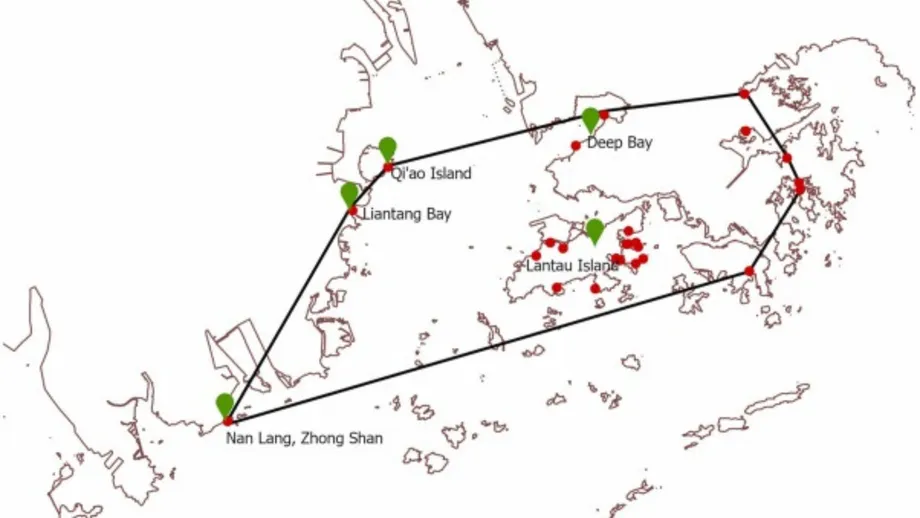
The assessment covers the Pearl River Estuary, described in the paper as the largest estuary delta in southern China, and compares two types of oyster ecosystem. Intertidal reefs occupy shores exposed at low tide. Subtidal reefs remain underwater.
The intertidal communities include species of Magallana and Saccostrea, while the subtidal communities include Dendostrea, Magallana and Ostrea. Examining both allows the researchers to account for losses along the shore and beneath the water, rather than treating every oyster habitat as identical.
How centuries of losses were reconstructed
Historical and archaeological evidence describes extensive reefs, sometimes metres tall, in the region at least as far back as the beginning of the 10th century. Those records reveal a coastal environment very different from the small patches surviving today.
Russell's team used historical ecology, which combines evidence about past environments with modern ecological information, to estimate the former extent of the reefs. Its reconstruction places their area above 3,000 square kilometres in 1750.
The paper identifies unsustainable harvesting, rapid human population growth and coastal development as major causes of decline over several centuries. Land reclamation and changes to shorelines have removed or altered habitat, while pollution and climate change add pressure.
The main dates trace both the decline and the efforts to reverse it:
- Beginning of the 10th century: historical and archaeological evidence describes extensive oyster reefs in the region.
- 1750: the reconstructed reef area exceeds 3,000 square kilometres.
- December 28, 2020: HKU publishes findings on the potential to restore reefs along heavily developed coastlines.
- 2021: a pilot project begins converting part of the airport's Three-Runway System seawall into shellfish habitat.
- 2024: the airport project expands to 4,080 square metres, with 500,000 live oysters introduced.
- 2026: the regional ecosystem assessment places the reefs in the Critically Endangered category.
What disappears when an oyster reef is lost?
Deep Bay research offers a concrete measure of the biodiversity at stake. Scientists recorded more than 80 species on intertidal muddy shores. Of those, 95% occurred in oyster reefs, and almost 60% were found exclusively in the reefs.
The reefs supported six times as many species as bare muddy shores, according to research by the Swire Institute of Marine Science and The Nature Conservancy. Their physical structure provides places for small animals to shelter and for young marine life to grow.
HKU's 2020 research announcement also described a small crab identified during the work that had not previously been recorded in Hong Kong. Russell, then an associate director of the institute and an associate professor at HKU, said the discovery showed how little studied these ecosystems were.
Fish and crabs with commercial or recreational value can also benefit from restored reefs. For coastal communities, the potential gains therefore extend from a richer variety of marine life to habitat supporting animals people catch and eat.
How much water can oysters filter?
Research published in Restoration Ecology in 2020 found that seven square metres of Hong Kong oyster reef could filter up to the volume of an Olympic swimming pool in one day. The study, by S. C. Y. Lau, Marine Thomas, Boze Hancock and Bayden Russell, examined restoration potential along heavily developed coastlines.
A single Hong Kong oyster, identified in that research as Crassostrea hongkongensis, could filter up to 30 litres per hour at summer temperatures. Oysters draw water through their bodies to collect food, removing suspended material in the process.
The Nature Conservancy gives a broader public estimate of up to 200 litres per oyster per day. The HKU figure is specifically tied to the Hong Kong species at summer temperatures, so the conditions attached to each estimate matter when describing filtration capacity.
Water filtration is one benefit among several. The Nature Conservancy also identifies shoreline stabilisation and coastal protection as reasons to restore reefs. The new assessment's finding of lost ecological function includes the disappearance of benefits once provided by extensive, connected oyster habitat.
Young oysters offer a route to recovery
Hong Kong's surviving oysters still produce large numbers of young. The account of the new assessment describes recruitment reaching hundreds of thousands of individuals per square metre. Recruitment means young oysters settling onto a surface where they can begin to grow.
Earlier research found that natural recruitment could make restoration possible without relying on oysters raised in hatcheries. A hatchery breeds and grows young shellfish before they are moved into the sea, a method used in restoration elsewhere.
Russell, speaking about the earlier research as an HKU marine ecologist, described why the finding mattered:
We were excited to find high natural recruitment levels which suggests that oyster reef restoration is possible without hatchery intervention.
Russell suggested that traditional oyster farms in the Pearl River Delta may have maintained native oyster populations and could supply larvae, the tiny early life stage that drifts in the water before settling. The proposed connection gives local aquaculture communities a potential role in recovering wild habitat.
Water quality is also gradually improving in parts of Hong Kong, according to the account of the assessment. Together, suitable water conditions and plentiful young oysters create opportunities for restoration, provided the animals have surfaces to settle on and protection as they grow.
From discarded shells to an airport seawall
The Nature Conservancy's Hong Kong restoration programme began testing methods through pilot reefs at Lau Fau Shan and Tolo Harbour. Discarded shells provided material for the reefs, with support from the Lau Fau Shan and Yung Shue O aquaculture communities.
Those pilots monitored reef growth, biodiversity and water quality. Their purpose was to collect evidence and develop methods that could be used over larger areas, working with HKU's Swire Institute of Marine Science.
The airport project brought restoration to an existing engineered shoreline. In 2021, The Nature Conservancy began a pilot to turn part of the new Three-Runway System seawall into functioning shellfish habitat. Monitoring subsequently recorded increased species diversity.
The 2024 expansion covered 4,080 square metres and introduced 500,000 live oysters of various species. More than 300 volunteers packed recycled shells into 1,500 biodegradable bags, using material collected through the organisation's Save Our Shell programme.
The expanded site covers 0.00408 square kilometres. Compared with the historical estimate of more than 3,000 square kilometres, its size illustrates the scale of the task: successful individual projects need to become part of a much wider effort to rebuild reef habitat.
Why protection matters as much as planting
Researchers examining 10 Hong Kong sites with remnant shellfish habitat found that large oysters more than a year old were difficult to find. They attributed that scarcity to continuing harvesting pressure.
Young oysters settling in large numbers can help start a reef, but older oysters contribute to the enduring structure that shelters other species. Removing animals as soon as they reach an edible size interrupts the growth of that habitat.
Marine Thomas, The Nature Conservancy's conservation project manager in Hong Kong at the time of the earlier research, described the problem:
Wild harvesting is a huge problem – as soon as oysters or mussels are big enough to eat, someone will harvest them.
Thomas said the organisation was working with the government to obtain greater protection and recognition for shellfish habitats, including seeking their inclusion in the next Hong Kong Biodiversity Strategy and Action Plan. That was a stated goal of the earlier work; the 2026 assessment now calls for protection of remaining reef patches alongside restoration on a large scale.
What the new assessment changes
The Critically Endangered assessment brings the historical losses, surviving habitat and threats into a single framework for judging collapse risk. Its 50 to 100 year assessment horizon describes the period considered by the researchers. No date for ecosystem collapse is given.
The study also makes its underlying data available through its supplementary information and the University of Hong Kong DataHub, under DOI 10.25442/hku.33067739. Those records give future research a basis for comparing changes in reef extent and condition.
Hong Kong's restoration work now has two linked tasks: safeguard the small areas that remain and create conditions in which new reefs can persist. The earlier research identifies plentiful young oysters and serious harvesting pressure at the same time. The airport project supplies an example of habitat creation and recorded biodiversity gains.
For coastal waters, success would mean more than a higher oyster count. It would mean rebuilding lasting structures that shelter marine life, filter water and help stabilise shorelines, recovering functions that have largely disappeared with the reefs.
Key Points
- Researchers assessed Hong Kong and Pearl River Estuary oyster reef ecosystems as Critically Endangered using the IUCN Red List of Ecosystems framework.
- Reconstructed reef area fell from more than 3,000 square kilometres in 1750 to an estimated 1.34 square kilometres today.
- Deep Bay research found six times as many species in oyster reefs as on bare muddy shores.
- Abundant natural recruitment offers restoration potential, while harvesting threatens the survival of older oysters.
- The airport seawall restoration expanded to 4,080 square metres in 2024 and introduced 500,000 live oysters.
- The assessment calls for protecting surviving reef patches and restoring habitat across larger areas.