A single rulebook for pollution, nature and climate
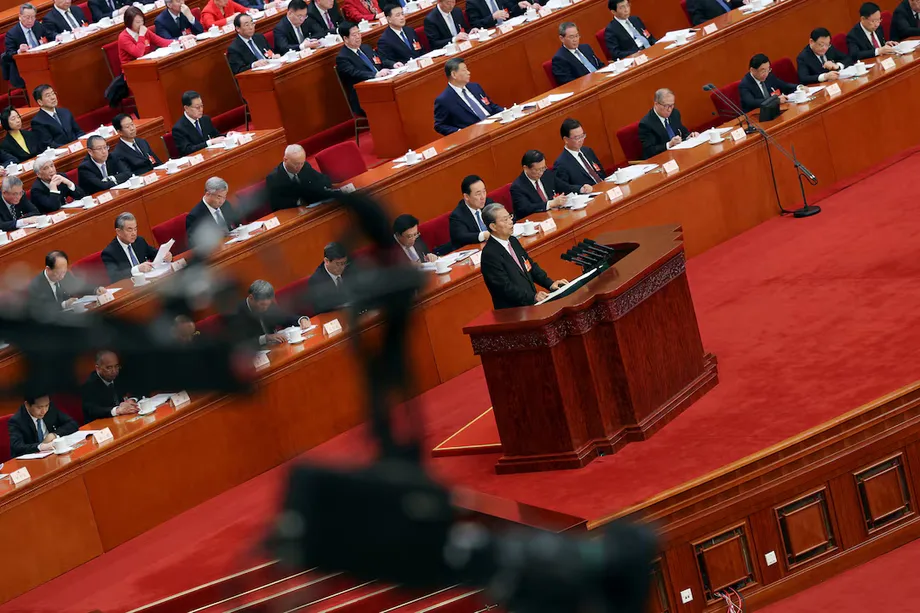
China's National People's Congress adopted its first comprehensive Ecological and Environmental Code on March 12, 2026. The law took effect on August 15, bringing pollution control, nature protection and climate policy under one legal framework. Its 1,242 articles are arranged in five books: general rules, pollution prevention and control, ecological conservation, green and low carbon development, and legal responsibilities and supplementary provisions.
Contents
- A single rulebook for pollution, nature and climate
- What changes when climate goals become law?
- How does the code reach factories, shops and households?
- Who must handle old solar panels, blades and batteries?
- What does the law mean for local environmental problems?
- How will the code work with the Civil Code?
- Can neighbouring regions enforce the rules together?
- What could make the rules difficult to apply?
- A national code in a difficult global moment
- Key Points
The code gathers provisions reorganized from more than 30 national laws, over 100 administrative regulations and more than 1,000 local regulatory documents. It follows a moderate form of codification: rather than replacing every existing environmental rule, lawmakers combined and updated many provisions while leaving specialist laws in place where they remain useful. Ten pollution control laws were absorbed and repealed when the code took effect. They include the Environmental Protection Law and the Environmental Impact Assessment Law. More than 20 laws on particular areas of ecological conservation, along with four laws on green and low carbon development, remain in force alongside it.
The code is China's second law to carry the formal title of a code, after the Civil Code. Its central change is organizational, but that structure also gives climate and resource rules a place within a national statute rather than leaving them scattered among policies and separate laws.
The main dates mark a rapid legislative process:
- March 12, 2026: the National People's Congress adopted the code.
- August 15, 2026: the code took effect and ten laws were repealed.
- November 2026: new measures for recycling waste from wind, solar and battery industries described duties set out in the code.
What changes when climate goals become law?
The code's fourth book, on green and low carbon development, contains four chapters and 114 articles. Its separate place in the code makes climate action part of environmental law's core structure. The provisions cover changes to energy use, cleaner production, resource recycling and greener purchasing. The intent is to prevent pollution and waste at the point where goods and energy are produced, rather than relying only on cleanup after damage has occurred.
That approach matters because a climate goal can be difficult to apply if it is expressed only as a broad ambition. The code connects the national dual carbon goals, China's targets for carbon emissions and carbon neutrality, with duties that apply to industries and businesses. It also establishes a framework for both the mandatory national carbon emissions trading system and voluntary trading in greenhouse gas reductions, with supervisory responsibilities written into law.
Carbon trading sets a price or market value for emissions reductions. In a mandatory system, covered companies must meet rules for their emissions; voluntary schemes allow participants to trade verified reductions outside those requirements. The code brings both into the wider system of climate governance, though detailed rules are still needed to explain how specific duties will operate.
How does the code reach factories, shops and households?
Several provisions connect environmental goals to ordinary decisions about water, electricity, materials and purchases. Article 966 says results from clean production audits can inform differentiated policies, including water use limits. A clean production audit examines how much energy and material a business uses and how much waste it creates, with the aim of reducing pollution before it is produced.
Article 993 calls for price and tax policies that encourage organizations and individuals to use water, electricity and gas carefully. Article 1000 requires businesses, under national rules, to use green purchasing and build green supply chains. In practice, that means giving priority to goods and services that save energy, water or materials and encouraging suppliers to make similar changes. Article 1001 sets related expectations for service businesses such as restaurants, hotels and entertainment venues.
The rules extend to energy projects. Article 1017 calls for wind and solar development while requiring the country to balance hydropower development with ecological protection and strictly control construction of small hydropower stations. Article 1018 calls for annual monitoring of non fossil energy development and publication of the results. These provisions connect energy transition with oversight of the land and water affected by new infrastructure.
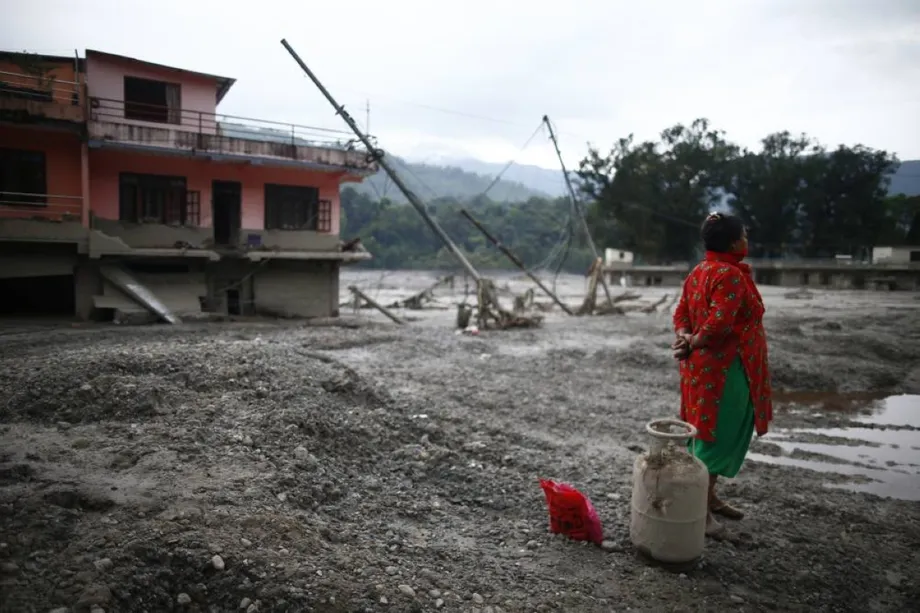
The legal duties also have a practical waste problem to solve. As China's wind, solar and electric vehicle industries grow, their equipment eventually wears out. Retired solar panels, turbine blades and vehicle batteries can create large volumes of waste, but can also yield materials for reuse if collected and processed properly.
Who must handle old solar panels, blades and batteries?
Under the code, companies that build and operate wind and solar projects are responsible for disposing of retired turbine blades and photovoltaic modules. Producers of power batteries must ensure that used batteries are recycled and put to use. Those responsibilities link the code's circular economy aims to the whole life of clean energy equipment, including what happens after it stops generating power or storing electricity.
China's projected waste volumes show why those provisions matter. By 2030, estimates cited by the Ministry of Ecology and Environment put retired solar modules at 1.5 million to 2 million tonnes, wind turbine blades at 500,000 tonnes and used power batteries at 1 million tonnes. The scale is substantial: these are streams of industrial material that need collection, safe dismantling and processing, not ordinary household rubbish.
In November 2026, Assistant Commerce Minister Yuan Xiaoming said a new guideline would advance recycling of waste from electric vehicles, solar products and lithium batteries. Yuan said China would establish a digital identification system for vehicle batteries, so they can be tracked and sent through recycling channels. The plan also calls for stronger research, more recycling facilities and improved management of solar and wind equipment throughout its life cycle.
Yuan described the 2030 target this way:
By 2030, China aims to establish a comprehensive, well regulated and technologically advanced recycling system for waste generated by the new three industries, significantly improving the recycling, dismantling and resource utilization of retired products.
China already had 148 enterprises meeting industry requirements for comprehensive use of retired power batteries, with a combined recycling and disposal capacity of 2.5 million tonnes. Capacity on paper does not by itself show how much material is actually collected or processed. The code's allocation of responsibility gives regulators and businesses a legal basis for building out that system.
What does the law mean for local environmental problems?
The code addresses problems people can encounter close to home, including noise, cooking fumes from homes and industrial odors. Such nuisances can affect health and daily life even when they do not resemble a major spill or a large industrial accident. Putting them into a national legal framework gives environmental regulators and residents a clearer set of issues to address through rules and enforcement.
The law also deals with the difficult balance between protecting wildlife and keeping people safe. It includes exemptions from liability for emergency action to prevent risk during human and wildlife conflicts. The purpose is to protect residents who act to defend their safety and health, while retaining wildlife protection as a legal priority. The exact circumstances and procedures will depend on the law's supporting rules and how authorities apply them.
These provisions show why a single environmental code has to cover more than factories and emissions. Environmental governance reaches into homes, public spaces, land use and interactions with animals. Its rules have to protect ecosystems while also addressing people's immediate safety and living conditions.
How will the code work with the Civil Code?
The Civil Code governs private relations such as personal injury, property and commercial disputes. The Ecological and Environmental Code sets public rules for how human activity affects ecosystems. A single polluting act can harm a person's health or property and also damage a river, soil or habitat. Those are related harms, but they are not the same legal claim.
The distinction affects who may bring a case, what must be proved and what remedy is appropriate. A person seeking compensation for injury has a private claim. A claim over damage to ecological functions concerns a shared public interest and may proceed through public interest litigation or ecological damage compensation procedures. Courts must identify the loss and the remedy being sought so that a public claim does not erase an individual's rights, and the same loss is not paid for twice.
The code gives ecological repair priority. Article 1065 says a responsible party should first remove pollution and repair the damaged environment. If direct repair cannot be done, alternative treatment or restoration measures may be used. This places restoration ahead of simply calculating a payment. Any substitute should address the ecological functions that were lost, rather than being chosen only because it costs the same amount.
Other provisions address urgent risks and responsibility across a chain of work. Article 1079 allows a court preservation order, a temporary measure to stop conduct that is under way or about to begin when delay risks major harm that is difficult to repair. Articles 1067 and 1068 provide for joint liability in specified cases involving environmental service providers, clients and certain arrangements for transport or disposal. A court still needs to examine each party's duties and role in creating or controlling the risk.
Article 1080 addresses special rules for proving causation in private environmental injury cases. Causation means showing that the conduct in question led to the damage. The legal analysis of the provision distinguishes those private claims from public ecological damage cases, where public bodies or organizations bringing the case must provide evidence about the conduct, its illegality, the ecological harm and related costs.
Can neighbouring regions enforce the rules together?
Water and pollution do not stop at administrative boundaries. In 2026, environmental authorities in Hubei and Henan launched a joint enforcement operation around the Danjiangkou Reservoir, covering key waters and shorelines in Danjiangkou, Xichuan and Gucheng. The reservoir is a core source for the central route of China's South to North Water Diversion Project.
Teams inspected the shoreline for company discharges, waste dumping, restoration work and visible environmental hazards. Patrols by boat checked the reservoir, shipping routes, exposed drawdown areas, river outlets and waters near the provincial boundary for hidden pollution sources and illegal discharges. The stated model is to share leads, patrol together, monitor at the same time and coordinate responses.
The operation illustrates a practical task for the code: a national rule needs local agencies to work together when a river basin crosses borders. Joint inspections can help close gaps where one region might otherwise miss pollution moving from a neighbouring area. The code's provisions for coordinated protection give such cooperation a legal setting, while the effectiveness of enforcement depends on routine coordination and follow up.
What could make the rules difficult to apply?
The code's adoption settles the broad legal framework, but not every operational detail. Supporting technical rules still need to be completed, public understanding of new duties may vary, and authorities may need to resolve inconsistencies between the code and older administrative rules. Those details can determine what a company must measure, how an inspection is carried out and which agency takes the lead.
Supply chains show why consistent rules matter beyond China. At a climate conference in Antalya on November 19, Environment Ministry climate official Liu Yang said the code requires green purchasing and supply chains that encourage suppliers to make coordinated changes. China's guidance for state owned companies also extends emissions responsibilities through their supply chains.
Liu said differences in environmental data, accounting methods and certification systems make it harder for companies in different countries to compare performance. World SMEs Alliance President Barbara Terenzi said smaller businesses often bear a larger share of compliance costs when rules differ. A proposal launched by Chinese research and business groups and international partners called for shared life cycle data, common evaluation rules and greater recognition of one another's certifications. Those measures would make it easier to check where emissions occur, from raw materials to finished products.
Implementation priorities include writing detailed supporting rules, strengthening supervision across enforcement agencies, assessing long term social and economic effects, and expanding cooperation on cross border environmental cases. Those steps will determine how consistently the code's broad requirements are translated into permits, inspections, repairs and penalties.
A national code in a difficult global moment
China completed the drafting process in less than two years, a short period for a law that draws together decades of environmental rules and touches energy, industry and everyday life. Its enactment comes as progress on global sustainability goals remains uneven. United Nations evaluation figures for 2025 cited in the analysis behind the legislation said 35 percent of 169 core targets were on track, nearly half were moving slowly and 18 percent were regressing.
Countries including Colombia, France, Sweden and Italy have adopted environmental or ecological codes, each with its own structure and scope. China's model preserves many established institutions while placing green and low carbon development in a distinct book. Its experience may be useful to other countries considering how to organize environmental law, though the results will depend on the rules and institutions used to put it into practice.
The code's test is now concrete: whether responsible companies reduce waste and emissions, whether damaged environments are repaired, and whether agencies can act across regional lines. The law joins climate duties, local protections and ecological remedies in one framework. Supporting rules and consistent enforcement will determine how much of that promise people and ecosystems experience.
Key Points
- China adopted the 1,242 article Ecological and Environmental Code on March 12, 2026; it took effect August 15.
- The code has five books, including a dedicated book on green and low carbon development.
- Ten laws were repealed when the code took effect, while more than 20 specialist conservation laws remain in force.
- Wind and solar project operators are responsible for retired equipment, while power battery producers must ensure recycling and utilization.
- The code prioritizes direct ecological repair and provides for temporary court orders against urgent risks.
- Effective implementation will require detailed rules, coordinated enforcement and cross border cooperation.