Five years of monitoring point to lasting protection
Dengue incidence in Yogyakarta was 76 percent lower than in cities elsewhere on Indonesia's Java island without Wolbachia interventions during five years of monitoring after deployment across the city. The finding is now informing SHIELD, a research project examining how Indonesia can extend the mosquito intervention while keeping its benefits over time.
Contents
- Five years of monitoring point to lasting protection
- How the mosquito intervention works
- What the early Yogyakarta trial measured
- Why the results include several percentages
- How the evidence developed
- Four teams will examine expansion
- Semarang adds another setting to study
- Why dengue cases can still occur
- Public concerns and the national stakes
- At a Glance
Katie Anders of Monash University, a supporting principal investigator for SHIELD, said the effect in Yogyakarta remained visible up to seven years after mosquitoes carrying Wolbachia were released. Monitoring in 2023 and 2024 found the bacterium in 89 percent of the local Aedes aegypti mosquito population.
Those figures describe two connected parts of the programme: whether Wolbachia remains established in mosquitoes and whether fewer people develop dengue. SHIELD will examine both, alongside costs, local implementation and the effects of extreme heat.
The project, led by Universitas Gadjah Mada's Center for Tropical Medicine, draws lessons from implementation in five Indonesian cities. Its principal investigator, Dr. Citra Indriani, said the aim is to develop strategies for expansion nationally and globally. A launch meeting took place on October 22, 2026.
How the mosquito intervention works
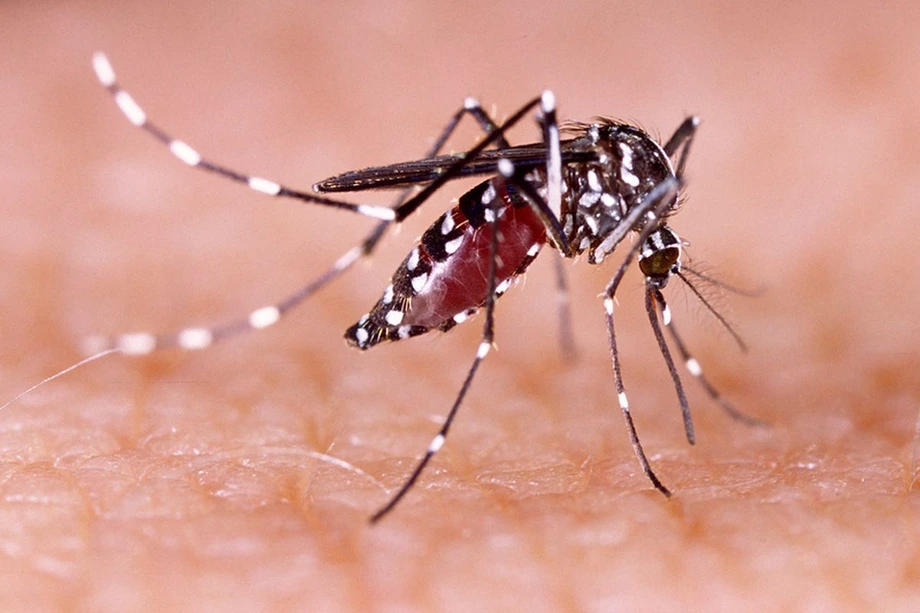
Wolbachia is a bacterium found naturally in many insects. In Yogyakarta, researchers introduced a strain called wMel, originally obtained from fruit flies, into Aedes aegypti, the mosquito that carries dengue between people.
Inside the mosquito, Wolbachia interferes with the dengue virus's ability to develop. A mosquito carrying the bacterium is consequently less able to transmit the virus through a bite. Female mosquitoes can pass Wolbachia to their offspring, allowing it to spread through the local mosquito population after releases.
Yogyakarta's approach therefore focuses on changing mosquitoes' ability to spread disease, rather than simply reducing their numbers. Its continued operation depends on Wolbachia remaining common in the mosquito population, which is why researchers keep measuring its presence years after deployment.
UGM entomologist Warsito Tantowijoyo explained in the university's November 2023 explanation that the mosquitoes used in Yogyakarta were not genetically engineered. Researchers introduced the bacterium into Aedes aegypti without manipulating the mosquitoes' genes.
What the early Yogyakarta trial measured
A study published on May 11, 2020, in Gates Open Research provides a detailed account of an earlier deployment. The Yogyakarta trial study describes releases every two weeks, over 13 to 15 rounds during seven months in 2016 and 2017.
The intervention covered five square kilometres with about 65,000 residents. Researchers selected an untreated comparison area on the opposite side of the city, covering three square kilometres with about 34,000 residents. Community engagement preceded the releases.
During 24 months after deployment, surveillance recorded 34 dengue cases in the intervention area and 53 in the comparison area. The study used notifications of hospitalised dengue patients. After accounting for population size and observation time, incidence was 26 versus 79 cases per 100,000 person-years.
A person-year combines the number of people observed with the time they were followed. For example, 50,000 people followed for two years contribute 100,000 person-years. This helps researchers compare areas with different populations.
The statistical model estimated a 73 percent reduction in dengue incidence associated with the intervention. Its 95 percent confidence interval ran from 49 to 86 percent, expressing uncertainty around the estimate. An exploratory analysis including six more months of observations estimated a 76 percent reduction, with a confidence interval of 60 to 86 percent.
Why the results include several percentages
Yogyakarta's frequently cited figures come from different evaluations. The early study estimated a 73 percent reduction over its main follow-up period. Later monitoring across the city found incidence 76 percent lower than in comparison cities on Java over five years. UGM has also cited earlier research showing 77 percent fewer dengue cases and an 86 percent reduction in hospitalisation incidence.
The 2020 study compared one intervention area with an untreated area and analysed changes over time. Researchers call this a quasi-experimental design: they used an organised comparison to estimate the intervention's effect, rather than randomly assigning those two areas to receive releases.
The later figures address broader deployment and longer observation. Keeping the study periods and comparison groups attached to each number helps explain how the evidence developed, from a smaller deployment to monitoring across the city.
The 89 percent figure measures something else entirely: the share of sampled Aedes aegypti mosquitoes carrying Wolbachia in 2023 and 2024. For every 100 mosquitoes represented by that measurement, about 89 carried the bacterium. Researchers track this alongside human disease because a lasting change in mosquitoes is central to the intervention's continued protection.
How the evidence developed
Yogyakarta's experience spans releases, evaluation and follow-up over several years. SHIELD builds on that sequence rather than starting with a new intervention whose local performance is unknown.
- 2016 and 2017: Researchers released mosquitoes carrying wMel over seven months in a five square kilometre area of Yogyakarta.
- May 11, 2020: Gates Open Research published the study reporting an estimated 73 percent reduction in dengue incidence during its main analysis.
- November 27, 2023: UGM published researchers' responses to public concerns, including questions about safety and continuing dengue cases.
- 2023 and 2024: Monitoring found Wolbachia in 89 percent of the local Aedes aegypti population.
- October 22, 2026: SHIELD held its launch meeting to examine lessons from implementation in five Indonesian cities.
Anders said protection remained visible up to seven years after releases. The five years used for the comparison with other Java cities and the period since mosquito releases describe different monitoring windows.
Four teams will examine expansion
SHIELD stands for Scaling Health Interventions for Effective Long-term Dengue Control. Its four working groups divide the task into practical delivery, mosquito biology, human disease and economic analysis.
The implementation research group will identify conditions that help or obstruct deployment, including the components that make a programme work. The entomology group, which studies insects, will examine whether Wolbachia becomes established and remains in mosquito populations, including under extreme heat.
The epidemiology group will evaluate changes in dengue transmission and public health across areas with different characteristics. Epidemiology is the study of how disease occurs and spreads in populations. Comparing places will help the team assess how the intervention performs under different local conditions.
The modelling group will analyse benefits and costs and examine combinations with other dengue measures, including vaccination. Models use data and assumptions to compare possible strategies before authorities commit resources to them.
Citra said lessons from the five cities are intended to guide wider deployment in Indonesia and elsewhere. A completion date for SHIELD and a timetable for any expansion have not been announced. Decisions about where and how to expand will therefore need the project's findings on delivery, durability, health effects and costs.
Semarang adds another setting to study
Semarang has also recorded a downward dengue trend alongside an established Wolbachia population, according to Dr. Fadjar Surya M. Silalahi, who heads the relevant vector disease working team at Indonesia's Health Ministry. He said the proportion of mosquitoes carrying Wolbachia had remained above 60 percent as cases declined.
Yogyakarta's monitoring recorded 89 percent in 2023 and 2024. Both cities give SHIELD practical experience to examine: mosquito populations can be monitored after deployment, while disease surveillance tracks what happens among residents.
SHIELD's focus extends beyond reproducing a single percentage. Its teams will investigate which conditions support lasting establishment, how results vary between places and what programmes cost. Those are concrete concerns for local authorities deciding how to organise releases, sustain monitoring and combine Wolbachia with existing services.
Why dengue cases can still occur
Dr. Riris Andono Ahmad, a researcher at UGM's Center for Tropical Medicine, addressed continuing infections in the university's November 2023 public explanation. Wolbachia reduces local transmission, he said, while some residents may acquire dengue when travelling through places without the intervention.
Yogyakarta's population moves between neighbourhoods and cities. A person's home address and the place where an infectious mosquito bit them can therefore be different. Riris said this matters particularly in areas with high mobility.
Anders also said Wolbachia should remain part of an integrated dengue strategy. For households, that means continuing measures against mosquito breeding sites. Indonesia's 3M Plus campaign includes draining water containers, covering stored water and recycling discarded items that could collect water and allow mosquitoes to breed.
SHIELD will examine vaccination as another possible partner to Wolbachia. The two approaches act at different points: Wolbachia reduces mosquitoes' ability to transmit dengue, while vaccination works through the human immune system.
Public concerns and the national stakes
UGM's public discussion also addressed safety. Warsito said researchers who volunteered to feed mosquitoes by allowing bites were tested, and Wolbachia was not found in their bodies. The university also described testing blood samples from residents in release areas, with no Wolbachia detected.
Riris explained that Singapore uses a different release strategy. Releasing male mosquitoes carrying Wolbachia aims to reduce mosquito numbers: when those males mate with females without Wolbachia, the resulting eggs do not hatch. Yogyakarta instead uses the bacterium's capacity to reduce virus transmission and persist through mosquito offspring.
Questions about Sri Lanka had also reached the UGM team, including a claim that dengue cases rose by 300 percent after deployment. Riris responded that releases there had covered only 20 square kilometres, whereas the rise being discussed concerned the whole country. The geographic reach of an intervention matters when examining disease trends.
Indonesia's own burden gives the expansion research urgency. According to figures cited by the Health Ministry, the country recorded 703 dengue deaths in 2025, about 17 percent of the global total, and ranked second worldwide for dengue deaths that year. That share amounts to roughly one in six deaths worldwide.
For health services, the research task is practical: determine how a method associated with fewer infections and hospital admissions in Yogyakarta can deliver sustained protection elsewhere. SHIELD brings the mosquito monitoring, disease surveillance and implementation work into the same project to help guide those decisions.
At a Glance
- Yogyakarta recorded 76 percent lower dengue incidence than comparison cities on Java during five years after deployment across the city.
- Monitoring in 2023 and 2024 found Wolbachia in 89 percent of local Aedes aegypti mosquitoes.
- An earlier trial published in 2020 estimated a 73 percent reduction in dengue incidence during its main analysis.
- UGM's SHIELD project will examine implementation in five Indonesian cities, including durability, health effects, costs and combinations with vaccination.
- Wolbachia reduces transmission risk, while mosquito breeding control and other prevention measures remain part of dengue protection.