A broader legal framework for money and misconduct overseas
China submitted a revised draft law on combating cross border corruption for a second reading on November 2, 2026, proposing stronger confidentiality protections, clearer compliance duties for companies and an explicit requirement to respect human rights during investigations.
Contents
- A broader legal framework for money and misconduct overseas
- What changed between the two readings?
- How public feedback shaped the revisions
- Why one law is being proposed
- Following money through companies and accounts
- Rights and secrecy become explicit duties
- What companies would have to organise
- Cooperation abroad meets competing legal systems
- Asset recovery and the changes experts still want
- Key Points
The draft, comprising six chapters and 47 articles, went before the 25th session of the Standing Committee of the 14th National People's Congress (NPC). It would bring together rules governing investigations, international cooperation, corporate conduct and legal responsibility that currently sit across several laws and government arrangements.
The revisions also add a commitment to promote a fair and reasonable global system for fighting corruption. Alongside cooperation with other countries, the draft provides for countermeasures against foreign governments that China considers to be improperly applying their laws abroad under the pretext of combating corruption.
For Chinese companies operating overseas, the proposed changes would make responsibility for preventing bribery more concrete. Businesses would need compliance departments or designated personnel suited to their size, activities and risks. For investigators, the changes would place express duties around legal procedures and the handling of confidential information.
The legislation remains under deliberation. The session was scheduled to run through Friday, but no adoption or commencement date was given.
What changed between the two readings?
The Standing Committee first reviewed the draft at its 24th session in August 2026. The November version develops its legislative purpose and principles while refining protections for information obtained during supervision and investigations.
Huang Haihua, spokesperson for the Standing Committee's Legislative Affairs Commission, outlined three main areas of revision: the principles governing enforcement, confidentiality requirements, and the organisation of corporate integrity and compliance work.
The proposed principles combine a comprehensive approach to national security with strict compliance with the Constitution and laws, observance of statutory procedures, and respect for and protection of human rights. Statutory procedures are the steps that authorities must follow because the law requires them.
The legislative sequence is:
- August 2026: The Standing Committee conducted the draft's first reading.
- Between the readings: Public consultation gathered suggestions from individuals, NPC deputies and legislative outreach offices.
- November 2, 2026: The revised draft was submitted for its second reading.
The NPC has described the legislation as an important step toward a systematic and comprehensive legal framework for corruption matters involving other countries. Its practical purpose is to connect the institutions and procedures involved when people, payments or evidence move across borders.
How public feedback shaped the revisions
The consultation attracted 1,263 suggestions submitted by 268 individuals through the NPC website. Another 35 suggestions came from 14 NPC deputies through their online platform, while 11 legislative outreach offices contributed more than 1,000 suggestions. Five letters from members of the public were also received.
Those channels together produced more than 2,298 suggestions, alongside the five letters. The figures count submissions rather than distinct participants across all channels, since individuals and offices could put forward multiple ideas.
Participants sought clearer legislative purposes, better coordination between authorities, more detailed procedures for handling cases, and stronger protection for trade secrets, privacy and personal information. Protection for whistleblowers was also among the issues raised.
Huang's description of the revisions shows a direct response on confidentiality and corporate responsibilities. Whistleblower protection featured in the consultation, but the announced changes focused on the three areas he identified.
Why one law is being proposed
China already has rules relevant to corruption involving other countries in its Supervision Law, Criminal Procedure Law, Extradition Law, International Criminal Judicial Assistance Law and Anti Money Laundering Law. These laws address different parts of the process, from investigating misconduct to obtaining help abroad and recovering money.
Peng Xinlin, a professor at Beijing Normal University and an executive council member of the China Against Corruption Law Association, said the dedicated legislation could bring those tools into a common framework. He linked that coordination to efforts to pursue people who leave China to escape investigation.
"Dedicated legislation at least means that governance tools previously scattered across different departments and institutional arrangements are expected to be brought under a more systematic legal framework, dispelling the illusion that fugitives who flee overseas are beyond the reach of the law," Peng said.
The draft establishes a national coordination mechanism and addresses responsibilities, case handling, international cooperation, corporate compliance and legal liabilities. Peng described its role as connecting and supplementing existing laws.
The need for coordination becomes more apparent when money passes through several countries. An investigator may need domestic financial records, evidence held overseas and a foreign court's assistance to secure assets, with a different authority responsible for each step.
Following money through companies and accounts
Offshore companies, trusts and layers of shell companies can make the ownership and movement of money difficult to trace. A shell company may have little operating business while holding assets or serving as a link between accounts. A trust places assets under management for beneficiaries, adding another legal relationship for investigators to examine.
The case of Li Yong, a former deputy Party secretary and general manager of China National Offshore Oil Corporation, illustrates the scale of the overseas element. More than 83 percent of the illicit money in his case came from abroad. The money moved through offshore companies and bank accounts in several countries and regions before reaching overseas banks.
Peng said some corruption now combines the exercise of public duties inside China with the collection of illicit benefits overseas. Companies may also route improper payments through foreign branches, agents or intermediaries, making the underlying transaction harder to identify.
Guo Hua, a professor at the Central University of Finance and Economics Law School, said the draft uses abuse of public power as its central test for defining cross border corruption. He said its scope also covers Chinese companies and individuals bribing foreign public officials, connecting domestic corporate conduct to China's international obligations.
Rights and secrecy become explicit duties
The revised draft requires authorities to conduct their work strictly under the Constitution and laws, follow legal procedures, and respect and protect human rights. These requirements matter because investigations can affect suspects, witnesses, businesses and other people connected to disputed assets or transactions.
Guo said the legality of an investigation can influence whether another country agrees to help. Authorities receiving a request for evidence or asset recovery may examine the procedures used by the requesting country before deciding how to respond.
Peng said investigations must distinguish people suspected of wrongdoing from unrelated third parties. A company whose records are examined, for example, may have employees, customers or business partners whose lawful interests also require protection.
The confidentiality provisions cover five categories: state secrets, confidential work information, trade secrets, personal privacy and personal information. Relevant authorities and their personnel would have a legal duty to protect information in these categories obtained during supervision or investigations.
The draft also addresses the use of information technology by authorities. The combination brings digital investigative work and the protection of sensitive records into the same legislative framework, with confidentiality obligations applying to the information officials obtain.
What companies would have to organise
Domestic enterprises conducting business across borders would be required to establish integrity and compliance departments or assign personnel to that work. Their arrangements would need to reflect company size, business scope and risk prevention and control needs.
Compliance means having people and processes responsible for keeping business activity within the law. In this context, it includes preventing bribery and improper transfers of benefits in overseas operations.
Guo said the choice between a department and designated personnel gives smaller businesses a different way to meet the obligation from a large multinational group. The draft ties the organisational requirement to the business rather than requiring every company to create an identical department.
Peng identified several practical problems: overseas operations often depend on agents, consultants and local partners; checking those third parties can be costly; and headquarters may struggle to supervise distant subsidiaries and project teams. Companies also face a shortage of staff familiar with both overseas business and the relevant corruption laws.
The scale of that task is substantial. By the end of 2025, Chinese investors had established more than 50,000 overseas enterprises across 190 countries and regions. China was also a major trading partner for more than 160 countries and regions, and its goods trade had ranked first globally for eight consecutive years.
Cooperation abroad meets competing legal systems
The draft advocates using the United Nations Convention against Corruption as the main channel for international cooperation. It places that approach alongside respect for sovereignty, equality and mutual benefit in pursuing fugitives, recovering illicit proceeds and returning assets.
The convention provides a shared international framework, but individual requests still pass through national legal systems. Peng said countries can differ over what counts as corruption, which evidence is acceptable and which procedures must be followed.
Extradition and legal assistance can encounter a requirement known as dual criminality. In simple terms, the conduct at issue generally needs to qualify as a crime in both countries. Differences in legal definitions can therefore affect whether a request proceeds.
The draft also authorises countermeasures against foreign countries invoking corruption enforcement as a pretext to contain or suppress China through improper application of their laws outside their territory. That provision was already present at the first reading.
The proposed framework therefore combines two objectives: securing cooperation to investigate corruption and recover money, and protecting Chinese institutions, companies and individuals against foreign enforcement China regards as improper. Delivering either objective involves decisions by authorities beyond China's borders.
Asset recovery and the changes experts still want
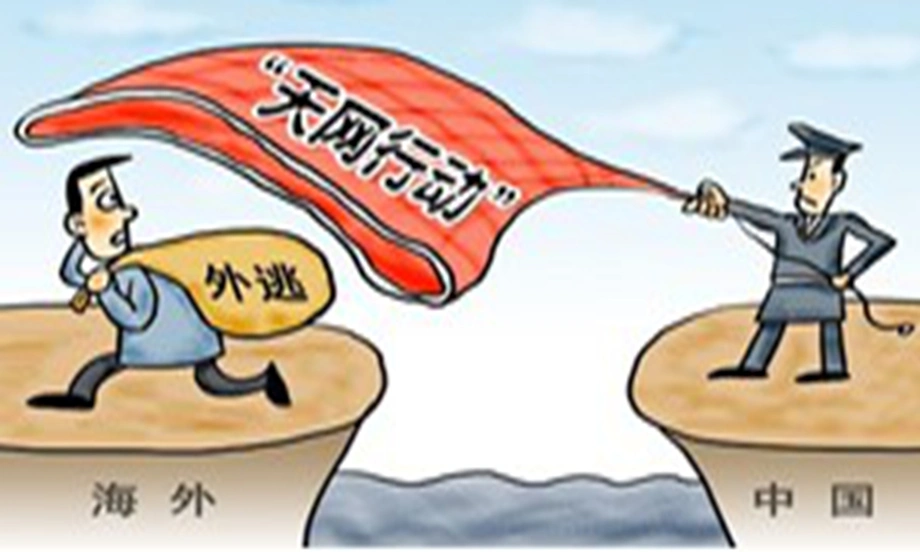
Official figures put the return of fugitives under Operation Sky Net at 14,048 from more than 120 countries and regions between its launch in 2015 and the end of 2024. Authorities recovered 66.62 billion yuan in illicit assets during that period.
For 2025, authorities recorded 505 investigations into cross border corruption and the repatriation of 963 fugitives. The figures describe different activities: investigations concern cases, while repatriations count people brought back to China.
Peng has proposed an additional tool aimed at stopping money from leaving while investigators begin their work. He said Article 19 addresses the risk of suspects fleeing through restrictions on departure, and recommended corresponding emergency measures for assets.
His proposal would allow relevant authorities, subject to legal conditions and procedures, to stop payments or temporarily freeze or seize property for no more than 48 hours. The suggested time limit is part of his recommendation, rather than an announced provision in the revised draft.
Guo recommended clearer arrangements for recognising and enforcing foreign confiscation rulings, bringing civil proceedings overseas, protecting assets before a lawsuit and sharing recovered assets between countries. Such procedures would address the steps between identifying money abroad and securing its return.
Peng also called for closer connections with criminal law and criminal procedure, including how the definition of cross border corruption maps onto criminal offences and how responsibility is assigned for overseas subsidiaries. These proposals identify the detailed legal work still under discussion as the legislature considers the broader framework.
Key Points
- The revised draft was submitted for its second reading on November 2, 2026, after an initial review in August.
- Its six chapters and 47 articles address coordination, investigations, international cooperation, corporate compliance and legal responsibility.
- The revisions expressly require lawful procedures, respect for human rights and confidentiality for sensitive information.
- Chinese companies operating across borders would need compliance departments or designated personnel suited to their size and risks.
- The draft combines international cooperation with countermeasures against foreign enforcement China considers improper.
- Emergency asset restrictions lasting up to 48 hours are an expert recommendation, not an announced draft provision.
- The legislation remains under deliberation, with no adoption or commencement date announced.