A Taipei campaign appearance draws a warning from China's military media
A threat against television host Kevin Tsai has become the focus of Taiwan's latest warning about Chinese interference ahead of the November 28, 2026, local elections. On October 27, a Taiwanese national security official said Beijing had escalated its pressure to psychological intimidation involving its military propaganda apparatus.
Contents
- A Taipei campaign appearance draws a warning from China's military media
- What happened to Kevin Tsai?
- Both Taipei rivals defend freedom to attend events
- The key dates before the November vote
- Six suspected tactics extend beyond public threats
- Betting allegations become another political contest
- How online influence reaches voters
- Cyber activity adds an intelligence threat
- Pressure reaches relatives and critics
- Taiwan's China policy chief rejects interference
- Key Points
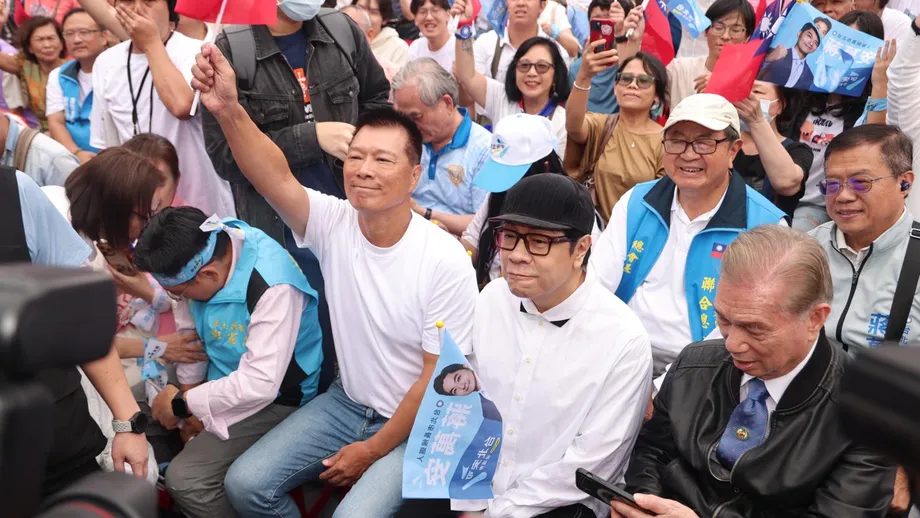
The warning followed Tsai's October 4 appearance at the opening of the campaign headquarters of Puma Shen, the Democratic Progressive Party candidate for Taipei mayor. Jun Zhengping Studio, a social media account affiliated with the People's Liberation Army's News and Communication Center, subsequently attacked the appearance and warned of consequences for public figures associated with Taiwan independence.
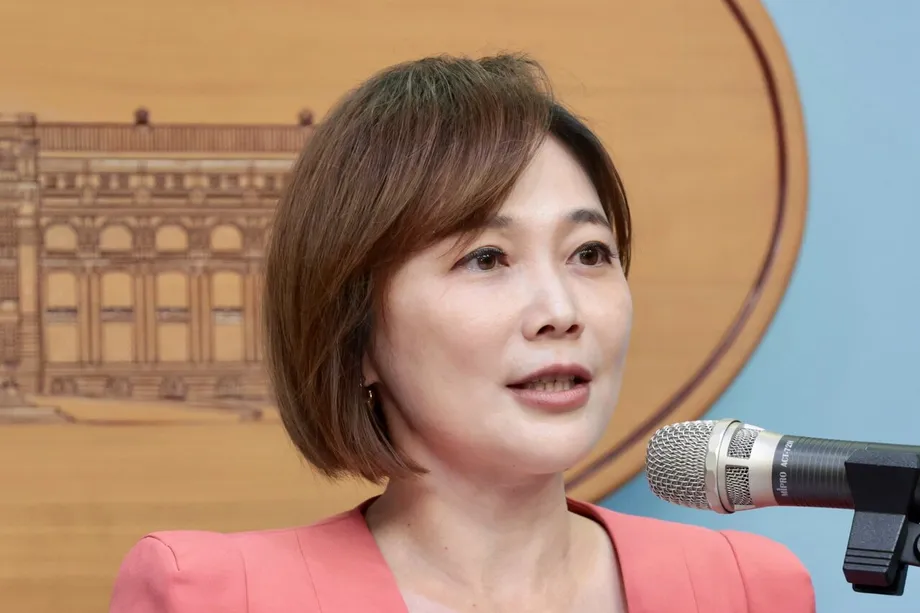
The national security official described intervention by an institution responsible for military propaganda in a local election and an entertainer's activities as unusual. The concern centers on the military's involvement in public pressure against people participating in Taiwan's political life.
The episode comes alongside a wider intelligence assessment. Taiwan's National Security Bureau says it identified more than 2.5 million pieces of disputed or false information originating from China in the first nine months of 2026, compared with more than 1.69 million a year earlier, an increase of about 48%.
Beijing claims Taiwan as its territory, while Taiwan governs itself and rejects that claim. Chinese authorities have previously denied interfering in Taiwanese elections or spreading disinformation. Taiwan's officials are now describing a campaign that combines public threats, financial incentives, online manipulation and efforts to gather election intelligence.
What happened to Kevin Tsai?
Tsai, 64, is widely known for cohosting the Taiwanese talk show Kangsi Coming from 2004 to 2016. His work has also brought him audiences and commercial relationships in China, making political controversy there a practical concern for his career.
The PLA affiliated account said there was "no room for ambiguity" on Taiwan independence. It warned that people earning money in China while associating with that cause would "pay a price too heavy to bear." China's Taiwan Affairs Office also criticized his attendance at Shen's event.
Late on October 25, Tsai addressed the controversy on Weibo and Xiaohongshu. He explained that he had attended events to conduct interviews and gather material, and that interviewing someone did not mean sharing that person's views.
Tsai, a television host and writer, stated his position directly:
I have always hoped for friendly exchanges across the Taiwan Strait. I have never supported Taiwan independence.
He also apologized for misunderstandings that had caused trouble for collaborators and supporters. His statement followed commercial consequences described after his October campaign appearance, including the removal of material associated with his collaboration with Chinese electric vehicle maker Leapmotor.
Tsai appeared at incumbent Taipei Mayor Chiang Wan-an's campaign headquarters launch on October 26. His attendance at events for both candidates placed his explanation about gathering material alongside his actual campaign visits.
Both Taipei rivals defend freedom to attend events
Chiang, the Kuomintang mayor seeking another term, welcomed Tsai's planned attendance at his headquarters opening. On October 26, he said he respected citizens' opinions whether or not they supported him, and opposed attacks, boycotts or exclusion based on political differences.
Chiang described his position on pressure against people for their views:
I absolutely will not permit or accept such anti-democratic intimidation.
Shen said Taiwanese people should be free to attend events of their choice without intervention from China. He said Tsai had already explained that his visits were intended to help him interview politicians and understand their policies.
Shen, the DPP mayoral candidate, described those visits as ordinary political participation:
As far as Taiwanese people are concerned, such activities are entirely normal, and the fact that China would intervene in this way is deeply distressing.
The two rivals expressed a shared objection to intimidation while continuing to compete for the same office. For entertainers, campaign workers and voters, the immediate issue is whether attending an event can expose them to threats or commercial pressure across the Taiwan Strait.
The key dates before the November vote
The dispute developed over several weeks, while Taiwan's intelligence agencies were also briefing lawmakers about suspected interference. The main dates show how an individual campaign appearance became part of a broader security warning:
- October 4: Kevin Tsai attended the opening of Puma Shen's campaign headquarters in Taipei.
- October 22: NSB Director-General Tsai Ming-yen outlined suspected election interference tactics before a legislative committee briefing.
- October 25: Kevin Tsai posted his statement denying support for Taiwan independence.
- October 26: Chiang and Shen publicly opposed intimidation, and Tsai attended Chiang's campaign headquarters launch.
- October 27: A national security official warned of psychological intimidation involving military propaganda, while Mainland Affairs Council Minister Chiu Chui-cheng condemned interference.
- November 28: Taiwan is scheduled to hold its local elections.
The NSB hopes to send evidence of suspected interference to judicial authorities before voting. Tsai Ming-yen also said discounted flights aimed at bringing selected Taiwanese residents of China home to vote were expected about three weeks before election day.
Six suspected tactics extend beyond public threats
Tsai Ming-yen, who heads the NSB and is a different person from entertainer Kevin Tsai, told lawmakers that Beijing's election operations were becoming more focused on particular groups and audiences.
The bureau identified six main suspected methods: illicit financial support for candidates or political groups, cheap trips to China, discounted flights back to Taiwan, disinformation, illegal betting markets and hacking to obtain election intelligence.
According to the director, Beijing was mobilizing airlines to offer selected Taiwanese citizens living in China cheaper tickets to return and vote for candidates it favored. The bureau also suspects that inexpensive sightseeing trips to China are being used to bribe voters.
Targeting particular groups can make an operation more precise. Travel incentives can reach voters living abroad, financial support can benefit selected political organizations, and stolen information can help an operator identify people or campaign activities to target.
Taiwan's intelligence agencies are collecting evidence for prosecutors to investigate. The public briefings did not identify the airlines or candidates allegedly involved, or provide amounts for the suspected political funding.
Betting allegations become another political contest
The October 27 national security warning also addressed a Chinese state media allegation that the DPP government was using underground betting markets to influence the election. The official rejected that allegation as a distortion of Taiwan's efforts to combat illegal gambling.
Taiwanese judicial authorities have long acted against underground election betting and illegal wagering, the official said. Beijing's messaging was using the issue to weaken trust in elections and deepen divisions within Taiwan.
Illegal betting also appears on the NSB's own list of suspected Chinese interference methods. In the bureau's assessment, such markets are one possible channel for manipulation. In the Chinese state media allegation, they were presented as a tool of the governing party.
The security official said Beijing's wider objective was to overwhelm voters with misleading claims, weaken their ability to assess candidates and encourage choices favorable to China. The official also described combinations of online manipulation, state media messaging and pressure below the level of open conflict as a concern for other democracies.
How online influence reaches voters
The NSB's assessment describes a distribution system stretching across Facebook, Threads, YouTube and online forums. It says Chinese official media can introduce narratives that are then circulated through public relations firms, fake accounts, content farms and coordinated groups posting large numbers of comments.
Artificial intelligence has widened the range of material these operations can produce, according to the bureau. AI generated videos can imitate real people or events, while automated tools can help collect information about candidates, policy debates and polling.
The bureau said the more than 2.5 million disputed or false items identified from January through September targeted energy, food security, defense policy and individual candidates. The increase from more than 1.69 million a year earlier amounts to roughly 810,000 additional items, using the stated figures.
The DPP's China Affairs Department separately warned about fake opinion polls, clips removed from their context, invented scandals, romantic rumors and fabricated announcements that candidates were withdrawing. It said sensational material could be circulated shortly before voting, leaving little time for verification.
The party urged investigators to trace the organizers and funding behind interference. Its warning also covered attempts to provoke retaliation through unverified allegations, which it said could deepen tensions. The NSB says it is using AI tools itself to trace the origins of misleading content.
Cyber activity adds an intelligence threat
Taiwan's Government Service Network was facing about 2.58 million cyberintrusion attempts a day as of September, according to the NSB's legislative briefing. The bureau described a sharp rise from June and said the activity could include preparations to interfere in the elections.
The bureau's figures put detected threats at 185.6 million in July and 106.4 million in August. July's figure was about 74% higher than August's. Another account of the briefing described July's total more broadly as exceeding 100 million.
The suspected election tactic is hacking selected targets to steal information useful for later interference. Campaign plans, contacts or other sensitive material could help an operator decide whom to approach or pressure. The NSB has identified intelligence gathering and harassment preparation as possible purposes of the increased activity.
The cyber warning sits beside pressure at sea. Tsai Ming-yen said China Coast Guard operations east of Taiwan were becoming more routine, sometimes involving research vessels, and expressed concern about Chinese militia boats east and southwest of the island. Taiwanese officials describe this wider pattern as pressure that stays below open warfare while consuming attention and resources.
Pressure reaches relatives and critics
Shen has faced Chinese sanctions and has been placed on a wanted list over his work on Chinese influence operations. Beijing added him to its list of people it labels committed Taiwan separatists in October 2024.
China's Taiwan Affairs Office has also announced sanctions against VWAY, a company owned by Shen's father, Shen Tu-cheng. The restrictions prohibit it from trading with organizations, businesses or individuals in the People's Republic of China.
The targeting of relatives extends the economic cost beyond a politician. Other reported cases include the denial of entry to China for the brother of United Microelectronics Corp founder Robert Tsao and the loss of a job in China for Interior Minister Liu Shyh-fang's nephew.
Physical intimidation is also under investigation. New Taipei prosecutors allege that a Chinese national known as K commissioned a staged traffic collision to stop comedian Huang Yi-hao, who mocks Chinese President Xi Jinping, from performing.
Following the charges over Huang's attack, Tsai Ming-yen said investigators were examining whether criminal gangs and private investigation firms had received direction and funding from the Chinese Communist Party. Five Taiwanese men were charged over the alleged operation; K was identified as the suspected organizer. Some descriptions of the case also listed K among those indicted.
The NSB director said protecting the victim and tracing the network behind the alleged attack were priorities. He described the case as part of intensifying transnational repression, meaning pressure directed by a government against people beyond the territory it controls.
Taiwan's China policy chief rejects interference
Chiu Chui-cheng, minister of Taiwan's Mainland Affairs Council, said on October 27 that Beijing should stop threatening Taiwanese people's free choices. Speaking at the legislature, he called for an end to election interference and transnational repression.
Chiu gave this response to the pressure surrounding Tsai's statement:
This will not succeed. It will only backfire.
The minister also cited a recent Mainland Affairs Council poll in which more than 88% of respondents rejected being ruled by the Chinese Communist Party. He said Taiwan and the People's Republic of China were not subordinate to each other.
Cultural exchanges are becoming part of the same dispute. Chiu said Taiwan continued to welcome exchanges with Chinese entertainers based on mutual respect and equal dignity. He nevertheless argued that a prospective visit by Chinese actor Zhang Linghe should wait until it was free of political risks and united front purposes, Beijing's term for efforts to win support among groups outside the party.
Chiu pointed to Zhang's participation in the Straits Forum under arrangements involving China's Taiwan Affairs Office, as well as social media posts that he said disparaged Taiwan's sovereignty. The minister's position links permission for a particular visit to concerns about political mobilization during the election period.
For Taiwan's authorities, the next concrete steps are evidence referrals before November 28 and investigations into money, local networks and online operations. For voters and public figures, the immediate stakes are the freedom to attend events, discuss candidates and make electoral choices without threats.
Key Points
- A Taiwanese national security official says a PLA affiliated account's threats against Kevin Tsai mark an escalation in psychological pressure around local elections.
- Tsai denied supporting Taiwan independence after attending Puma Shen's campaign event, then attended rival Chiang Wan-an's headquarters launch.
- Both Taipei mayoral candidates publicly opposed intimidation over political participation.
- The NSB identified six suspected interference methods, including illicit funding, travel incentives, disinformation, betting markets and hacking.
- The bureau counted more than 2.5 million disputed or false information items in the first nine months of 2026, up about 48%.
- Intelligence agencies aim to refer evidence to judicial authorities before the November 28 local elections.