Six permitted hours, strict sales rules and a pollution test
India's Supreme Court has permitted certified green firecrackers in Delhi and the National Capital Region on November 7 and 8, 2026, for three hours each day, while ordering the complete firecracker ban to return on November 9. The temporary relaxation comes with restrictions on manufacturing, packaging, sales locations and use near hospitals and schools.
Contents
- Six permitted hours, strict sales rules and a pollution test
- What residents and traders may do
- What makes a box eligible for sale?
- Illegal stock puts verification under pressure
- How much cleaner are green crackers?
- Health and noise remain concerns
- Why the court allowed a religious practice with limits
- How earlier restrictions shaped this decision
- Testing costs and wider pollution controls
- What authorities must report in December
- Key Points
Justices M. M. Sundresh and Prasanna B. Varale allowed fireworks between 6:00 a.m. and 7:00 a.m. and between 8:00 p.m. and 10:00 p.m. on both days. Deepavali falls on November 8. The order was dated October 29 and made available on November 2, when the permission was widely announced.
The court has also required authorities to collect daily air quality readings, environmental samples and information about hospital admissions through November 30. Compliance reports are due on December 14, before the next hearing on December 16.
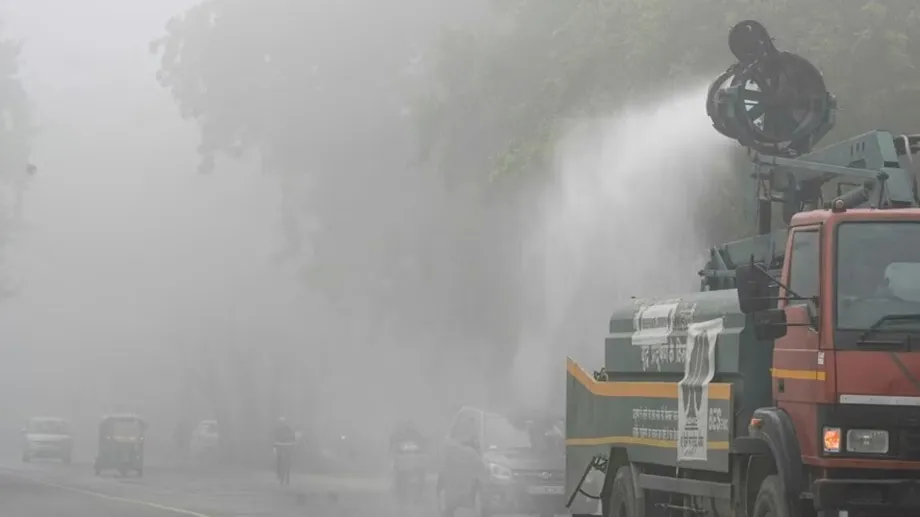
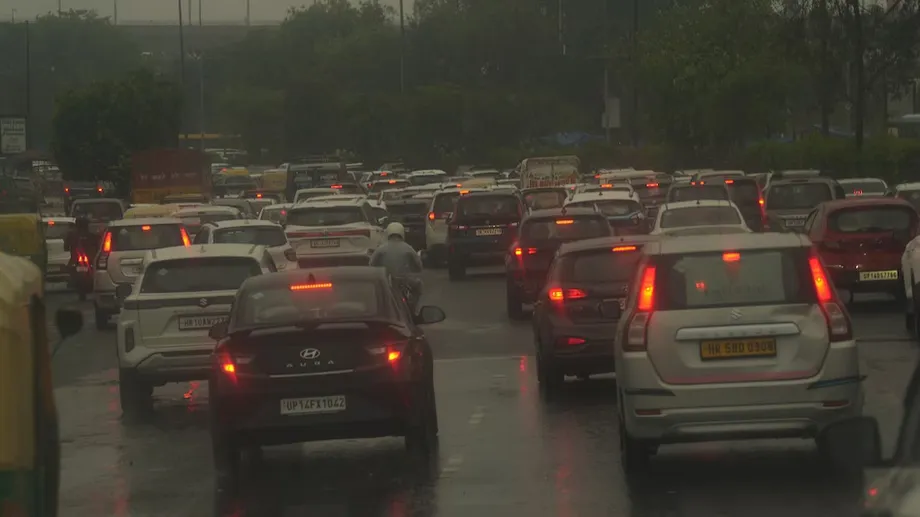
Delhi enters the festival period with pollution already close to the severe category. A government implementation update put the city's Air Quality Index at 391, with 30 of 59 monitoring stations recording severe conditions. Those figures make enforcement consequential for residents who will breathe the emissions, including people living outside the immediate areas where fireworks are set off.
The bench described bursting firecrackers during Deepavali as a religious practice, while saying that its exercise remains subject to constitutional protections for health and the environment. It criticised the failure to enforce restrictions imposed since 2015 and said prohibition had encouraged illegal conventional fireworks sales while preventing consumers from buying legitimate green products.
The practical result is a short exception to the wider ban: approved products, bought through authorised channels, may be used only during the specified hours and outside protected areas.
What residents and traders may do
Manufacturing, selling and bursting firecrackers have different permitted dates. A product's approval for sale does not extend the hours when residents may use it.
- November 2 to 6: eligible manufacturers may produce approved green crackers listed on the CSIR-NEERI website.
- November 4 to 6: approved green crackers may be sold at designated locations, including by traders whose cancelled licences are temporarily restored.
- November 7 and 8: certified green crackers may be burst from 6:00 a.m. to 7:00 a.m. and from 8:00 p.m. to 10:00 p.m.
- November 9: the complete firecracker ban resumes.
- December 14: authorities must submit compliance affidavits and monitoring reports.
- December 16: the Supreme Court will hear the matter again.
Fireworks remain prohibited within 300 metres of hospitals, nursing homes, primary and district health centres, homes for older people, educational institutions and notified silence zones. Authorities must mark and publicise these areas so that residents can identify where the prohibition applies.
District collectors or commissioners must select sales locations in consultation with police. In Delhi, an administrative order following a meeting chaired by Chief Secretary Rajeev Verma restricted purchases to locations designated by Delhi Police in coordination with district authorities. Online sales and sales from unauthorised locations are prohibited.
What makes a box eligible for sale?
Manufacturers need valid approval from the Council of Scientific and Industrial Research's National Environmental Engineering Research Institute, known as CSIR-NEERI, and the required Petroleum and Explosives Safety Organisation licence. They may produce only the approved types listed on the institute's website during the permitted manufacturing period.
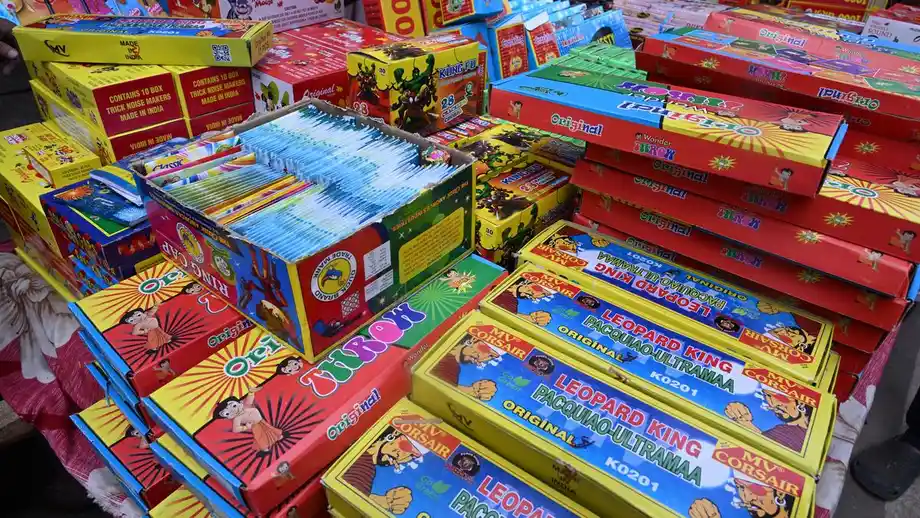
Every box must remain sealed, keeping certified products separate from conventional or unauthorised fireworks. Its QR code must identify the product and batch and provide the manufacturer's details, NEERI registration, relevant licence, formulation and test certificate.
The codes must be non-transferable. Transferring or selling them can lead to cancellation of a manufacturer's registration or licence. Crackers containing barium and fireworks joined in strings, commonly called ladis or garlands, are prohibited.
Manufacturers and traders must also provide monetary security, with the amount set by the authorities. The deposit can be forfeited for a violation. Traders operating under temporarily restored licences face immediate cancellation if they breach the conditions.
Illegal stock puts verification under pressure
Justice Sundresh asked Additional Solicitor General Aishwarya Bhati, representing the Centre, to investigate allegations that conventional and uncertified crackers were being sold despite the restrictions.
Market checks described sales in Sadar Bazaar, Shastri Nagar, Chandni Chowk, Jama Masjid, Sarojini Nagar and New Friends Colony. Some stock was allegedly kept in nearby warehouses. Boxes carried descriptions such as green or pollution free, while some QR codes opened online catalogues or were too small to scan.
Delhi Police Deputy Commissioner Niharika Bhatt, responsible for the North district, said police had registered more than 13 first information reports and seized 1,200 kilograms of firecrackers in the 12 days following Dussehra. A first information report, or FIR, formally records information about an alleged offence and begins a police investigation.
Joint teams of district officials and Delhi Police personnel are to inspect sales points, verify codes and confiscate illegal stock. Authorities must also check vehicles entering Delhi-NCR to stop conventional and unauthorised fireworks reaching the market. Violators face prosecution as well as licensing penalties.
A functioning verification system requires the details returned by a QR code to match the product inside the sealed box. That connection between the tested formulation, the manufacturer and the batch is central to the court's attempt to keep conventional fireworks out of the permitted supply.
How much cleaner are green crackers?
CSIR-NEERI's green cracker framework sets two routes for meeting its emissions benchmark: at least 30 percent less particulate pollution than a conventional cracker of the same category, or at least 20 percent less particulate pollution together with a 10 percent reduction in gaseous emissions.
Particulate matter consists of tiny airborne particles. PM10 describes particles measuring 10 micrometres or less across, while PM2.5 describes finer particles measuring 2.5 micrometres or less. The finer particles can travel deep into the lungs and enter the bloodstream.
Researchers have changed firework ingredients to reduce these emissions. The Safe Water Releaser formulation uses a material that releases water vapour during combustion to suppress dust. Safe Thermite Cracker uses iron oxide to improve combustion, while Safe Minimal Aluminium reduces the amount of aluminium used.
CSIR-NEERI figures for the STAR-F formulation showed 45.5 percent lower PM10 emissions and 35.6 percent lower PM2.5 emissions than its conventional counterpart. Those reductions relate to that formulation and comparison; the required benchmark varies according to the certification route.
A January 2023 study published in Environmental Pollution found 30 to 60 percent lower barium concentrations in particulate emissions from the green crackers tested. The current Delhi-NCR permission prohibits crackers containing barium, making checks for banned chemicals part of the approval and enforcement process.
The quantity burned also matters. Using the same number of comparable crackers with 30 percent lower particulate emissions would reduce that portion of emissions by 30 percent. Burning more crackers would reduce the benefit. The court's monitoring programme will assess pollution during the permitted window and the surrounding weeks.
Health and noise remain concerns
Green crackers still release particles and gases that can irritate airways, trigger asthma attacks and worsen chronic lung disease. Exposure can also increase the risk of cardiovascular complications, particularly for people with existing heart or respiratory conditions.
Children, older adults and pregnant people are among those facing greater health risks. The court also identified disabled people among the groups especially vulnerable to pollution. The 300 metre exclusion areas are intended to reduce disturbance around places where patients, children and older residents gather.
Noise remains substantial even for approved formulations. Recorded sound levels for the original SWAS and STAR products were 105 to 110 dBA, while SAFAL recorded 110 to 115 dBA. The dBA measure adjusts sound readings to reflect human hearing. CSIR-NEERI's framework requires levels below 125 dBA.
Delhi's pollution readings show why additional emissions matter. Of 59 monitoring stations, 30, slightly more than half, recorded severe air quality in the cited morning update. Rohini registered an AQI of 475 and IIT Delhi 472, compared with the city reading of 391. The Central Pollution Control Board classifies readings from 401 to 500 as severe.
The Air Quality Early Warning System forecast severe conditions through November 8. That puts the permitted fireworks period within an already difficult pollution episode, alongside concerns about stubble burning and other emissions.
Why the court allowed a religious practice with limits
The bench acknowledged Deepavali's religious, social, psychological and emotional significance. It also referred to ancient Hindu scriptures describing lamps as part of the festival and said firecrackers became part of celebrations after gunpowder reached India.
Article 25 of the Constitution protects religious practice subject to public order, morality and health. Article 21 protects life, including the right to a healthy, safe and pollution free environment. The judges applied both protections when setting the temporary permission.
Justices Sundresh and Varale explained the constitutional limit in their order:
The right of an individual to engage in a particular practice, which may have a religious colour, is only a qualified one and cannot go beyond the Constitutional restrictions,
The bench said environmental damage and resulting health hazards undermine the purpose of celebration. It also said it lacked adequate data to decide whether a complete ban was the best solution to pollution caused by fireworks.
Enforcement was a central concern. During the proceedings, the bench warned authorities that repeated judicial directions required action by officials on the ground:
There is no point in passing orders and directions unless you give effect to them on the ground, otherwise, it becomes a mockery,
How earlier restrictions shaped this decision
The present dispute grew from a 2015 petition filed on behalf of three infants, including Arjun Gopal, seeking protection from Delhi-NCR's air pollution. The court suspended firecracker sales licences in the region in November 2016 and later adjusted and restored restrictions during 2017.
The October 23, 2018 ruling in Arjun Gopal v. Union of India permitted specified products with reduced emissions and green crackers. It prohibited barium salts, joined firecrackers and online sales, establishing several restrictions repeated in the current permission.
Earlier regulation had focused on noise and timing. A central notification dated October 5, 1999, introduced firecracker noise standards under the Environment (Protection) Rules, 1986. In 2001, the Supreme Court directed enforcement of noise limits, restricted use to evening hours and prohibited fireworks in designated silence zones.
Delhi imposed a comprehensive ban, including green crackers, in October 2024. The prohibition was extended across NCR that December and continued into 2025. On October 15, 2025, Chief Justice B. R. Gavai and Justice K. Vinod Chandran allowed a temporary festival relaxation with designated sales points, QR verification and police monitoring.
The 2026 bench has retained that regulated approach while adding financial security and requiring detailed information about enforcement, pollution and hospital admissions. Its criticism of earlier failures puts responsibility on administrations to demonstrate what happens beyond the courtroom.
Testing costs and wider pollution controls
CSIR-NEERI's published testing charges total 12,500 rupees per sample before goods and services tax: 7,000 rupees for air pollution emissions, 2,500 rupees for noise and 3,000 rupees for banned chemicals. Around 1,700 manufacturers were registered with the institute as of November 2026.
Chidambaram GK of Chidambaram Fireworks Industry in Sivakasi said green cracker prices were largely comparable with conventional fireworks, with small differences across some categories. He said manufacturers were increasingly making both types and demand for green products was gradually growing.
Production costs have also faced pressure. Sulphur prices rose from 75 rupees to 140 rupees per kilogram before easing to 100 rupees, still about one third above the earlier level. Manufacturers estimated production expenses could rise by around 15 percent.
Firecrackers are one part of the wider pollution proceedings. Bhati outlined Delhi's planned restrictions on older vehicles, construction and demolition activity, and changes to government office timings. She also sought three weeks for the Centre to complete internal consultations on barium use.
Senior advocate Gopal Sankaranarayanan urged a manufacturing ban, arguing that earlier directions had repeatedly been violated. A lawyer assisting the court questioned how sellers' green cracker claims would be verified and raised concerns about hazardous particles and an AQI spike during Dussehra.
What authorities must report in December
The Central Pollution Control Board and State Pollution Control Boards must prepare daily air quality reports for November 2 to 6, November 7 and 8, and November 9 to 30. Sand and water samples must also be collected for comparison across the period.
Authorities must inspect monitoring stations alleged to be faulty and repair defects immediately. They must arrange cleaning and solid waste disposal after the festival, particularly in heavily polluted areas.
The December 14 submissions must detail security deposits, designated markets, enforcement measures, prosecutions and changes in hospital and health centre admissions through November 30. Officials face possible contempt proceedings for failing to comply.
The court also directed publication of the Winter Action Plan 2026, Air Pollution Mitigation Plan 2026 and CAQM Annual Action Plan. Education departments must inform schoolchildren about pollution, and Delhi Metro must broadcast awareness messages. The December 16 hearing will give the court its next scheduled opportunity to examine compliance and the collected evidence.
Key Points
- Certified green crackers may be used on November 7 and 8, from 6:00 a.m. to 7:00 a.m. and 8:00 p.m. to 10:00 p.m.
- Sales are limited to designated locations from November 4 to 6. Online sales are prohibited.
- Fireworks are banned within 300 metres of hospitals, health centres, schools, homes for older people and notified silence zones.
- Boxes must be sealed and carry valid product and batch QR codes. Barium crackers and joined strings are prohibited.
- The complete firecracker ban returns on November 9.
- Compliance reports are due December 14, with the next Supreme Court hearing on December 16.