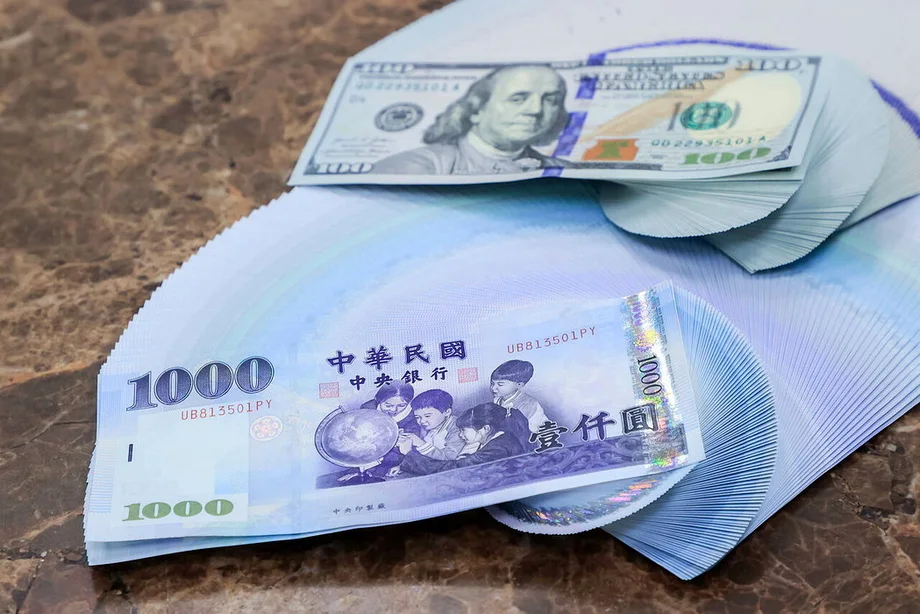
Exporters Given More Room to Sell Dollars
Taiwan's central bank temporarily lifted daily limits on some exporters' sales of US dollars on November 2, 2026, as heavy foreign investment withdrawals pushed the Taiwan dollar to NT$32.714 against the US dollar, its weakest intraday level since April 2025. The currency recovered part of that loss to close at NT$32.592, but official figures for the following days show that pressure continued.
Contents
The central bank contacted at least four banks that morning to tell them exporters' dollar sales would temporarily be exempt from the daily restrictions, according to foreign exchange traders familiar with the calls. Banks were told they would receive notice when the restrictions resumed. No end date was specified, and the central bank's foreign exchange department had not responded to a request for comment at the time of the initial reporting.
The measure gave exporters more freedom to exchange their US dollar earnings for Taiwan dollars. Those transactions can support the local currency because they increase the supply of US dollars in the market while creating demand for Taiwan dollars.
The immediate pressure came from foreign investors selling Taiwanese shares and moving money abroad. Foreign withdrawals from Taiwan's stock market reached NT$994.3 billion in October, a record monthly total that exceeded the previous record in March. Selling continued on November 2, when foreign investors sold a net NT$73.52 billion of shares, their third consecutive session of net sales.
Taiwan's Central Bank of the Republic of China confirmed the November 2 close in its daily exchange rate table. The table also records a further weakening to NT$32.876 on November 5, followed by a partial recovery to NT$32.768 on November 6. The initial rebound therefore gave way to several more days of currency pressure.
How the Currency Moved on November 2
The Taiwan dollar opened at NT$32.50 per US dollar on November 2 before weakening through NT$32.6 and NT$32.7. At its lowest point, NT$32.714, it was down as much as 0.73% during the session. Among major Asian currencies, only the South Korean won performed worse at that point, falling about 1%.
The Taiwan dollar finished at NT$32.592, a decline of NT$0.114, or about 0.35%, from its October 30 close of NT$32.478. A higher number in this exchange rate means a weaker Taiwan dollar: someone buying one US dollar must hand over more local currency.
Currency traders described several forces behind the afternoon recovery. Exporters actively sold US dollars as the Taiwan dollar reached a recent low, foreign investors' outward transfers slowed, and the central bank intervened during the session and near the close. Total turnover across the Taipei and Yuanta foreign exchange markets reached US$3.078 billion.
The intraday low and the closing rate capture different moments. By the close, one US dollar cost NT$0.122 less than it had at the session's weakest point, although it still cost more than at the previous trading day's close. The recovery reduced the day's loss without reversing it.
Why Exporters Matter to the Exchange Rate
Taiwanese exporters often receive payment in US dollars and need Taiwan dollars to meet expenses at home. When they convert those earnings, they sell US dollars and buy the local currency. Allowing more conversion can help absorb demand for US dollars from investors taking money out of Taiwan.
The central bank has used different daily limits for exporters and previously said that, as a general rule, an exporter could sell up to US$10 million a day. The restrictions were introduced in 2025 after the Taiwan dollar experienced its biggest surge since the 1980s. At that time, the concern was that exporters rushing to sell dollars would push the local currency higher too quickly.
November's temporary relaxation addressed pressure in the opposite direction. Exporters were being given more room to sell dollars while foreign investors were seeking dollars to move funds abroad. The amount of support depended on how much exporters chose to convert, alongside the size and timing of investors' withdrawals.
Eddie Cheung, senior emerging markets strategist at Credit Agricole CIB's Hong Kong branch, interpreted the change as a possible signal about the central bank's tolerance for further currency weakness:
Given the underperformance of the Taiwan dollar, the headline is a signal that the authorities could be becoming less tolerant of Taiwan dollar depreciation,
The action also shifted a rule originally used to slow appreciation toward helping manage depreciation. In simple terms, the same flow of exporter earnings that officials had previously sought to slow could now provide support when money was leaving the stock market.
Stock Selling Put Pressure on Both Markets
Taiwan's stock market was falling alongside its currency as investors questioned how quickly large investments in artificial intelligence would generate revenue and profits. A sharp decline in US semiconductor shares on the preceding Friday added pressure to Taiwanese technology stocks.
The benchmark stock index fell as much as 812.73 points on November 2, reaching 44,399.10 during the session. It recovered some ground but still closed down 291.69 points at 44,920.14, below the 45,000 level.
Foreign investors' net share sales of NT$73.52 billion that day extended an already substantial withdrawal. October's NT$994.3 billion outflow was equivalent to nearly NT$1 trillion. The Taiwan dollar fell about 2% during that month and was Asia's weakest performing currency over the period.
Share selling can feed into currency selling when overseas investors exchange their Taiwan dollar proceeds for US dollars before sending the money abroad. Stock sales and currency transfers can occur at different times, which helps explain why traders were watching for further outward transfers even after the afternoon recovery.
Official Rates Show What Happened Next
The central bank's closing figures place the November 2 intervention within a broader period of depreciation. The exchange rate moved from NT$31.795 per US dollar on October 7 to NT$32.592 on November 2. By November 6, a US dollar cost NT$0.973 more than it had on October 7.
The key dates show both the initial recovery and the renewed pressure that followed:
- October 7: The Taiwan dollar closed at NT$31.795 per US dollar.
- October 30: The last close before the reported relaxation was NT$32.478.
- November 2: Banks received the reported calls, and the currency closed at NT$32.592 after touching NT$32.714.
- November 3: The closing rate weakened to NT$32.760.
- November 4: The closing rate reached NT$32.821.
- November 5: The currency weakened further to close at NT$32.876.
- November 6: The rate recovered to NT$32.768, still weaker than the November 2 close.
Traders had warned on November 2 that a rapid move beyond NT$32.8 could damage market confidence and encourage further depreciation. Official closing rates subsequently crossed that level on November 4 and November 5 before moving back below it on November 6.
That sequence matters for businesses deciding when to exchange their earnings or pay overseas bills. A recovery within one trading session can offer a better conversion rate than the day's extreme, while the cost of buying dollars may still rise over the following days.
Currency Contracts Reacted More Strongly
The response was sharper in contracts used to manage future exchange rate risk. Contracts known as one month non-deliverable forwards strengthened as much as 0.4% to NT$32.535 per US dollar after weakening earlier.
A non-deliverable forward lets participants arrange a currency rate for a future date and settle the difference in cash rather than exchange the full amounts of both currencies. Companies and investors use these contracts to reduce uncertainty about future payments or investments. Their prices also respond to expectations about where exchange rates may go.
The stronger forward rate showed a quick market response to the reported easing of restrictions. The cash market still ended November 2 with a weaker Taiwan dollar, while the subsequent official closing rates recorded continued pressure.
Near Term Pressure and a Longer View
Commerzbank analysts identified the US dollar, oil prices and foreign equity flows as possible sources of near term pressure on Taiwan's currency, despite the island's strong economic fundamentals. For a currency already facing investment withdrawals, changes in those factors could affect how much demand there is for US dollars.
Citigroup maintained a more positive view over a longer period, keeping its forecast at NT$32 per US dollar over the next six to 12 months. That would represent a stronger Taiwan dollar than both the November 2 close of NT$32.592 and the November 6 close of NT$32.768.
Exporters, importers and investors face different consequences from these movements. Exporters receive more Taiwan dollars for each US dollar of revenue when the local currency weakens. Businesses paying bills in US dollars need more local currency to cover the same dollar amount. The temporary relaxation gave exporters greater flexibility over conversion, while continued stock withdrawals remained a source of pressure.
Key Points
- Taiwan's central bank reportedly contacted at least four banks on November 2 to temporarily lift daily limits on exporters' US dollar sales.
- The Taiwan dollar touched NT$32.714 per US dollar that day before closing at NT$32.592, down about 0.35%.
- Foreign investors withdrew NT$994.3 billion from Taiwan stocks in October and sold a net NT$73.52 billion of shares on November 2.
- Exporters' dollar sales, slower afternoon outward transfers and central bank intervention helped reduce the November 2 decline.
- Official closing rates later weakened to NT$32.876 on November 5 before recovering to NT$32.768 on November 6.
- Citigroup retained a forecast of NT$32 per US dollar over the next six to 12 months.