Chip factories drive a faster rise in electricity demand
Taiwan expects its semiconductor industry's annual electricity use to rise from about 52 billion kilowatt-hours in 2026 to 110 billion in 2035, putting power plants, transmission lines and substations under growing pressure to keep pace with factory expansion.
Contents
- Chip factories drive a faster rise in electricity demand
- Why demand is being revised upward
- AI demand reaches beyond data centers
- Gas plants form the core of the supply expansion
- Why 2028 and 2029 need particular attention
- More reserves are expected after 2030
- Substations face a demanding construction schedule
- Location choices can speed up power connections
- Renewables expand, while nuclear stays outside the forecast
- Key Points
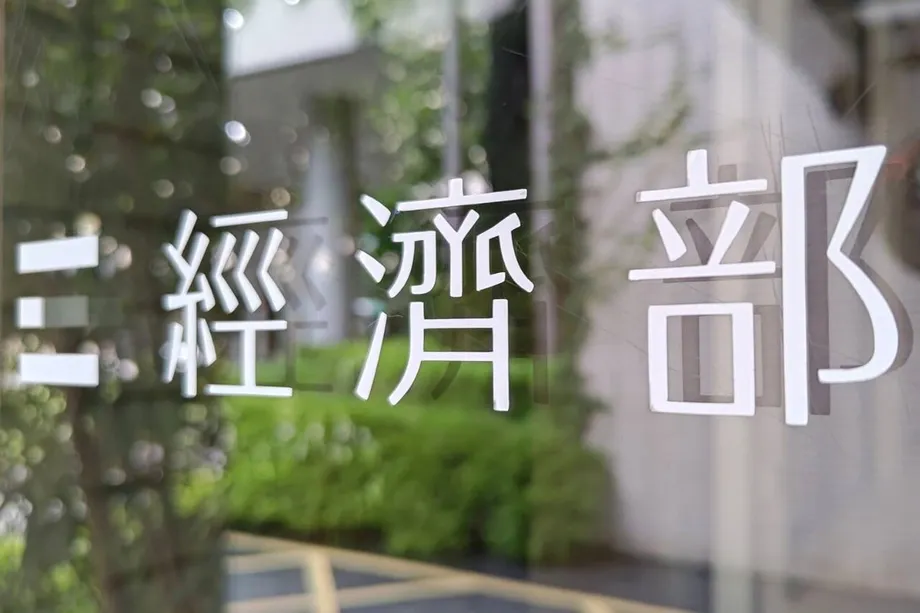
The Ministry of Economic Affairs now forecasts average annual electricity demand growth of 2.5% between 2026 and 2035. That is more than twice the 1.2% average recorded over the previous decade and an increase from its earlier forecast of 1.7%. The ministry described the latest projection as its second highest on record.
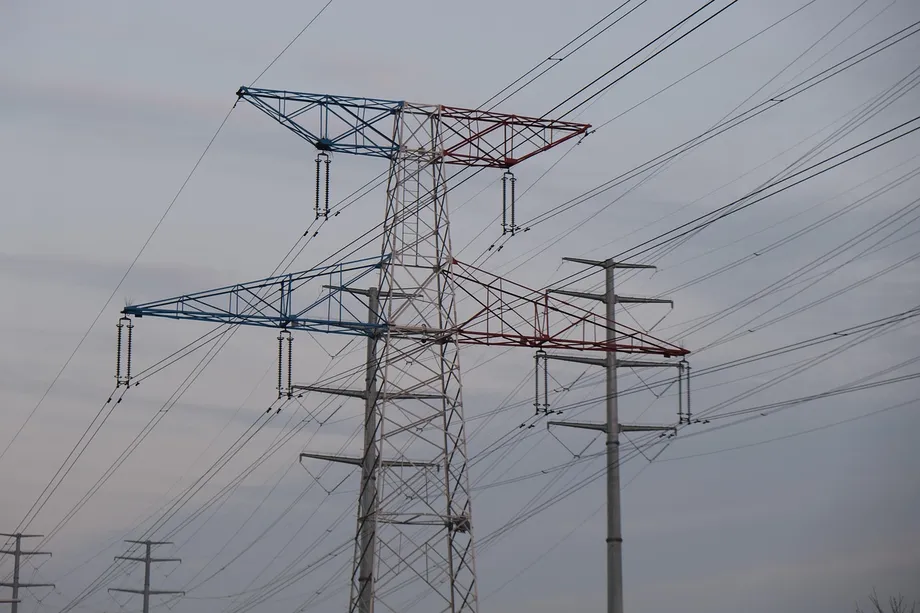
Meeting that demand will require about 26 gigawatts of additional generating capacity, largely from natural gas, alongside a major expansion of the electricity grid. Taiwan Power Co, the state utility known as Taipower, plans to build or expand 43 substations over 15 years and construct about 1,922 kilometers of transmission lines.
The semiconductor forecast amounts to an increase of 58 billion kilowatt-hours a year, or roughly 112%, between 2026 and 2035. Advanced chip production and manufacturing connected to artificial intelligence are expected to drive much of that growth.
For manufacturers, the practical issue is whether electricity can reach a new factory when production is ready to begin. More generating capacity helps supply the island, while local substations and transmission lines determine how much power a particular industrial area can receive.
Why demand is being revised upward
Energy Administration Director-General Wu Chih-wei attributed the higher forecast to investment in chip factories and AI data centers, clearer business expansion plans and rising temperatures. Earlier uncertainty about US tariffs, excess production capacity in China and investment decisions had made businesses more cautious about requesting electricity for new projects.
Taiwan's experience in 2025 shows why economic growth and electricity consumption can move in different directions. The economy expanded by 8.76%, while electricity use fell by 0.3%. Wu said semiconductor and electronic component producers generated more economic value for each unit of electricity than traditional industries.
Steel, petrochemicals and other industries that consume large amounts of energy faced weaker production amid tariff uncertainty. Frequent typhoons in July and August also reduced extremely hot days and held down demand for air conditioning.
The next decade's forecast anticipates delayed investment moving ahead. It also includes the effects of hotter weather and government energy conservation measures. For comparison, the ministry cited projected demand growth of 1.1% for Japan and 2.1% for South Korea, below Taiwan's 2.5%.
AI demand reaches beyond data centers
Taipower chairman Tseng Wen-sheng said the fastest growing electricity demand connected to AI comes from manufacturing. That includes chip fabrication, memory production, packaging and server production, extending the power challenge across several parts of Taiwan's technology industry.
Data centers are another major source of demand. The Energy Administration forecasts a power requirement of about 3.1 GW to 4.1 GW for AI data centers through 2035. Gigawatts measure the amount of power needed at a given time; kilowatt-hours measure electricity used over a period. A factory's annual consumption and a data center's power requirement therefore describe different aspects of the system.
Tseng said AI equipment could spread further into ordinary businesses and potentially homes, shifting evening peak demand toward 8pm to 10pm. Taipower is considering that possibility in its forecasts and assessing whether older urban grids will need upgrades.
Electricity planning is consequently beginning earlier in industrial development. Taipower is working with manufacturers during the planning of industrial parks so that factory expansion schedules and power infrastructure can advance together.
Gas plants form the core of the supply expansion
The ministry's plan includes 25.98 GW of new thermal generating capacity by 2035, generally described as about 26 GW. Most of it is expected to come from units burning natural gas at Taipower plants and privately operated facilities.
Projects include facilities at Taichung, Hsinta, Tongxiao, Dalin and Hsieh-ho, alongside private investments by Kuo Kuang Power and Mailiao Power. Taipower has identified Taichung gas units 1 and 2 and Hsinta gas units 2 and 3 as a near term addition totaling about 5.2 GW of installed capacity.
Some future capacity still needs a location. The planning documents include 4.2 GW of gas generation for 2033 to 2035 whose sites have yet to be selected. Taipower said those decisions will depend partly on where major electricity users establish operations.
New capacity will also replace older generating units. The construction program must therefore cover both rising consumption and the retirement of existing equipment, making the timing of individual projects important.
Why 2028 and 2029 need particular attention
Taipower identifies 2028 and 2029 as a critical transition period as older plants give way to new capacity. The ministry's projection puts the nighttime reserve margin at its lowest point in 2029, at 7.1%, while officials expect roughly 3 GW of reserve capacity to remain available.
A reserve margin is the cushion between available generating capacity and expected peak demand, expressed as a percentage of that demand. Taipower describes a reserve of about 3 GW as equivalent to two or three large combined cycle gas units. These plants generate electricity with a gas turbine and use the resulting heat to produce additional electricity through a steam turbine.
Taipower's measures for strengthening nighttime supply include extending the operation of existing units, renewing contracts with independent power producers, strengthening pumped storage hydropower, adjusting maintenance schedules and using demand response.
Pumped storage uses electricity to move water uphill, then releases it through turbines when power is needed. Demand response works from the other side: participating users reduce or shift consumption during periods when supply is tight.
Some aging thermal units will remain available as backup. Wu said older Hsinta units would move into reserve service and run when needed. Retaining them gives the utility another option during unexpected changes in demand or supply.
More reserves are expected after 2030
Taipower expects the nighttime reserve margin to stay above 15% after 2030 as new units enter service. The ministry's later projection places reserve margins above 20% from 2031 onward and at 23.1% in 2035. Those forecasts describe a stronger supply cushion after the tighter transition years.
Taipower has also responded to concerns raised by the Legislative Yuan's Budget Center by pointing to operating conditions during a July to October period, when it said reserves stayed above 10% and supply indicators remained green.
Daily operating reserves describe the electricity system's condition at a particular time. A planning reserve margin looks ahead at capacity and expected demand. For businesses arranging future production, both matter: they need dependable service now and sufficient capacity when new facilities open.
The principal milestones in the current plans are:
- 2026 to 2035: electricity demand is forecast to grow by an average of 2.5% annually.
- 2028 and 2029: Taipower expects a tighter transition as older generating units are replaced.
- 2029: the projected nighttime reserve margin reaches its lowest point, at 7.1%.
- 2031: Southern Taiwan Science Park's electricity load is forecast to reach 4 GW.
- 2033 to 2035: the plan includes 4.2 GW of gas capacity awaiting site selection.
- 2035: semiconductor electricity consumption is forecast to reach 110 billion kilowatt-hours annually.
Substations face a demanding construction schedule
Taipower's grid program includes about 52 GW of additional substation capacity over the next 15 years. Substations change voltage and direct electricity through the network, allowing power from generating plants to reach industrial areas, businesses and homes.
Tseng described the construction schedule at an Energy Taiwan exhibition forum in Taipei:
"We need to build 43 substations in 15 years, averaging about three a year. This is unprecedented," he said.
The Songhu ultra-high-voltage substation in Taipei's Neihu District shows how long such projects can take. Construction began after 26 years of planning and administrative procedures, with completion scheduled for 2029.
Tseng said Taiwan's limited land availability can mean shorter transmission distances, yet densely packed infrastructure makes new lines difficult to build. Electricity infrastructure can take longer to complete than the factories it is intended to serve.
Southern Taiwan Science Park illustrates the scale of local requirements. With its load forecast to reach 4 GW by 2031, the park will need a third extra-high-voltage substation alongside its two existing facilities.
Location choices can speed up power connections
Tseng urged large data centers to locate near power plants. Shorter dedicated lines could reduce construction time, engineering difficulties and costs, helping match investment schedules with electricity delivery.
Taipower is coordinating locations and schedules with major users and seeking direct engagement with companies committed to investing in computing infrastructure. For a company selecting a site, access to sufficient power on time has become an early investment consideration.
The utility is also considering rules for allocating capacity when a property developer has not yet secured an investor. Reserving electricity for such a site could leave less capacity available for projects with confirmed users.
Those decisions connect national planning to individual construction projects. A power plant adds supply to the system, while a site's location, transmission route and substation capacity determine the work required to connect a particular customer.
Renewables expand, while nuclear stays outside the forecast
Taiwan's renewable energy plans set installed capacity targets of 31.2 GW for solar and 10.97 GW for offshore wind by 2030. By 2035, the targets rise to 35.02 GW and 18.41 GW respectively.
The government said it would use installed capacity as its main benchmark rather than focus on the percentage of electricity generated by renewables. Installed capacity describes the rated output of equipment; actual electricity production varies with conditions, including sunlight and wind. Nighttime planning gives Taipower a separate view of supply when solar generation is unavailable.
Offshore wind development has encountered delays as several developers ended contracts or fell behind schedule. Wu said authorities would improve auction and procurement arrangements and assess additional offshore areas that could support another 2 GW to 3 GW. Delayed and canceled projects will be reviewed alongside future development zones.
Nuclear generation is excluded from the ministry's planning assumptions. Wu said the two reactors at the Maanshan plant in Pingtung County could generate about 15 billion kilowatt-hours annually if restarted, but no restart timetable has been set.
Taipower says it will review demand with industry and adjust generation and grid plans periodically. The central task is to align three schedules: when factories need electricity, when generating units become available and when the network can deliver their power.
Key Points
- Taiwan forecasts average annual electricity demand growth of 2.5% from 2026 to 2035, up from an earlier forecast of 1.7%.
- Semiconductor electricity use is projected to rise from 52 billion to 110 billion kilowatt-hours annually.
- The supply plan includes about 26 GW of additional thermal generating capacity, mostly using natural gas.
- The nighttime reserve margin is projected to reach a low of 7.1% in 2029 before improving as new units enter service.
- Taipower plans 43 new or expanded substations and about 1,922 kilometers of transmission lines over 15 years.
- Solar and offshore wind capacity are scheduled to expand, while nuclear generation remains outside the planning assumptions.