Clearance advances unevenly across three districts
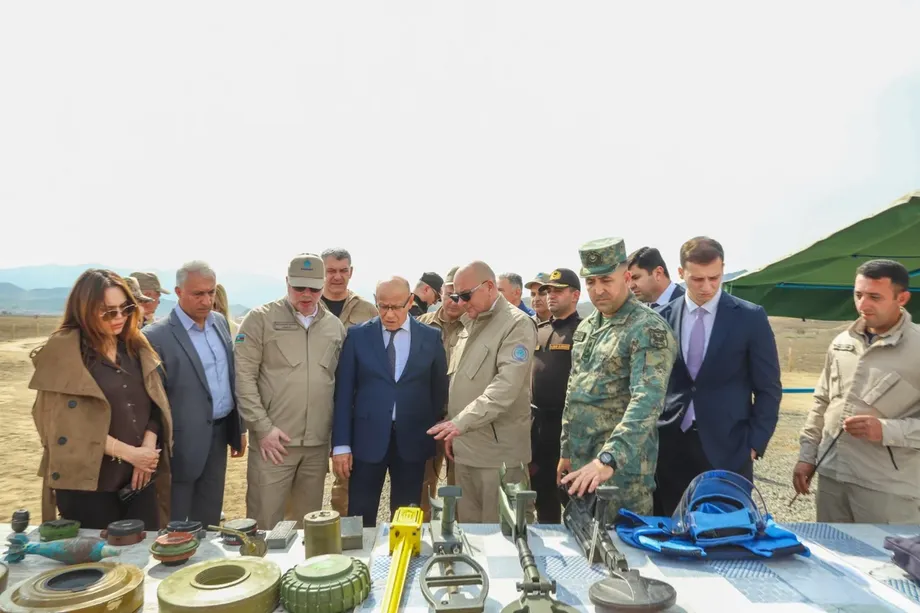
Azerbaijan has discovered 115,306 mines and unexploded munitions across Aghdam, Fuzuli and Khojavand over five years, according to figures given by Emin Huseynov, the Azerbaijani president's special representative in the three districts. His account places mine clearance at the center of efforts to rebuild towns and preserve their cultural identity in Karabakh.
Contents
The figures, published on October 27, 2026, show substantial differences in progress: approximately 60% of Aghdam, 78% of Fuzuli and 16% of Khojavand had been cleared. Huseynov presented the update at the seventh World Forum on Intercultural Dialogue in Baku, during a session examining culture and safe pathways toward a shared future.
Huseynov described mines as one of the main obstacles to restoration and reconstruction. His remarks connected the physical work of clearing land with decisions about how rebuilt cities should function, where their administrative centers should stand and how their historical character should be preserved.
For residents and construction workers, those tasks are closely connected. Rebuilding requires access to land, while the danger from buried explosives and ammunition left after fighting affects where people can move and where work can proceed safely.
What the district figures show
Fuzuli recorded the largest number of discoveries, with 51,640 mines and unexploded munitions, followed by Aghdam with 37,385 and Khojavand with 26,281. Together, those figures produce the total of 115,306 items across the three districts.
Fuzuli accounted for about 45% of that combined total. Its reported clearance coverage was also the highest, at approximately 78%, compared with 60% in Aghdam and 16% in Khojavand. The gap between Fuzuli and Khojavand was 62 percentage points, showing how differently the work has progressed across the districts.
The discoveries include two categories of explosive danger. A mine is placed so that it can explode when triggered, for example by pressure or contact. Unexploded ordnance is ammunition, such as a shell or another explosive weapon, that failed to explode when used and can remain dangerous afterward.
Huseynov's combined figures count both categories. The distinction matters for understanding the work: clearance teams must deal with explosive objects left in different circumstances, rather than search only for buried mines.
Khojavand's remaining clearance needs
Khojavand had the lowest clearance percentage in Huseynov's rounded figures, at approximately 16%. Another published account of his remarks gave a different measure, stating that 78.32% of Khojavand remained uncleared, which would leave 21.68% cleared. No explanation was given for the difference between that figure and the approximately 16% figure.
Both figures place Khojavand behind Aghdam and Fuzuli in the share of territory cleared. For planning purposes, that means a greater proportion of Khojavand still requires clearance before the district can reach the coverage reported for its neighbors.
Huseynov also said that more than a third of Aghdam and nearly a fifth of Fuzuli remained uncleared. Those descriptions broadly follow the pattern of the rounded clearance percentages: Aghdam has substantial work remaining, while Fuzuli has progressed further.
The percentages describe shares of each district's territory. Comparing the actual amount of land cleared would require the corresponding area measurements, which Huseynov's reported update did not include. A district with a higher percentage cleared can still have a different workload because its size and the conditions encountered on the ground may differ.
Why minefield maps matter
Huseynov said the failure to provide accurate minefield maps continued to complicate demining. Such maps can help teams identify where mines were laid and plan searches around recorded locations.
Accurate records give clearance teams a starting point. Where records are missing or unreliable, teams have less dependable information about where explosive hazards may be located. That makes the quality of information part of the practical challenge, alongside the physical task of finding and dealing with dangerous objects.
The update brought together two measures of progress: the proportion of territory cleared and the number of explosive items discovered. Each answers a different question. The first describes the reach of clearance work across a district; the second records how many hazardous objects teams have found.
For communities awaiting reconstruction, the location of clearance also matters. Roads, building sites and access routes have different roles in making a place usable again. Huseynov's district totals provide a broad picture, while decisions about particular projects require information about the land those projects will occupy.
How reconstruction decisions are organized
Azerbaijan has established a management and coordination structure with several levels for restoring the territories, Huseynov said. Senior decision makers set restoration policies and priorities, while expert working groups determine how planned activities should be carried out.
The arrangement separates the choice of objectives from the detailed work of delivering them. At the policy level, authorities decide what restoration should prioritize. At the working level, specialists translate those priorities into practical activities.
Huseynov identified the preparation of master plans and urban planning as another important stage of reconstruction. A master plan is a broad guide to how a city will be organized, including the relationship between its main areas and functions. It gives individual building projects a common framework.
His account places clearance, coordination and planning within the same rebuilding effort. Removing explosive hazards addresses access to land; coordination organizes the work; urban planning sets out what the restored city is intended to become.
Aghdam plans separate historical and administrative centers
Aghdam's master plan was developed through international cooperation involving specialists from several countries, Huseynov said. He described a central design choice: the city's historical center and its administrative center are separate.
The stated purpose is to preserve Aghdam's historical and cultural identity while connecting its past, present and future. In practical terms, the plan gives the historical center and the area devoted to administration distinct places in the city's design.
That choice helps explain why reconstruction featured at a forum devoted to intercultural dialogue. Huseynov presented rebuilding as a matter of cultural identity as well as physical infrastructure. A city's layout can shape how its history remains visible alongside the institutions needed for daily administration.
The international contribution described by Huseynov concerns the development of the master plan. His remarks focused on its guiding approach, especially the relationship between historical preservation and the organization of a functioning city.
What the update means for rebuilding
Fuzuli's approximately 78% clearance rate, Aghdam's approximately 60% rate and Khojavand's much lower reported coverage point to different conditions for reconstruction across the three districts. Authorities must organize rebuilding around the progress of clearance in each place.
The 115,306 discoveries also show the scale of the explosive hazards encountered during five years of work. Huseynov's account links that clearance effort to a wider process in which senior officials set priorities, specialist groups organize implementation and city plans guide development.
Aghdam provides the clearest planning example in the update: a master plan that separates historical and administrative centers to preserve the city's identity. Across all three districts, continued clearance remains a central part of making land available for restoration.
Key Points
- Huseynov reported 115,306 mines and unexploded munitions discovered across Aghdam, Fuzuli and Khojavand over five years.
- The district totals were 37,385 in Aghdam, 51,640 in Fuzuli and 26,281 in Khojavand.
- He put clearance at approximately 60% in Aghdam, 78% in Fuzuli and 16% in Khojavand.
- Another account of his remarks put Khojavand's uncleared share at 78.32%, leaving an unexplained difference in its figures.
- Huseynov identified inaccurate minefield maps as a continuing complication for clearance.
- Aghdam's master plan separates its historical and administrative centers, with preservation of cultural identity as a stated goal.