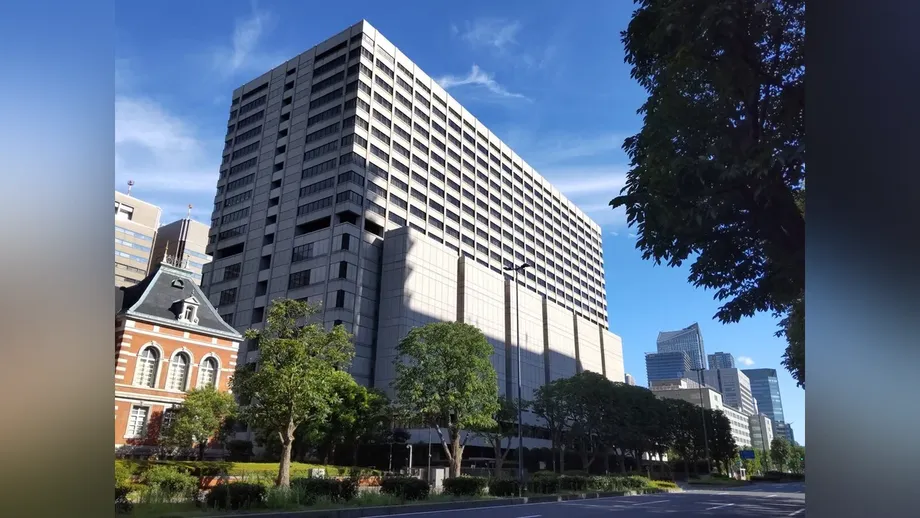
Evacuees Face Departure Orders and a Large Housing Bill
The Tokyo District Court on October 26, 2026, ordered 11 Fukushima evacuees to leave government employee housing in Tokyo and Saitama and pay about 24.4 million yen in unpaid housing fees and other charges. The decision concerns homes provided after the March 2011 accident at Tokyo Electric Power Company's Fukushima Daiichi nuclear power plant.
Contents
- Evacuees Face Departure Orders and a Large Housing Bill
- What the District Court Decided
- Who Counts as a Voluntary Evacuee?
- How Emergency Shelter Became a Long Legal Dispute
- Why the Supreme Court Upheld Departure
- Why Fukushima Could Seek a National Government Apartment
- Miura Wanted Individual Housing Needs Examined
- Cleanup Designations Explain the Disagreement
- What Support Existed, and What Happens Next?
- Key Points
Presiding Judge Tomoko Ikeda ruled that Fukushima Prefecture had lawfully ended the free emergency housing arrangement in March 2017. The court also found that the prefecture violated the plaintiffs' privacy by telling relatives that they had not moved out, and ordered it to pay a total of 300,000 yen in damages.
The plaintiffs had sought 11 million yen, arguing that the demands to leave and pay housing charges had caused mental distress. They said they could not accept the judgment and were considering an appeal. The departure order and the much larger payment obligation leave them facing both a move and a substantial financial burden.
The ruling follows a separate Supreme Court judgment on January 9, 2026, which upheld an order requiring another Fukushima evacuee to leave a government apartment in Tokyo. That decision exposed a sharp disagreement among the justices over how authorities should assess the continuing housing needs of people who fled areas outside official evacuation zones.
The two cases turn on the same practical problem: housing offered as emergency shelter became a home for years, while the legal permission to live there remained temporary. Their outcomes also show how courts can uphold a departure order while finding fault with another part of the government's treatment of residents.
What the District Court Decided
The 11 plaintiffs moved into public employee accommodation that Fukushima Prefecture had arranged as emergency temporary housing after the nuclear accident. Their homes were in Tokyo and neighbouring Saitama Prefecture, far from the communities they had left.
Fukushima ended free housing provision for evacuees from outside designated evacuation zones at the end of March 2017, six years after the disaster. The prefecture then sought the return of the accommodation. In the litigation decided in October 2026, the evacuees challenged that decision and sought compensation, while the prefecture brought a counterclaim seeking their departure.
Judge Ikeda accepted the prefecture's position that ending the free provision was lawful and granted its demand that the plaintiffs vacate. The court also ordered payment of approximately 24.4 million yen in unpaid housing fees and other charges.
The privacy finding concerned a different action: passing information about the residents' failure to leave to their relatives. The court awarded 300,000 yen for that disclosure. The award is separate from the residents' payment obligation, leaving both sides with orders against them for different conduct.
Who Counts as a Voluntary Evacuee?
The plaintiffs had lived outside the areas where the government issued evacuation orders after the Fukushima Daiichi accident. People who left those areas are commonly called voluntary evacuees, distinguishing them from residents formally instructed to leave.
That classification became central to housing assistance. From April 2017, Fukushima stopped extending free emergency accommodation for people from outside the evacuation zones, while assistance continued for qualifying residents from within them.
For a family deciding whether to return, an administrative boundary was only one part of the decision. In his January 2026 dissent, Supreme Court Justice Mamoru Miura argued that authorities also needed to consider individual circumstances, including health, employment, family relationships and the ability to secure a stable home.
How Emergency Shelter Became a Long Legal Dispute
The housing disputes developed over many years. The separate Supreme Court case provides a detailed record of how one resident's accommodation changed from free disaster relief to an apartment the prefecture sought to recover.
That resident left an area of Minamisoma outside the evacuation zone and received an apartment around July 2011 at the Shinonome national government employee housing complex in Tokyo's Koto Ward. Tokyo supplied it free after receiving a request from Fukushima to assist with relief under the Disaster Relief Act.
- March 11, 2011: The earthquake and subsequent Fukushima Daiichi accident forced residents to leave their communities.
- Around July 2011: The resident in the later Supreme Court case received free accommodation at Shinonome.
- June 2015: Fukushima decided to move evacuees from outside evacuation zones from emergency housing relief to other support measures from April 2017.
- June 2016: Tokyo set aside 200 public housing units in a dedicated application category for eligible evacuees from outside evacuation zones.
- March 31, 2017: Free emergency housing provision ended for that category of evacuees.
- March 31, 2019: The maximum extension period under Fukushima's replacement safety net housing contracts ended.
- January 9, 2026: The Supreme Court dismissed the Shinonome resident's appeal.
- October 26, 2026: The Tokyo District Court ordered the 11 plaintiffs in the separate case to leave and pay housing charges.
The January appeal and the October district court ruling concern separate proceedings. The Supreme Court judgment settled the individual Shinonome case; the 11 plaintiffs in the October case said they were considering their own appeal.
Why the Supreme Court Upheld Departure
The Supreme Court's Second Petty Bench dismissed the Shinonome resident's appeal in its January 9 judgment. The ruling left standing the lower courts' orders requiring the resident to vacate. It was the first Supreme Court judgment in a dispute over the eviction of a voluntary Fukushima evacuee from government employee accommodation.
Fukushima had introduced a safety net arrangement under which eligible residents could remain temporarily by signing a contract and paying housing charges. The resident received information about that arrangement but did not agree to a contract and continued occupying the apartment after March 2017.
The majority upheld the finding that the resident had no legal right to occupy the apartment. It treated the question of whether Fukushima's decision to end free provision was unlawful as separate from whether the resident possessed an existing right to remain in that particular property.
That reasoning made the contractual position decisive. Continued residence after the free arrangement ended, without a replacement agreement, left the resident without an occupancy right recognised by the majority.
Why Fukushima Could Seek a National Government Apartment
The Shinonome apartment belonged to the national government, rather than Fukushima Prefecture. That ownership arrangement created another legal issue: how could the prefecture demand that someone leave a property it did not own?
Fukushima had obtained national government permission to use the apartment and was paying the required usage fees. It argued that the resident's continued occupation interfered with its authorised use. To protect that interest, it sought to exercise the national government's right, as owner, to recover possession.
The legal mechanism is called subrogation. In this setting, it means using another party's claim when doing so is necessary to protect one's own legal interest. The Supreme Court accepted that Fukushima could use the national government's ownership claim to seek possession.
Justice Junichi Takasu agreed with the result but examined the limits of that reasoning. He explained that permission to use national government property is restricted by purpose and duration. It differs from an ordinary private rental agreement.
Takasu considered the time that had passed and the failure of mediation aimed at reaching a safety net contract. By the end of the lower court proceedings, he concluded, the prospect of reaching such an agreement had fallen away, allowing Fukushima to seek the apartment's return through the owner's claim.
Miura Wanted Individual Housing Needs Examined
Justice Mamoru Miura, who presided over the Supreme Court hearing, dissented. He challenged both Fukushima's ability to bring the possession claim through subrogation and the treatment of evacuees from outside evacuation zones.
Miura reasoned that the prefecture's permission to use the apartment served the purpose of housing the resident while that person remained there. In his view, the resident's continued occupation fulfilled that purpose, weakening the legal basis for using the national government's ownership rights to demand departure.
He also argued that ending free provision for everyone outside evacuation zones, without properly examining their circumstances, exceeded the authorities' lawful discretion. He favoured dismissing the prefecture's possession claim or, alternatively, returning that part of the case for further examination.
Miura's approach would require attention to whether a particular resident still needed emergency housing and could obtain a suitable alternative. He argued that the temporary nature of disaster relief had to be assessed alongside the continuing need for assistance.
Cleanup Designations Explain the Disagreement
Miura supported his criticism with figures about contamination and cleanup. By February 2012, 41 Fukushima municipalities had been designated either as special decontamination areas or as areas requiring intensive investigation of contamination.
Only five had been released from those designations by the end of March 2017, when free housing provision ended for evacuees from outside evacuation zones. The remaining 36 represented about 88% of the original 41. They included Fukushima, Koriyama, Iwaki and Minamisoma, where the Supreme Court appellant had lived.
The dissent examined two radiation benchmarks used for different government decisions. A projected annual dose of 20 millisieverts was one criterion for establishing and lifting evacuation orders. Cleanup investigation rules used a benchmark related to an additional annual dose of 1 millisievert, expressed through an air dose rate of 0.23 microsieverts per hour. These units measure radiation exposure over different periods.
Miura's argument was that a person's location outside an evacuation zone still needed to be considered alongside the contamination rules applying to their community. He regarded continued evacuation from affected areas as having a rational basis and argued that housing decisions should account for each person's circumstances.
His dissent also drew on the International Covenant on Economic, Social and Cultural Rights and the United Nations Guiding Principles on Internal Displacement. He used their provisions on adequate housing, voluntary return and resettlement to support an interpretation of Japanese disaster law that gives weight to residents' continuing housing needs.
What Support Existed, and What Happens Next?
Fukushima's replacement measures included assistance with moving to permanent housing within the prefecture, rent support for qualifying households with low incomes, and requests to other prefectures to help evacuees obtain public housing. Tokyo's dedicated category of 200 units was part of that response.
The safety net scheme introduced in February 2017 offered another temporary route. Eligible residents in national government employee housing could sign contracts involving payment, initially for a period within one year and the relevant financial year. Extensions were possible until March 31, 2019.
Miura considered those measures insufficient to justify ending emergency provision across the entire category. He pointed to the limited duration of safety net contracts and the uncertainty of securing public housing through applications. His dissent also noted that emergency housing continued for evacuees from Okuma and Futaba at the time of the January judgment.
The October plaintiffs now face a concrete choice about challenging their ruling. They said they were considering an appeal, but no filing date, hearing date or deadline for leaving the properties was given in the accounts of the decision. Their housing charges and departure order stand alongside the prefecture's smaller liability for violating their privacy.
The central disagreement remains precise: the courts upheld the end of an occupancy arrangement, while Miura argued that disaster assistance decisions required closer examination of the people still depending on those homes.
Key Points
- The Tokyo District Court ordered 11 Fukushima evacuees to leave housing in Tokyo and Saitama on October 26, 2026.
- The plaintiffs were ordered to pay about 24.4 million yen in unpaid housing fees and other charges.
- Fukushima Prefecture must pay 300,000 yen for disclosing information about their continued residence to relatives.
- The court upheld the prefecture's March 2017 termination of free emergency housing provision.
- A separate Supreme Court judgment in January 2026 upheld another evacuee's departure order.
- Justice Mamoru Miura dissented, arguing that individual housing needs required closer examination.
- The October plaintiffs said they were considering an appeal.