A bag of rubbish lands beside the person clearing it
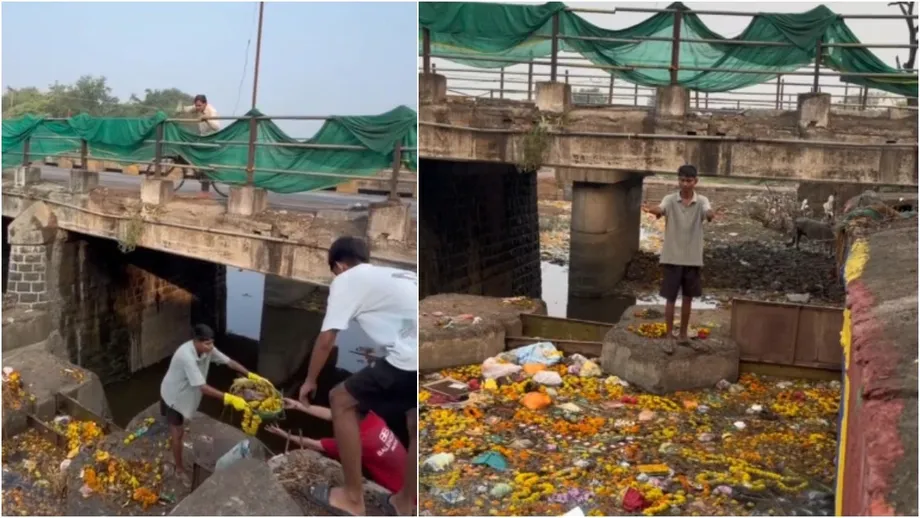
Surendra Singh Choudhary had returned to Madhya Pradesh's Ajnar River to remove plastic bags, discarded flower garlands and rubbish left after Navratri and Dussehra celebrations. While the 20-year-old environmental campaigner worked in the water, a man on a bridge appeared to throw another bag of garbage towards the place he was cleaning. It landed close to him.
Contents
- A bag of rubbish lands beside the person clearing it
- Why Bittu returned after the festivals
- Eight months of work, followed by more dumping
- What the municipality removed, and what remained
- Rajgarh's collector promises a wider plan
- How the effort reached this point
- Public anger and international attention
- Who keeps the river clean between collections?
- Key Points
Known as Bittu Tabahi, Choudhary is a student from Biaora in Rajgarh district. He had already spent eight months removing tonnes of waste from the river with basic equipment. His latest Instagram video showed why that effort has become so difficult to sustain: rubbish keeps arriving in the same water he is trying to clear.
Choudhary, who wore protective gloves while collecting waste in the video, described the incident as it happened:
While I am cleaning this river, an uncle is throwing garbage right over me.
The episode comes as Rajgarh collector Girish Mishra has promised administrative support and instructed officials to prepare a plan for cleaning the entire river. Municipal workers have also been deployed following festival immersions. Yet waste left in the water, repeated dumping and a missing riverbank dustbin show that removing rubbish is only one part of keeping the Ajnar clean.
Why Bittu returned after the festivals
Navratri and Dussehra brought another accumulation of material into the Ajnar, prompting Choudhary to begin a second period of cleaning. The rubbish included plastic bags and garlands, alongside other waste that had collected in the river.
Choudhary explained the reason for returning in his video:
As you all know, I am cleaning the Ajnar river again. After Dussehra and Navratri, the condition of our river has deteriorated a lot.
For the people doing the cleaning, the practical consequence is repeated work in a stretch they had already restored. Choudhary and those assisting him continued collecting rubbish even as the video appeared to show further instances of people throwing waste into the river.
The materials present different problems. Plastic bags remain as litter unless someone collects them. Flowers and other worship materials can decay in the water. A river can therefore still contain substantial waste after larger, more visible objects have been removed.
Eight months of work, followed by more dumping
Choudhary's campaign began largely with his own money and labour. He used basic tools and, at times during the earlier effort, his bare hands to retrieve rubbish. Municipal support later helped his work, while public attention grew around the condition of the river flowing through Biaora.
The scale of his previous effort makes the return of waste especially frustrating. He spent eight months removing tonnes of garbage without sophisticated equipment, only to find the cleaned stretch filling again. His latest complaint was about both the renewed accumulation and the behaviour of people who could see someone working to remove it.
Choudhary described that frustration in the video:
I have been putting so much effort into cleaning this river for months. But still, some people refuse to understand and continue throwing garbage into the river.
He also tried to make disposal easier by placing two dustbins along the riverbank. One later went missing, leaving only one of the two bins he had installed. The attempt shows that his campaign has included a practical measure to discourage dumping, alongside physically retrieving waste from the water.
What the municipality removed, and what remained
Biaora's municipality assigned a team and sanitation workers to the river after Navratri idol immersions. Officials claimed that submerged idol remains had been taken out and that cleaning had been completed overnight.
More than 75 large Durga idols were immersed between October 19 and 21, with devotees arriving from Biaora, nearby rural areas and elsewhere in the district. More than 50 municipal sanitation workers began the special cleanup late on Wednesday and worked through the night, removing idol remains and other rubbish from the river and cleaning the surrounding area. Chief municipal officer Ikrar Ahmed said the municipality was carrying out cleaning campaigns continuously.
Conditions described at the immersion site presented a narrower result: idol remains had been removed, but worship materials were still in the river. Those materials could rot there. Idol immersions also continued late on Wednesday, creating the possibility of more material entering the water after workers had cleared an earlier accumulation.
Pawan Kushwaha, a representative of the area's member of Parliament, said people from the city or nearby villages might have carried out further immersions after the cleaning. He said he would have the situation checked and arrange prompt cleaning, adding that officials had already received clear instructions about the river.
The difference between removing idol remains and clearing all the associated waste matters for residents and volunteers. Taking out the larger pieces leaves another task if flowers, bags and other worship materials remain behind. Continued immersions also require follow-up collection after the initial work is finished.
Rajgarh's collector promises a wider plan
Rajgarh collector Girish Mishra invited Choudhary to his office on Thursday evening, honoured his work and assured him of administrative support. The meeting followed public comments in which the student said repeated dumping had left him considering whether to abandon the mission.
Mishra said officials had been instructed to look beyond the stretch Choudhary had cleaned:
I directed officials to prepare a roadmap for cleaning the entire river. Bittu did a commendable job in not just cleaning up a stretch of the river but also motivating others to take up similar efforts.
Choudhary welcomed the promise that the municipal authority would provide support to sustain the work. He also said the district administration and Biaora municipality were already helping him, while some members of the public continued emptying waste into the water.
Officials described their broader aim as building public awareness, encouraging people to join the effort and preventing littering in public spaces. No completion date, budget or detailed schedule was given for the plan to clean the entire river.
How the effort reached this point
The Ajnar campaign has moved from an individual effort to a wider discussion about municipal action and public responsibility. The main developments are:
- Choudhary spent eight months removing tonnes of rubbish from the Ajnar using basic equipment.
- He placed two dustbins along the riverbank to discourage littering; one later went missing.
- After Navratri and Dussehra, accumulated garlands, plastic and other rubbish prompted him to resume cleaning.
- His comments about possibly giving up became public on October 22.
- On Thursday evening, collector Girish Mishra met him and promised support, directing officials to prepare a plan for the entire river.
- In his latest Instagram video, a man on a bridge appeared to throw a garbage bag towards the area where he was working.
The sequence reveals a recurring practical problem: a stretch can be cleared, but its condition depends on what enters the water afterwards. Choudhary's return after the festivals and the municipality's work around immersions are parts of that same continuing task.
Public anger and international attention
Choudhary's video drew angry reactions online towards the act of dumping rubbish near someone collecting it. Viewers criticised the lack of civic responsibility and empathy, while others praised him for continuing despite repeated setbacks.
His earlier work had already attracted attention beyond India, including a job offer from Boyan Slat, founder of The Ocean Cleanup, an environmental organisation based in the Netherlands. That recognition has brought a much wider audience to a local campaign centred on a river in Biaora.
For Choudhary, however, recognition has come alongside the need to revisit work already done. The latest video places those two realities together: a young volunteer whose persistence has attracted international interest is still retrieving everyday rubbish while more is thrown nearby.
Who keeps the river clean between collections?
Choudhary has repeatedly said the task cannot rest with him alone. In his latest appeal, he asked residents to share responsibility for the waterway:
It is the responsibility of all of us to clean the river, not just mine.
Biaora already has several participants in the effort: the student and other volunteers, municipal sanitation workers, district officials and residents using the riverbank. Their actions affect different stages of the same problem, from where rubbish is discarded to when it is collected and removed.
The collector's proposed plan expands the intended cleaning area from a restored stretch to the entire river. The festival cleanup also shows why continued attention is needed after a single round of collection, particularly when immersions carry on and smaller materials remain in the water.
Choudhary's immediate request is simpler than a new plan: people should stop adding rubbish while others work to take it out. Administrative support can provide workers and organisation, while residents determine how much fresh waste those workers and volunteers face on their next visit.
Key Points
- Bittu Tabahi, whose real name is Surendra Singh Choudhary, returned to clean the Ajnar River after Navratri and Dussehra waste accumulated.
- A man on a bridge appeared to throw a garbage bag towards the area where the 20-year-old was working.
- Choudhary previously spent eight months removing tonnes of rubbish and installed two riverbank dustbins, one of which later went missing.
- More than 50 municipal sanitation workers removed idol remains and other rubbish and cleaned the surrounding area overnight after immersions, but worship materials remained in the water.
- Rajgarh collector Girish Mishra promised support and ordered a plan for cleaning the entire river.
- Choudhary says keeping the Ajnar clean requires responsibility from everyone, alongside administrative help.