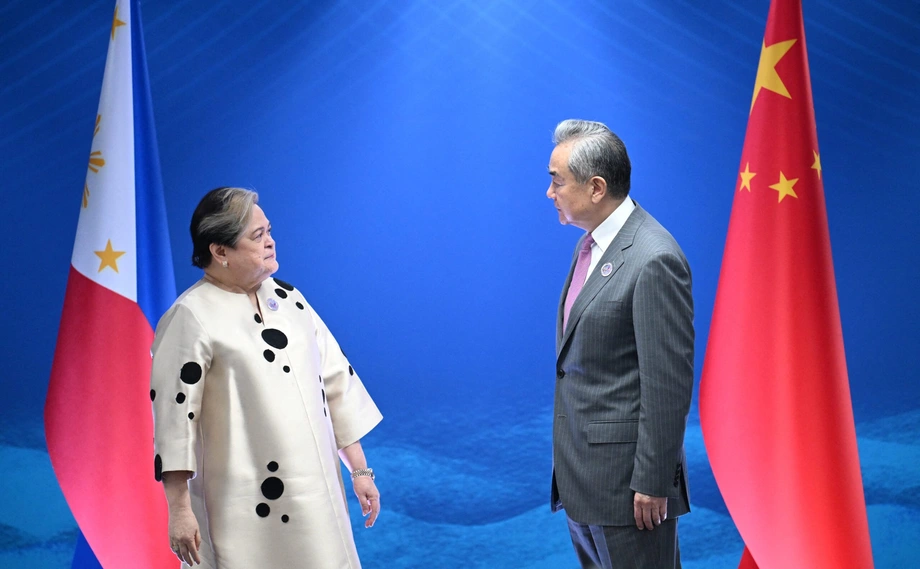
A November call seeks to contain a widening dispute
The Philippines and China have agreed to keep talking and manage their differences peacefully before regional leaders gather in Manila, following weeks of arguments over maritime rights, diplomatic threats and participation in ASEAN defense meetings.
Contents
- A November call seeks to contain a widening dispute
- What the ministers agreed to do
- Beijing seeks restraint, while Manila defends speaking out
- How the October disputes reached the summit agenda
- Business groups put trade and livelihoods at the center
- Reed Bank brings energy resources into the talks
- The One China policy becomes another point of friction
- Manila and Shenzhen offer opportunities for direct engagement
- The code of conduct goal remains out of reach for Manila
- Key Points
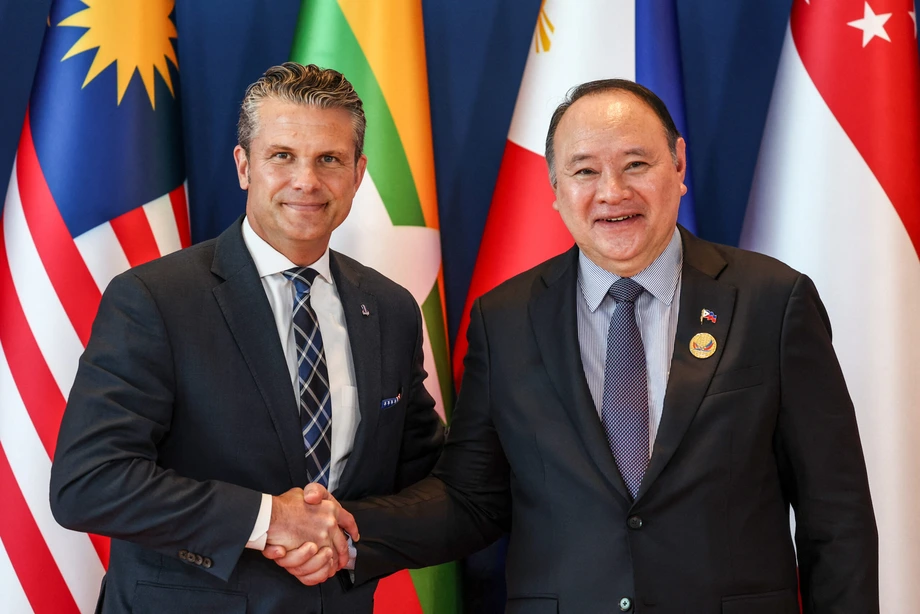
Philippine Foreign Secretary Ma. Theresa Lazaro and Chinese Foreign Minister Wang Yi spoke on November 3, 2026. The Philippine Department of Foreign Affairs announced the conversation on November 4, describing an effort to restore a stable relationship ahead of the 49th Association of Southeast Asian Nations Summit.
The diplomatic push carries a substantial economic stake. Twenty-three Philippine business and sectoral organizations appealed for calmer relations on November 3, citing Philippine Statistics Authority figures showing that China and Hong Kong accounted for nearly 30 percent of Philippine international trade in the first half of 2026. That is close to three in every ten units of trade value.
Manila also faces a diplomatic deadline. The Philippines is hosting the ASEAN summit on November 16 to 18, while the broader Summit and Related Summits program has been described as running from November 15 to 18. Chinese Premier Li Qiang is expected to attend.
The conversation brought agreement on maintaining communication, alongside sharp disagreements about Philippine officials speaking against Beijing. Maritime confrontations continue, and a regional code of conduct for the South China Sea is not expected to be completed by the Manila meetings.
What the ministers agreed to do
The DFA said Lazaro and Wang shared three principles for managing relations: maintain diplomacy and dialogue, avoid actions and rhetoric that needlessly increase tensions, and resolve disputes peacefully while managing differences responsibly.
Lazaro, the Philippine foreign secretary, described the approach in a public statement after the call:
Both sides emphasized the need for continued diplomatic dialogue and the proper management of differences anchored on mutual respect.
Lazaro also called for regular exchanges between senior officials, direct communication between ministries, and the use of established bilateral and regional mechanisms. In practical terms, those channels give officials somewhere to raise complaints and discuss incidents before public arguments become harder to contain.
The DFA said the conversation addressed maritime issues, including Philippine sovereignty, sovereign rights and jurisdiction. It also maintained that diplomacy and practical cooperation could proceed while protecting those rights.
Beijing's account placed greater weight on criticism of Philippine politicians. China's Foreign Ministry said Wang accused some officials of attacking China for political reasons and crossing its red lines. Manila's account focused on restoring balance to the relationship and did not include those accusations.
Beijing seeks restraint, while Manila defends speaking out
Wang, China's foreign minister, described bilateral relations as facing "malicious interference" by certain Philippine politicians. In the Chinese Foreign Ministry's account, he urged Manila to control their conduct:
strengthen restraints on the relevant people, and speak with a unified, reasonable voice on policy towards China
Philippine Defense Secretary Gilberto Teodoro Jr. rejected the suggestion that Manila had been irresponsible. Speaking on November 4, he said:
We are always responsible. We hope we see the same kind of responsibility on the Chinese side. I mean we have been more than responsible. We have been very careful.
Teodoro also questioned what Beijing meant by prudence, asking: "What is prudence? Tell a lie?" He said he takes instructions from President Ferdinand Marcos Jr., rather than Wang, and defended Philippine officials speaking about China's conduct in the West Philippine Sea.
Palace Press Officer Claire Castro supported continued diplomacy while saying Philippine leaders remained responsible for defending the country's rights and interests. Her position leaves room for negotiations and public criticism at the same time, a balance that Beijing's demand for restraint makes difficult.
How the October disputes reached the summit agenda
Chinese Ambassador Jing Quan became a focus of the dispute after responding to Teodoro's description of China as a regional "troublemaker." Jing, China's ambassador to the Philippines, said:
if we want to use force, we may easily win. But no, we will not choose force and we love peace.
Marcos said the remarks sounded like a threat. The DFA summoned Jing in October, while some Philippine senators called for his expulsion. Arguments between the Chinese Embassy and Philippine officials continued through public statements and social media.
A disagreement over China's participation in the ASEAN Defence Ministers' Meeting-Plus then brought the dispute into the Philippines' work as ASEAN chair. The sequence leading to the foreign ministers' call was:
- July 2026: Lazaro and Wang last held formal talks on the sidelines of the ASEAN Foreign Ministers' Meeting, following a confrontation at Ayungin, or Second Thomas, Shoal that injured a Filipino soldier.
- October 23: Teodoro said an invitation to China for the defense meetings had only just been sent by Defense Undersecretary Ignacio Madriaga.
- October 28 and 29: The ASEAN Defence Ministers' Meeting-Plus took place in Cebu. China sent its defense attaché based in Manila rather than Defense Minister Dong Jun.
- November 3: Philippine business organizations appealed for stable relations, and Lazaro and Wang spoke by telephone that night.
- November 4: The DFA announced the call, while Philippine officials defended their right to speak about maritime interests.
Beijing accused Teodoro of obstructing China's participation in the Cebu meetings by delaying the invitation. Teodoro maintained that China had been invited and rejected suggestions that Beijing could speak for other ASEAN members about their concerns.
Business groups put trade and livelihoods at the center
The 23 organizations seeking calmer relations included the Philippine Chamber of Commerce and Industry, Employers Confederation of the Philippines, Federation of Filipino-Chinese Chambers of Commerce and Industry, and Philippine Exporters Confederation.
Their appeal connected diplomatic tensions with trade, investment and economic opportunities. Their figure of nearly 30 percent covers China and Hong Kong together and refers to the first half of 2026. The size of that share explains why Philippine employers and exporters want predictable relations even while territorial and maritime disputes continue.
Businesses making purchases, arranging shipments or considering investments depend on being able to plan. A prolonged political confrontation adds uncertainty to those decisions. The organizations argued that economic cooperation could continue while the Philippines protected its sovereignty.
The DFA welcomed their November 3 appeal, describing it as a constructive contribution supporting candor, composure, sound judgment and measured engagement. Its response connected the commercial demand for stability with the government's stated aim of protecting national interests through diplomacy.
Reed Bank brings energy resources into the talks
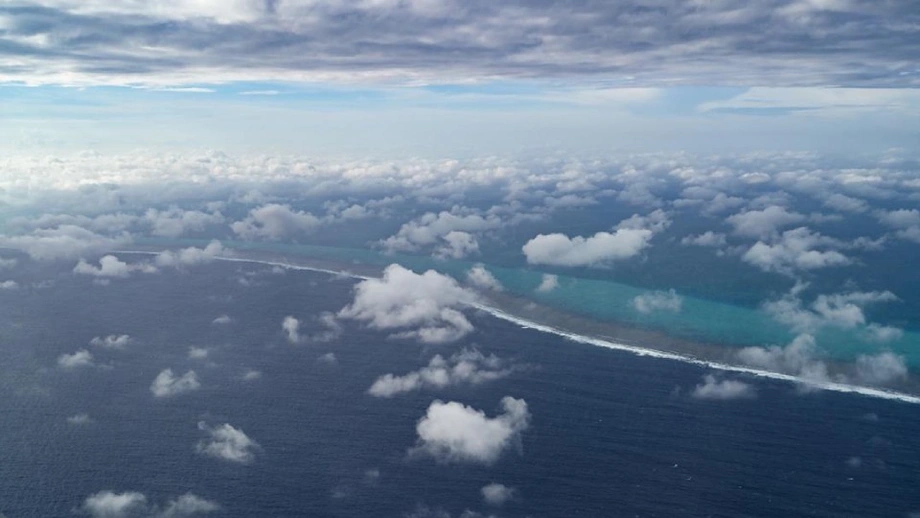
Lazaro and Wang also discussed possibly restarting stalled negotiations on joint oil and gas exploration at Reed Bank, according to a Philippine official who spoke anonymously because the official lacked authority to discuss the matter publicly.
Reed Bank lies within the Philippines' exclusive economic zone, or EEZ, and is also claimed by China. Philippine exploration efforts there have been hampered for years by Beijing's opposition. No date for renewed negotiations or agreement to begin exploration was announced.
An EEZ generally extends up to 200 nautical miles, about 370 kilometers, from a country's coastline under the United Nations Convention on the Law of the Sea. Within that zone, a coastal state has exclusive rights to explore and use natural resources, including fish, oil and gas. Those economic rights differ from full sovereignty over land or territorial waters.
The possible return to energy negotiations gives the diplomatic effort a concrete subject beyond managing official statements. Any discussion of extracting resources at Reed Bank must address how the proposed activity would operate alongside Philippine resource rights and the two governments' competing positions.
The West Philippine Sea includes waters within the Philippine EEZ. An international arbitral tribunal's 2016 ruling rejected the legal basis for China's expansive historic rights claims in the South China Sea. Teodoro invoked that award when questioning whether Beijing's request for restraint meant asking Manila to set aside its rights.
The One China policy becomes another point of friction
Wang also urged the Philippines to implement its One China policy. The DFA reaffirmed the 1975 Joint Communiqué, which established diplomatic relations between Manila and Beijing and remains a foundation of bilateral cooperation and Philippine policy toward China.
Teodoro said his social media page had reposted information about Taiwan and argued that discussing trade, investment or Filipino workers there was consistent with Philippine policy. The defense secretary stated:
The one China policy is for us to decide and we have not recognized Taiwan as an independent country. That is the long and the short of it.
The exchange widened the disagreement beyond maritime incidents. Beijing sought a unified Philippine position on China, while Teodoro defended discussion of the Philippines' economic connections and the interests of Filipinos in Taiwan.
China has also imposed sanctions on Teodoro and his family. Teodoro and Francis Tolentino have faced restrictions on entering mainland China, Hong Kong and Macau. Those measures have added personal penalties to a dispute already involving defense cooperation, maritime resources and diplomatic conduct.
Manila and Shenzhen offer opportunities for direct engagement
Lazaro told Wang that Marcos looked forward to Premier Li Qiang's participation in the 49th ASEAN Summit and Related Summits in Manila. Li has customarily led China's delegation to ASEAN summit meetings in recent years.
Wang, in turn, said China anticipated Marcos attending the 33rd Asia-Pacific Economic Cooperation Economic Leaders' Meeting in Shenzhen later in November. Both ministers assured each other that their leaders would receive appropriate courtesies and assistance during the meetings.
The arrangements matter because the two countries will exchange hosting responsibilities within the same month. Manila must welcome China's delegation while leading ASEAN discussions, and China expects to receive the Philippine president at APEC.
Marcos had called for a reset in relations early in 2026 as the Philippines assumed the ASEAN chairmanship. He had also hoped Chinese President Xi Jinping might visit Manila if negotiations on a South China Sea code of conduct were completed. Xi does not usually attend the ASEAN Summit and Related Summits.
The code of conduct goal remains out of reach for Manila
ASEAN foreign ministers set a goal in 2023 of completing negotiations on a South China Sea code of conduct by 2026. The code is intended to set agreed rules for conduct in the disputed waters. It is not expected to be concluded at the Manila summit.
The Philippines therefore enters its largest event as ASEAN chair seeking better diplomatic conditions while a major regional negotiating goal remains unfinished. Vietnam, Malaysia, Brunei and Taiwan also have claims in the South China Sea, making the dispute wider than the relationship between Manila and Beijing.
Marcos has strengthened existing defense partnerships and expanded the Philippines' network of security relationships while taking a firmer position against Chinese actions at sea. Teodoro has defended that approach and urged future Philippine administrations to avoid abrupt changes that could disrupt defense plans.
The November call gives both governments a commitment to continued communication and peaceful management of differences. The immediate work is concrete: receive visiting leaders, keep diplomatic channels active, and address maritime incidents and resource discussions while officials continue to disagree publicly.
Key Points
- Lazaro and Wang spoke on November 3 and agreed to maintain dialogue, avoid needless escalation and manage disputes peacefully.
- China urged restraint by Philippine politicians; Philippine officials defended their responsibility to speak about maritime rights.
- Twenty-three business and sectoral organizations called for stability, citing China and Hong Kong's nearly 30 percent share of Philippine international trade in the first half of 2026.
- The ministers discussed possibly restarting Reed Bank oil and gas negotiations, according to a Philippine official. No restart date was announced.
- Premier Li Qiang is expected at the Manila ASEAN meetings, while China anticipates Marcos attending APEC in Shenzhen.
- A South China Sea code of conduct is not expected to be completed at the Manila summit.