Cebu talks bring new funding pledge, with no amount announced
The United States has pledged additional funding to modernize the Armed Forces of the Philippines as Manila prepares a proposed P50 billion modernization budget for 2027, P20 billion below the minimum Defense Secretary Gilberto Teodoro Jr. says the program's final phase needs.
Contents
- Cebu talks bring new funding pledge, with no amount announced
- Two US funding channels with different rules
- Manila's proposed increase still falls short
- A wider defense budget squeeze
- The modernization law approaches its final year
- What the command and control agreement would change
- Nine Philippine sites form the facilities network
- A regional framework alongside the Philippine pledge
- Japan talks and the sequence of decisions
- Key Points
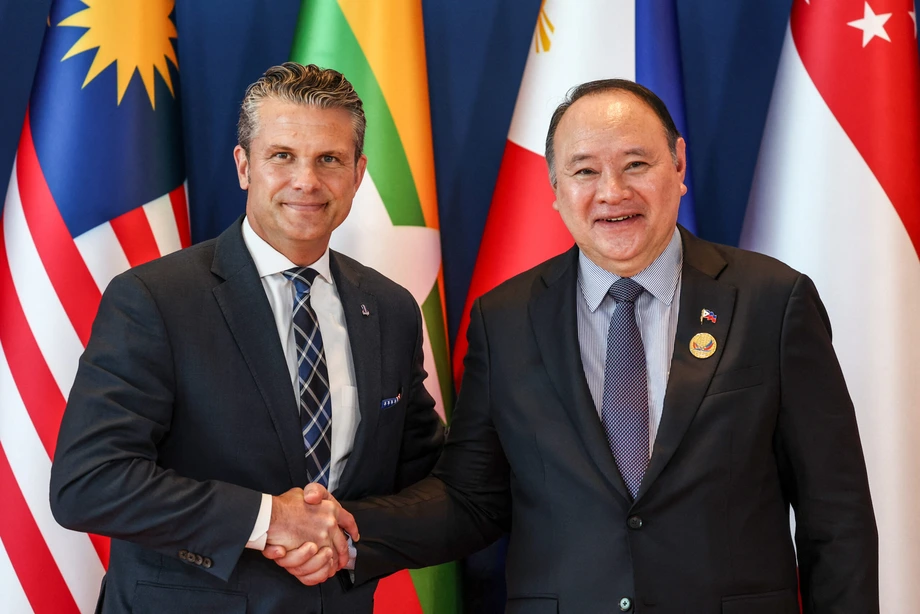
US defense chief Pete Hegseth announced the increase during talks with Teodoro on October 28, 2026, in Lapu-Lapu City, Cebu. The meeting also produced an agreement to improve the systems that allow the two militaries to coordinate operations, alongside discussions about infrastructure and storage facilities at Philippine military sites accessible to US forces.
The US Department of War, as the Trump administration now calls the Pentagon, did not disclose the additional funding amount, release date or projects to receive support. It also gave no starting date or detailed scope for the command and control initiative. Those missing details leave Manila's immediate budget picture unresolved.
The Philippine Information Agency's account of the meetings places the bilateral pledge within a broader US proposal for defense cooperation with Southeast Asia. The Philippines hosted the ASEAN defense ministers' meetings on October 28 and 29 as the regional group's chair for 2026.
For the Philippines, the central issue is how quickly a promise of support can become usable military capability. The Cebu discussions covered money, operational coordination and facilities, while the domestic budget debate exposed the scale of the purchases Manila still hopes to finance.
Two US funding channels with different rules
The newly announced Pentagon security cooperation funding is separate from Foreign Military Financing, or FMF. FMF grants help partner governments acquire defense equipment, services and training, while loans provide financing that must be repaid.
The 2026 US National Defense Authorization Act, signed by President Donald Trump in December 2025, allows up to $500 million annually in FMF for the Philippines from 2026 through 2030, as well as up to $1 billion in direct loans. Across those five years, the annual grant authorization totals as much as $2.5 billion.
Congress appropriated at least $100 million in FMF grants for the Philippines for fiscal year 2026, according to the Congressional Research Service. The difference between an authorization and an appropriation matters: authorization permits a program or funding ceiling, while appropriation supplies budget authority to spend.
The $500 million annual ceiling and the appropriation of at least $100 million therefore describe different stages of the funding process. The Pentagon's new pledge belongs to another funding channel, making its eventual amount and conditions important to understanding how much additional support Manila will receive.
Manila's proposed increase still falls short
The proposed Philippine budget allocates P50 billion to the Revised AFP Modernization Program in 2027, compared with P40 billion in regular funds in 2026. That is an increase of P10 billion, or 25%, but it would meet only about 39% of the Department of National Defense's P126.97 billion modernization request.
The gap between that request and the proposed allocation is P76.97 billion. This helps explain why an increase in both Philippine and US support can coexist with warnings from defense officials that planned purchases remain difficult to finance.
Teodoro gave lawmakers a narrower measure of the immediate pressure at an October 19 Senate finance subcommittee hearing. He said Horizon 3, the modernization program's third and final phase, requires at least P70 billion. If all planned projects were contracted, he said, another P20 billion beyond the proposed P50 billion would be needed for contracts covering several years.
Those contracts spread payments across successive budgets. They allow the government to buy expensive equipment without paying the entire price immediately, but they also commit part of future funding to purchases already agreed. For military planners, the budget question concerns both new orders and payments that would follow them.
A wider defense budget squeeze
The Department of National Defense's proposed total budget for 2027 stands at P324.63 billion, compared with its request for P572.79 billion. The proposal is about 43% below the requested amount, leaving a difference of P248.16 billion.
The department's capital outlay allocation, which covers spending on assets such as equipment and facilities, was set at P32.67 billion against a request for P239.73 billion. That would provide about 14% of the requested capital spending. These department budget figures cover broader categories than the modernization program and need to be understood within their respective budget lines.
Senate President Sherwin Gatchalian said he was pushing for a larger AFP budget to support modernization, readiness and military capabilities, including cyber warfare capacity. His position connects the debate over ships, aircraft and other equipment with the need to protect and operate military digital systems.
The proposed 2027 allocations remain part of the Philippine budget process. The US announcement adds a potential source of support, while lawmakers still face decisions about how much national funding to provide.
The modernization law approaches its final year
Republic Act 10349, the Revised AFP Modernization Act, was enacted in 2012 as a program lasting 15 years and divided into three phases. It is scheduled to conclude in 2027, the same year covered by the budget now under discussion.
Teodoro has urged Congress to repeal the law, arguing that its fixed cycles cannot keep pace with changes in military technology. He has also said that remittances from the Bases Conversion and Development Authority, intended as a funding source, have contributed too little and required support from the national government.
In an August statement, Teodoro challenged the length of the planning cycle:
Which entity works on 15-year horizons in this day and age?
The approaching end of the law's schedule gives the funding debate another dimension. Congress is considering resources for the final scheduled year while the defense secretary is seeking a different legal structure for future modernization. Equipment orders placed now can require payments and support well beyond that year.
What the command and control agreement would change
Hegseth and Teodoro agreed to launch an alliance command and control modernization sprint. Command and control means the systems and procedures military leaders use to receive information, make decisions and direct forces. In a joint operation, those arrangements help two countries coordinate what their units are doing.
The Pentagon described the initiative as a way to improve coordination in real time and strengthen the alliance's ability to keep functioning under pressure. Interoperability, another stated goal of the funding increase, means that different armed forces can communicate and operate together effectively.
The geography helps explain the focus. The First Island Chain runs from Japan through Taiwan and the Philippines toward maritime Southeast Asia. US military planning treats this arc as important to deterring China and making military action against US partners more difficult and costly.
For Manila, the pledge comes amid continuing tensions with China in the West Philippine Sea. Better coordination is intended to connect Philippine military modernization with the practical demands of operating alongside US forces across a large maritime area.
Nine Philippine sites form the facilities network
The two defense chiefs also reviewed implementation of the Enhanced Defense Cooperation Agreement, known as EDCA, particularly investment in critical infrastructure and storage facilities. Signed in 2014, the agreement allows US forces rotational access to agreed Philippine military facilities and permits construction and improvements there.
The Philippines has nine EDCA sites, including four additional locations identified in 2023. Those additions expanded the network from five sites to nine, increasing the number of locations available under the agreement by 80%.
Storage and infrastructure serve a different purpose from purchasing military platforms. They provide places to keep supplies and support forces using the facilities. The Cebu discussions therefore addressed the physical network needed for cooperation as well as funding and the systems used to direct operations.
The agreement's access arrangements are based on Philippine military locations and rotational US use. That structure is central to understanding how the facilities fit into the alliance's plans.
A regional framework alongside the Philippine pledge
Hegseth also proposed a US-ASEAN defense cooperation framework during an informal meeting with ministers from the 11 members of the Association of Southeast Asian Nations. The discussion took place alongside the 20th ASEAN Defence Ministers' Meeting.
Explaining the proposal, Hegseth said:
We propose that we work together to develop the US-ASEAN framework for defense cooperation, a practical framework that guides our cooperation over the next several years,
Participating countries would choose initiatives according to shared interests and regional security priorities. Hegseth identified maritime domain awareness, interoperability and cooperation among regional navies as areas for expanded work. Maritime domain awareness means knowing what is happening at sea, including the location and activity of vessels.
The proposal comes before the 50th anniversary of ASEAN-US relations in 2027. Teodoro pointed to an existing example of cooperation: the second ASEAN-US maritime exercise, held in Indonesia in December 2025 with Philippine Navy participation. He linked secure sea lanes and freedom of navigation to the security and prosperity of communities that depend on the sea.
The wider Cebu meetings included ASEAN's defense ministers and their partners through the ADMM-Plus format. China's defense chief did not attend despite an invitation, placing the US initiatives within a gathering where a major regional military power's top defense representative was absent.
Japan talks and the sequence of decisions
Hegseth's separate meeting with Japanese Defense Minister Shinjiro Koizumi addressed more flexible use of military facilities and exercises involving forces operating from dispersed positions. Spreading units across several locations can make operations less dependent on a single facility.
The Japan discussions also covered expanded US access and presence, and realistic exercises including live fire drills. Japan and the Philippines participate with the United States and Australia in the defense grouping known as the Squad. Recent US exercises involving these countries have included Typhon missile systems and High Mobility Artillery Rocket Systems, or HIMARS.
The Cebu announcements sit within a sequence of Philippine modernization decisions, expanded military access and US funding measures:
- 2012: Republic Act 10349 established the revised modernization program lasting 15 years.
- 2014: The Philippines and the United States signed EDCA.
- 2023: Four additional EDCA locations brought the Philippine total to nine.
- December 2025: Trump signed the 2026 US defense authorization law, including Philippine financing provisions.
- October 19, 2026: Teodoro told a Senate subcommittee that Horizon 3 needs at least P70 billion.
- October 28, 2026: Hegseth announced additional security cooperation funding and agreed with Teodoro to improve alliance command and control.
- 2027: The Philippine budget proposal allocates P50 billion for modernization as the existing program reaches its scheduled conclusion.
For Philippine defense planners, the immediate challenge is to align these separate decisions: domestic appropriations, US assistance, equipment commitments and facilities that allow forces to operate together.
Key Points
- The United States pledged additional AFP modernization support at the October 28 talks in Cebu, without announcing an amount or release date.
- The new Pentagon funding is separate from Foreign Military Financing grants and loans.
- Manila proposes P50 billion for modernization in 2027, up 25% from regular funding in 2026 but below defense officials' stated needs.
- Hegseth and Teodoro agreed to improve command and control and reviewed infrastructure at nine EDCA sites.
- A proposed US-ASEAN defense framework would let participating countries choose cooperation initiatives based on shared priorities.
- The Philippine modernization law's schedule ends in 2027, while Teodoro is seeking its repeal.