Formaldehyde found in every heated tobacco product tested
South Korea has published its first detailed chemical test results for 465 tobacco products, finding formaldehyde in all 104 heated tobacco products examined and in the liquid from 99 of 105 electronic cigarettes. The disclosure, announced on October 29, 2026, accompanies a plan to expand testing, require companies to explain why they use each ingredient and bring forward testing requests for new products by as much as 17 months.
Contents
- Formaldehyde found in every heated tobacco product tested
- What the cigarette tests found
- Heated tobacco and liquid products showed different patterns
- Why the figures can differ from cigarette packs
- The law behind the disclosure
- Companies will have to explain their ingredients
- More products and additives enter the programme
- Key dates in the testing rollout
- Tobacco use trends sharpen the policy debate
- What changes for consumers and tobacco companies
- Key Points
The Ministry of Health and Welfare and the Ministry of Food and Drug Safety approved the First Master Plan for Tobacco Harmfulness Management for 2027 to 2031 after review by the Tobacco Harmfulness Management Policy Committee. By 2030, authorities intend to test about 50 substances in conventional cigarettes and heated tobacco products, up from 44, and about 30 in liquid electronic cigarettes, up from 20.
The initial disclosure covers products from 20 manufacturers and importers: 256 conventional cigarettes, 104 heated tobacco products and 105 liquid electronic cigarettes. Conventional cigarettes accounted for about 55% of the products examined, calculated from 256 out of 465.
Consumers can now look beyond the nicotine and tar figures printed on cigarette packs to see information about individual products and chemicals such as benzene, cadmium and formaldehyde. The International Agency for Research on Cancer classifies these substances as Group 1 carcinogens, meaning there is sufficient scientific evidence that they cause cancer in humans.
Oh Yu-kyung, minister of food and drug safety, described the purpose of the disclosure:
This disclosure is the first step toward transparently informing the public about harmful substances contained in tobacco products, based on scientific test results.
What the cigarette tests found
Authorities identified 11 Group 1 carcinogens across the 256 conventional cigarette products. Four substances, formaldehyde, benzene, cadmium and 1,3-butadiene, appeared in every product tested. NNN and NNK, carcinogens associated with tobacco, and benzo[a]pyrene were each detected in 255 products.
Formaldehyde measurements ranged from 39.5 to 181 micrograms per cigarette. Nicotine ranged from 0.8 to 2.6 milligrams per cigarette, while tar ranged from 11.7 to 40.4 milligrams. A milligram is one thousandth of a gram; a microgram is one millionth.
Tar is a laboratory measurement of the particles remaining in tobacco emissions after nicotine and water are removed. It combines many substances into one figure. The expanded disclosure gives consumers information about individual chemicals alongside that combined measurement.
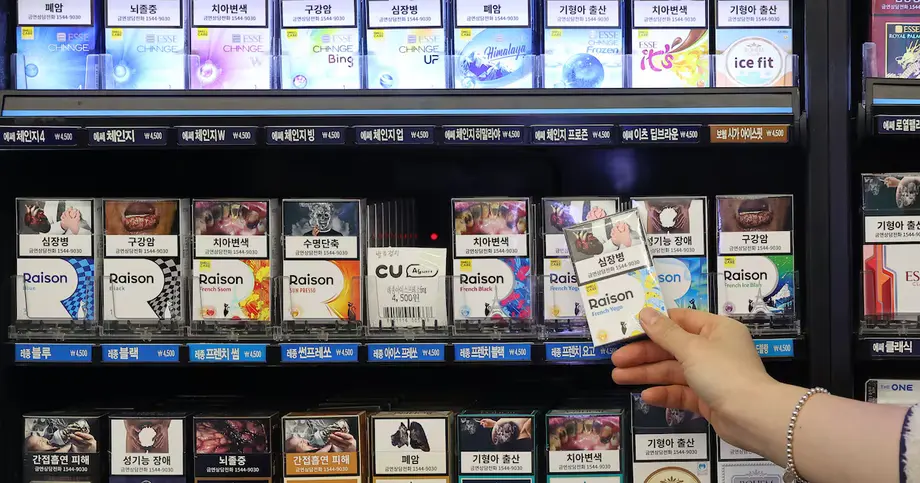
Cigarette packaging previously provided nicotine and tar quantities, together with information identifying the presence of six carcinogens. The new system adds measured concentrations and explanations of how individual substances affect the body. Benzene, for example, can cause leukemia after prolonged exposure, while formaldehyde can irritate the eyes, nose and throat.
Heated tobacco and liquid products showed different patterns
All 104 heated tobacco products contained formaldehyde in their emissions, at 5.4 to 12.1 micrograms per stick. The measured ranges were lower than the 39.5 to 181 micrograms found in conventional cigarette emissions under the testing conditions.
NNN appeared in 87 heated tobacco products and NNK in 88. One product contained benzo[a]pyrene at 3.6 nanograms per stick. A nanogram is one billionth of a gram. Nicotine ranged from 0.1 to 1.2 milligrams per stick and tar from 10.3 to 32.0 milligrams.
Among the 105 liquid electronic cigarette products, formaldehyde appeared in 99, or about 94%. Concentrations ranged from 3.0 to 83.8 micrograms per gram of liquid. NNN appeared in two products, NNK in one and arsenic in two. The arsenic measurements were 27.3 to 28.6 nanograms per gram.
Every liquid product contained nicotine, propylene glycol and glycerin. The latter two are major liquid ingredients that carry other substances. Nicotine concentrations ranged from 5.7 to 20.0 milligrams per gram of liquid.
The distinction between liquid and emissions matters: authorities tested the liquid inside these products, while conventional cigarettes and heated tobacco products were assessed through the emissions generated during use. Government researchers plan to develop standard devices and methods for testing electronic cigarette emissions too.
Why the figures can differ from cigarette packs
Laboratories used an intensified collection method recommended by the World Health Organization and included in International Organization for Standardization standards. For conventional cigarettes, the procedure blocks tiny ventilation holes in the filter while collecting smoke, helping the test reflect smoking behaviour more closely.
The nicotine and tar figures printed on cigarette packs come from a different collection method. The intensified procedure can produce higher readings, so consumers may see a substantial gap between the new database and the packaging for the same product. Authorities plan to consider changes that make the two forms of information more consistent.
Across the testing programme, laboratories examined 46 distinct substances after removing overlaps between the lists for different product categories. Conventional cigarettes and heated tobacco products each had a testing list of 44 substances; liquid electronic cigarettes had a list of 20. The earlier lists included carbon monoxide for cigarettes and heated tobacco, and propylene glycol for liquids.
Some heated tobacco measurements for benzene, 1,3-butadiene and cadmium fell below the quantification limit. That term means the amount was below the level at which the equipment could reliably assign a precise quantity.
Health risk depends on exposure to several chemicals together, how much tobacco a person uses, how long they use it and how they inhale. Kim Heon-joo, president of the Korea Health Promotion Institute, also pointed to the importance of using more than one tobacco product when explaining how actual exposure varies between people.
The law behind the disclosure
The tobacco harmfulness law, formally the Act on the Management of Harmfulness of Tobacco, was enacted as Act No. 19815 on October 31, 2023. Its stated purposes include protecting public health and guaranteeing the right to know about tobacco harm. The disclosure system began operating on November 1, 2025.
Article 5 requires the health and food safety ministers to prepare a joint master plan every five years. Article 6 requires annual implementation plans, giving the government a mechanism to turn the broader programme into yearly actions.
Article 11 establishes regular inspections every two years and requires fresh testing without delay when harmful ingredients change after an inspection report is issued. Laboratories must retain their reports for three years. Article 12 requires manufacturers and importers to submit ingredient names and inspection results.
Article 14 directs the food safety minister to review the information and disclose harmful ingredients for each tobacco product in a form that people can easily access. Article 15 allows those findings to be used in health promotion policies.
The policy committee brings together government officials, scientists and consumer representatives. Its 15 members review testing methods, the substances covered and how results are disclosed. The law also sets requirements for laboratories, including equipment, facilities and staff.
Companies will have to explain their ingredients
Manufacturers and importers will face a more detailed reporting system under the new plan. Alongside ingredient names and test results, companies will have to explain the purpose of each ingredient. That would give regulators information about why a substance is used, rather than simply whether it appears on an ingredient list.
Authorities plan unannounced inspections to check for understated quantities and false ingredient reports. Article 21 already gives officials powers to inspect business premises, examine relevant documents and collect samples.
The government also intends to require testing requests for new products within one month after sales begin. Under the existing arrangement described by the ministries, companies could wait until the first six months of the following calendar year. Moving to the shorter deadline could advance a testing request by up to 17 months. The deadline concerns requesting a test; laboratory analysis and government review follow.
The law provides corrective orders for companies that fail to request inspections or submit results. Continued noncompliance, coupled with actual or likely harm to public health, can lead to recall or destruction orders. Certain offences, including false inspection reports and failure to obey corrective orders, carry penalties of up to one year in prison or a fine of 10 million won.
Authorities also plan to monitor advertising that selectively uses chemical readings to mislead consumers. The relevant legal framework includes the Tobacco Business Act, the National Health Promotion Act and the Act on Fair Labeling and Advertising.
More products and additives enter the programme
Synthetic nicotine products were excluded from the first testing round because they fell outside the legal definition of tobacco when the disclosure law began operating. An amendment to the Tobacco Business Act, effective April 24, 2026, brought them within that definition. Testing and public disclosure for these products are scheduled to begin in 2027.
Products labelled as containing no nicotine and products using nicotine substitutes were also outside the initial survey. Authorities plan to complete a harmfulness assessment of nicotine substitutes by December 2026 before discussing regulation across government.
Smokeless tobacco, cigars and waterpipe tobacco will enter the testing programme under the master plan. Researchers will also investigate chemicals generated specifically by heated tobacco and develop methods for identifying additional potentially harmful substances.
Menthol is a particular focus because it appeared as a major additive in company submissions. The government will examine how additives affect product appeal, dependence and health. WHO guidance has described how inhaling menthol together with nicotine may strengthen nicotine's effects.
Restrictions on particular ingredients, including possible bans, remain under consideration. Officials also intend to expand the number of testing institutions, support quality control consistent with international standards and cooperate with WHO on common testing methods.
Key dates in the testing rollout
The programme connects legislation passed in 2023 with testing changes extending to 2031. The first disclosure followed an initial request deadline for existing products and laboratory work during 2026.
- October 31, 2023: The Act on the Management of Harmfulness of Tobacco was enacted.
- November 1, 2025: The disclosure system began operating.
- January 31, 2026: Manufacturers and importers faced the initial deadline to request testing of existing products.
- April 24, 2026: An amendment expanded the tobacco definition to include synthetic nicotine products.
- October 29, 2026: Authorities released results for 465 products and announced the 2027 to 2031 master plan.
- December 2026: Assessment of nicotine substitutes is scheduled for completion.
- 2027: Testing and disclosure for synthetic nicotine products are scheduled to begin.
- 2030: Authorities aim to reach the expanded chemical testing lists and lower adult tobacco use.
The government initially expected the first inspections to conclude around July 2026. The October publication brought the reviewed results into public view through the Ministry of Food and Drug Safety website.
Tobacco use trends sharpen the policy debate
South Korea's conventional cigarette smoking rate fell from 20.3% in 2019 to 17.9% in 2025, a decline of 2.4 percentage points. During the same period, use of any tobacco product rose from 21.6% to 22.1%, an increase of 0.5 percentage points. The figures show why the government's targets cover tobacco products beyond conventional cigarettes.
Quit attempts also declined: the proportion attempting to stop fell from 46.8% in 2020 to 40.6% in 2025. The new master plan sets targets for adult current tobacco product use of 29.0% among men and 6.0% among women by 2030.
Myung Seung-kwon, president of the Korean Association on Smoking or Health, has called for cigarette prices to rise to at least 10,000 won per pack. Kim Yeol, a family medicine professor at the National Cancer Center, has argued for combining chemical disclosure with price policy and using tobacco tax revenue to support quitting.
The standard pack price rose from 2,500 won to 4,500 won in 2015 and has remained there. The Sixth National Health Promotion Plan for 2026 to 2030 sets a policy direction toward an OECD average price of 9,869 won. Health Ministry health promotion division director Jeon Eun-jeong said on October 29 that the government was not currently considering a price increase. No increase amount or implementation date has been decided.
What changes for consumers and tobacco companies
Consumers can find the results through the Ministry of Food and Drug Safety website under policy information, hazard information and tobacco harmfulness information. Authorities intend to present the findings in accessible language and use them in smoking prevention education and campaigns supporting people who want to quit.
Support includes the national quit smoking counselling line at 1544-9030, public health centre clinics and treatment services at medical institutions. These services connect the disclosure programme with practical help for tobacco users.
Tobacco companies are continuing to expand products that heat tobacco or liquid. Philip Morris Korea introduced VEEV in August 2026, while BAT Rothmans launched glo Hyper Pro Plus that month. Their ingredient choices and launch schedules will face closer scrutiny as testing and reporting requirements expand.
Kim Heon-joo has placed Korea's programme within a wider international movement, citing 183 countries that have ratified the WHO Framework Convention on Tobacco Control and an expansion of the US Food and Drug Administration's harmful and potentially harmful constituent list from 93 to 111 substances. Korea's plan focuses on building testing capacity, widening coverage and using the findings in public health policy.
The practical task now is to make repeat inspections useful: track changes in product chemistry, explain the measurements consistently and connect public information with prevention and quitting services. Annual implementation plans will provide the framework for carrying out those commitments.
Key Points
- South Korea released its first detailed harmful substance results for 465 tobacco products from 20 companies.
- Formaldehyde appeared in all 104 heated tobacco products and 99 of 105 electronic cigarette liquids tested.
- Testing covered 46 distinct substances across the three product categories.
- The government plans wider chemical testing and new coverage for smokeless tobacco, cigars and waterpipe tobacco.
- Companies will have to explain ingredient purposes, and new product testing requests would be due within one month of launch.
- Synthetic nicotine testing and disclosure are scheduled to begin in 2027.
- Ingredient restrictions are under consideration; the government says it is not currently considering a cigarette price increase.