Military patrols follow a tense week of diplomacy
China sent naval and air forces on combat readiness patrols around Scarborough Shoal on Friday, October 30, as the Philippines investigated a Chinese vessel carrying unidentified equipment inside the disputed feature's lagoon. The operations followed regional defence meetings in Cebu that ended with Beijing and Manila publicly disputing how China had been treated.
Contents
- Military patrols follow a tense week of diplomacy
- What China says its forces are doing
- A vessel inside the lagoon draws Philippine scrutiny
- Nine other Chinese vessels observed nearby
- Defence talks end with competing accounts
- Why the location and the 2016 ruling matter
- Talks and patrols have continued side by side
- How the latest developments unfolded
- Key Points
The Chinese People's Liberation Army's Southern Theater Command described the patrols as a response to Philippine actions and said it had strengthened its presence around the shoal. The China Coast Guard announced law enforcement patrols the same day and said it had taken action against vessels it accused of illegally infringing Chinese rights.
Neither Chinese body identified the specific Philippine action that prompted Friday's operations. The Philippine embassy in Beijing and the Philippine military did not immediately respond to requests for comment.
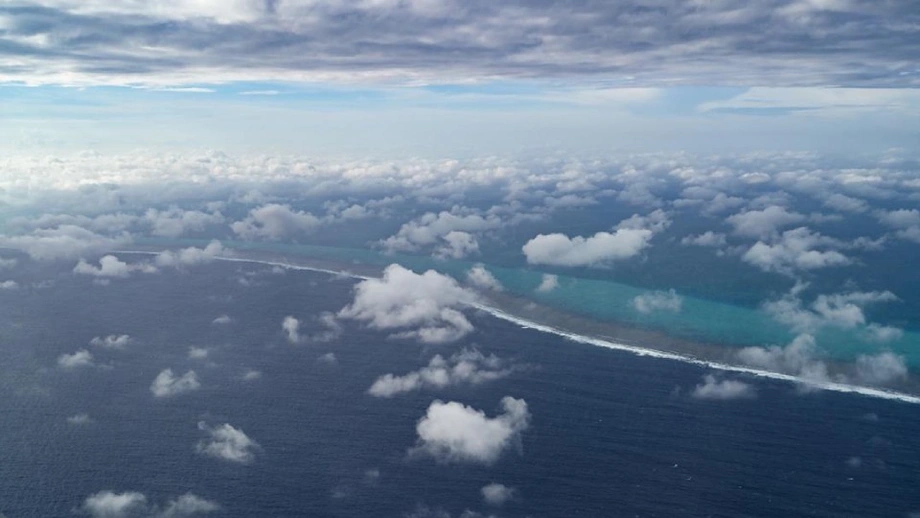
Scarborough Shoal, called Huangyan Dao by Beijing and Bajo de Masinloc by Manila, lies about 124 nautical miles west of the Philippine province of Zambales, inside the Philippines' exclusive economic zone. Both countries claim the shoal, making the presence and conduct of ships there a recurring source of friction.
The latest developments bring together three pressures on the relationship: a growing Chinese patrol presence, Philippine scrutiny of an unfamiliar vessel, and a diplomatic argument immediately after a regional security gathering. For the ships operating around the shoal, those disputes concern practical matters such as where they can sail, what activities they can carry out and which authorities seek to control their movements.
What China says its forces are doing
The Southern Theater Command said Friday's naval and air patrols covered what Beijing describes as the shoal's territorial waters, airspace and surrounding areas. It presented the operation as a way to strengthen control, defend Chinese sovereignty and security, and maintain peace and stability in the South China Sea.
The command described the October 30 patrols as:
a necessary countermeasure in response to the Philippines' rights violation and provocative acts.
The China Coast Guard used similar language about its own operation. It said patrols around the shoal had been strengthened throughout October and that vessels accused of infringement had been dealt with according to Chinese laws and regulations.
Military descriptions give different starting points for the increased activity. One Southern Theater Command statement said naval and air patrols had been strengthened since September; the account of the October 30 operation said patrols had increased since early October. Both describe sustained activity across several weeks rather than a single deployment on Friday.
The military and coast guard have different roles. Naval and air forces conduct military operations, while a coast guard normally carries out maritime policing and enforcement. Their parallel announcements show Beijing using both military presence and law enforcement authority to press its position around the same disputed shoal.
A vessel inside the lagoon draws Philippine scrutiny
The Philippine Coast Guard is examining a Chinese vessel first monitored on October 3. During a maritime awareness flight on October 29, personnel saw it towing a smaller boat and carrying an orange object shaped like a boat, fitted with sensors and antennas.
Rear Admiral Jay Tarriela, the Philippine Coast Guard spokesperson for the West Philippine Sea, described the investigation during an interview with state broadcaster PTV:
We're trying to track what is the capability of this watercraft,
Tarriela said the coast guard would like to believe the vessel was among the support craft used by the Chinese government. Its configuration had changed several times since it was first observed, prompting closer examination of its equipment and possible uses.
The coast guard is assessing whether the equipment could support underwater operations. Its function remains unidentified, and the assessment is continuing without an announced completion date. Philippine officials are also checking the vessel's identity, because the markings on its bow and its International Maritime Organization identification numbers do not match known Chinese research ships.
The distinction matters for maritime monitoring: identifying a hull is only one part of understanding what a vessel is doing. Equipment carried on board, changes to its arrangement and the smaller craft working alongside it can help authorities assess its operational role.
Nine other Chinese vessels observed nearby
The same Philippine flight on October 29 tracked three China Coast Guard ships, five vessels identified by the Philippine coast guard as Chinese maritime militia, and one Chinese navy warship around the shoal. Those categories add up to nine vessels, alongside the separately described craft under investigation.
The Philippine account provides a more detailed picture of the ships present than China's general patrol announcements. Coast guard vessels accounted for three of those nine ships, while the five vessels classified as maritime militia formed the largest group. Maritime militia is a term used for civilian vessels organised or used to support state objectives at sea.
The Philippine observations concern activity on October 29, while the Chinese military and coast guard announcements concern patrols on October 30. The two dates place the sightings and the announced operations close together during a period in which China says it has increased its presence.
Manila has accused Chinese vessels of dangerous manoeuvres and of using water cannon to interfere with Philippine resupply missions in contested waters. A Chinese water cannon attack on a Philippine ship was also reported near Scarborough Shoal in July. These confrontations make ship movements and equipment a matter of safety as well as sovereignty.
Philippine concerns extend to other disputed features. In March, Manila accused a Chinese navy ship of provocative target tracking near Sabina Shoal. That allegation involved a different location, but it helps explain why Philippine authorities are closely examining what Chinese ships can do as well as where they operate.
Defence talks end with competing accounts
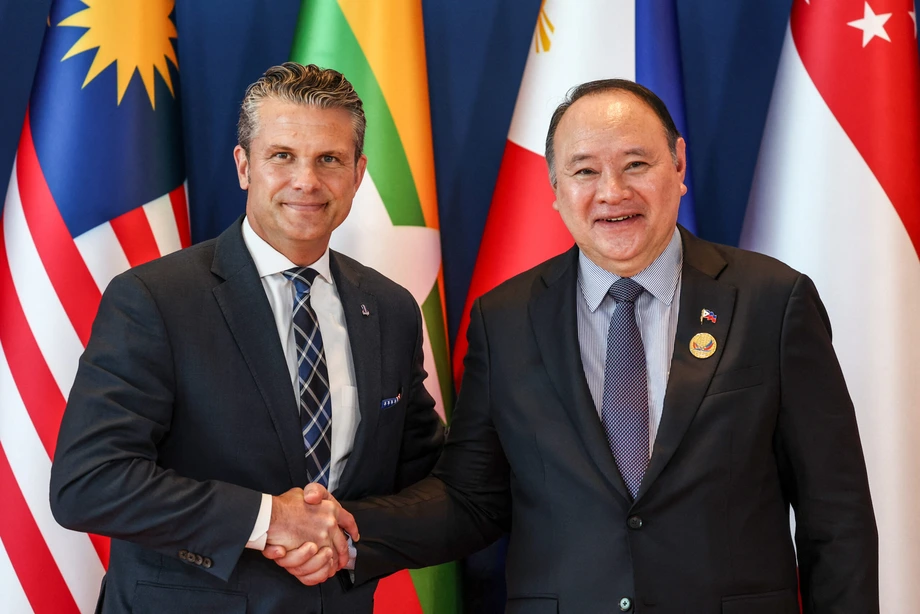
The patrols came a day after the conclusion of two days of ASEAN defence meetings in Cebu. China accused an unnamed Philippine politician of obstructing its participation, while Philippine Defence Secretary Gilberto Teodoro said Beijing had been invited and its representative had been able to speak.
The dispute at Cebu talks centred partly on China's decision to send its embassy defence attaché, Yang Lei, to the 13th ASEAN Defence Ministers' Meeting-Plus instead of Defence Minister Dong Jun. It was China's lowest level of representation since the forum began in 2010.
Chinese defence ministry spokesperson Zhang Xiaogang accused the Philippines of violating ASEAN's principle of reaching agreement through consultation. He also said several ASEAN countries had questioned Manila's actions. Teodoro said no ASEAN member had raised such concerns with him.
Teodoro, who chaired the meetings, rejected Beijing's description of the regional bloc's position:
It is China's position; it is not ASEAN's position.
ASEAN, the Association of Southeast Asian Nations, brings regional governments together for diplomacy and security discussions. Its defence forum gives China, the Philippines and other participating countries a place to explain their positions, even while their vessels confront each other at sea.
The Cebu gathering ended with the Philippines handing leadership of ASEAN's defence agenda to Singapore for 2027. Manila also renewed its support for the 2016 South China Sea arbitration ruling, keeping the legal dispute alongside the immediate argument over China's participation.
Why the location and the 2016 ruling matter
Scarborough Shoal sits inside the Philippines' exclusive economic zone, an area that generally extends up to 200 nautical miles from a country's coast. Within that zone, the coastal state has rights to explore, use and manage natural resources, including fish and resources beneath the seabed. Other countries retain navigation rights.
Sovereignty over a land feature concerns who owns that territory. An exclusive economic zone concerns specified rights in the surrounding sea. Those two legal issues help explain why both governments can describe the same patrol in sharply different terms: Beijing speaks of defending its territory, while Manila invokes its maritime rights.
China's broader claim, commonly illustrated by a nine dash line, extends across most of the South China Sea and overlaps maritime zones claimed by the Philippines, Vietnam, Malaysia, Brunei and Indonesia. The line has been central to disputes over fishing, energy resources and government activity at sea.
In 2016, an international arbitral tribunal ruled that China's sweeping claim to historic rights within that line had no legal basis where it exceeded the rights allowed by the United Nations Convention on the Law of the Sea. The tribunal addressed maritime entitlements and conduct; ownership of Scarborough Shoal remains disputed. Beijing rejected the ruling.
The legal disagreement therefore continues alongside the physical contest over access. China's patrol statements assert its authority around the shoal, while the Philippines uses surveillance flights and diplomatic statements to monitor and challenge Chinese activity in waters where Manila asserts its own rights.
Talks and patrols have continued side by side
China also announced naval, air and coast guard patrols around Scarborough Shoal on Sunday, March 29. That operation followed renewed talks between Beijing and Manila covering the disputed waters and possible cooperation on oil and gas.
The Philippine foreign ministry described those discussions as the first broader examination of bilateral relations since March 2023, with building confidence among their aims. The combination of talks and patrols shows that diplomatic engagement and maritime pressure have been taking place at the same time.
Oil and gas cooperation would require the two governments to work through disagreements over rights to resources. Patrols address a more immediate issue: who is present at sea and how each government responds to the other's ships. Progress in one area can therefore coexist with confrontation in another.
The October dispute also followed a rebuke over force remarks earlier in the month. On October 15, the Philippine Department of Foreign Affairs criticised Chinese Ambassador Jing Quan after he said China could easily win if it chose to use force, while also saying Beijing would not do so because it valued peace.
At that time, Teodoro said diplomatic and coast guard channels remained open, although Manila had suspended direct military communications over concerns about Beijing's use of them. Those remaining contacts are especially relevant when military ships, coast guard vessels and other craft operate near one another in contested waters.
How the latest developments unfolded
The October sequence connects an investigation lasting several weeks with a new patrol announcement and a diplomatic confrontation. The key dates are:
- October 3: The Philippine Coast Guard first monitored the Chinese vessel now being examined inside Scarborough Shoal's lagoon.
- October 15: The Philippine foreign affairs department rebuked China's ambassador over remarks about the possible use of force.
- October 29: A Philippine surveillance flight observed the vessel's equipment and tracked three Chinese coast guard ships, five vessels classified as maritime militia and one navy warship.
- October 29: The ASEAN defence meetings in Cebu ended amid Chinese and Philippine disagreement over Beijing's participation.
- October 30: China's Southern Theater Command announced naval and air patrols around Scarborough Shoal, while the China Coast Guard announced law enforcement patrols.
China describes its increased presence as necessary to defend sovereignty and respond to Philippine actions. The Philippines is continuing to assess the vessel inside the lagoon while contesting Beijing's wider claims. The immediate situation combines sustained patrol activity with an unresolved investigation into equipment already operating at the shoal.
Key Points
- China announced naval, air and coast guard patrols around Scarborough Shoal on October 30.
- Beijing accused Manila of provocation without identifying the specific action behind Friday's patrols.
- The Philippine Coast Guard is investigating sensors and antennas carried by a Chinese vessel first observed on October 3.
- A Philippine flight on October 29 tracked nine other Chinese vessels across navy, coast guard and maritime militia categories.
- The operations followed a dispute over China's participation in ASEAN defence meetings in Cebu.
- Scarborough Shoal lies inside the Philippine exclusive economic zone, while sovereignty over the feature remains contested.