A late launch brings a crucial addition to NavIC
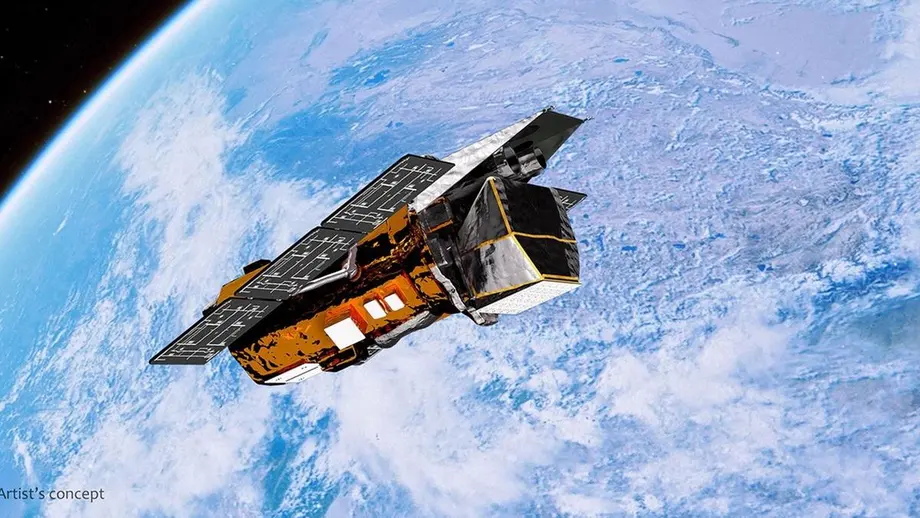
India's GSLV-F18 rocket launched the 2,250-kilogram NVS-03 navigation satellite from Sriharikota at 11:51 p.m. IST on October 30, 2026, with ISRO Chairman V. Narayanan announcing that the mission restored NavIC to its minimum operational configuration of four satellites.
Contents
- A late launch brings a crucial addition to NavIC
- What happened during the flight?
- How NVS-03 fits into the rebuilding programme
- Why the atomic clock matters
- What the new L1 signal changes
- Where NavIC is designed to work
- Why independent navigation matters for security
- A faster turnaround for GSLV
- India welcomes the launch, with more satellites to follow
- Key Points
The rocket lifted off from the Second Launch Pad at the Satish Dhawan Space Centre in Andhra Pradesh. About 18 minutes later, it released NVS-03 into an elliptical geosynchronous transfer orbit, the starting point for the satellite's journey to its working orbit.
NVS-03 carries an Indian atomic clock alongside procured atomic clocks and adds an L1 navigation signal to NavIC's existing L5 and S signals. Those changes address two practical needs: keeping extremely accurate time and making India's navigation signals usable by a wider range of compatible receivers.
Narayanan, who heads the Indian Space Research Organisation, described the result after the launch:
"With the success of this launch, the NavIC constellation is restored to the minimum operational configuration with 4 satellites...NavIC constellation is a strategic national asset that provides the nation independent access to position, navigation and timing services. The NavIC satellites are also used for civilian applications," he said.
His assessment gives the mission immediate importance for India's navigation network. Earlier estimates had placed restoration of minimum capacity after the launches of NVS-04 and NVS-05. Narayanan's announcement instead puts that threshold at NVS-03, while a constellation of around six to seven working satellites remains the objective for stronger reliability and backup.
What happened during the flight?
GSLV-F18 placed NVS-03 into its intended transfer orbit after separation from the rocket's cryogenic upper stage, about 1,105 seconds after liftoff. Because the launch took place just before midnight, that separation occurred early on October 31 in India.
The mission's transfer orbit was described as having a perigee of 170 kilometres and an apogee of 37,023 kilometres. Perigee is the nearest point to Earth; apogee is the farthest. The large difference means the satellite initially follows a stretched oval rather than a circle.
A transfer orbit allows a rocket to deliver a heavy satellite without carrying it all the way to its final operating position. The satellite then uses its own propulsion system to change its orbit before beginning routine service.
ISRO announced successful placement in the intended orbit. A date for NVS-03 to complete its orbital manoeuvres and enter routine navigation service was not given. Those steps are particularly important after the propulsion problem that prevented its predecessor, NVS-02, from reaching its planned orbit.
How NVS-03 fits into the rebuilding programme
NVS-03 is the third satellite in India's new generation of navigation spacecraft. It is also designated IRNSS-1L and is described as the twelfth satellite launched for the Indian Regional Navigation Satellite System, the programme now known as NavIC.
NavIC stands for Navigation with Indian Constellation. Its recent launch history shows why adding spacecraft and keeping them healthy are equally important:
- May 2023: ISRO launched NVS-01, the first satellite in the new generation.
- January 2025: NVS-02 launched, but its onboard engines failed to fire for the manoeuvres needed to raise its orbit.
- September 4, 2026: GSLV-F17 launched the EOS-05 imaging satellite, beginning the 56-day interval before the next GSLV mission.
- October 30, 2026: GSLV-F18 lifted off carrying NVS-03, which entered its intended transfer orbit shortly after midnight.
NVS-04 and NVS-05 are expected to follow as ISRO continues renewing the constellation. No launch dates were announced for them.
Four operational satellites are theoretically sufficient for core navigation calculations. A receiver needs several independent signals to work out its position and correct its own clock. A network with six or seven usable satellites offers more choices and spare capacity when a spacecraft is unavailable or needs maintenance.
Why the atomic clock matters
NVS-03's Indian atomic clock tackles one of the programme's most persistent technical weaknesses. Failures involving imported atomic clocks have reduced the usefulness of several earlier navigation satellites.
A navigation satellite broadcasts a signal containing precise timing information. A receiver, such as the navigation equipment in a vehicle, uses the time taken for signals to arrive from several satellites to calculate distance and then position.
Radio signals travel at the speed of light, so even an extremely small timing error can create a meaningful positioning error. Atomic clocks keep time using the stable behaviour of atoms, giving navigation systems the accuracy that ordinary clocks cannot provide.
NVS-03 carries both an indigenous clock and procured clocks. The combination gives ISRO experience with Indian timing technology while retaining other clocks aboard the spacecraft. NVS-01 and NVS-02 also carried indigenous atomic clocks, making this the third such clock sent into space in the NVS series.
Narayanan said an indigenous atomic clock had been successfully placed in orbit. For India, developing this component at home also creates greater control over a part whose failure can affect the usefulness of an entire navigation satellite.
What the new L1 signal changes
NVS-03 adds the L1 navigation signal alongside NavIC's existing L5 and S signals. These names identify radio frequency bands, the parts of the radio spectrum used to transmit navigation information.
L1 is widely used in satellite navigation equipment. Adding it gives manufacturers another way to include NavIC support in compatible smartphones, vehicle receivers and other navigation devices. The benefit reaches users through equipment designed to receive and process those signals.
NavIC and the American Global Positioning System can operate together in a compatible receiver. A device can use signals from more than one constellation, giving it more satellites to draw on when calculating a position.
India's aim is to expand its own navigation capability while retaining that ability to work with other systems. For a driver, ship operator or survey team, the practical value lies in access to useful signals and dependable positioning rather than the name of the constellation supplying each measurement.
Where NavIC is designed to work
NavIC is designed to cover India's landmass and an area extending about 1,500 kilometres beyond its geopolitical boundary. Its focus is India and the surrounding region, including nearby waters where navigation matters to fishing boats and commercial shipping.
The network provides two services. Standard Positioning Service serves general users, while Restricted Service is intended for authorised users, including security and government needs.
Position, navigation and timing describe three related jobs. Position tells a user where they are. Navigation helps them travel to a destination. Timing provides an accurate time reference that equipment can use to coordinate its work.
Potential civilian uses include locating vehicles, supporting rail and aviation operations, guiding agricultural drones and helping rescue teams reach an incident. At sea, reliable position information can help fishing crews follow routes and return to the correct location.
School students attended the launch at Sriharikota, where the mission offered a visible connection between a rocket flight and services used on the ground. The spacecraft's work will take place far from view, through timing messages received by compatible equipment.
Why independent navigation matters for security
Former Defence Research and Development Organisation scientist Ravi Gupta said before the launch that a fourth satellite was expected to restore NavIC's operational capability. He linked reliable navigation to the needs of aircraft, missiles, submarines and ships.
Gupta argued that independence also requires control over the technology inside the system. He described the supply chain and the ability to inspect critical components as central requirements:
"The important aspect of this kind of system is that the components which are going into this system, we should have complete control over the supply chain; of course, the design has to be ours. And then, if we're including any system, we should have the capability to examine them and inspect them, so that we can completely depend on them and rely on them," he said.
Foreign navigation services remain useful to India, but their operation is controlled elsewhere. An Indian constellation gives the country direct responsibility for its satellites, signals and service priorities, including those intended for authorised security users.
The mission brings together two parts of that effort: adding a spacecraft to the network and placing another Indian atomic clock in orbit. Sustaining the capability also requires working propulsion, healthy clocks, functioning ground systems and enough satellites to keep services available during failures.
A faster turnaround for GSLV
GSLV-F18 was the twentieth flight of India's Geosynchronous Satellite Launch Vehicle. The rocket stood nearly 50 metres tall and weighed about 420 tonnes at liftoff.
The vehicle uses three stages, with a cryogenic upper stage powered by liquid hydrogen and liquid oxygen kept at extremely low temperatures. That upper stage provides the final push needed to reach the satellite's transfer orbit.
Narayanan said the 56 days between successive GSLV missions was the shortest interval achieved so far. He also said EOS-05, launched aboard GSLV-F17 on September 4, was functioning as intended and supplying data.
GSLV Project and Mission Director Thomas Kurian gave two further measures of the preparation effort: the NVS-03 launch campaign took 47 days, and the four L40 strap-on boosters were prepared in 37 days. The boosters provide extra thrust during the early part of flight.
Those figures describe different parts of the work. The 56 days measure the interval between launches, while the 47 days cover the mission's launch campaign and the 37 days cover preparation of the four boosters. Together, they show the pace at which ISRO prepared another flight of the same rocket family.
India welcomes the launch, with more satellites to follow
Prime Minister Narendra Modi congratulated ISRO and connected NVS-03 to India's effort to develop critical technology domestically. In his message after the launch, he said:
"This mission marks an important step in strengthening NavIC, our indigenous satellite navigation system. Equipped with enhanced capabilities, NVS-03 will further our pursuit of self-reliance in critical technologies and support navigation services that benefit our people. The dedication and ingenuity of our space scientists continue to make our nation proud," he wrote.
Union Minister Jitendra Singh also congratulated the agency and credited recent space reforms with contributing to India's growing capabilities.
ISRO's next tasks are concrete: move NVS-03 towards its working orbit, check its systems and continue building the constellation through later NVS missions. Narayanan's announcement places NavIC back at a minimum configuration of four satellites. The planned larger network would give India more capacity to maintain navigation services when individual spacecraft develop problems.
Key Points
- GSLV-F18 launched NVS-03 from Sriharikota at 11:51 p.m. IST on October 30, 2026.
- The 2,250-kilogram satellite entered its intended elliptical transfer orbit about 18 minutes later.
- ISRO Chairman V. Narayanan said NavIC had regained its minimum operational configuration of four satellites.
- NVS-03 carries an Indian atomic clock alongside procured clocks and adds L1 signals to the existing L5 and S signals.
- NavIC is designed to serve India and an area extending about 1,500 kilometres beyond its boundary.
- NVS-04 and NVS-05 are expected to continue the renewal programme; launch dates were not announced.