A mission focused on aid and access
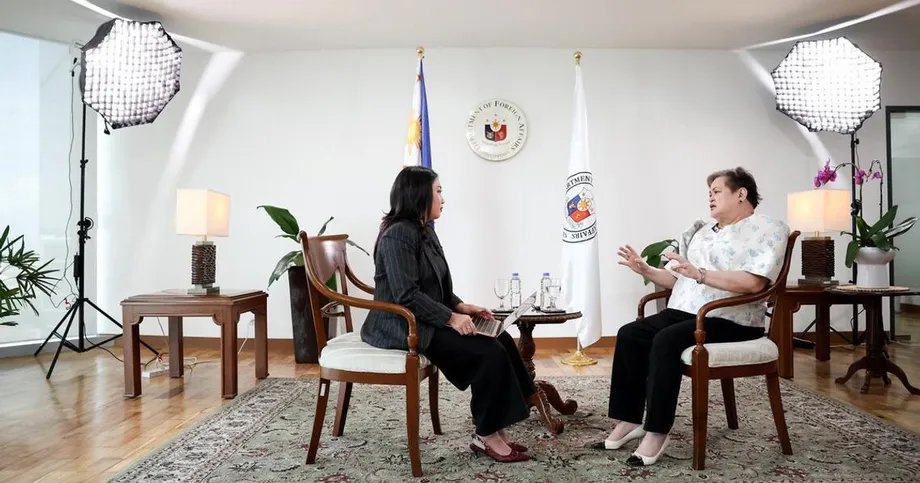
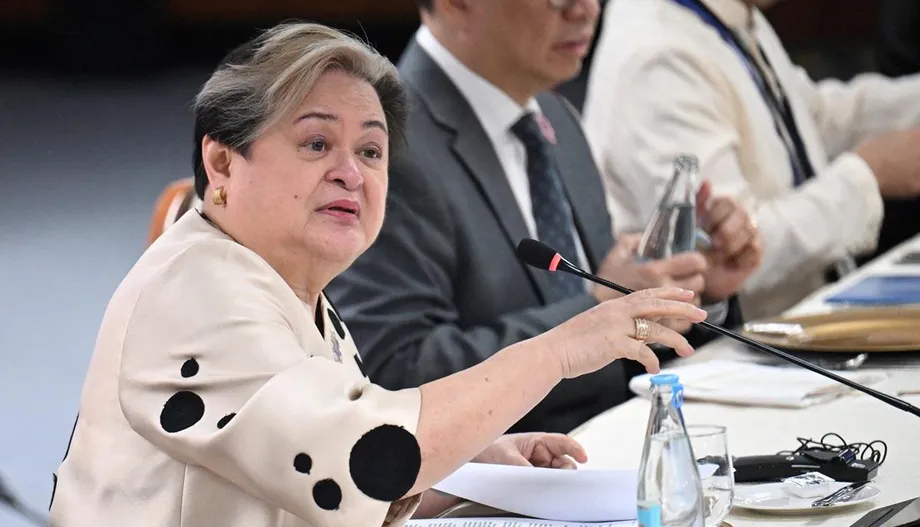
Philippine Foreign Secretary Maria Theresa Lazaro will visit Myanmar's capital, Naypyidaw, on October 28 and 29 as ASEAN's special envoy, with humanitarian assistance on the agenda and no confirmed permission to meet detained former civilian leader Aung San Suu Kyi. The visit comes days after Suu Kyi spoke to her son for the first time in more than five years.
Contents
- A mission focused on aid and access
- What Lazaro is going to discuss
- The five commitments behind the visit
- Myanmar disputes ASEAN's framework
- Why a meeting with Suu Kyi matters
- A rare call gives her son some reassurance
- Clothing requests and an undisclosed residence
- The diplomatic opening before Manila
- How the events fit together
- Key Points
Thai Foreign Minister Sihasak Phuangketkeow announced the trip in Bangkok on Tuesday, saying arrangements were still being worked out. Lazaro is expected to discuss humanitarian aid with senior officials and report to ASEAN foreign ministers in Manila before the bloc's leaders meet.
The Philippines, which holds ASEAN's rotating chairmanship in 2026, has repeatedly sought access to Suu Kyi without success. Her detention puts a concrete issue at the centre of the mission: ASEAN's peace plan calls for its envoy to meet all parties concerned, while Myanmar's authorities continue to control contact with the leader removed in the February 2021 coup.
What Lazaro is going to discuss
Lazaro said in July that she intended to visit Myanmar this year to expand access to humanitarian assistance. Her planned talks therefore concern a practical task: securing arrangements that allow aid to reach people affected by the civil war that followed the military takeover.
Sihasak, speaking alongside his Malaysian counterpart, described the visit as an opportunity to bring results back to the regional bloc. He said:
She is going there as the ASEAN special envoy, and we hope that there'll be good progress and some progress for her to report on when the ASEAN foreign ministers meet in Manila prior to the ASEAN Summit.
ASEAN, the Association of Southeast Asian Nations, has tied Myanmar's participation in its highest level meetings to progress on ending the crisis. Lazaro is travelling as the bloc's representative, giving her talks a regional purpose beyond normal discussions between the Philippines and Myanmar.
The five commitments behind the visit
ASEAN leaders adopted the Five-Point Consensus in April 2021, two months after the coup. It connects an end to violence with political talks, mediation and humanitarian relief. Its five commitments are:
- An immediate end to violence, with all parties exercising restraint.
- Constructive dialogue among all parties concerned to seek a peaceful solution.
- Mediation led by a special envoy of the ASEAN chair, assisted by ASEAN's secretary general.
- Humanitarian assistance through the AHA Centre, ASEAN's regional disaster coordination body.
- A visit by the special envoy and a delegation to meet all parties concerned.
Those commitments make the question of whom Lazaro can meet part of the mission itself. Discussions with government officials address one part of the process; the plan also calls for contact across the conflict's political divisions.
Myanmar's military leadership has made little progress on the agreement's central demands, prompting ASEAN to exclude its leaders from top meetings. Lazaro said in July that their return was still distant and that ASEAN intended to develop benchmarks, meaning specific standards against which implementation could be measured.
Myanmar disputes ASEAN's framework
Myanmar's parliament, dominated by supporters of the military, adopted a motion in July rejecting the Five-Point Consensus as interference in domestic affairs. It argued that the plan did not match the country's current political situation.
Myanmar's Foreign Ministry also challenged how the agreement had been issued. The ministry said it had been attached to an ASEAN chair's statement without prior notification or circulation of a draft to Myanmar, and described it as the Five-Point Statement. It said Foreign Minister Tin Maung Swe conveyed the government's position at an informal ASEAN meeting in Bangkok on July 12.
Lazaro continued to identify the consensus as ASEAN's foundational document for discussions with Myanmar. The disagreement leaves the envoy seeking progress through a framework that Myanmar's authorities have publicly challenged. Concrete arrangements for aid and contact with political figures will therefore matter when ministers assess the visit.
Why a meeting with Suu Kyi matters
Suu Kyi, 81, has been detained since soldiers removed her National League for Democracy government on February 1, 2021. An NLD official said she is serving an 18-year sentence following reductions from an original total of 33 years. Her supporters reject the convictions as politically motivated.
The Philippines earlier requested brief access for its envoy, but Myanmar's authorities refused. After Suu Kyi met an International Committee of the Red Cross representative in August, her first publicised meeting with a foreign official since the coup, Manila renewed its request and called for her complete and unconditional release.
A meeting would allow Lazaro to hear directly from a central political figure who has been largely cut off from outside contact. The envoy's wider mandate also covers other parties concerned in the conflict, making Suu Kyi's situation one part of a broader demand for inclusive talks.
Win Myint, the president detained alongside her in 2021, was released from prison in an April 17 amnesty for Myanmar's New Year. He has since remained under strict surveillance, illustrating how restrictions on former civilian leaders can continue after release from prison.
A rare call gives her son some reassurance
Kim Aris spoke to his mother on October 22 through a telephone call arranged at Myanmar's embassy in London. Based in Britain, he had not spoken with her for more than five years. He said she sounded fairly healthy, while continuing to express concern about her well-being.
Aris described his impression of her physical and mental condition after the conversation:
She still sounds certainly all there mentally, and physically she sounds strong.
Her son also described severe isolation. He said he believed she had little or no contact with anyone outside the military or police and lacked access to newspapers, radio and television. He welcomed the conversation while describing the invitation as part of a public relations campaign by Myanmar's leaders.
Aris said he would not receive regular family access. His account brings a personal measure to the diplomatic debate: a single telephone conversation followed more than five years without speaking to his mother. Earlier concerns about her isolation and health had included the family's inability to visit or verify her condition.
Clothing requests and an undisclosed residence
Suu Kyi has reportedly requested 20 outfits from her home at 54 University Avenue in Yangon. An NLD official, speaking anonymously, described the request, while a person close to Naypyidaw Prison said her former staff had been assigned to send belongings she asked for.
The Yangon house carries particular meaning because Suu Kyi spent about 15 years there under house arrest during earlier periods of military rule. The current clothing request concerns items being sent from that property to Naypyidaw.
Her exact place and conditions of detention remain unclear. A reported April 30 transfer to house arrest has not been independently verified. Aris believes she is in a residence at an undisclosed location in Naypyidaw, but said she was neither in prison nor under house arrest and was not living in her own home.
Myanmar's authorities released photographs on October 19 showing officials delivering books and correspondence from Britain's King Charles III. The royal books delivery followed the August Red Cross visit. Aris has criticised such controlled appearances while calling for sustained contact and his mother's release.
The diplomatic opening before Manila
Myanmar's leadership is seeking wider regional acceptance as Min Aung Hlaing, the military chief who led the coup, presents himself as a civilian president. ASEAN members have continued some direct engagement while keeping restrictions on participation in their highest level meetings.
Thailand helped arrange the July 12 meeting in Bangkok with Myanmar's foreign minister. Malaysia also hosted Min Aung Hlaing on October 7 and 8, when Prime Minister Anwar Ibrahim supported working toward Myanmar's fuller participation in ASEAN.
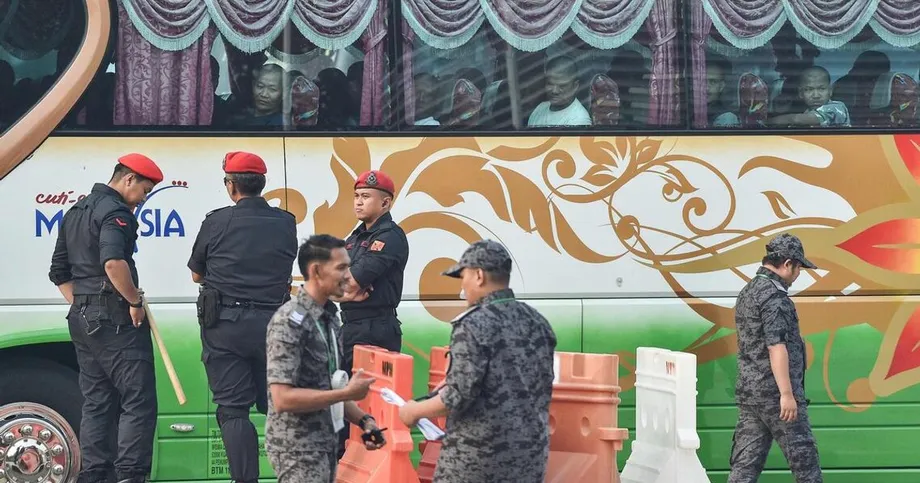
Those talks in Malaysia combined diplomacy with negotiations over the return of Myanmar nationals. Malaysia said it had repatriated 10,493 people that year by October 8. Rights groups warned that returnees could face persecution, forced military conscription or other abuse.
Lazaro's mission sits within this wider engagement, but ASEAN's stated conditions remain tied to the peace plan. Her proposed benchmarks would give ministers specific measures for judging progress, rather than relying only on visits, meetings or assurances.
How the events fit together
The October visit follows months of limited contact with Suu Kyi and disputed diplomacy over Myanmar's place in ASEAN. The main developments are:
- February 1, 2021: The military seizes power and detains Suu Kyi and other civilian leaders.
- April 2021: ASEAN leaders adopt the Five-Point Consensus.
- July 12, 2026: Myanmar's foreign minister attends informal talks with ASEAN counterparts in Bangkok.
- July 2026: Lazaro announces plans to visit Myanmar and discusses benchmarks for implementing the consensus.
- August 2026: Suu Kyi meets a Red Cross representative.
- October 19, 2026: Myanmar releases photographs of the delivery of books and correspondence from King Charles.
- October 22, 2026: Aris speaks to his mother for the first time in more than five years.
- October 28–29, 2026: Lazaro is scheduled to visit Naypyidaw before reporting to ministers in Manila.
The next regional step is Lazaro's report to ASEAN foreign ministers before the leaders' summit. For people needing assistance, the practical outcome will be whether the visit opens access for aid. For detained political figures and their families, access to the envoy and sustained outside contact remain immediate concerns.
Key Points
- ASEAN envoy Maria Theresa Lazaro is scheduled to visit Naypyidaw on October 28 and 29 to discuss humanitarian assistance.
- No meeting with Aung San Suu Kyi has been confirmed after repeated Philippine requests were rejected.
- ASEAN's Five-Point Consensus calls for an end to violence, inclusive dialogue, aid and envoy access to all parties concerned.
- Myanmar's authorities have challenged the consensus, while ASEAN is seeking benchmarks to measure compliance.
- Suu Kyi's son spoke to her on October 22, reporting that she sounded strong but remained deeply isolated.
- Lazaro is expected to report on the visit to ASEAN foreign ministers in Manila before the leaders' summit.