Sri Lanka turn a must win match into a rout
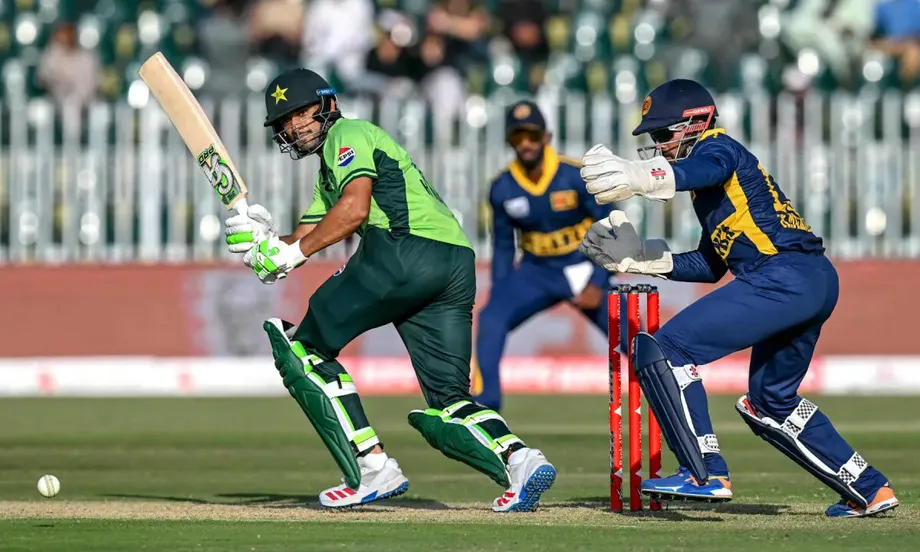
Dilshan Madushanka took five wickets for 34 runs as Sri Lanka bowled Pakistan out for 110 in Lahore on Tuesday, October 27, then completed an eight wicket victory with 191 balls remaining to reach the one-day international tri-series final. The result eliminated England and set up another meeting between Sri Lanka and Pakistan.
Contents
- Sri Lanka turn a must win match into a rout
- Madushanka sets a new personal best
- Pakistan lose their chance to rebuild
- A partnership of 27 is Pakistan's best
- Kamindu attacks after an early escape
- A boundary catch becomes six runs
- How the finalists were decided
- Pakistan face a different test in the rematch
- Key Points
Kamindu Mendis guided the chase with an unbeaten 62 from 60 deliveries at Gaddafi Stadium. Sri Lanka finished on 114 for two in 18.1 overs, with Pavan Rathnayake unbeaten on 23 after striking the winning boundary. Pakistan had already qualified by winning their first three matches, but their unbeaten run ended abruptly.
Sri Lanka captain Kusal Mendis chose to bowl, and his attack dismissed Pakistan in just 25.3 overs. Madushanka supplied the early breakthroughs and returned to finish the innings, while Sahan Arachchige supported him with two wickets for 24 runs. Every Sri Lankan bowler used took at least one wicket.
The victory ended Sri Lanka's run of five successive defeats against Pakistan. It also changed the meaning of Thursday's remaining league match against England: neither side can now alter which teams contest the final.
The principal match figures put Sri Lanka's total at 114 for two and Babar Azam's contribution at 29, although alternative published figures give 112 for two and 27 respectively. The result, winning margin and length of the chase are consistent. In cricket notation, 18.1 overs means 18 completed overs and one ball, leaving 31 overs and five balls unused in a scheduled innings of 50 overs.
Madushanka sets a new personal best
Madushanka's five for 34 improved on his previous best ODI figures of five for 80 against India in Mumbai during the 2023 World Cup. He took the same number of wickets while conceding 46 fewer runs. This was his second haul of five wickets in an ODI.
The left arm fast bowler unsettled Pakistan with deliveries that bounced sharply towards the batters' upper bodies. Fakhar Zaman was the first to fall, making five before a short delivery forced a mistimed shot to point in the fourth over.
Madushanka also removed Saad Baig for five, caught at short cover, before returning later to dismiss Arafat Minhas, Haris Rauf and Pakistan captain Shaheen Shah Afridi. His wickets came at both ends of the innings: he disrupted the opening stages, broke Pakistan's best partnership and prevented the lower order from extending the total.
His return to this level of effectiveness was especially welcome for Sri Lanka after injuries interrupted his progress following the 2023 World Cup. In Lahore, his ability to extract bounce gave Pakistan problems even on a surface where Sri Lanka's batters later scored freely.
Pakistan lose their chance to rebuild
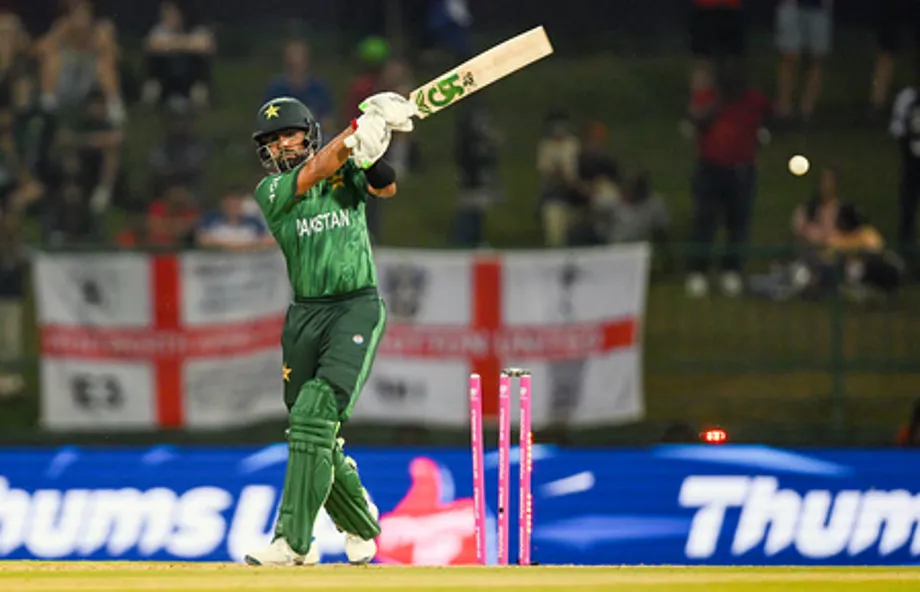
Pakistan's difficulties began before their established batters could settle. Maaz Sadaqat, brought into the squad after Saim Ayub's release, made eight before Asitha Fernando trapped him leg before wicket with a full delivery. Pakistan were 23 for two.
Babar offered the strongest resistance, hitting five boundaries in his 33 balls. He and Baig added 23 for the third wicket, but the partnership ended when Baig drove Madushanka to a fielder close to the bat.
Salman Ali Agha then edged Arachchige to wicketkeeper Kusal Mendis for nine. Babar fell to Eshan Malinga immediately afterwards, across the change of overs, leaving Pakistan 61 for five inside 14 overs. Two established batters had disappeared without a run being added between their dismissals.
Pakistan had used both unsuccessful reviews by the time Shadab Khan was caught attempting a sweep off Arachchige for two. The review system lets a team ask television officials to check an umpire's decision, but unsuccessful challenges use up its allowance. Pakistan could no longer request another check.
A partnership of 27 is Pakistan's best
Hasan Nawaz and Arafat Minhas briefly steadied Pakistan with a partnership of 27 for the seventh wicket. It was the largest stand of the innings, a measure of how effectively Sri Lanka prevented a recovery.
Madushanka broke it with another short delivery, which Arafat could only fend towards Kusal behind the stumps. Arafat departed for 10. Hasan followed for 17, sending a lofted shot off Dunith Wellalage to Arachchige at long off, leaving Pakistan 91 for eight.
Rauf made one before edging Madushanka to Kamindu at slip. Shaheen provided a late burst of resistance, striking two sixes in his 15 from 13 balls, but his attempted hook ended in Wellalage's hands and completed Madushanka's five wickets.
Only four Pakistan batters reached double figures. Their 110 was their second lowest ODI total at home and their third lowest against Sri Lanka. Pakistan used 153 legal deliveries, barely more than half their allocation of 300, leaving the bowlers a target with very little room for error.
Kamindu attacks after an early escape
Kamindu received an immediate chance when wicketkeeper Baig dropped him before he had scored in Shaheen's opening over. He then took control, including three consecutive boundaries when Rauf entered the attack.
Avishka Fernando contributed 16 from 17 balls, with two fours, as the opening partnership reached 50. Shaheen eventually dismissed him when a pull went to Fakhar at short midwicket, but Sri Lanka already had a substantial share of the target.
Kusal's stay lasted six balls and brought eight runs. His dismissal to Arafat was unusual: a defensive shot sent the ball forward, it struck the back of his bat during the follow through, then rolled into the stumps. Arafat finished with one wicket for 23 runs.
Kamindu kept the chase moving despite another interruption, successfully reviewing a leg before wicket decision. The television review overturned the umpire's ruling and allowed him to continue towards his half century.
A boundary catch becomes six runs
Kamindu reached fifty in 43 balls after a pull towards deep backward square leg produced one of the chase's decisive moments. A substitute fielder completed a catch but touched the boundary with his foot, turning a potential dismissal into six runs.
Cricket requires a fielder completing a boundary catch to remain clear of the rope while in contact with the ball. Stepping on it meant Kamindu stayed at the crease and received the maximum boundary score.
Rathnayake then provided steady support, finishing with two fours in his unbeaten 23 from 26 balls. His final stroke through cover point took Sri Lanka past the target of 111. A winning boundary counts in full, which explains why a chase can finish several runs beyond the number required.
Kamindu ended with eight fours and two sixes. Those boundary shots supplied 44 of his 62 runs, or about 71 percent. Sri Lanka's two innings together with Pakistan's lasted only 43.4 overs, less than the allocation for one complete ODI innings.
How the finalists were decided
Pakistan finished their league programme with six points from three victories in four matches. Sri Lanka moved to four points with their second win, enough to secure qualification before facing England in the final league fixture. England remained on zero points after three defeats. Pakistan's net run rate was -0.114, Sri Lanka's was 1.255 and England's was -0.733.
Pakistan had beaten England twice and Sri Lanka once before Tuesday. Their opening victory over Sri Lanka on October 18 was by 37 runs, followed by an 87-run win over England on October 20. Sri Lanka subsequently beat England by two wickets on October 22 before reversing the result against Pakistan in Lahore.
- Opening match: Pakistan defeated Sri Lanka to begin their winning run.
- Sunday, October 25: Pakistan beat England by one wicket after being set 243, with Shadab's unbeaten century helping rescue the chase.
- Tuesday, October 27: Sri Lanka beat Pakistan by eight wickets and eliminated England from final contention.
- Thursday, October 29: Sri Lanka face England in the last league match.
- Saturday, October 31: Sri Lanka and Pakistan are scheduled to contest the final.
The fixture dates place the final on Saturday, October 31, although an earlier match dispatch gave Sunday. Thursday's game remains a full ODI, but its result cannot change the finalists.
Pakistan face a different test in the rematch
Pakistan's previous victory had depended on a remarkable recovery against England. This time, Shadab's dismissal for two removed the batter who had supplied that rescue, and the remaining partnerships were too small to repair the damage.
Sri Lanka's success came from several connected contributions: Madushanka's bounce, Arachchige's wickets through the middle of the innings, sharp catching and Kamindu's fast start. Pakistan took only two wickets in reply, one each through Shaheen and Arafat, while missed chances allowed the chase to remain comfortable.
Saturday's rematch gives Pakistan an immediate opportunity to respond. Sri Lanka still have England to play first, but they have already secured the practical prize from Lahore: a place in the final and a victory over opponents who had beaten them five times in succession.
Key Points
- Sri Lanka beat Pakistan by eight wickets in Lahore to qualify for the tri-series final and eliminate England.
- Dilshan Madushanka took a career best five for 34 as Pakistan were dismissed for 110 in 25.3 overs.
- Kamindu Mendis finished unbeaten on 62, while Pavan Rathnayake made 23 not out.
- Sri Lanka completed the chase in 18.1 overs with 191 balls remaining.
- Sri Lanka face England on October 29 before the scheduled final against Pakistan on October 31.